
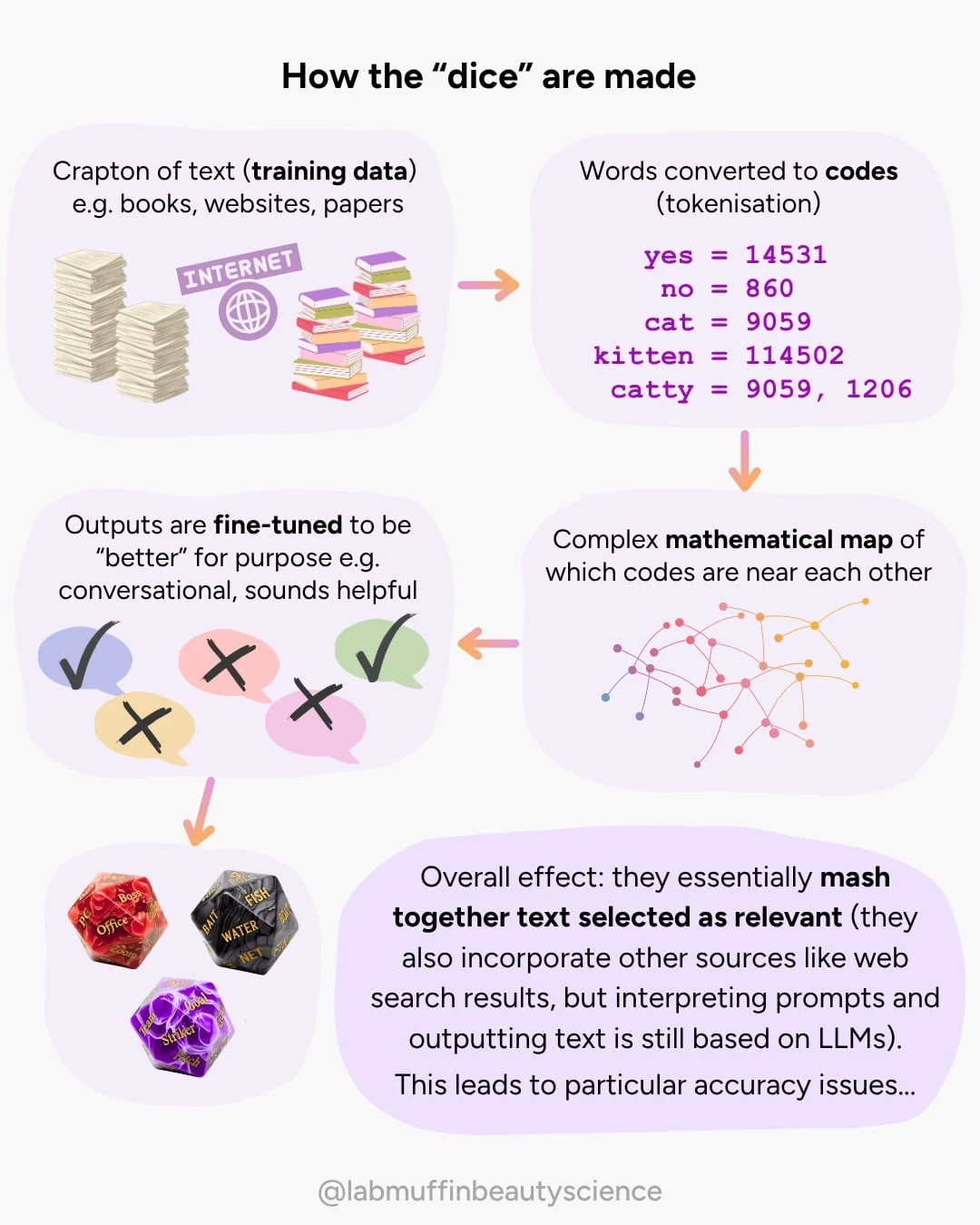
The proliferation of generative artificial intelligence across digital media has transformed how information is generated, consumed, and shared. Among the most concerning developments is the increasing reliance on AI chatbots—such as OpenAI’s ChatGPT, Anthropic’s Claude, and Google’s Gemini—for factual and scientific content. While these large language models (LLMs) have become ubiquitous tools for drafting text and summarizing data, experts increasingly warn that their underlying architecture makes them fundamentally unsuited for scientific communication. Rather than acting as repositories of human knowledge, LLMs operate through probabilistic language prediction, a mechanism that frequently generates authoritative-sounding inaccuracies, misattributions, and scientific distortions.
Understanding the Mechanics of Large Language Models
To comprehend why chatbots struggle with scientific accuracy, it is necessary to examine how these systems process information. A widespread misconception, frequently reinforced by the marketing strategies of AI developers, is that chatbots possess an internalized understanding of facts and data. In reality, LLMs do not "know" things in the cognitive sense. Instead, they function by predicting which words are statistically likely to follow a given prompt based on vast patterns found in their training data.
Fundamentally, modern LLMs act as sophisticated pattern-matching engines. An effective conceptual analogy is a vast array of weighted, uneven dice. When a user enters a prompt, the system selects textual outputs based on probabilities shaped by both the immediate prompt and the preceding sequence of words. While advanced architectures incorporate web search capabilities to pull real-time data, the core interpretation and generation of responses remain governed by statistical correlation rather than logical deduction or factual verification.
Because language correlates with concepts, this statistical approach often produces remarkably fluent and human-like text. However, correlation is not causation. Chatbots do not cross-reference their outputs against physical reality or empirical data; they synthesize text designed to mimic human discourse. Consequently, critics in the technical community describe chatbot generation as an advanced form of stochastic interpolation—effectively "bullshitting" with a high degree of linguistic polish.
The Vulnerability of Scientific Content
Scientific inquiry relies on precision, peer review, empirical validation, and exact attribution—standards that directly conflict with the probabilistic nature of LLMs. When tasked with synthesizing scientific studies or explaining complex technical concepts, chatbots frequently fail because their accuracy depends entirely on the volume and quality of their training inputs.
Recent literature highlights numerous instances of systemic failure in scientific and medical summaries. A notable example involves a dermatological study co-authored by science communicator and chemist Michelle Wong, which was misattributed by an AI-generated summary as the work of a "Harvard team," despite only a single author being affiliated with the institution. Similar errors plague academic literature reviews, where AI tools routinely hallucinate citations, misinterpret statistical findings, or amalgamate distinct research conclusions into misleading narratives.
Furthermore, recent benchmarking studies indicate that even as developers introduce advanced "reasoning" models and multi-step verification protocols, these mechanisms often create a dangerous illusion of logic. Rather than engaging in genuine critical thinking, these enhanced models generate more elaborate, convincing pathways of text that still originate from baseline pattern-matching rather than empirical reasoning.
Cognitive Biases and the Illusion of Authority
The danger of relying on AI for scientific information is compounded by well-documented human cognitive biases. When individuals review AI-generated text, several psychological hurdles impede effective fact-checking:
- The Fluency Heuristic: Humans inherently perceive fluent, grammatically polished text as more truthful than awkward or unrefined prose.
- The Confidence Effect: Chatbots deliver information with an unwavering, authoritative tone, which audiences routinely mistake for objective certainty.
- Confirmation Bias: Users frequently prompt AI systems in ways that elicit preferred answers, leading the model to reinforce pre-existing beliefs.
- Automation Bias: Society harbors an underlying predisposition to trust decisions and outputs generated by computational systems.
- Authority Bias: Individuals with limited technical literacy regarding AI architectures assume that chatbots function as infallible digital encyclopedias.
Overriding these evolutionary mental shortcuts requires substantial cognitive effort. Most users naturally tend to nod along with well-structured text, making rigorous peer-level fact-checking exceedingly rare among casual consumers of AI-generated media.
Systemic Risks: Anchoring, Verbosity, and Model Collapse
Beyond factual inaccuracies, AI-generated text introduces structural hazards when used as a foundational tool for research or content creation.
The anchoring effect makes it difficult for human writers to pivot away from the initial framing established by an AI draft. Furthermore, LLMs are notoriously verbose, injecting redundant filler phrases and repeating concepts multiple times, which inflates the time required to review and edit the material. Their organizational logic is often erratic, grouping unrelated concepts together in ways that defy standard editorial frameworks.
Compounding these issues is the phenomenon of "model collapse." As the internet becomes increasingly saturated with AI-generated text, subsequent generations of language models are increasingly trained on synthetic data rather than human-generated content. This recursive training loop amplifies baseline biases—including racial, gender, and socioeconomic prejudices—while degrading the overall semantic quality and factual integrity of future models.
Implications for Science Communication and the Public Sphere
The rise of "AI slop"—low-effort, automated content distributed across social media and educational platforms—presents a critical challenge for science communication. Anecdotal and observational evidence from science communicators indicates a strong correlation between the presence of AI-generated stylistic markers and fundamental factual errors in published content. Because verifying AI-generated scientific claims requires deep subject-matter expertise and arduous cross-referencing against primary literature, spotting these linguistic red flags has become an essential metric for media literacy.
Experts emphasize a fundamental rule for information consumption in the digital age: an individual must already know the correct answer—and understand whether an empirical answer even exists—to accurately audit AI-generated text. Without this baseline expertise, reliance on chatbots for scientific insights introduces profound vulnerabilities to misinformation, ultimately undermining public trust in empirical science and evidence-based discourse.
