
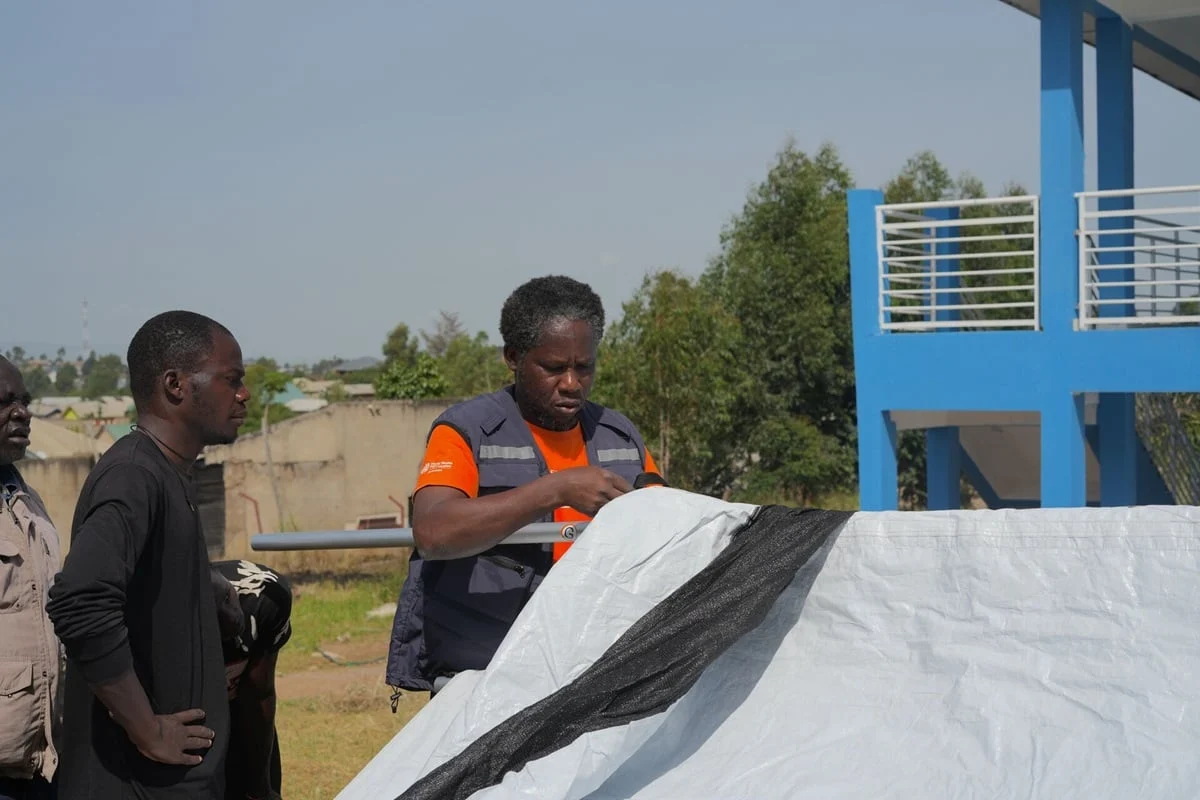
The World Health Organization (WHO) has intensified its response to a critical Ebola outbreak in the Ituri Province of the Democratic Republic of the Congo (DRC), with Director-General Dr. Tedros Adhanom Ghebreyesus issuing a direct appeal for a humanitarian ceasefire to facilitate life-saving medical interventions. This latest surge in cases, identified as the 17th Ebola outbreak in the nation’s history, presents a unique and formidable challenge to international health authorities. Unlike the more frequent Ebola Zaire outbreaks, which have been managed in recent years with effective vaccines and therapeutic treatments, the current crisis involves the Ebola Bundibugyo virus, for which no approved vaccines or specific antiviral treatments currently exist.
The epicenter of the crisis has shifted to Ituri, a province already grappling with chronic instability, armed conflict, and massive internal displacement. According to the latest epidemiological data, more than 90% of the confirmed cases in this outbreak are concentrated within Ituri, with sporadic transmissions reported in neighboring North Kivu and South Kivu. The WHO’s leadership has emphasized that the convergence of a deadly viral pathogen and an active conflict zone has created a "perfect storm" of humanitarian risk, necessitating an unprecedented level of community cooperation and international support.
The Bundibugyo Challenge: A Specialized Medical Crisis
The identification of the Bundibugyo strain of the Ebola virus (BDBV) has significant implications for the public health response. First identified in 2007 in the Bundibugyo District of neighboring Uganda, this species of the virus typically exhibits a lower case fatality rate than the Zaire strain—historically ranging from 25% to 50%—but its management is complicated by the absence of the Ervebo vaccine, which was instrumental in containing previous outbreaks in West Africa and the DRC.
Dr. Tedros, in a message directed to the residents of Bunia and the broader Ituri region, underscored the gravity of the situation. He noted that while medical teams cannot rely on the pharmaceutical tools used in previous years, the mortality rate can be significantly reduced through early supportive care. This includes intensive rehydration, the management of secondary infections, and the stabilization of electrolyte levels in dedicated Ebola Treatment Centers (ETCs). The WHO has deployed specialized teams to assist the DRC Ministry of Health in establishing these centers, yet the success of these facilities depends entirely on the ability of symptomatic individuals to reach them safely and without fear of violence.
Chronology of Ebola Outbreaks and the 2018-2020 Legacy
The DRC has a long and complex history with the Ebola virus, dating back to its discovery near the Ebola River in 1976. However, the current situation in Ituri is being viewed through the lens of the 2018-2020 outbreak (the DRC’s 10th), which was the second-largest Ebola epidemic in history. During that period, North Kivu and Ituri were the primary zones of transmission, resulting in over 3,400 cases and 2,280 deaths.
Dr. Tedros’s personal history with the region is deeply rooted in that era. Between 2018 and 2020, the Director-General conducted 14 high-profile visits to the epicenters, including Beni, Butembo, and Goma. It was during this time that he was given the name "Dr. Paluku" by the local community—a title traditionally reserved for a firstborn son in the local culture—symbolizing a bond of trust between the international health body and the Congolese people.
The current 17th outbreak serves as a reminder of the virus’s endemic nature in the region’s zoonotic reservoirs. The timeline of the current response highlights a rapid escalation:
- Detection: Initial cases were identified through routine surveillance in Ituri, initially suspected as malaria or typhoid due to overlapping symptoms.
- Confirmation: Laboratory analysis confirmed the Bundibugyo strain, triggering the activation of the WHO’s emergency response framework.
- Geographic Spread: While Ituri remains the primary focus, the movement of displaced populations has led to cross-border risks and small clusters in North Kivu.
- Deployment: The WHO has mobilized personnel to Bunia to provide technical expertise in logistics, contact tracing, and safe and dignified burials (SDBs).
Security Constraints and the Appeal for a Ceasefire
The primary obstacle to containing the virus is not medical, but environmental. Ituri Province is currently home to numerous armed groups, including the Allied Democratic Forces (ADF) and the Cooperative for the Development of the Congo (CODECO). The presence of these factions has led to frequent attacks on civilians, health infrastructure, and humanitarian convoys.
The WHO has reported that the security situation has already cost "precious time" in the race to contain the virus. In previous outbreaks, clinics were targeted by misinformation-fueled violence, and health workers were frequently caught in crossfire. The current displacement of hundreds of thousands of people into overcrowded camps further exacerbates the risk of rapid transmission, as sanitation facilities are overstretched and social distancing is impossible.
In a rare and direct diplomatic move, the WHO leadership has called upon all warring parties in the region to declare an immediate, even if temporary, ceasefire. The "humanitarian pause" is intended to allow health workers to reach isolated communities, conduct essential contact tracing, and transport the sick to treatment centers. The rationale provided by health officials is that the virus does not respect political or territorial boundaries; an uncontrolled outbreak in a conflict zone eventually threatens the health and stability of all parties involved.
Community Resilience and the Role of Local Leadership
A critical lesson learned from the 2018-2020 crisis was that top-down medical interventions often fail if they lack community buy-in. Mistrust of government officials and international organizations can lead families to hide sick relatives, which facilitates the silent spread of the virus.
To counter this, the WHO is prioritizing engagement with traditional healers, religious leaders, and the youth of Ituri. Dr. Tedros highlighted the "remarkable energy" of the province, specifically citing the entrepreneurial spirit of Bunia’s markets as a source of community strength. The strategy involves empowering local voices to share factual information about Ebola, thereby breaking the cycle of fear and silence.
Youth leaders are being identified as key influencers in this strategy. By mobilizing young people to act as health advocates within their social networks, the WHO aims to modernize the messaging around disease prevention. This includes the promotion of hand hygiene and the importance of reporting symptoms such as fever, fatigue, and unexplained bleeding to health authorities immediately.
Socio-Economic Impact and Long-Term Implications
The Ebola outbreak is occurring against a backdrop of existing humanitarian crises. The people of Ituri are simultaneously facing high rates of malaria, measles, and malnutrition. The economic impact of the outbreak is also significant; trade routes essential for the province’s vibrant commerce are often disrupted by quarantine measures and security checkpoints.
Journalistic analysis of the situation suggests that the international community’s response to this outbreak will be a litmus test for the "Pandemic Accord" and global health equity. Because the Bundibugyo strain lacks the commercial incentives for vaccine development that the Zaire strain attracted, the DRC is reliant on the WHO’s ability to coordinate a response based on "early supportive care" and "public health fundamentals" rather than high-tech pharmaceutical interventions.
The WHO has committed to remaining in Ituri long after the current outbreak is declared over. The goal is to transition from emergency response to the strengthening of the primary healthcare system. This includes training local health workers, improving laboratory capacity in provincial capitals like Bunia, and ensuring that future outbreaks are detected and contained at the source.
Conclusion: A Call for Global Solidarity
As Dr. Tedros prepares for his upcoming visit to Bunia to meet with provincial leaders and frontline workers, the message remains one of solidarity and urgency. The WHO has emphasized that the people of the DRC have successfully overcome 16 previous outbreaks, demonstrating a level of resilience that is unparalleled globally. However, the 17th outbreak, complicated by the Bundibugyo strain and active warfare, requires more than just local courage; it requires a cessation of hostilities and a renewed commitment from the international community to provide the necessary resources.
The situation in Ituri is a stark reminder that global health security is inextricably linked to peace and stability. Without a ceasefire, the efforts of health workers—the "backbone of the response"—remain in constant jeopardy. The WHO’s stance is clear: every death from Ebola in the current context is preventable if medical teams are given the safe passage required to do their jobs. The world is now watching to see if the call for a humanitarian pause will be heeded, or if the virus will be allowed to exploit the fractures of war to claim more innocent lives.
