
The multi-billion-dollar global hair care industry has long relied on a foundational paradox: selling consumers products designed to "hydrate" their hair, despite decades of cosmetic science demonstrating that "hydrated hair" is, strictly speaking, a physical and chemical misnomer. For generations, marketing campaigns have promised deep moisture infusions, luxury hydration masks, and water-locking serums to solve the universal dread of dry, frizzy, and brittle strands. However, trichologists, cosmetic chemists, and material scientists have increasingly pushed back against these industry tropes, pointing out that water’s interaction with human hair is far more complex, and frequently detrimental, than commercial messaging suggests.
To understand the real science of hair, hydration, and water, one must look past the clever copywriting found in the beauty aisle and examine the microscopic architecture of the hair fiber itself. Water is neither inherently good nor bad for human hair; rather, it is a potent chemical modifier that alters the structural integrity, elasticity, and tactile sensation of hair proteins. Demystifying this relationship requires exploring the delicate balance of molecular bonds, structural protein behavior, consumer psychology, and the fundamental physics of daily grooming.
The Anatomy of Hair Bonds and Molecular Interactions
Human hair is primarily composed of a fibrous structural protein called keratin. The interior of the hair shaft, specifically the cortex, relies on an intricate network of chemical and physical bonds to maintain its tensile strength, elasticity, and overall shape. These internal connections are broadly categorized into permanent and temporary bonds.
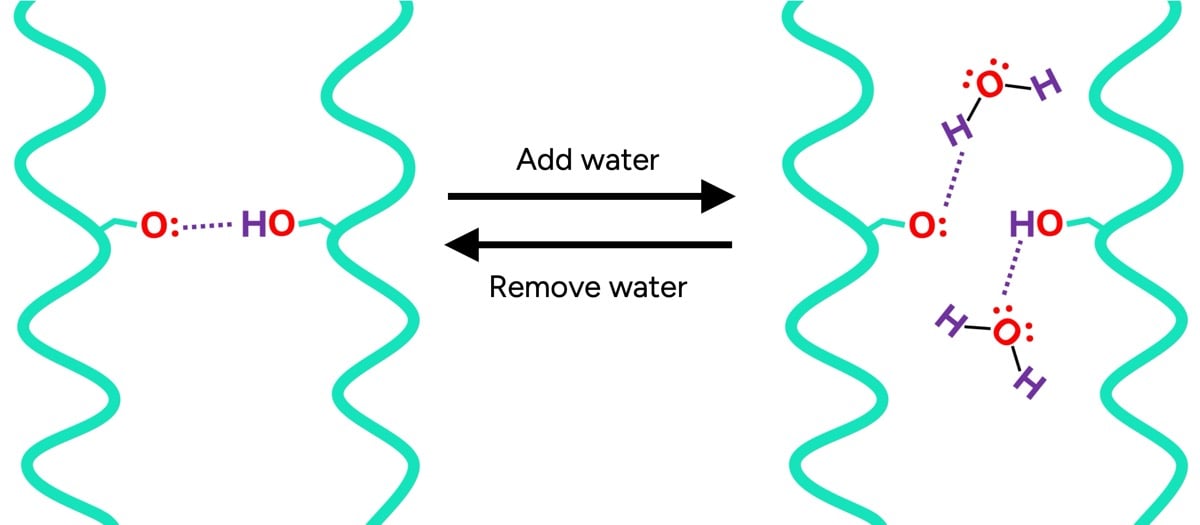
In a dry environment, temporary hydrogen bonds act like microscopic glue, holding adjacent protein chains together. These bonds are formed when individual protein molecules interact directly with one another. However, because proteins are hydrophilic, they exhibit a strong affinity for water molecules. When water is introduced to the hair fiber, these hydrogen bonds are disrupted. Instead of holding hands with each other at a molecular level, the protein chains abandon their internal connections to bond with the invading water molecules.
Consequently, wet hair possesses significantly fewer internal bonds holding its structure together than dry hair. This chemical transition radically changes the mechanical properties of the fiber. Dry hair, fortified by a high density of internal bonds, is stiff and brittle, rendering it susceptible to sudden, unyielding fractures under high-stress conditions like aggressive brushing. Conversely, wet hair—deprived of those rigid internal bonds—becomes remarkably stretchy, elastic, and flexible.
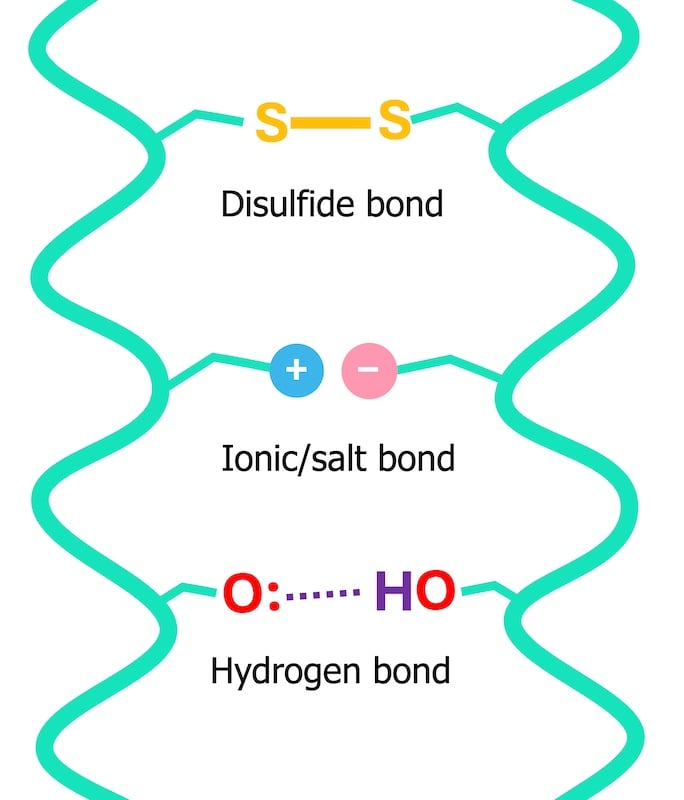
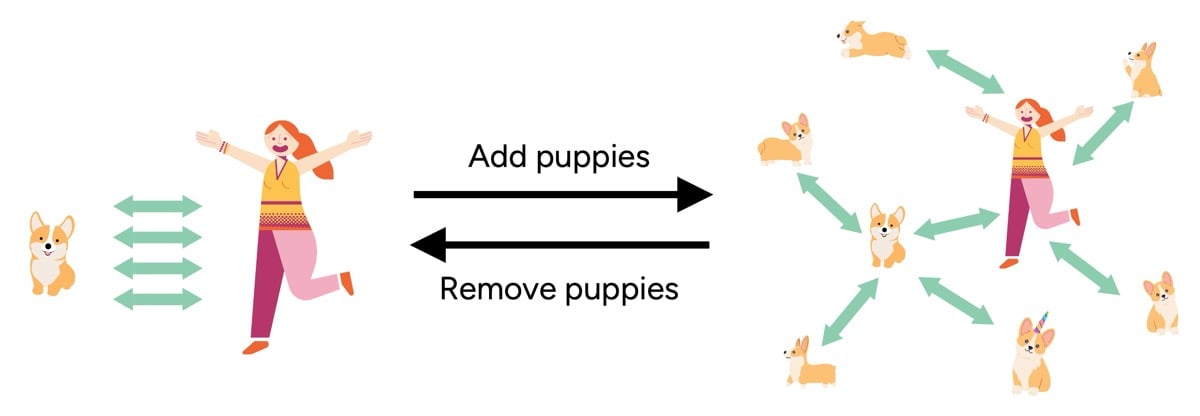
This molecular phenomenon is often visualized through simple analogies, such as a dog at a park interacting exclusively with its owner until a crowd of enthusiastic puppies arrives, distracting the owner and altering the primary dynamic. When the water evaporates, the proteins return to their original state, reforming their internal connections. While this process is entirely reversible, the temporary weakening of the hair shaft during wet states presents distinct mechanical risks depending on the geometry of the hair.
The Wet Detangling Conundrum: Straight Versus Curly Hair
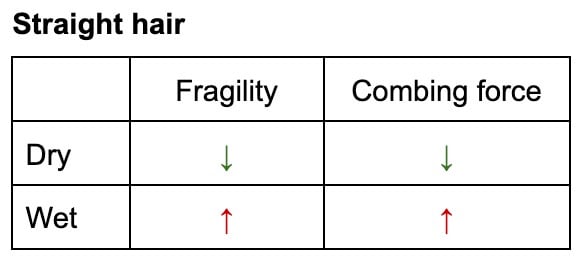
The weakening and softening of hair via water immersion creates a structural dilemma known as wet detangling. For individuals with straight hair, attempting to comb or detangle strands while they are wet frequently maximizes physical damage. Straight hair in a wet state is simultaneously weaker and stickier due to water’s surface tension, which causes individual strands to cling together. When a comb is pulled through wet straight hair, the fibers experience heightened frictional resistance despite their increased elasticity. The combination of reduced tensile strength and elevated friction results in accelerated cuticle wear and premature breakage.
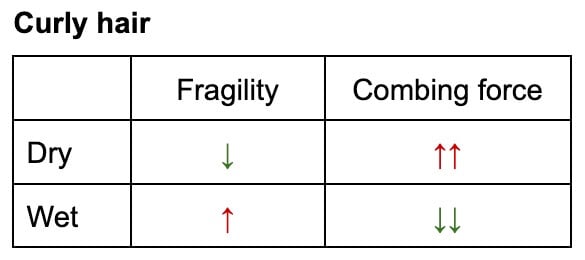
Conversely, the exact opposite holds true for curly and coily hair types. For individuals with textured hair, detangling while dry is notoriously destructive because the sharp bends and coils create endless snag points that resist mechanical manipulation. When water is introduced, it temporarily relaxes the hair’s shape and lubricates the strands, allowing them to slide past one another with reduced resistance. Even though the individual fibers are weaker when wet, the dramatic reduction in frictional snags and mechanical resistance means that wet detangling ultimately causes less overall damage for curly hair than dry detangling.
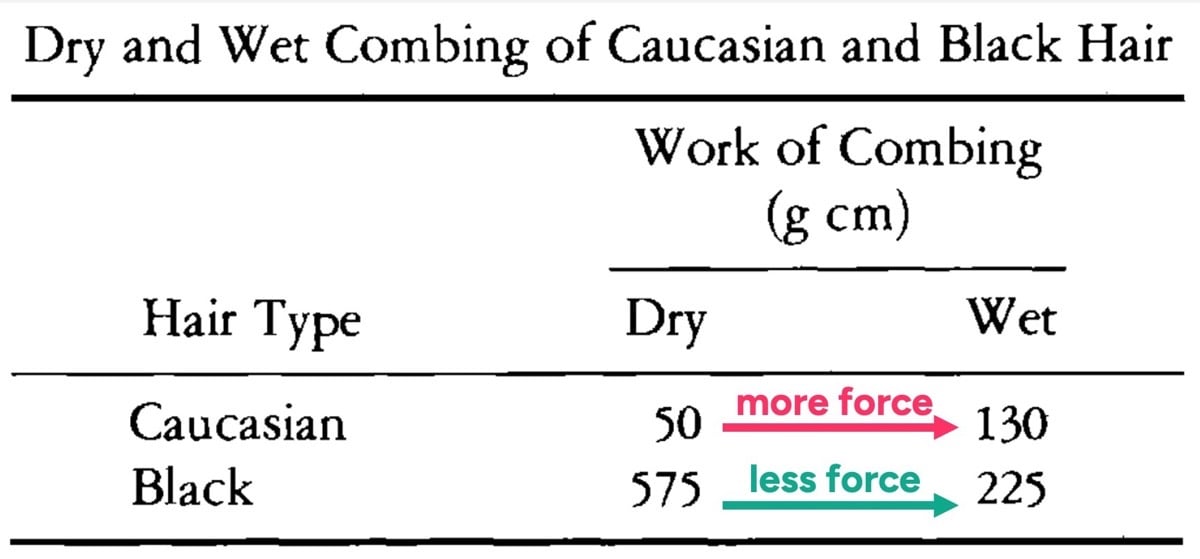
This delicate interplay extends beyond direct washing, highlighting how ambient environmental humidity can alter the mechanical performance of hair. Studies dating back to early trichological research, such as the foundational work by Epps and Wolfram in the early 1980s, demonstrated that combing forces fluctuate dramatically depending on moisture levels in the surrounding air.
Sensory Perception Versus Scientific Reality
Perhaps the most startling disconnect in hair science lies in the stark contrast between how hair feels to the human hand and what its actual water content dictates. Consumer surveys and sensory evaluations consistently reveal that hair possessing higher water content is frequently perceived as rougher, drier, and more damaged, while hair with lower water content feels smoother, silkier, and more moisturized.
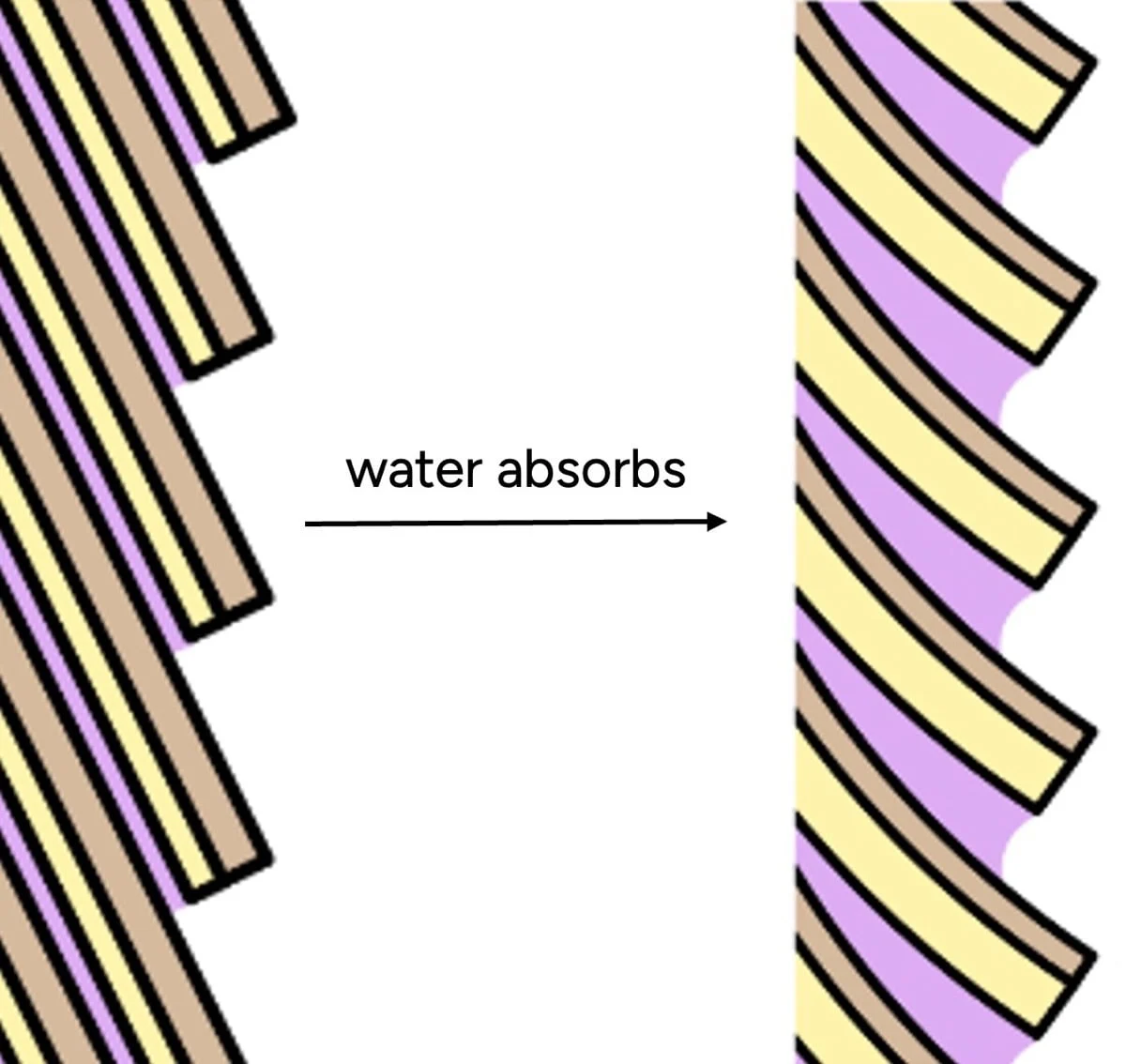
This sensory paradox is rooted in the microscopic behavior of the cuticle, the outermost layer of the hair shaft. The cuticle consists of overlapping, scale-like protective layers. When hair is dry, these scales lie relatively flat, creating a smooth surface that minimizes friction against the hand or a hairbrush.
When excess water penetrates the hair fiber, it causes the internal structures of the cuticle to swell. Notably, the endocuticle (the underside of the scale) and the cell membrane complex (the intercellular glue binding the scales together) absorb water at disproportionate rates compared to the rest of the fiber. This differential swelling forces the cuticle scales to lift and buckle outward, creating a microscopic landscape that is bumpy, uneven, and highly textured. Furthermore, water increases surface friction, acting almost like a mild adhesive. To human tactile perception, this microscopic roughness and elevated friction register as "dry" and damaged, completely defying the literal presence of abundant water.
This sensory misalignment explains why commercial products marketed as "hydrating" rarely function by simply pumping water into the hair shaft. Instead, cosmetic chemists formulate these products using specialized conditioning agents, such as silicones and long-chain fatty alcohols. These oily ingredients deposit a microscopic film over the cuticle, smoothing down the lifted scales, replicating the natural protective lipid layer known as the F-layer, and reducing surface friction to deliver the tactile sensation of softness and health.
Why Washing Hair Improves Manageability
Given that excess water can make the hair surface feel rougher and structurally weaker, consumers often wonder why freshly washed and conditioned hair consistently feels and looks better than hair treated merely with a leave-in serum. This phenomenon is driven by four distinct physicochemical mechanisms:
- Uniform Product Dispersion: Water acts as an exceptional solvent and distributing agent, allowing rinse-off conditioners to coat every individual hair fiber evenly and efficiently.
- Structural Reset: Water successfully breaks the temporary hydrogen bonds formed during previous styling sessions, enabling the hair to abandon heat-set configurations or humidity-induced distortions and return to its natural baseline state.
- Alignment and Self-Assembly: In curly and coily hair types, water utilizes surface tension to "zip" adjacent wet strands together into parallel clumps. These aligned formations create a larger surface area that interacts with the hand, transferring thermal energy more rapidly and producing a tactile sensation of coolness and smoothness that the human brain interprets as hydration.
- Microscopic Scale Smoothing: Rapid drying techniques, such as intense heat from blow dryers, can cause cuticle scales to shrink unevenly and buckle. Soaking the hair in water and allowing it to dry under normal conditions relaxes these mechanical distortions, resetting the cuticle at a microscopic level.
The Goldilocks Principle of Hair Moisture
Much like human skin, hair operates best within a specific middle ground of moisture content. Both extremes—excessive saturation and extreme dehydration—carry distinct physiological and cosmetic disadvantages.
When hair is subjected to severe dehydration, often caused by extremely low-humidity environments such as commercial aircraft cabins or arid climates, two major problems emerge. First, the lack of ambient moisture prevents the dissipation of electrostatic charges, leading to high static build-up and persistent flyaways as the hair fibers lose electrons through friction. Second, dehydrated hair loses its shock-absorbing capacity. Lacking sufficient flexibility, overly dry hair reacts to mechanical stress by developing microscopic internal fractures. Over time, these micro-cracks propagate until the fiber snaps entirely—a phenomenon easily observed in human fingernails, which share a similar protein composition.
Conversely, maintaining hair in a perpetually water-logged state introduces its own vulnerabilities. While the old internet myth of "hygral fatigue"—the idea that water continuously expanding and contracting the hair damages its elastic properties indefinitely—has been largely debunked by modern cosmetic science, the immediate risks of wet hair remain well-documented. Because wet hair is inherently weaker and its cuticle scales are raised, exposing it to mechanical manipulation without protective conditioning agents accelerates wear and tear.
Industry Implications and Consumer Takeaways
The ongoing evolution of cosmetic science has forced a quiet reckoning within the beauty industry. While marketing terminology will likely continue to lean on familiar, comforting concepts like "hydration" and "moisture," industry experts emphasize that consumers should evaluate products based on their actual mechanical functions rather than misleading buzzwords.
Water is an indispensable tool in hair care, serving as a softening agent that facilitates styling, product distribution, and structural restructuring. It is neither inherently destructive nor a miraculous elixir of youth for keratin fibers. Achieving smooth, manageable, and healthy-looking hair does not require obsessing over internal water quotas; rather, it demands proper conditioning to smooth the cuticle, gentle handling during vulnerable wet states, and strategic friction reduction. By understanding the true chemistry of hair bonds and moisture interactions, consumers can make informed choices that prioritize the long-term structural integrity of their hair over clever marketing illusions.
