
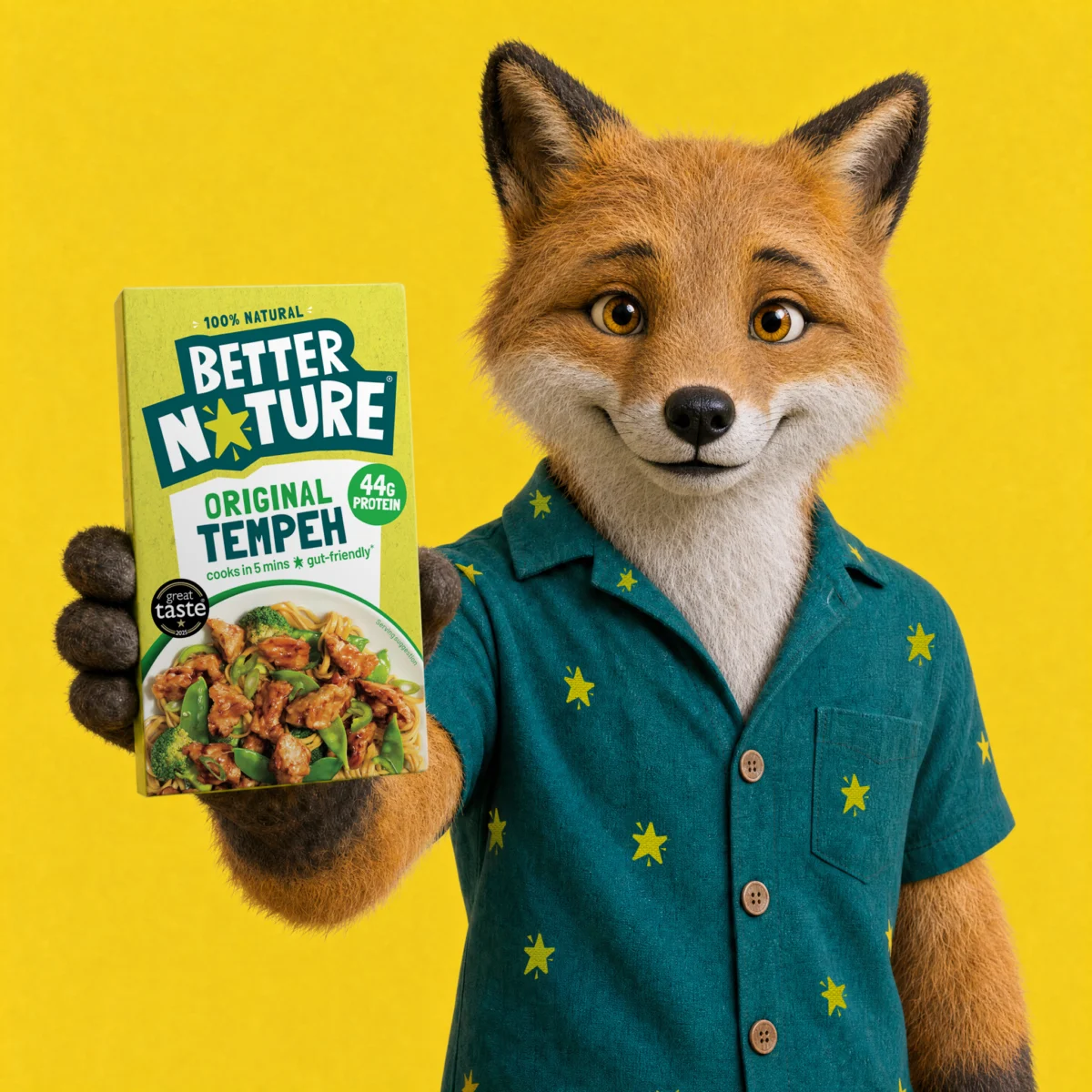
London-based plant-based food manufacturer Better Nature has launched a high-profile marketing initiative titled Believe in Tempeh. The campaign openly spoofs the poultry industry’s dominant messaging—specifically targeting KFC’s widespread Believe in Chicken promotional push—to capture the attention of British consumers who are increasingly seeking alternatives to traditional poultry products.
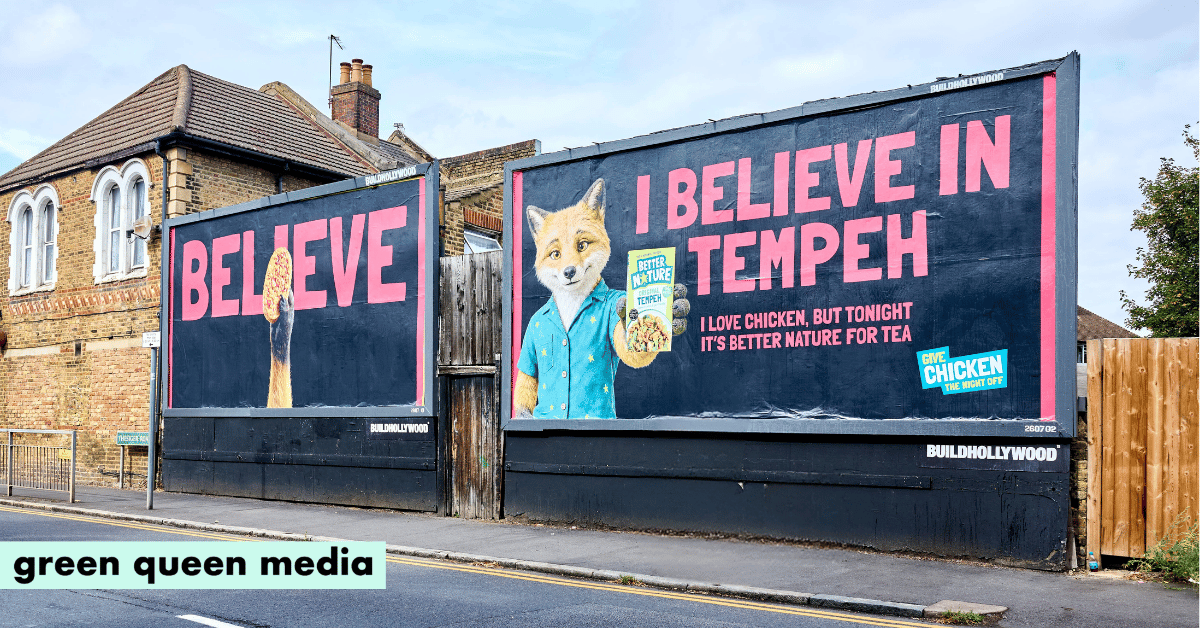
By positioning its fermented soy-based protein against the United Kingdom’s multi-billion-dollar chicken sector, Better Nature aims to disrupt automatic grocery-buying habits. The campaign introduces a new brand mascot, a fox named Fred, and utilizes prominent out-of-home advertising across London to urge consumers to give their standard poultry consumption a routine break.
This strategic maneuver arrives at a time of shifting dietary preferences across the UK, driven by growing awareness of nutritional deficits, particularly regarding dietary fiber, and a broader cultural pivot toward protein diversification.
Market Context and Consumer Fatigue
The British poultry market represents a massive economic footprint, valued at approximately $4.9 billion annually. For millions of shoppers, chicken serves as the default animal protein, often purchased on autopilot. However, fresh data indicates that this ubiquity has bred consumer fatigue.
A recent 1,000-person survey conducted by consumer research platform Attest in partnership with Better Nature reveals that over half of British consumers—approximately 54%—feel bored with chicken. Furthermore, the findings indicate that 35% of respondents are actively open to exploring novel protein alternatives, while 19% expressed a willingness to substitute chicken with a plant-based option at least once a week.
Better Nature’s leadership argues that this widespread culinary monotony presents a distinct commercial opening. Rather than attempting to convince consumers to abandon meat consumption entirely, the startup advocates for a flexitarian approach centered on moderation and nutritional enhancement.
Nutritional Profile and Health Trends
Better Nature’s tempeh positions itself as a nutritionally dense alternative to traditional meats. Produced through a natural fermentation process using whole soybeans, water, and cultures, the product yields 22 grams of complete protein per 100-gram serving. Crucially, unlike fried chicken and other highly processed poultry items, tempeh provides 6.6 grams of dietary fiber per 100 grams, alongside essential micronutrients such as calcium, iron, and phosphorus.
This nutritional makeup aligns closely with several concurrent public health trends across the United Kingdom. Data shows that 43% of Brits increased their overall protein intake over the past year, fueled in part by social media wellness trends and a rising skepticism toward ultra-processed foods. Looking ahead, 14% of consumers intend to incorporate additional protein into their diets, while 13% are explicitly seeking to increase their daily fiber consumption.
Simultaneously, the widespread adoption of GLP-1 receptor agonists for weight management has introduced a new demographic of consumers focused on maintaining muscle mass and supporting metabolic health. Over 1.5 million individuals in the UK currently utilize these medications, a figure that nearly doubled between 2024 and 2025. Health experts note that adequate protein intake is vital for this cohort to prevent muscle wasting, while dietary fiber stimulates the body’s natural GLP-1 responses and supports gastrointestinal health.
Public awareness regarding fiber intake has also reached unprecedented levels, amplified by media productions such as Netflix’s Hack Your Health, the popular "30 plants a week" dietary movement, and viral social media trends including "fibremaxxing" and "fibrelayering." These movements highlight a stark nutritional reality: approximately 96% of the British population fails to meet the recommended daily target of 30 grams of fiber.
Chronology and Campaign Development
The rollout of the Believe in Tempeh campaign is the culmination of months of strategic brand development designed to scale Better Nature’s presence in the UK retail market.
In late 2024 and early 2025, the company experienced accelerated financial and operational growth, successfully securing $1.5 million in funding following a record-breaking sales period. This commercial momentum carried into 2026, during which unit sales of tempeh across major UK grocery retailers surged by 71.5% in the first half of the year alone.
Capitalizing on this momentum, Better Nature’s co-founders—CEO Elin Roberts and COO Dr. Ando Ahnan-Winarno, who holds a PhD in food science—began conceptualizing a counter-narrative to the dominant poultry marketing campaigns saturating British media.
The campaign’s initial signals appeared on professional networks when Roberts published commentary addressing KFC’s Follow Your Gut promotional strategy. She noted the physiological irony of promoting gut health through fried chicken, which contains virtually no dietary fiber.
The official campaign launch featured two central London billboards juxtaposing animal paw imagery with blocks of tempeh. This visual pun anchors the campaign’s core proposition: consumers do not need to abandon their favorite foods permanently, but rather incorporate a single weekly swap to achieve meaningful nutritional gains.
Executive Statements and Strategic Vision
Better Nature’s leadership has emphasized that the campaign is designed to engage, rather than antagonize, mainstream meat consumers.
"The big chicken companies have put chicken firmly into the cultural conversation. We didn’t want to compete with that. We wanted to play with it," said Elin Roberts, co-founder and CEO. "If they can get Britain believing in chicken, we can get Britain thinking about what else could be on their plate."
Roberts stressed that the initiative respects consumer preferences while offering a pragmatic alternative for health-conscious shoppers. "We’re not asking anyone to give up chicken. We’re just saying, why not give it a night off once a week and try something different? Our tempeh soaks up flavour better than any other protein, brings something new to the pan, and gives people a healthier protein option with more good inside when they want to mix things up."
Dr. Ando Ahnan-Winarno, co-founder and chief operating officer, highlighted the quantifiable public health impact if the campaign’s central challenge is adopted widely by the British public.
"If everyone in the UK swapped chicken for tempeh for just one night a week, we’d add 457 tonnes of fibre to the nation’s diet every single week," Ahnan-Winarno stated. "Tempeh is a brilliant swap for chicken as it not only delivers a similar amount of protein, but it’s also full of fibre and, as a fermented protein, it’s packed with gut-friendly goodness too."

Ahnan-Winarno also addressed the culinary expectations of consumers accustomed to poultry. "We know that chicken lovers are not prepared to compromise on taste, which is why at Better Nature we’ve spent years refining our tempeh to make it flavour-hungry, which means it soaks up flavour more deeply and evenly to taste of the best things in the pan."
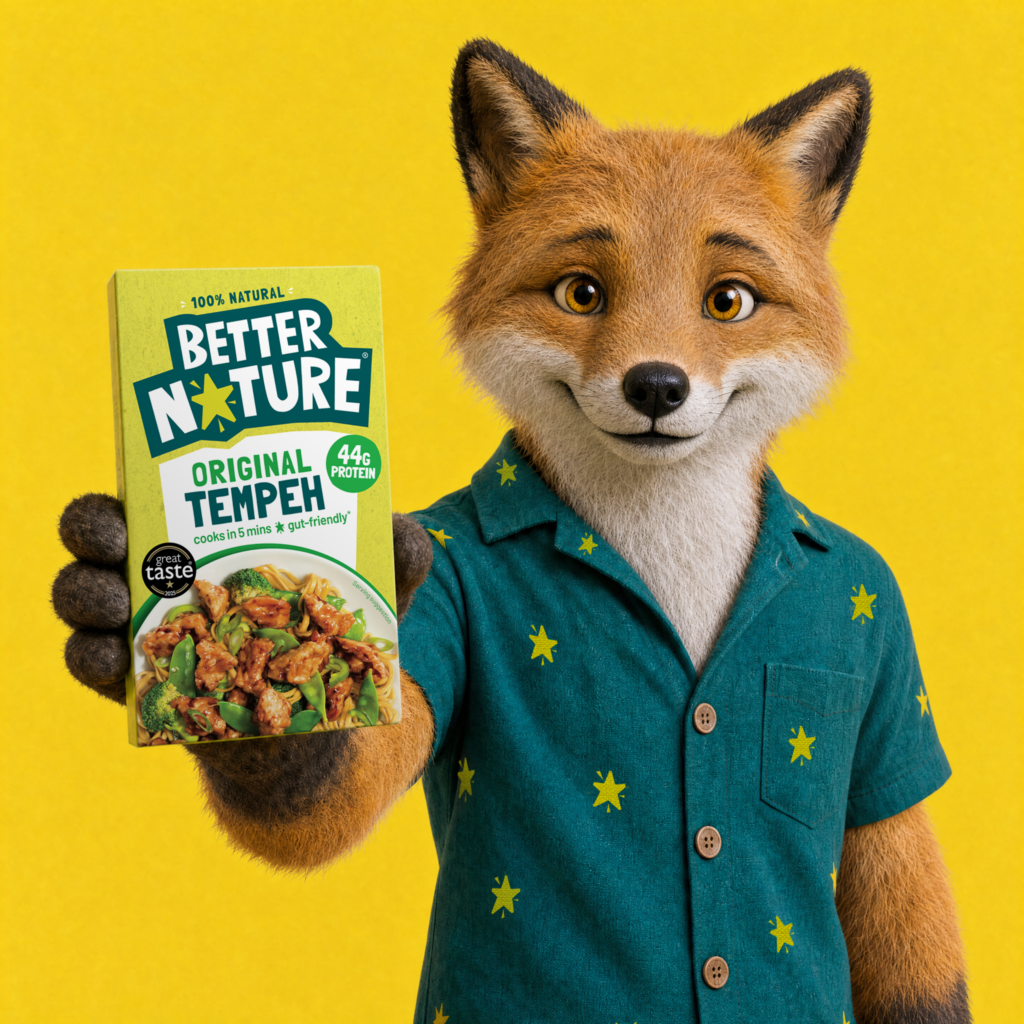
To solidify this challenger positioning, the company unveiled Fred the Fox, a custom-designed brand mascot intended to inject humor and distinct visual identity into the category. Developed over several months, the character aims to make tempeh more approachable to mainstream supermarket shoppers who may be unfamiliar with fermented soy products.
Broader Economic and Industrial Implications
The entry of aggressive, challenger-brand marketing into the traditional meat alternative sector signals a maturation of the UK plant-based food industry. Historically, plant-based brands relied heavily on ethical, environmental, or strictly vegan messaging, which often limited their appeal to dedicated subset demographics.
By directly targeting the dominant animal protein category through playful comparison and focusing on functional health benefits—such as gut health, fiber intake, and culinary versatility—brands like Better Nature are increasingly competing on the same terms as conventional food manufacturers.
Industry analysts observe that as inflation and changing health paradigms prompt consumers to re-evaluate their grocery baskets, value-added products that offer functional nutritional upgrades without sacrificing culinary satisfaction are best positioned for growth. Whether Better Nature’s satirical approach will successfully alter shopping habits on a national scale remains to be seen, but the campaign has firmly established tempeh as a vocal competitor in the ongoing evolution of the British protein market.
