
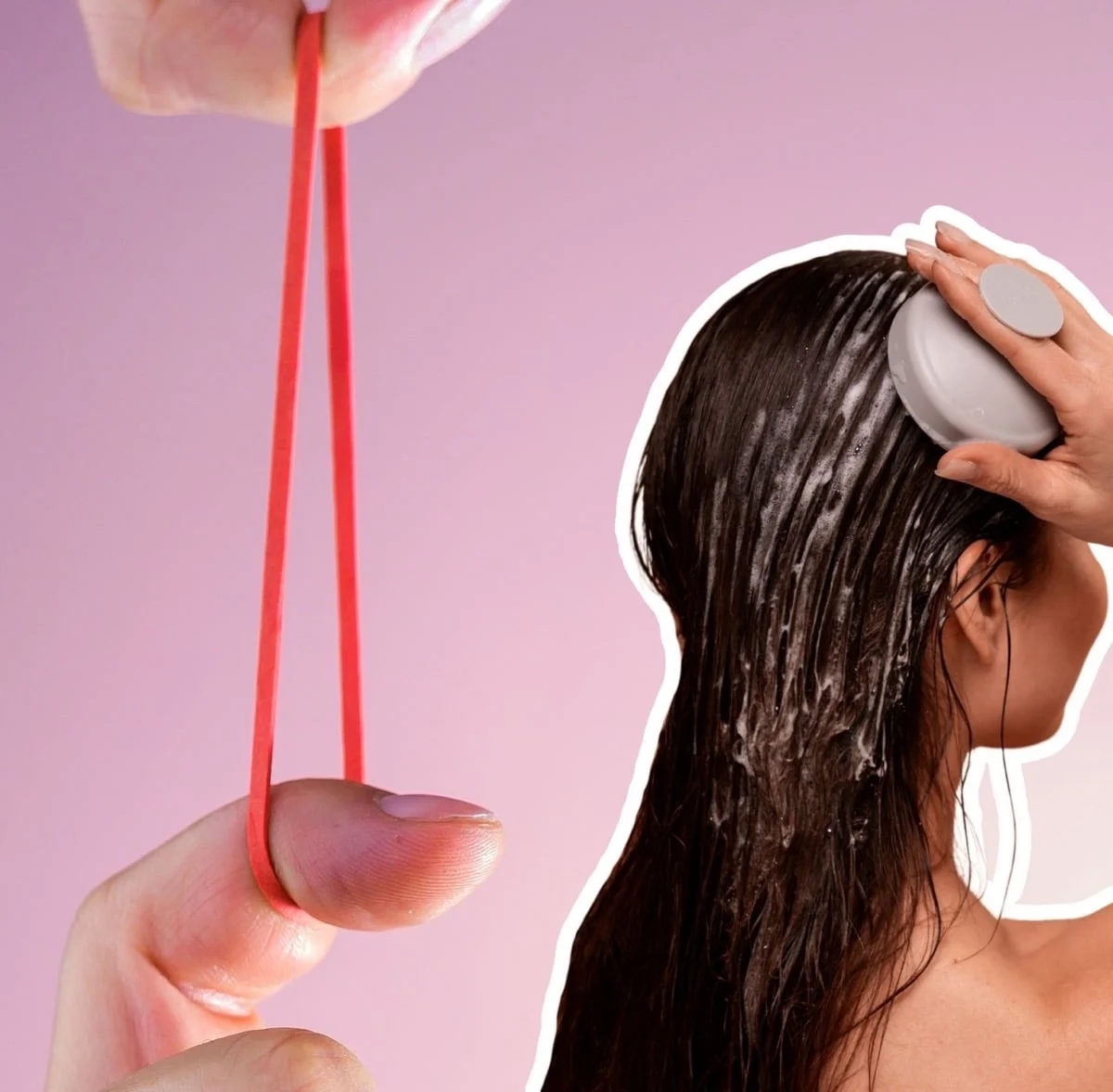
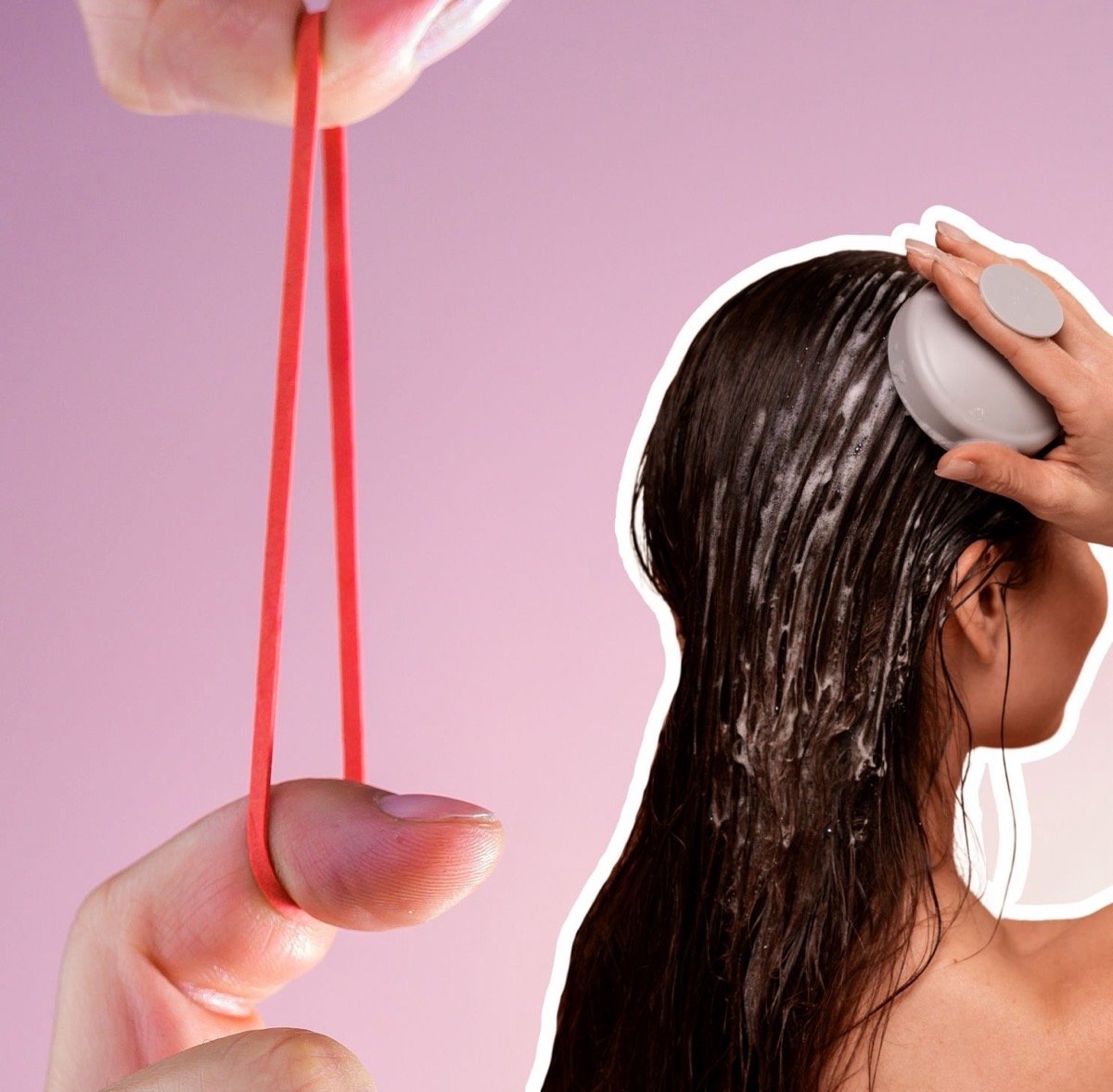
For decades, the beauty and wellness industries have perpetuated a pervasive theory regarding hair maintenance: the concept of "hygral fatigue." Often cited as a primary justification for limiting hair washes and avoiding frequent wetting, the theory posits that the continuous process of hair absorbing water and subsequently drying causes permanent, cumulative structural degradation. According to this narrative, as water penetrates the hair fiber, it causes the cortex to swell and the cuticles to lift, straining the internal bonds until the hair eventually snaps, mirroring a rubber band stretched to its breaking point. However, a comprehensive review of chemical and physical data surrounding hair science reveals that hygral fatigue is largely a myth. Water entering and exiting the hair shaft does not inherently cause structural damage, upending standard advice routinely given by hair care professionals and beauty influencers alike.
To understand why hygral fatigue fails to hold up under scientific scrutiny, one must examine the molecular structure of human hair and how it interacts with moisture. Hair is primarily composed of keratin, a fibrous protein held together by several types of chemical bonds, including disulfide bonds, salt bridges, and hydrogen bonds. Disulfide bonds are permanent covalent bonds that provide the hair with its primary structural integrity; these are the bonds broken and reformed during chemical relaxing or perming processes. In contrast, hydrogen bonds are temporary. When water molecules come into contact with hair, they temporarily disrupt and break these hydrogen bonds, allowing the hair to stretch and bend more easily. Once the hair dries, the water evaporates, and the hydrogen bonds rapidly reform in their original configurations.
The popular analogy comparing this process to a stretched rubber band is fundamentally flawed. When a rubber band is stretched repeatedly, it undergoes mechanical stress that severs permanent covalent polymer chains, eventually resulting in microscopic cracks and physical failure. Hair, however, operates on a reversible, dynamic equilibrium. The hydrogen bonds broken by water do not wear down or degrade through repeated hydration cycles; protons and electrons maintain their durability indefinitely. While hair is unquestionably more fragile and susceptible to physical manipulation when wet—because the temporary softening of hydrogen bonds lowers its tensile strength—the mere act of water entering and leaving the fiber causes no intrinsic harm.
Despite the lack of robust mechanistic support, the hygral fatigue hypothesis has found its way into various peer-reviewed dermatological and cosmetic science papers over the years. A prominent piece of literature frequently referenced by proponents of the myth is a 2011 study investigating hair drying methods. Researchers analyzed how air-drying compared to using blow dryers at varying distances and temperatures. During the observations, scientists noted unusual bulges forming in certain air-dried hair samples, subsequently attributing these structural anomalies to prolonged swelling caused by retained water.
Independent cosmetic scientists and dermatological researchers have since questioned these conclusions, noting that standard air-drying is a universal human practice. If natural air-drying routinely caused structural bulges, such phenomena would be widely documented across thousands of hair science studies rather than isolated to a single experiment. Experts suggest that the observed bulges were likely experimental artifacts, potentially stemming from pre-existing environmental damage—such as severe UV radiation or chemical processing—on the specific hair samples utilized, rather than standard water absorption and evaporation.
Another pillar supporting the hygral fatigue myth involves the purported protective benefits of coconut oil. Several historical studies have hypothesized that applying coconut oil to hair blocks moisture absorption, thereby shielding the fiber from hygral fatigue. While some of these papers explicitly invoke the term hygral fatigue, they typically do so without citing empirical evidence proving the phenomenon occurs in vivo. Furthermore, the underlying premise that coconut oil acts as an impenetrable waterproof barrier has faced significant scientific pushback.
In various laboratory evaluations, researchers measured dynamic vapor sorption by coating hair fibers in oils—such as mineral, sunflower, and coconut oils—and tracking weight changes across fluctuating humidity levels. Because hair treated with coconut oil showed a smaller percentage increase in weight compared to untreated hair, researchers concluded that the oil successfully blocked water absorption. However, hair scientists like Trefor Evans have pointed out a fundamental mathematical flaw in this methodology: the baseline weight of the hair increases once oil is applied. Consequently, any given amount of absorbed water calculates to a smaller percentage because it is being divided by a larger total mass (hair plus oil).
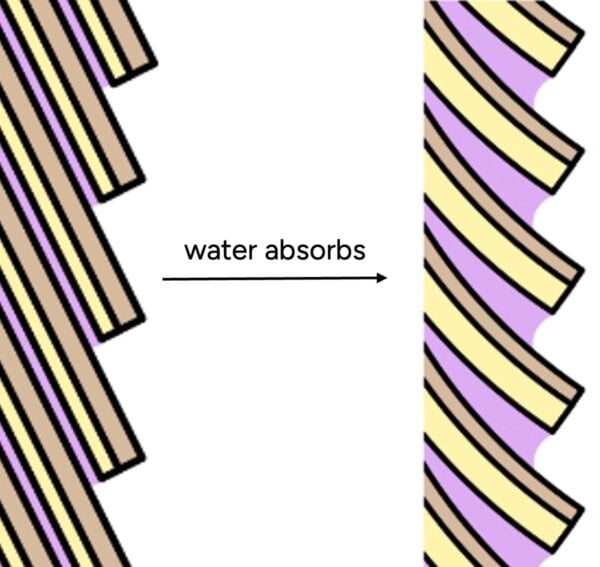
Furthermore, the physical architecture of human hair makes complete waterproofing nearly impossible. The outermost layer of the hair shaft, the cuticle, consists of overlapping scale-like cells resembling a pinecone. Microscopic gaps exist at every cuticle edge, allowing tiny water vapor molecules to easily bypass topical oil barriers. Consequently, the internal moisture content of hair is dictated primarily by relative environmental humidity rather than topical sealants.
This scientific reality does not render oils obsolete in a hair care regimen. Coconut oil, in particular, possesses a unique molecular structure that allows it to penetrate deeper into the hair fiber than many other botanical or mineral oils. This penetration allows coconut oil to reinforce the cell membrane complex—the lipid-rich mortar situated between keratin cells—effectively reducing internal friction and cracking. Additionally, oils serve as surface lubricants, smoothing the cuticle scales and minimizing mechanical friction during combing and styling. Thus, while oils provide valuable protective and conditioning benefits, they do so through lubrication and internal reinforcement rather than by sealing water out of the hair shaft.
The broader implications of these scientific findings challenge the restrictive hair care routines adopted by many consumers. For years, individuals with textured, curly, or dry hair have been advised to minimize washing frequency, sometimes stretching wash days to once a week or longer out of fear that water itself is drying out or degrading their strands. Dermatologists and trichologists emphasize that scalp health requires regular cleansing to prevent the accumulation of sebum, dead skin cells, and microbial overgrowth, which can lead to conditions like seborrheic dermatitis and folliculitis.
Understanding that water does not inflict inherent molecular damage frees consumers from overly restrictive wash schedules. The focus should instead shift toward gentle handling practices. Because hair is in a temporarily weakened state while wet due to the disruption of hydrogen bonds, individuals should exercise caution when detangling, using wide-tooth combs, and applying appropriate conditioning agents to reduce surface friction. By replacing persistent myths like hygral fatigue with evidence-based hair science, consumers can optimize both their scalp hygiene and hair longevity without unnecessary anxiety over routine washing and hydration.
