
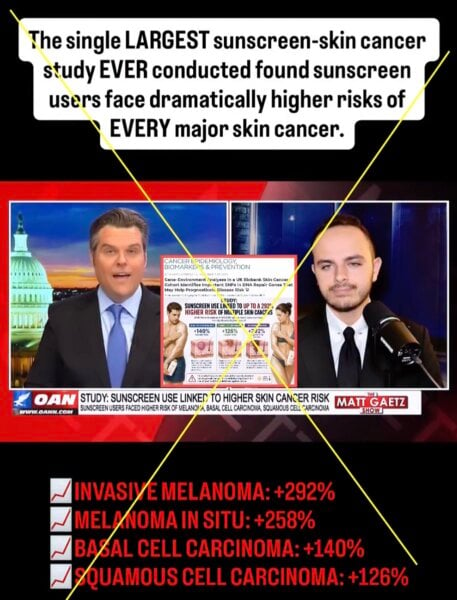
In recent years, social media platforms have experienced an unprecedented surge in viral posts and video content claiming that conventional sunscreens are the true driver of modern skin cancer epidemics rather than ultraviolet (UV) radiation from the sun. This counterintuitive narrative has increasingly leaked out of digital echo chambers and into everyday conversations, leaving many consumers confused and questioning decades of dermatological consensus. As misleading interpretations of complex epidemiological datasets circulate widely online, public health officials and cosmetic scientists are stepping up efforts to clarify the empirical reality behind sun protection.
To understand how these misconceptions took root, it is necessary to examine the evolution of public health messaging and the mechanisms by which scientific studies are frequently distorted. The timeline of modern sun protection dates back to the mid-20th century, when early sunscreens were developed primarily to prevent painful sunburns, largely focusing on blocking UVB rays. Over the decades, formulations evolved dramatically. By the late 1990s and early 2000s, regulatory bodies and manufacturers recognized the deeper cellular risks posed by UVA radiation, leading to the widespread adoption of broad-spectrum sunscreens capable of shielding the skin from both UVA and UVB rays.
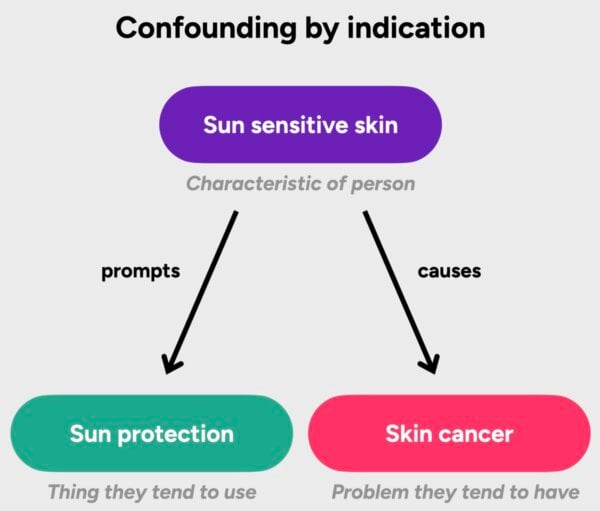
Despite these technological advancements, digital misinformation has increasingly targeted these products, citing observational studies, historical cancer registries, and chemical成分 analyses out of context. Dermatologists and researchers point out that these viral claims rely on elementary statistical fallacies, most notably the confusion between correlation and causation. When observational studies indicate that individuals who use sunscreen frequently also experience higher rates of skin cancer diagnosis, bad-science actors routinely invert the relationship. In reality, individuals who burn easily, possess fair skin, or spend significant time outdoors in high-UV environments are simply much more likely to both purchase sunscreen and develop skin cancer over their lifetimes.
Deconstructing the Observational Data Fallacy
The foundation of many viral anti-sunscreen claims rests on misinterpreted observational research, such as analyses drawn from the UK Biobank study. In observational trials, researchers observe subjects behaving in their natural, everyday environments without intervening or controlling external variables. Confounding factors heavily skew these datasets. For instance, people who apply sunscreen regularly often use it as a license to stay out in the direct sun significantly longer than they otherwise would, counteracting the protective barrier through sheer volume of cumulative UV exposure.
When scientists want to eliminate these confounding variables, they turn to experimental studies, specifically Randomized Controlled Trials (RCTs). The gold standard in this domain remains the landmark Nambour Trial, conducted in Australia and published in the late 1990s with subsequent long-term follow-ups. Unlike observational questionnaires, the Nambour Trial actively assigned participants to either daily sunscreen use or discretionary use, following them over many years.
The results of the Nambour Trial offered unequivocal proof of efficacy. Participants assigned to daily sunscreen application demonstrated a statistically significant reduction in both squamous cell carcinomas and basal cell carcinomas. Furthermore, long-term follow-up data revealed a substantially reduced incidence of cutaneous melanoma among the consistent sunscreen group compared to the control group. Researchers emphasize that the Nambour Trial remains a monumental achievement in dermatological science precisely because organizing a large, decade-long RCT requires immense funding and logistical coordination, explaining why such expansive trials are rare.
Historical Cancer Registries and Diagnostic Shifts
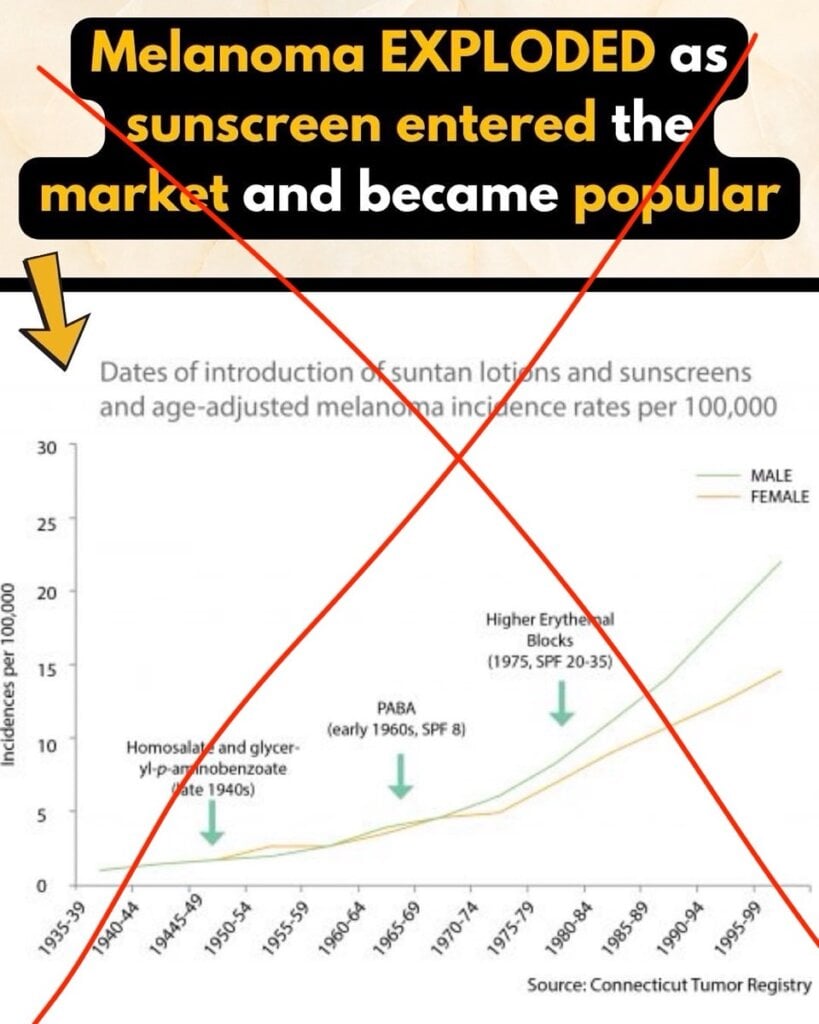
Another common argument propagated by wellness influencers involves historical cancer registry graphs, such as data from the Connecticut cancer registry, which shows rising rates of melanoma diagnoses spanning from the 1940s to the present day. Pseudoscience commentators argue that because sunscreen usage became widespread over this same period, the products must be causing the cancer spike.
Public health experts dismiss this logic by pointing to major shifts in medical diagnostics, public awareness, and demographic changes over the last eighty years. First, the threshold for diagnosing skin cancers has lowered dramatically due to advances in dermatological screening tools and increased public skin-check campaigns. Conditions like melanoma in situ—non-invasive cancers caught in their earliest stages—are diagnosed at rates unimaginable in the 1940s. Second, lifestyle shifts, including more frequent international travel to tropical destinations, changing fashion trends that expose more skin, and an aging global population, have exponentially increased cumulative lifetime UV exposure.
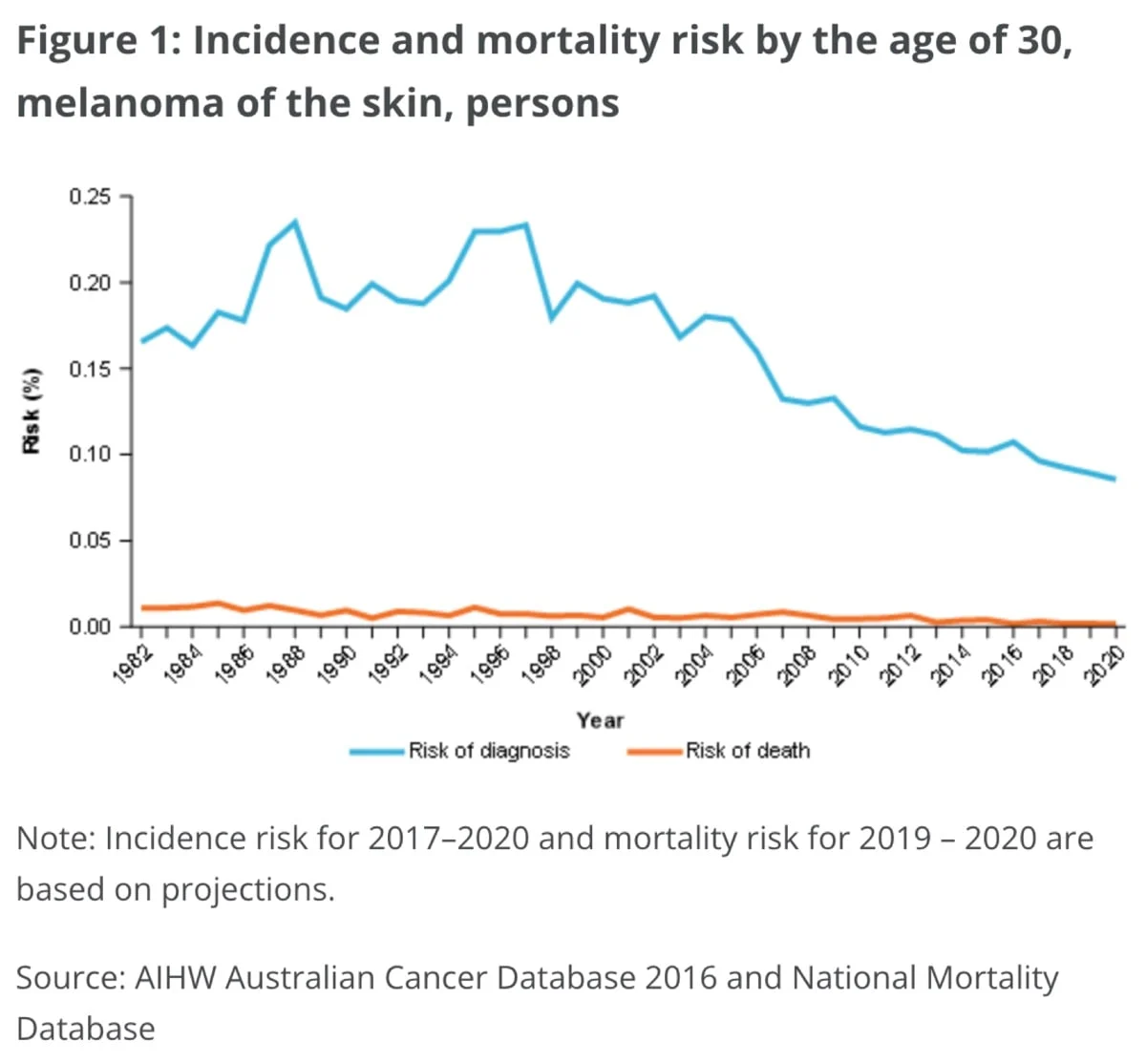
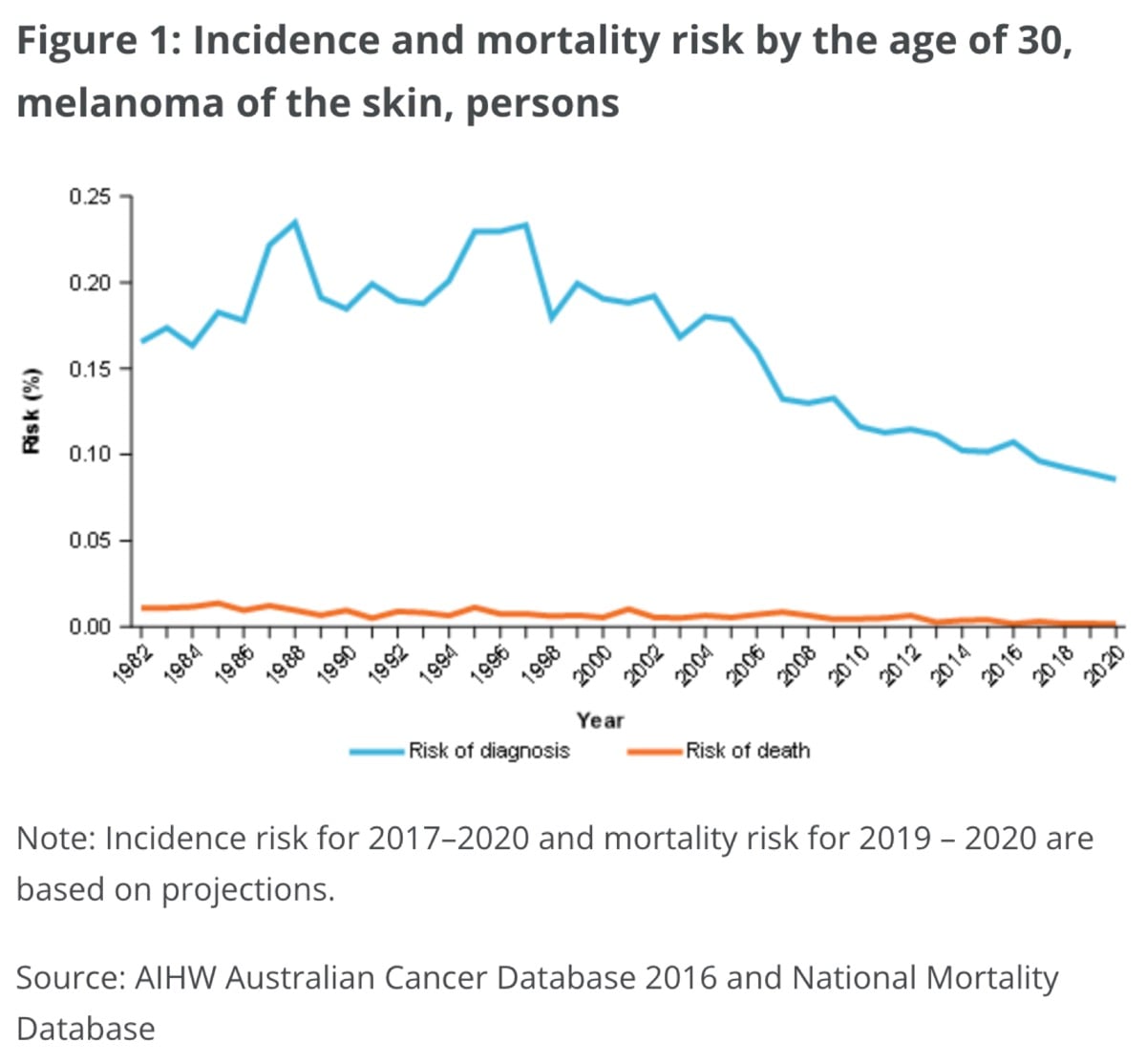
When data is controlled for specific cohorts, the correlation vanishes. For example, recent epidemiological modeling published in the Medical Journal of Australia analyzing melanoma incidence between 2006 and 2021 demonstrates that skin cancer rates have not increased universally across all demographics. Younger generations who grew up with rigorous, government-backed sun protection programs are actually experiencing stabilizing or declining rates of specific skin cancers compared to older generations who lacked early education.
Addressing Chemical Safety and Regulatory Standards
Skeptics of commercial sunscreens frequently pivot from epidemiological arguments to chemical toxicity, raising alarms regarding benzene contamination, coral reef degradation, systemic absorption, endocrine disruption, and the presence of retinyl palmitate.
On the issue of benzene—a known human carcinogen linked primarily to blood cancers rather than skin malignancies—independent analyses have clarified that trace amounts occasionally detected in certain aerosol batches through independent laboratory testing (such as past Valisure petitions) do not pose a clinically meaningful risk. Comprehensive epidemiological studies published in the Journal of the American Academy of Dermatology have explicitly shown that sunscreen use is not associated with elevated blood concentrations of benzene among adults. In fact, individuals who avoid sunscreen entirely often exhibit higher baseline blood benzene levels from environmental pollution and lifestyle factors.
Regarding environmental concerns, particularly the narrative that chemical sunscreens destroy coral reefs, marine scientists and toxicologists have pushed back against flawed foundational studies. A heavily cited 2015 laboratory study claimed to link oxybenzone to coral toxicity, but critics noted that the concentrations used in the petri dishes were vastly higher than anything found in natural ocean waters where swimmers apply lotion. A comprehensive 2022 review by the National Academies of Sciences, Engineering, and Medicine concluded that legislative bans on specific chemical filters were not grounded in rigorous, realistic aquatic science, identifying climate change and general coastal pollution as the true existential threats to coral ecosystems.
Systemic absorption of chemical UV filters through the skin and into the bloodstream has also generated consumer anxiety, fueled largely by exploratory US FDA studies. Toxicologists note, however, that systemic detection does not equate to toxicity. Regulatory bodies across the European Union and other international jurisdictions evaluate cosmetic ingredients using rigorous safety margins—typically requiring a 100-fold safety margin between the maximum systemic exposure level derived from human use and the threshold where adverse effects are observed in animal toxicology models.
Similarly, concerns regarding endocrine disruption and retinyl palmitate (a vitamin A derivative hypothesized to generate free radicals under UV light) have been extensively studied. Independent scientific reviews confirm that the amounts utilized in topical formulations do not disrupt human hormonal axes under normal physiological conditions, nor do they induce oncogenesis when balanced against the overwhelming protective benefits of blocking high-energy radiation.
The Mechanistic Chain of Protection
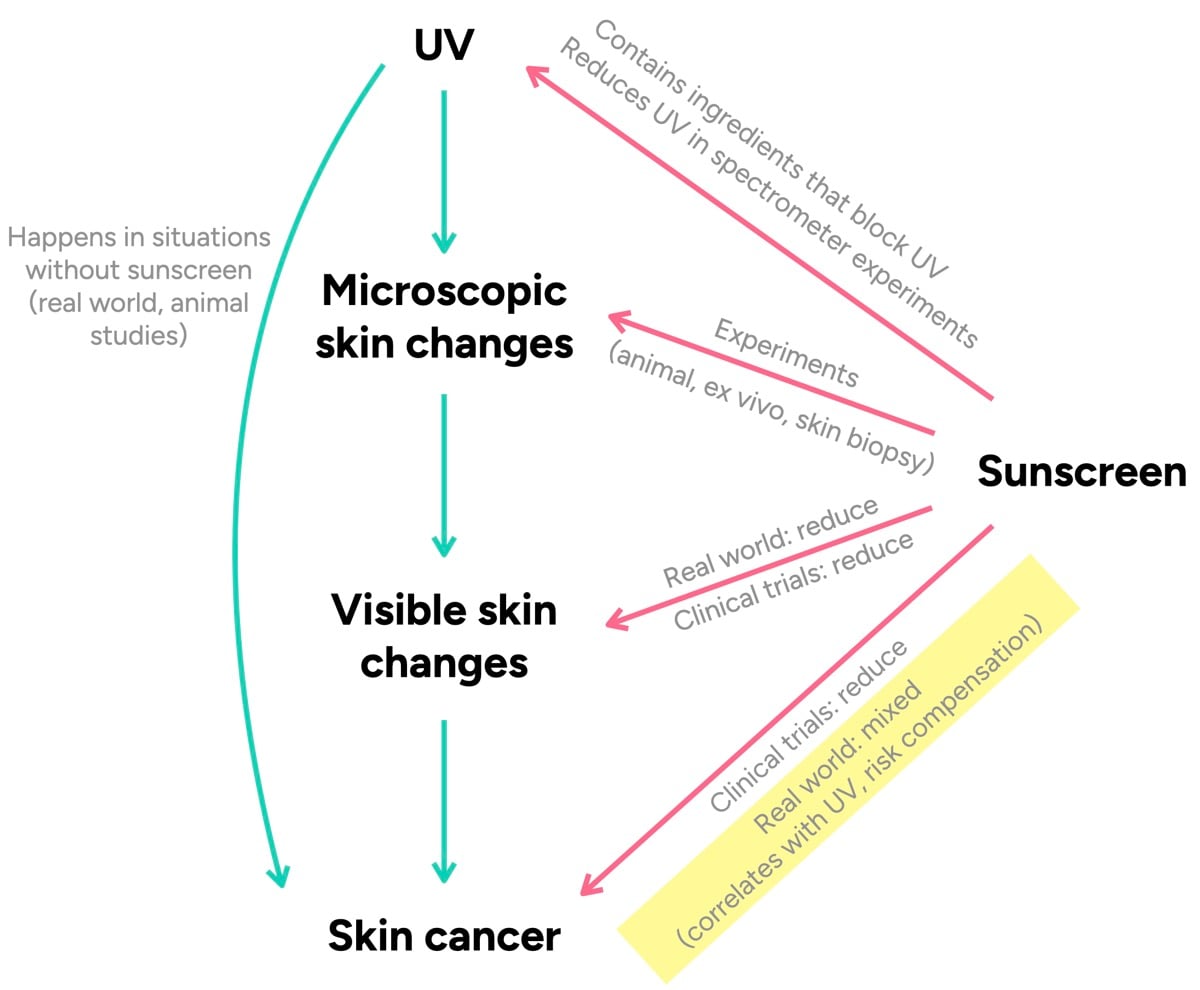
To definitively counter the myth that sunscreens facilitate skin cancer, scientists trace the precise biological cascade linking solar radiation to carcinogenesis. Ultraviolet radiation possesses sufficient quantum energy to break chemical bonds, directly damaging cellular DNA and initiating mutations. This process triggers microscopic cellular changes, progresses to visible skin damage such as solar keratoses and erythema (sunburn), and ultimately culminates in skin cancer over decades of cumulative exposure.
Extensive clinical and laboratory data demonstrate that high-SPF, broad-spectrum sunscreens interrupt this causal chain at multiple checkpoints. Clinical trials assessing actinic keratoses—pre-cancerous lesions—have consistently shown that regular sunscreen application suppresses their formation and promotes regression.
Public health institutions maintain that while sunscreen misuse—such as applying insufficient quantities or neglecting reapplication—remains a widespread behavioral challenge, the solution lies in enhanced consumer education rather than the abandonment of sun protection. Medical consensus remains unified: when integrated with protective clothing, shade-seeking behaviors, and mindful outdoor habits, broad-spectrum sunscreen stands as a vital, empirically validated shield against skin cancer.
