
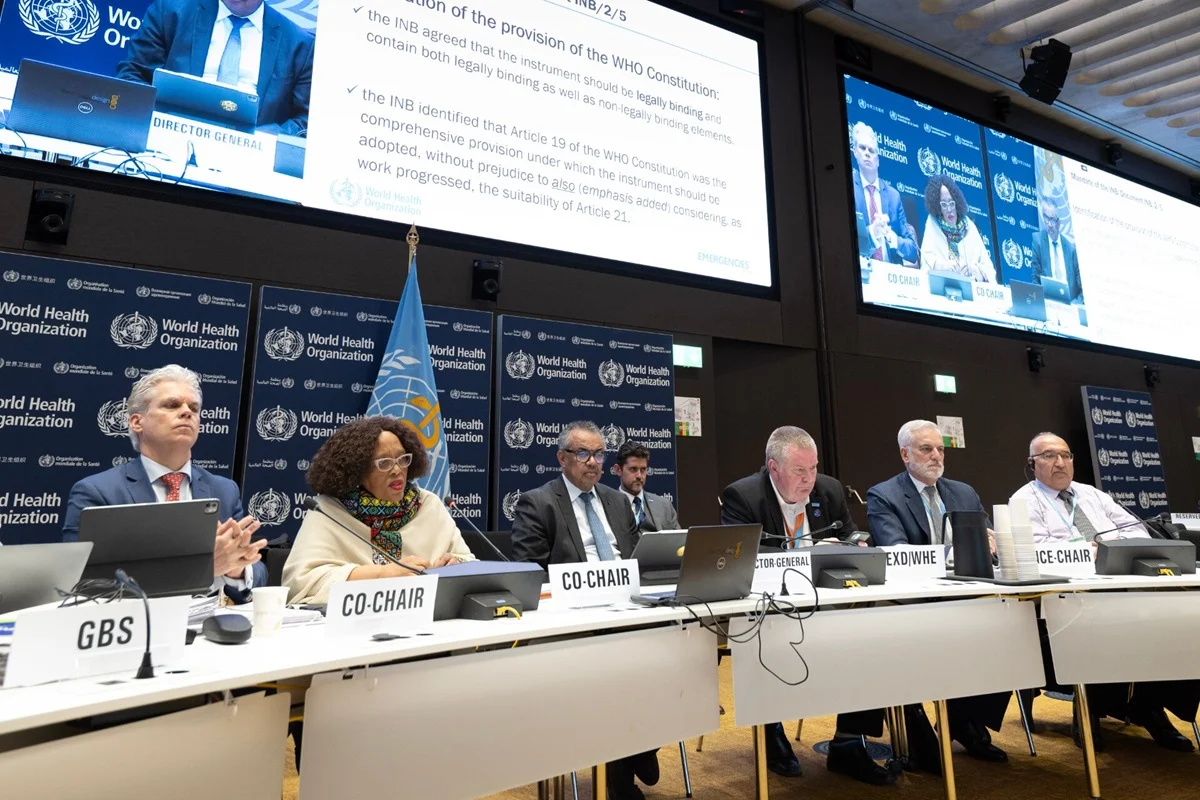
In a decisive move toward strengthening global health security, governments from across the world have reached a consensus to intensify negotiations on a landmark pandemic agreement. Meeting at the World Health Organization (WHO) headquarters in Geneva, representatives agreed to continue a series of hybrid and in-person discussions in the weeks leading up to the Seventy-seventh World Health Assembly, which is scheduled to commence on May 27, 2024. This latest round of deliberations marks a critical juncture in a two-year diplomatic endeavor aimed at ensuring that the international community is never again caught as unprepared as it was during the initial stages of the COVID-19 pandemic.
The proposed agreement seeks to codify a new global architecture for pandemic prevention, preparedness, and response. Central to these discussions is the creation of a Pathogen Access and Benefit-Sharing (PABS) system. This mechanism is designed to facilitate the rapid sharing of genetic sequence data for emerging pathogens while simultaneously guaranteeing that developing nations receive equitable access to the resulting medical countermeasures, including life-saving vaccines, diagnostics, and therapeutics. Beyond data and benefit sharing, the negotiations encompass the "One Health" approach—which recognizes the interconnectedness of human, animal, and environmental health—and the development of robust financial frameworks to bolster national health systems in resource-limited settings.
A Chronology of the Pandemic Accord Process
The road to the current negotiations began in the immediate wake of the global COVID-19 crisis, which exposed significant fissures in international cooperation and supply chain resilience. In March 2021, an influential group of heads of state and government from two dozen nations, supported by the WHO, issued a formal statement of commitment. This document served as the foundational call for a "pandemic treaty," arguing that the scale of the crisis required a more robust, legally binding international framework.
By December 2021, the WHO’s governing body formally established the Intergovernmental Negotiating Body (INB). The mandate of the INB was to draft and negotiate an international instrument that would address the systemic failures seen during the 2020-2022 period. Since then, the process has moved through successive rounds of technical briefings and drafting sessions, navigating complex geopolitical interests and varying national priorities. The current phase represents the "final stretch," where diplomats must bridge the gap between aspirational language and binding commitments before the May 2024 deadline.
Data-Driven Context: Why a New Framework is Necessary
The urgency behind these negotiations is backed by sobering data regarding the socio-economic impacts of the COVID-19 pandemic. According to the International Monetary Fund (IMF) and the World Bank, the pandemic triggered the deepest global recession since the Second World War, causing an estimated $12.5 trillion in losses to the global economy by 2024. Furthermore, the WHO has documented that the inequitable distribution of vaccines left millions of vulnerable individuals in the Global South without protection during the critical first year of the rollout, despite the availability of effective technology in high-income nations.
Epidemiological experts frequently cite the "preparedness gap" as a primary concern. Prior to 2020, many countries lacked the laboratory infrastructure to conduct mass testing, the supply chains to distribute personal protective equipment (PPE), and the legal frameworks to pivot medical manufacturing during a state of emergency. The proposed agreement aims to mandate the pre-positioning of these assets and create a global financing facility that can be triggered instantly when the WHO declares a Public Health Emergency of International Concern (PHEIC).
Official Responses and Diplomatic Perspectives
Dr. Tedros Adhanom Ghebreyesus, the Director-General of the WHO, has remained a vocal advocate for the treaty, consistently framing it as a "generational agreement." During the recent Geneva proceedings, he lauded the unwavering commitment of Member States, noting that the intensity of the negotiations reflects the gravity of the task. "I welcome the determination that all countries have shown to continue their work and fulfill the mission on which they embarked," Dr. Tedros stated, emphasizing that the primary objective is to protect the world from the "horrors" of a repeat pandemic event.
The INB Bureau, which is steering the negotiations, has faced the arduous task of mediating between disparate national interests. Dr. Precious Matsoso of South Africa, a Co-Chair of the INB, described the process as an exercise in historic institution-building. "This is not a simple exercise. This is the first-ever process to develop a proposed agreement on pandemic prevention, preparedness, and response," she remarked. "Getting this done means getting it right, and the INB Bureau is committed to helping finalize a meaningful, lasting agreement."
Her colleague, Mr. Roland Driece of the Netherlands, highlighted the pragmatic necessity of the endeavor. He noted that the initial ambition of the timeline was set in response to an unprecedented emergency, and that the sovereign states involved have recognized that national isolationism is a losing strategy against a pathogen. "It is not a matter of if a pandemic will happen again; it is a matter of when," Driece cautioned. "We cannot afford to miss this historic opportunity to make the world safer from the next pandemic threat."
Implications for Global Governance
The finalization of this agreement would represent a significant evolution in international law. While the International Health Regulations (IHR) of 2005 currently provide a framework for responding to outbreaks, they have been criticized for lacking enforcement mechanisms and for being overly reactive rather than preventative. The new pandemic accord is envisioned as a complementary, more robust instrument that would impose clearer obligations on signatories regarding transparency, investment in local manufacturing, and the sharing of pathogen-related data.
However, the path to ratification is not without obstacles. Critics and observers have pointed to several contentious areas that remain under negotiation:
- Intellectual Property Rights: Developing nations continue to advocate for technology transfer and the waiver of intellectual property rights during health emergencies, a point that remains a major sticking point for countries with large pharmaceutical sectors.
- National Sovereignty: Concerns have been raised by several governments regarding the extent to which a global agreement might dictate domestic health policies or force the sharing of domestic resources during a crisis.
- Funding Mechanisms: The question of who pays for global preparedness remains unresolved. Discussions include proposed levies on pharmaceutical products or fixed contributions from the world’s largest economies to ensure a permanent, dedicated fund for pandemic response.
Strategic Outlook and Future Challenges
As the May 2024 World Health Assembly approaches, the pressure on the INB to deliver a final draft has reached its zenith. The success of this agreement will depend on whether Member States can balance their domestic political imperatives with the reality of global interconnectedness.
If successful, the agreement could fundamentally alter the landscape of global health, moving from a system of ad-hoc charitable donations to a structured, rights-based approach to health security. This would effectively move the world closer to the goal of "universal health security," where the resilience of the global economy and the safety of the individual are tethered to the strength of the weakest health system in the international network.
The coming weeks of negotiation are expected to be characterized by intense closed-door sessions and high-level diplomatic pressure. The international community, observers, and civil society groups are closely watching these developments, as the outcome will likely define the parameters of global health cooperation for the next several decades. Whether the resulting instrument is a legally binding treaty or a comprehensive international convention, the consensus remains that the status quo is insufficient to manage the risks posed by future, potentially more lethal, infectious disease threats. The world is watching to see if the lessons of COVID-19 have been learned, or if the challenges of international coordination will once again stall progress in the face of an existential threat.
