
The multi-billion-dollar global haircare industry has long relied on a foundational framework of consumer diagnostics, instructing individuals to categorize their locks by a single metric: hair porosity. Widely disseminated across digital platforms, salon floors, and product packaging, this concept asserts that hair falls into distinct buckets of low, medium, or high porosity, which dictates how well strands absorb and retain moisture. However, a comprehensive reexamination of trichological science reveals that the viral diagnostic techniques used to determine this metric—most notably the household float and drop tests—are fundamentally flawed. Far from measuring the internal structural capacity of a hair fiber, these popular assessments merely gauge surface-level damage and the physics of water surface tension.
The pervasive reliance on porosity-based advice has inadvertently shaped consumer routines for decades, directing buyers toward specific emollients, humectants, and heavy oils. While consumers frequently report that these porosity-informed regimens yield positive cosmetic outcomes, scientific experts explain that this success is largely coincidental. The underlying physiological assumptions driving these routines do not align with how human hair actually interacts with water on a molecular level. By dissecting the peer-reviewed literature surrounding the chemical and physical behavior of human hair, researchers are dismantling the myths that have governed modern cosmetic marketing and consumer hair maintenance.
To understand why traditional porosity diagnostics fail, one must first dismantle the prevailing misconception that undamaged human hair is naturally waterproof. Consumer lore often suggests that a healthy cuticle acts as an impenetrable shingle barrier, sealing out moisture, and that artificial conditioners are necessary to mimic this sealing function. Trichological data contradicts this assumption entirely. Undamaged human hair is remarkably hygroscopic, capable of absorbing approximately 30 percent of its own dry weight in liquid water within minutes.
Furthermore, the internal moisture content of healthy, conditioned hair fluctuates rapidly in direct response to surrounding atmospheric humidity. According to classical data compiled in scientific literature, such as research detailed in C.R. Robbins’ seminal text Chemical and Physical Behavior of Human Hair, the weight of water absorbed by hair scales upward predictably alongside relative humidity. At zero percent humidity, water absorption rests at zero; at 40 percent humidity, absorption reaches roughly 10.2 percent; and at 100 percent humidity, undamaged hair absorbs a staggering 31.2 percent of its weight in water.
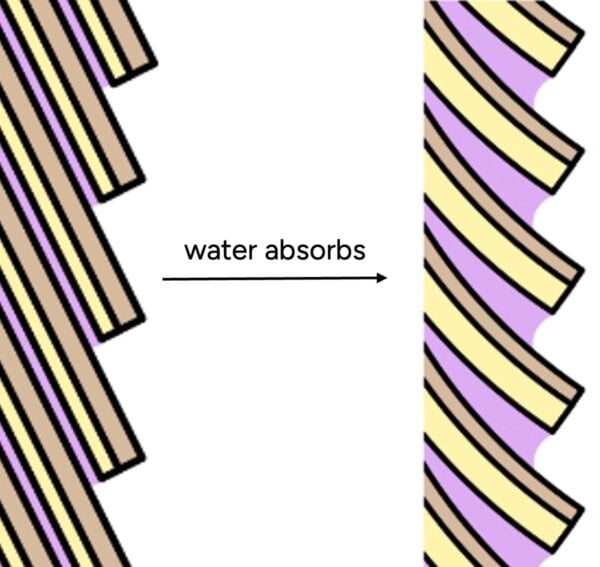
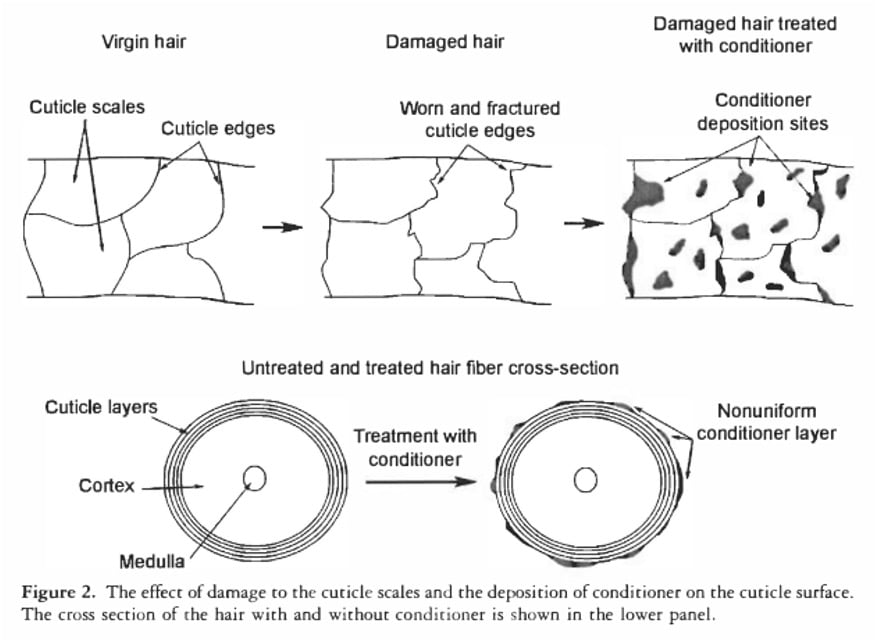
This rapid absorption occurs because the hair’s natural lipid barrier—specifically the F-layer—resides strictly on the exterior tips of the cuticle scales, leaving microscopic gaps through which moisture easily penetrates. Structurally, a human hair fiber behaves less like a sealed waterproof pipe and more like a pinecone, reacting dynamically to ambient moisture conditions. Additionally, hair conditioners do not form a continuous, impermeable hydrophobic membrane over the fiber. Microscopy studies, including work by researchers like C. La Torre and B. Bhushan published in the Journal of Cosmetic Science, demonstrate that conditioning agents deposit unevenly in microscopic blobs. While these deposits are sufficiently dense to smooth the cuticle and impart a soft tactile feel, individual water molecules are infinitely smaller than these conditioning clusters, rendering them ineffective at locking ambient moisture out.
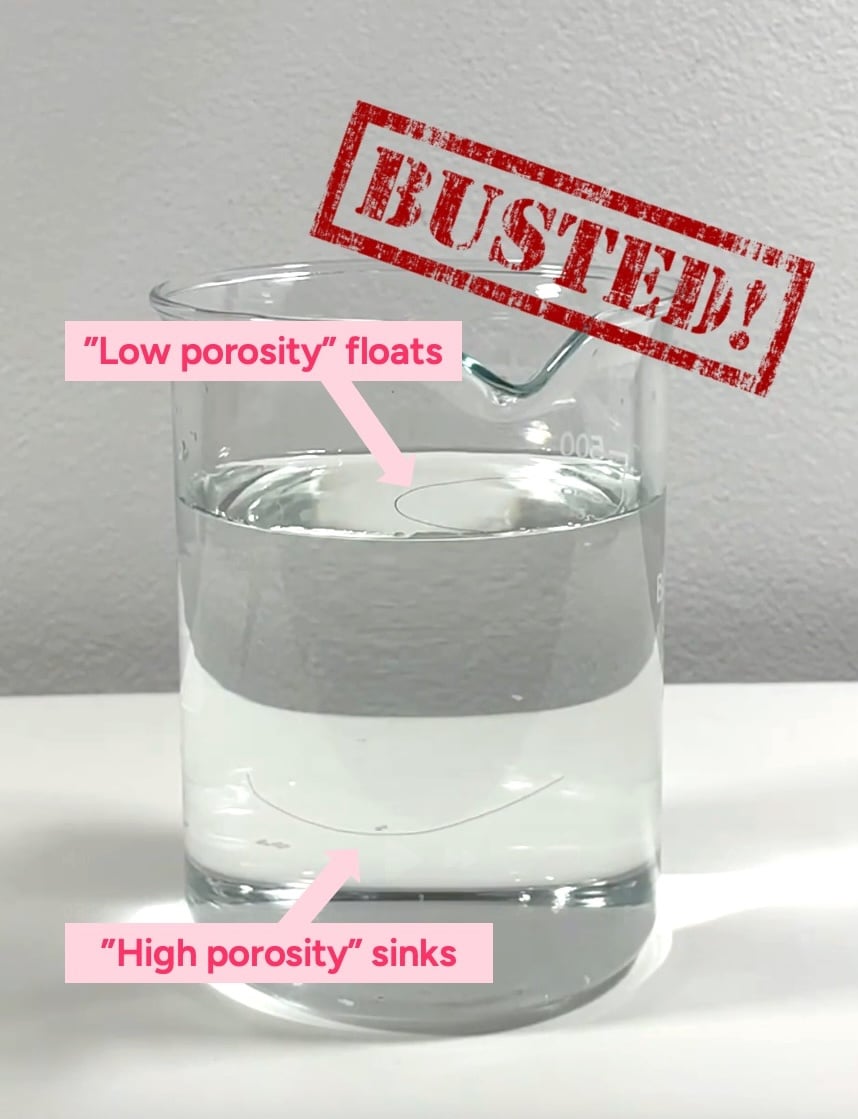
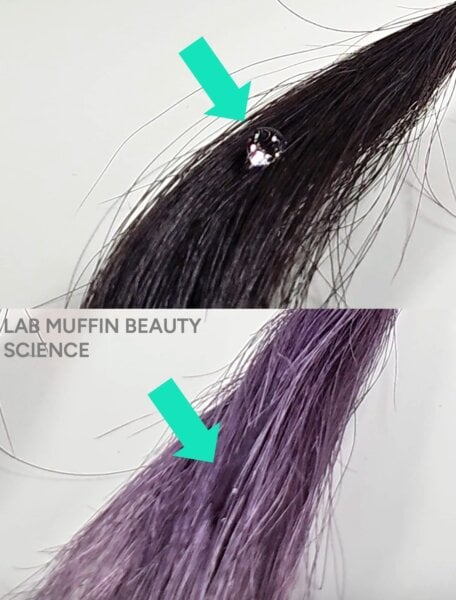
Despite these biological realities, viral beauty culture continues to promote two primary diagnostic methods: the float test and the drop test. The float test instructs consumers to drop a clean strand of hair into a glass of water, claiming that damaged, "high porosity" hair will sink because it absorbs water quickly and becomes heavy, while healthy, "low porosity" hair will float. The drop test involves placing a droplet of water onto a lock of hair, asserting that the droplet beads up on healthy hair due to impermeability, but flattens and absorbs quickly into porous, compromised strands.
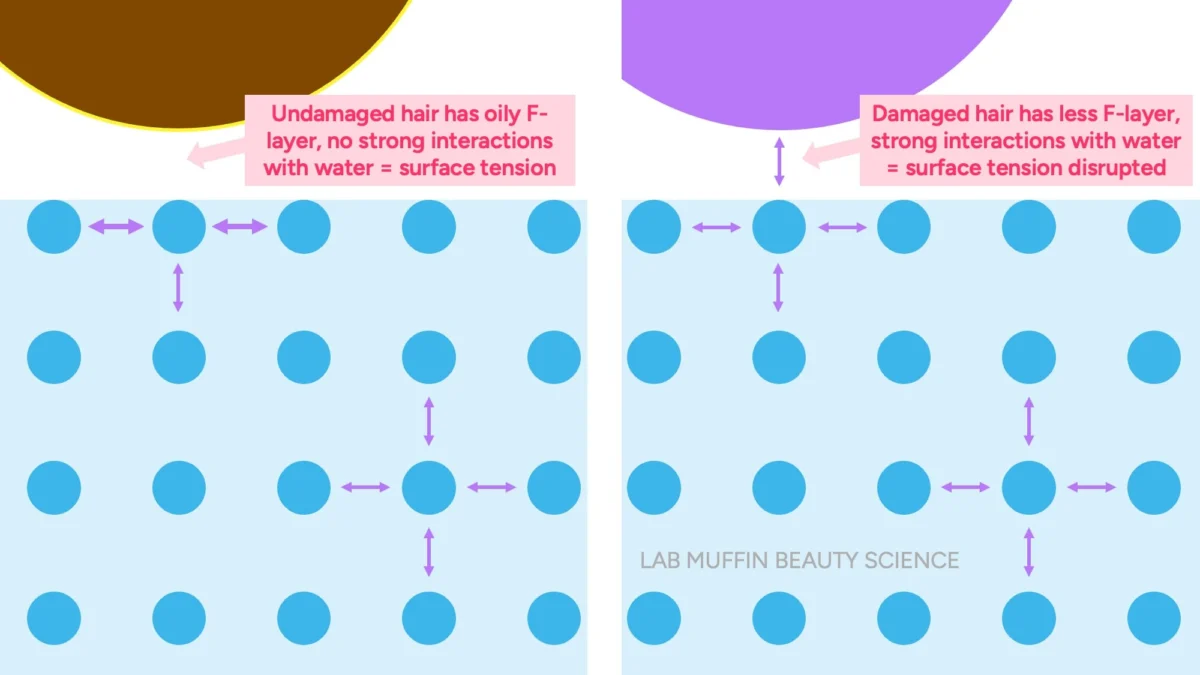
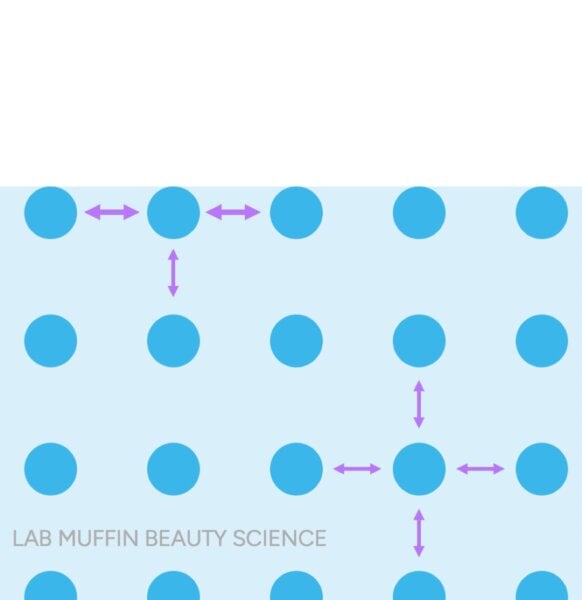
According to cosmetic scientists, these tests are not measuring porosity at all, but rather the disruption of surface tension. Water molecules possess robust intermolecular hydrogen bonds. At the liquid-air interface, molecules lacking neighboring upward bonds cluster tightly together, generating a resilient elastic film often described as surface tension. This phenomenon enables dense objects like steel paperclips—which are roughly eight times denser than water—to float effortlessly on the surface, despite their inability to absorb any moisture whatsoever. A paperclip sinks immediately not because its porosity has changed, but because surface tension has been physically or chemically disrupted.
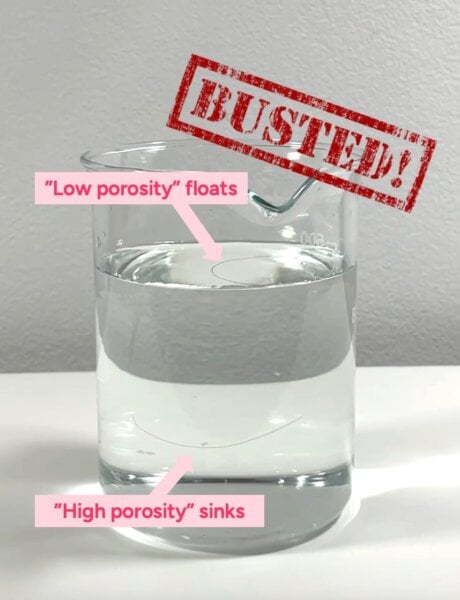
The same principle applies to human hair. Healthy hair fibers feature an intact outer F-layer rich in hydrophobic fatty acids, creating an oily surface that repels water’s hydrogen network. When damaged hair—compromised by heat styling, chemical processing, or mechanical stress—lacks this protective lipid shield, the exposed protein surface becomes hydrophilic. Upon contact with water, these exposed sites engage in hydrogen bonding with the liquid, disrupting the surface tension "skin" of the water and causing the hair strand to sink. Thus, the float test distinguishes between an oily, undamaged surface and a stripped, damaged surface, rather than measuring internal void spaces.
Similarly, the drop test measures surface wettability rather than absorption capacity. Empirical studies show that damaged hair absorbs roughly 45 percent of its weight in water—only marginally higher than the 30 percent absorbed by undamaged hair. The flattening of a water droplet on damaged hair is a consequence of spreading along a hydrophilic surface rather than rapid internal saturation. Conversely, the significant water uptake observed in healthy hair under normal conditions is driven by water vapor rather than liquid water. In humid environments, individual gas-phase water molecules freely navigate the microscopic fissures between cuticle scales without encountering the barrier of liquid surface tension.
The persistence of the porosity paradigm presents a curious contradiction: if the tests are scientifically inaccurate, why do consumers frequently report positive results when tailoring their routines to their supposed porosity type? Industry analysts and formulation chemists suggest that porosity diagnostics ultimately function as a proxy for evaluating surface damage. Routines designed for "high porosity" hair typically emphasize heavy sealing oils and protein reconstruction, which effectively ameliorate the tactile roughness of damaged cuticles. Conversely, regimens for "low porosity" hair often favor lightweight humectants and clarifying washes, preventing the heavy buildup of silicones on an intact cuticle.
However, misidentifying hair characteristics through these flawed diagnostic tools can lead to adverse professional outcomes, particularly in salon environments. Trichologists and professional colorists caution that relying on float or drop tests to gauge chemical processing times is perilous. A client with severe surface damage—diagnosed as high porosity by a home test—might still possess dense, tightly packed internal cortex structures that resist the rapid penetration of permanent hair dyes or chemical relaxers. Conversely, hair coated in heavy residues of styling oils might yield a false "low porosity" reading while suffering from severe internal degradation.
Professional consensus within the cosmetic science community increasingly emphasizes direct evaluation over generalized diagnostic shortcuts. Rather than depending on household experiments with glassware and droplets, hair professionals advocate for tactile strand testing, elasticity assessments, and thorough historical consultations regarding chemical and thermal exposure. As consumer awareness evolves, the scientific community aims to replace unverified folk science with a clearer, more accurate understanding of hair biophysics, ensuring that cosmetic routines are guided by verified empirical evidence rather than persistent viral myths.
