
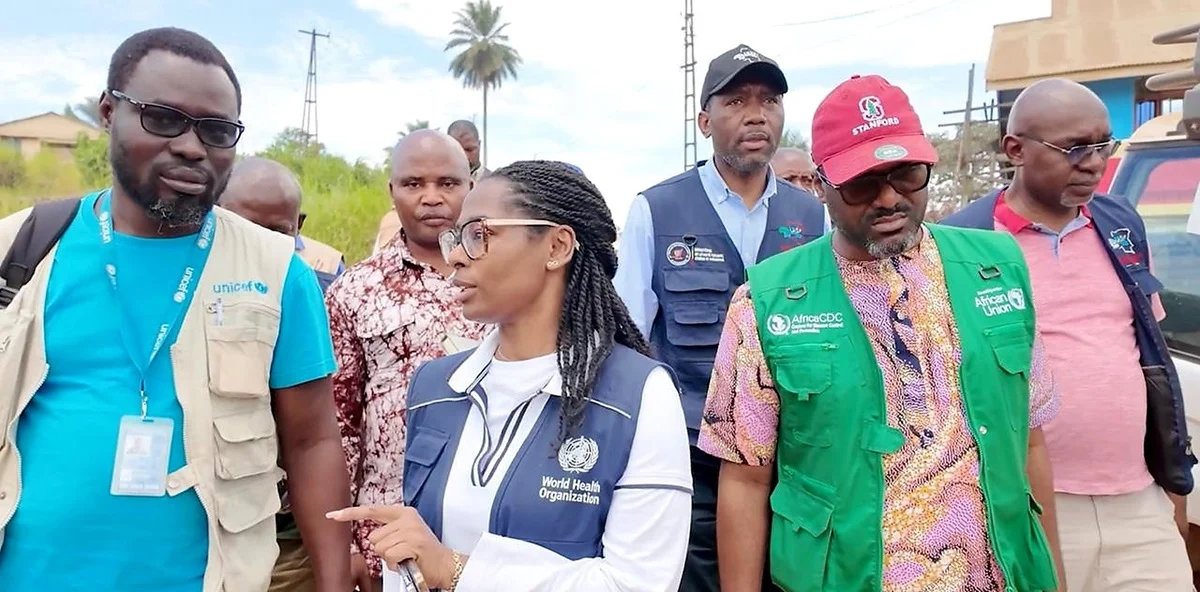
In a decisive move to curb the spread of the Bundibugyo ebolavirus, the Africa Centres for Disease Control and Prevention (Africa CDC) and the World Health Organization (WHO) have officially inaugurated a comprehensive continental preparedness and response plan. The strategic initiative, which carries a budget of US$ 518 million, is designed to provide a robust framework for African nations to detect, monitor, and neutralize the current outbreak before it escalates into a wider regional crisis. Launched to cover a critical six-month window from June to November 2026, the plan represents a unified front, merging the technical expertise of the United Nations’ primary health body with the localized, sovereign authority of the African Union’s public health agency.
The announcement comes at a pivotal moment for public health in East and Central Africa, as the Democratic Republic of the Congo (DRC) and Uganda continue to navigate the complexities of managing highly infectious viral hemorrhagic fevers. The "One Response" approach central to this plan is built upon the principle of harmonizing international aid with national sovereignty, ensuring that every dollar spent and every medical team deployed operates under a single, cohesive strategy. By mobilizing $518 million, the organizations aim to bridge the funding gaps that have historically hindered rapid response efforts in the region.
Scientific Context: The Challenge of the Bundibugyo Species
The current outbreak is caused by the Bundibugyo ebolavirus (BDBV), one of the six species within the genus Ebolavirus. First identified in 2007 in the Bundibugyo District of Uganda, this specific strain presents unique challenges to public health officials. Unlike the more common Zaire ebolavirus, for which several effective vaccines and therapeutic treatments—such as Ervebo and monoclonal antibodies—have been developed and licensed, there are currently no approved vaccines or specific antiviral treatments for the Bundibugyo species.
This lack of medical countermeasures necessitates a response strategy focused heavily on traditional public health interventions: rigorous contact tracing, early isolation, and high-quality supportive care. The case fatality rate for Bundibugyo outbreaks has historically ranged between 25% and 50%, which, while lower than the Zaire strain’s potential 90% mortality rate, remains a significant threat to human life and social stability. The joint Africa CDC-WHO plan recognizes this scientific vacuum and prioritizes the strengthening of health systems to reduce mortality through better clinical management and infection prevention.
The Strategic Framework: Six Months of Intensified Action
The preparedness and response plan is structured around several core pillars designed to create a "ring of defense" around the affected areas. These pillars include emergency coordination, enhanced disease surveillance, laboratory capacity building, and infection prevention and control (IPC). A significant portion of the $518 million will be allocated to laboratory testing, ensuring that suspected cases can be confirmed within hours rather than days, thereby reducing the window for community transmission.
Logistics and supply chain management also form a cornerstone of the initiative. In previous outbreaks, the delay in transporting personal protective equipment (PPE) and medical supplies to remote areas often led to preventable infections among healthcare workers. The new plan seeks to preempt these issues by establishing regional hubs for essential supplies. Furthermore, the plan integrates "One Health" principles, recognizing the interconnectedness of human, animal, and environmental health in the emergence of zoonotic diseases like Ebola.
Leadership Perspectives: Unity as a Prerequisite for Success
The leadership of both the WHO and Africa CDC emphasized that the success of the plan rests on political will and financial transparency. Dr. Tedros Adhanom Ghebreyesus, WHO Director-General, highlighted the necessity of a coordinated effort, stating that the only way to beat the outbreak is through a "One Plan, One Budget, One Team" philosophy. He pointed out that while technical interventions are vital, the ultimate success of the mission depends on the trust and engagement of the communities involved. Without community buy-in, contact tracers are often met with resistance, and patients may avoid seeking care at specialized centers, allowing the virus to spread unchecked in domestic settings.
Echoing these sentiments, Dr. Jean Kaseya, Director-General of Africa CDC, underscored the need for speed. He noted that the virus moves faster than traditional bureaucratic processes, and therefore, Africa must move even faster. Dr. Kaseya’s remarks reflect a shift in the continent’s public health architecture, where the Africa CDC is taking an increasingly prominent role in leading responses on its own soil, supported by international partners like the WHO rather than being directed by them.
Priority Countries and Cross-Border Coordination
While the Democratic Republic of the Congo and Uganda are the current epicenters of the response, the plan identifies 10 priority countries that are at high risk due to geographical proximity, trade routes, and population movement. In these "Tier 1" and "Tier 2" countries, the plan will fund the strengthening of public health emergency preparedness, including the training of rapid response teams and the implementation of rigorous screening protocols at points of entry (PoE), such as airports and land border crossings.
Cross-border collaboration is particularly vital in the Great Lakes region, where borders are often porous and communities are deeply integrated across national lines. The joint plan encourages Member States to share real-time data and synchronize their public health measures to prevent the virus from "jumping" across borders unnoticed. This regional solidarity is intended to prevent the need for disruptive trade and travel restrictions, which can devastate local economies.
Chronology of the Response and Background Context
The development of this $518 million plan follows several months of escalating reports from the DRC and Uganda. Historically, the region has been a hotspot for ebolavirus outbreaks. The 2018-2020 Zaire Ebola outbreak in eastern DRC was the second-largest in history, and it provided many of the "lessons learned" that have been incorporated into the current 2026 plan.
Since the initial detection of the Bundibugyo cases earlier this year, national authorities in Kinshasa and Kampala have worked to contain localized clusters. However, as the virus showed signs of spreading to more urbanized or mobile populations, the need for a continental-scale intervention became apparent. The June to November 2026 timeline is intended to cover the most critical phase of the outbreak, aiming to reach "zero cases" by the end of the year through a surge in resources and manpower.
Managing the "Syndemic": Ebola Amidst Other Health Crises
A unique aspect of this joint plan is its acknowledgement that Ebola does not exist in a vacuum. Much of Africa is currently grappling with what epidemiologists call a "syndemic"—the simultaneous occurrence of multiple outbreaks that exacerbate one another. The $518 million plan includes provisions to ensure that the focus on Ebola does not detract from efforts to combat mpox, cholera, and measles, which are also placing a heavy burden on health systems in the region.
By strengthening the general health infrastructure—such as improving water and sanitation in clinics and enhancing general epidemiological surveillance—the plan aims to create a "dual-use" benefit. This approach ensures that even after the Ebola outbreak is contained, the investments in laboratory capacity and healthcare worker training will continue to serve the population in the fight against other infectious diseases.
Community Engagement and the Human Factor
At the heart of the response is a commitment to community-centered care. Past outbreaks have shown that "top-down" medical interventions can sometimes fail if they do not account for local customs, burial practices, and traditional beliefs. The 2026 plan allocates specific funding for community engagement and social mobilization. This involves working with local religious leaders, traditional healers, and community influencers to disseminate accurate information and counteract misinformation.
The plan also emphasizes the importance of "Safe and Dignified Burials" (SDB). Because the bodies of Ebola victims remain highly infectious after death, traditional funeral rites often become super-spreader events. The joint plan provides training for specialized teams to conduct burials that respect local traditions while ensuring the safety of the mourners, a delicate balance that is essential for maintaining community cooperation.
Analysis of Implications and Future Resilience
The launch of this joint plan signifies a maturation of the partnership between the WHO and the Africa CDC. Historically, the two organizations have sometimes struggled with overlapping mandates, but the "One Response" framework suggests a high level of strategic alignment. This partnership is a critical component of the "New Public Health Order" for Africa, which seeks to reduce the continent’s dependence on external aid and move toward self-reliance in health security.
Financially, the $518 million request is a significant test of international donor appetite. In a global economic climate where health budgets are often stretched thin, the WHO and Africa CDC are making the case that investing in containment now is far more cost-effective than dealing with a global pandemic later. The successful implementation of this plan would not only save lives in the immediate term but also provide a blueprint for how the world responds to future "Species X" or emerging viral threats for which no vaccines yet exist.
As the implementation phase begins, the international community will be watching closely to see if the mobilized resources reach the front lines in a timely manner. The next six months will be a test of whether the lessons of the past decade have been truly learned, and whether a unified, scientifically grounded, and community-focused approach can finally turn the tide against the Bundibugyo ebolavirus.
