
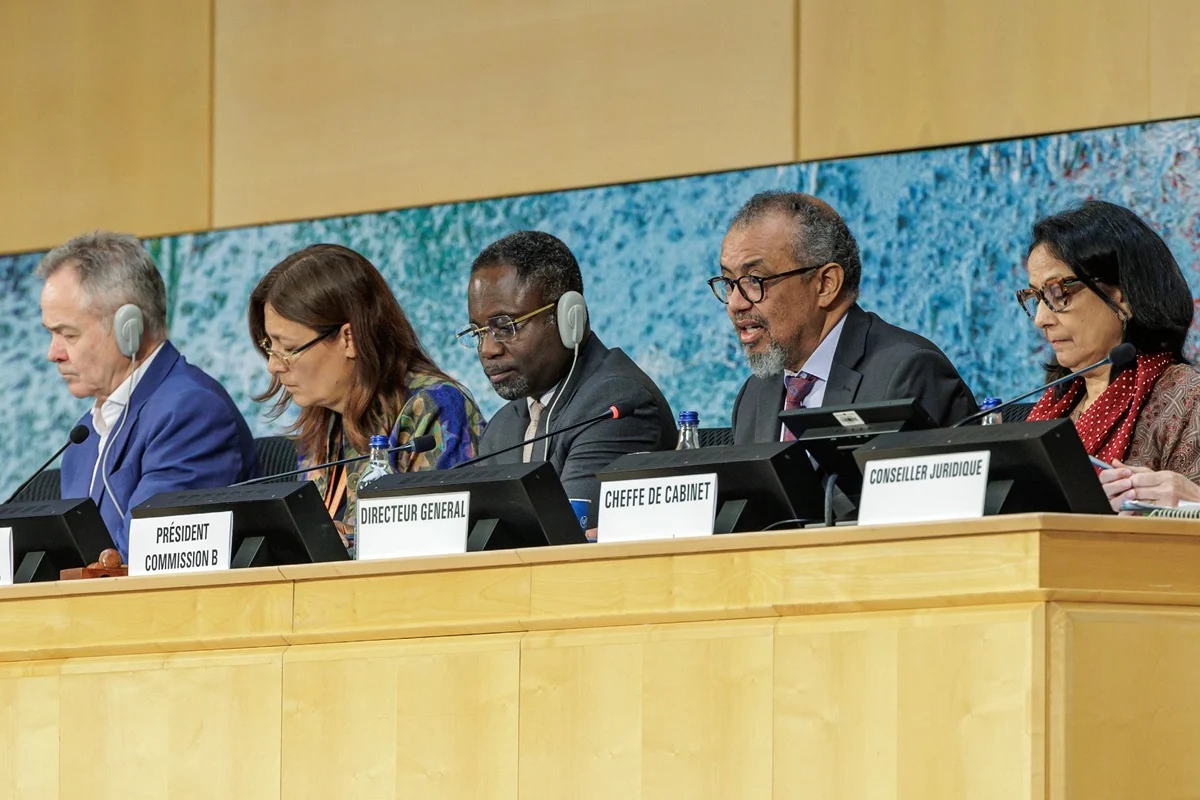
The World Health Assembly has formally decided to establish a member state-led joint process, hosted by the World Health Organization (WHO) and involving various global health partners, to spearhead comprehensive reforms of the global health architecture. This landmark decision, reached during the latest sessions in Geneva, signals a collective recognition that the existing framework for international health cooperation must evolve to address the complexities of the 21st century. The Assembly mandated that this process develop specific options and recommendations aimed at maximizing access, impact, and equity, ensuring that the global health system meets the diverse needs of countries and communities worldwide.
The decision to reform the global health architecture comes at a pivotal moment as the international community prepares for the UN80 Initiative. Member States emphasized the WHO’s central convening and normative role while advocating for a process that, while led by governments, remains inclusive of global health initiatives, UN partners, civil society, and youth. The proposal adopted by the Assembly acknowledged the significant strides made by the current architecture—particularly in disease control and the establishment of global norms—but noted that the system has struggled to keep pace with a rapidly changing environment. Key factors necessitating this reform include the expansion of national health sovereignty, the rise of regional health capacities, shifting disease burdens, the rapid evolution of artificial intelligence and digital technologies, and significant contractions in global health financing.
Addressing Fragmentation in Global Health Governance
One of the primary drivers for the new joint process is the increasing complexity of the global health landscape. Over the past two decades, the number of actors in the health sector has proliferated, leading to what Member States described as power imbalances, fragmentation, and the duplication of efforts. These issues have frequently undermined country ownership and leadership, as national governments often find themselves navigating a maze of competing initiatives and reporting requirements.
The Assembly has requested the WHO Director-General to submit a comprehensive report by next year’s World Health Assembly. This report is expected to provide a roadmap for transformation, offering tangible options to streamline governance and ensure that international health investments are more effectively aligned with national priorities. The goal is to move toward a more coherent system where global initiatives support, rather than bypass, domestic health infrastructures.
A Historic Milestone: The First-Ever Resolution on Stroke
In a move of significant public health importance, delegates approved the first-ever World Health Assembly resolution dedicated specifically to stroke. Titled "Reducing the burden of stroke: strengthening prevention, acute care, rehabilitation and health-system readiness," the resolution was proposed by Egypt and co-sponsored by a diverse group of nations including Chile, Georgia, Palestine, Paraguay, and Tunisia.
The adoption of this resolution is supported by alarming epidemiological data. Over the last 20 years, the lifetime risk of stroke has surged by 50%, with current projections suggesting that one in four adults will experience a stroke in their lifetime. In 2021 alone, stroke was identified as the third leading cause of death and disability globally. The scale of the crisis is represented by approximately 93.8 million existing cases, including 11.9 million new cases annually.
The resolution calls for a multi-faceted approach, emphasizing that stroke is not merely a clinical issue but a systemic one. It urges member states to strengthen national prevention strategies, improve access to acute care and rehabilitation, and enhance overall health-system readiness. Furthermore, the resolution integrates stroke reporting into existing frameworks, such as the WHO Global NCD Action Plan 2023–2030 and the Intersectoral Global Action Plan on Epilepsy and Other Neurological Disorders, ensuring that progress is tracked with high levels of accountability.
Strengthening Global Pharmacovigilance and Safety Monitoring
Recognizing the lessons learned from the COVID-19 pandemic, the Assembly approved a resolution to modernize and strengthen pharmacovigilance systems worldwide. This initiative focuses on the "smart" safety monitoring of medicines and vaccines, identifying it as a critical pillar for patient safety and the achievement of universal health coverage.
The resolution highlights the need for rapid detection and management of safety signals, particularly during health emergencies. It addresses several modern challenges, including unequal regulatory capacities between nations and the proliferation of mis- and disinformation, which has been shown to undermine public trust in scientific interventions. Member States committed to integrating patient reporting mechanisms, improving workforce capacity, and leveraging digital technologies. The use of real-world data and artificial intelligence was specifically noted as a means to improve safety surveillance and regulatory decision-making, provided that ethical standards and data transparency are maintained. WHO will now work to develop global guidance and technical tools to support these "smart" pharmacovigilance efforts, with progress reports scheduled for future assemblies through 2032.
Global Strategy for Integrated Emergency, Critical, and Operative Care
The Assembly also approved the "Global Strategy for Integrated Emergency, Critical and Operative (ECO) Care 2026–2035." This strategy provides a ten-year roadmap for countries to strengthen their health systems’ ability to deliver timely and affordable care for acute conditions.
Data presented to the Assembly underscored the urgency of this strategy: conditions addressable by ECO care account for an estimated 38 million deaths and 1.3 billion disability-adjusted life years (DALYs) annually. These services are essential for mitigating the health impacts of climate-related events, disasters, conflicts, and outbreaks. However, many low- and middle-income countries continue to face severe shortages in health workers, equipment, and service design, leading to delayed diagnoses and high mortality rates for treatable conditions. The WHO has been tasked with developing an implementation action plan with specific targets by the end of 2026.
Expanding Diagnostic Access Through Teleradiology
To bridge the gap in diagnostic services, particularly in remote and underserved areas, Member States endorsed a resolution to scale up teleradiology. Diagnostic imaging is vital for the management of noncommunicable diseases, trauma, and maternal health, yet many regions suffer from a chronic shortage of trained radiologists.
Teleradiology—the secure transmission and remote interpretation of medical images—is viewed as a cost-effective solution to expand access to expert diagnostics. The resolution encourages the integration of teleradiology into national digital health strategies while emphasizing the need for robust data protection and clinical oversight. This move is expected to democratize access to high-level medical expertise, allowing a specialist in an urban center to provide critical diagnostic support to a rural clinic thousands of miles away.
Precision Medicine and the Goal of Health Equity
The Assembly adopted a landmark resolution on precision medicine, which seeks to move global healthcare toward more personalized and targeted treatments. By using molecular, genomic, and clinical data, precision medicine can ensure that patients receive the right treatment at the right time, significantly improving outcomes in areas like oncology and rare diseases.
However, the discussion was tempered by concerns regarding the "genomic divide." Currently, genomic data is heavily skewed toward populations in high-income countries, and many developing nations lack the laboratory infrastructure and skilled professionals to implement these technologies. The resolution requests the WHO to develop a global strategy on precision medicine and a framework for self-assessment of country readiness. The ultimate goal is to ensure that the benefits of scientific progress are not restricted to wealthy nations but are integrated into the broader goal of universal health coverage.
Diplomatic Compromises and Humanitarian Reports
In a session marked by complex diplomacy, the Assembly addressed Argentina’s notification of withdrawal from the WHO. Under the WHO Constitution, the Assembly is mandated to consider such communications. Following deliberations in Committee B, a consensus was reached on a compromise text. The Assembly took note of Argentina’s communication but decided that "no further action at this stage is desirable," while expressing a continued welcome for Argentina’s cooperation in the organization’s work.
The Assembly also focused on the deteriorating humanitarian situation in the occupied Palestinian territory (oPt), including east Jerusalem. A report by the Director-General detailed a health sector under extreme duress, citing 1,947 recorded attacks on healthcare facilities since October 2023. In the Gaza Strip, infrastructure damage to the health sector is estimated at US$ 1.39 billion, with total sector losses reaching US$ 6.78 billion. Despite these challenges, the WHO and its partners continue to provide life-saving services and support early recovery efforts. The Assembly agreed to continue reporting on these conditions to the next session. Additionally, a resolution was approved regarding the public health impact of regional escalations on Gulf Cooperation Council countries and Jordan.
Conclusion and Future Outlook
The decisions made at this World Health Assembly represent a comprehensive attempt to recalibrate global health priorities. By addressing structural reforms, embracing technological advancements like AI and teleradiology, and tackling specific disease burdens like stroke, the WHO and its Member States are attempting to build a more resilient and equitable global health system. The success of these resolutions will depend heavily on the implementation of the proposed strategies and the mobilization of financing in an increasingly constrained economic environment. As the WHO moves toward the 2026 reporting deadlines, the focus will shift from policy adoption to the practical realities of national health system strengthening.
