
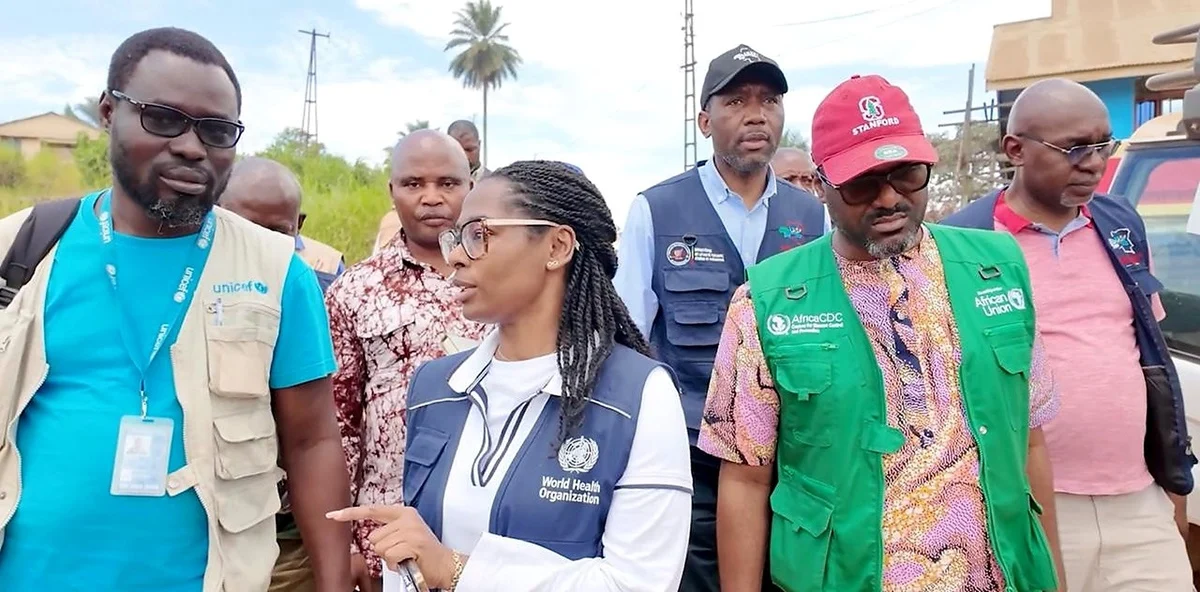
The Africa Centres for Disease Control and Prevention (Africa CDC) and the World Health Organization (WHO) have officially inaugurated a comprehensive continental preparedness and response plan to address the escalating Ebola outbreak fueled by the Bundibugyo virus species. This strategic initiative, which seeks to mobilize US$ 518 million in emergency funding, represents a critical escalation in the regional effort to contain the virus before it transcends further international borders. The plan is designed to empower African nations and their global partners with the resources necessary for rapid detection, containment, and clinical management over a six-month window spanning from June to November 2026.
This collaborative framework arrives at a pivotal moment as health authorities in the Democratic Republic of the Congo (DRC) and Uganda grapple with a surge in cases. Unlike the more common Zaire ebolavirus, for which vaccines and therapeutics have been developed and deployed, the Bundibugyo species currently lacks licensed medical countermeasures. This technical gap necessitates a response rooted in rigorous public health fundamentals: surveillance, contact tracing, and intensive supportive care.
The Strategic Framework of the ‘One Response’ Approach
The joint plan is anchored in a "One Response" philosophy, a management model intended to eliminate the fragmentation that has hindered previous pandemic responses. By aligning governments, international NGOs, and local communities under a single operational banner, the Africa CDC and WHO aim to streamline the flow of resources and information. The US$ 518 million budget is earmarked for several high-priority pillars, including emergency coordination, enhanced laboratory diagnostics, and the reinforcement of infection prevention and control (IPC) measures within primary healthcare facilities.
A significant portion of the funding will be directed toward "One Plan, One Budget, One Team" operations. This ensures that every dollar spent contributes to a unified set of objectives, reducing the risk of redundant activities by different agencies. The plan also emphasizes the "One Health" approach, recognizing the interconnectedness of human, animal, and environmental health in the emergence of zoonotic diseases like Ebola.
Contextualizing the Bundibugyo Ebolavirus
The Bundibugyo ebolavirus (BDBV) is one of the six species within the genus Ebolavirus. It was first identified in 2007 during an outbreak in the Bundibugyo District of western Uganda. Historically, BDBV has been associated with lower case fatality rates (CFR) compared to the Zaire species—typically ranging from 25% to 40%—but its clinical presentation remains severe, characterized by hemorrhagic fever, multi-organ failure, and high transmissibility through bodily fluids.
The 2026 outbreak has presented unique challenges due to its occurrence in regions already stressed by civil unrest and other concurrent health crises. Because there are no approved vaccines specifically for the Bundibugyo strain, the public health response must rely on "old-school" epidemiology. This includes the rapid isolation of suspected cases and the monitoring of contacts for a 21-day incubation period. The new continental plan seeks to modernize these efforts by deploying mobile laboratory units and digital surveillance tools to remote areas.
Chronology of the 2026 Response Efforts
The timeline of the current crisis reflects a rapid mobilization of regional resources following the initial detection of the virus.
- Early 2026: Sporadic cases of unexplained hemorrhagic fever are reported in the northeastern regions of the Democratic Republic of the Congo.
- April 2026: Genomic sequencing confirms the presence of the Bundibugyo ebolavirus. The DRC Ministry of Health declares an official outbreak and requests international assistance.
- May 2026: Cross-border transmission is confirmed in neighboring Uganda, prompting both nations to activate their National Task Forces. Africa CDC dispatches its first wave of the African Health Volunteers Corps (AVoHC).
- June 2026: Africa CDC and WHO formally launch the US$ 518 million Continental Preparedness and Response Plan in a joint session, marking the beginning of the intensive six-month operational phase.
- July–August 2026 (Projected): Scaled-up deployment of diagnostic kits and the establishment of dedicated Ebola Treatment Centers (ETCs) in ten "priority countries" identified as high-risk for further transmission.
Financial Allocation and Resource Mobilization
The US$ 518 million requested by Africa CDC and WHO is not merely a relief fund but a strategic investment in regional health security. According to preliminary budget outlines, the funds will be distributed across several critical sectors:
- Surveillance and Contact Tracing (30%): Funding for community health workers to conduct door-to-door monitoring and the implementation of digital platforms for real-time data entry.
- Laboratory Strengthening (20%): Increasing the capacity of regional hubs to process PCR tests quickly, reducing the turnaround time from days to hours.
- Clinical Management and IPC (25%): Procurement of Personal Protective Equipment (PPE), construction of isolation units, and training for frontline clinicians in supportive care protocols.
- Community Engagement and Risk Communication (15%): Combating misinformation through local leaders, radio broadcasts, and community dialogues to ensure safe burial practices and early reporting of symptoms.
- Logistics and Research (10%): Managing the supply chain for essential medicines and facilitating "ring-fence" research for potential candidate vaccines and therapeutics.
Official Perspectives: Leadership on the Frontlines
The success of the plan depends heavily on political will and the seamless integration of international expertise with local leadership. Dr. Tedros Adhanom Ghebreyesus, WHO Director-General, emphasized that the human element is the most vital component of the strategy. "The only way to beat this outbreak is through close partnership, working together under the leadership of the affected countries," Dr. Tedros stated. He further noted that without community trust, even the most well-funded plans would fail, as contact tracing relies on the honesty and cooperation of the public.
Dr. Jean Kaseya, Director-General of Africa CDC, echoed this sentiment, highlighting the need for speed. "Ebola moves fast. Africa must move faster," Kaseya remarked. He pointed out that the Africa CDC is focused on turning "commitment into action," ensuring that the resources reach the most vulnerable communities in the DRC and Uganda. Kaseya’s leadership has been instrumental in shifting the narrative of African health crises toward a "self-centered" response where the African Union takes the lead in managing its own public health challenges.
Navigating a ‘Polycrisis’: Concurrent Health Threats
A major feature of the 2026 plan is its recognition that Ebola does not exist in a vacuum. Many of the regions currently affected by the Bundibugyo virus are simultaneously battling outbreaks of mpox, cholera, and measles. This "polycrisis" environment threatens to overwhelm fragile health systems and deplete medical supplies.
The joint plan explicitly includes provisions to ensure that the Ebola response does not cannibalize resources from other essential health services. By strengthening general health infrastructure—such as improving water and sanitation (WASH) facilities and reinforcing routine immunization networks—the plan aims to leave behind a more resilient health system once the Ebola outbreak is contained. This integrated approach is designed to prevent the "seesaw effect," where focusing on one disease leads to a spike in mortality from another.
Implications for Regional Stability and Future Preparedness
The implications of this continental plan extend far beyond the immediate containment of the Bundibugyo virus. It serves as a litmus test for the African Union’s ability to coordinate a large-scale emergency response in the post-COVID-19 era. If successful, the US$ 518 million investment will validate the "One Response" model as a blueprint for future pandemics.
Furthermore, the plan places a heavy emphasis on cross-border collaboration. In the past, border closures have often been reactive and economically damaging. The current strategy advocates for "smart" borders—enhancing screening and public health measures at points of entry without completely halting the movement of essential goods and people. This balance is crucial for maintaining the economic stability of the East African and Great Lakes regions.
Finally, the focus on research in a setting where no licensed treatments exist is a bold move. The plan provides a pathway for the ethical conduct of clinical trials during an active emergency, potentially paving the way for the first-ever licensed vaccine for the Bundibugyo species. By treating the outbreak as both a crisis and a learning opportunity, the Africa CDC and WHO are positioning the continent to be a leader in global health security.
About the Implementing Agencies
The Africa Centres for Disease Control and Prevention (Africa CDC) serves as the specialized technical institution of the African Union. It is tasked with strengthening the capacity of Africa’s public health institutions to detect and respond to disease threats based on data and science. Its autonomy within the AU allows it to provide high-level advocacy and direct technical support to Member States.
The World Health Organization (WHO) remains the leading global authority on health within the United Nations system. With a presence in over 150 locations, the WHO provides the scientific guidelines and international coordination necessary to manage global health emergencies. The "Together for Health. Stand with Science" theme for World Health Day 2026 underscores the organization’s commitment to evidence-based interventions in the face of emerging viral threats.
