
Global public health campaigns have spent decades championing the daily application of sunscreen as a frontline defense against ultraviolet (UV) radiation and malignant melanoma. Yet, an apparent paradox frequently surfaces in public discourse: as sunscreen sales and reported usage steadily climb, statistical charts continue to show an upward trajectory in skin cancer diagnoses worldwide. This statistical trend has recently fueled viral misinformation on social media platforms like TikTok, where wellness commentators suggest that sunscreens are either ineffective or actively contributing to the rise in malignancies.
However, dermatologists, oncologists, and cosmetic scientists emphasize that this line of reasoning fundamentally misinterprets epidemiological data. The rising incidence of skin cancer is driven by a complex convergence of demographic shifts, evolving lifestyle habits, increased medical screening, and an aging global population. Rigorous clinical trials and photobiological research consistently demonstrate that when used correctly, sunscreen is a powerful, highly effective tool for preventing DNA damage and reducing the risk of skin cancer.
Dissecting the Statistical Paradox and the Fallacy of Correlation
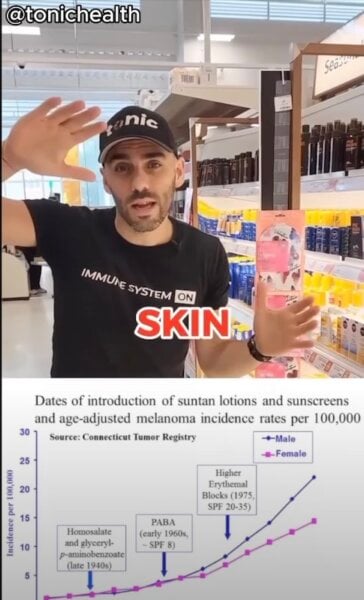
The core argument presented by skeptics typically relies on historical charts showing rising melanoma rates in the United States dating back to the mid-20th century. At first glance, a parallel between greater commercial availability of sunscreens and higher cancer rates might appear suspicious. In scientific and statistical analysis, however, establishing a true causal relationship requires far more than observing two concurrent upward trends.
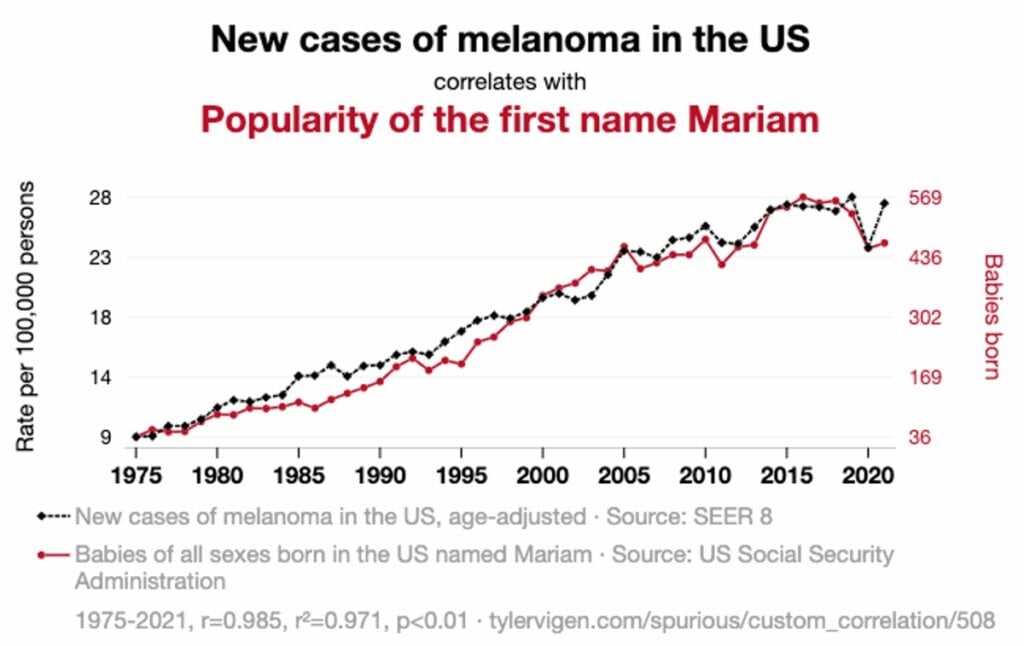
This specific comparison fails basic statistical scrutiny for multiple reasons. First, historical graphs tracking long-term cancer incidence often conflate broad chronological trends without mapping actual per-capita sunscreen application rates onto the same timeline. Second, invoking parallel trends without accounting for confounding variables can lead to absurd conclusions. Statisticians frequently use humorous datasets—such as the near-perfect mathematical correlation between US melanoma rates and the popularity of specific baby names—to illustrate why correlation does not equal causation.
Many other societal shifts have occurred since the 1930s, including significant changes in dietary habits, urban environments, environmental exposures, and average life expectancy. Attributing rising cancer numbers solely to the chemical formulations in modern skincare products ignores the substantial body of controlled scientific evidence validating the safety and efficacy of these products.

Historical Chronology of Sun Protection and Cancer Tracking
Understanding the current landscape of skin cancer data requires examining the timeline of product development and public health adoption.
- 1930s to 1940s: Early prototypes of modern sun protection products emerge, primarily designed to protect soldiers from severe sunburns during military operations in tropical environments. These early iterations offered minimal protection by modern standards.
- 1950s to 1970s: Commercial availability expands, but widespread daily use remains limited. Sunscreen is primarily viewed as a seasonal beach accessory rather than a daily health staple.
- 1970s to 1980s: Public health agencies begin recognizing the link between cumulative UV exposure and skin malignancies. Regulatory bodies, such as the US Food and Drug Administration (FDA), start formalizing testing and labelling standards, aligning roughly with the commercial rise of indoor tanning culture.
- 1990s: Landmark clinical studies, most notably the Nambour Trial in Australia, begin publishing definitive, long-term data regarding the real-world cancer-preventive benefits of regular sunscreen application.
- 2000s to Present: Global health organizations refine their messaging, transitioning from simple sunscreen advocacy to comprehensive multi-layered sun safety frameworks. Simultaneously, social media accelerates the spread of unverified claims, challenging established dermatological consensus.
Experimental Evidence: What Clinical Trials Reveal
To eliminate the confounding variables inherent in observational population trends, researchers rely on randomized controlled trials (RCTs). These controlled studies provide the gold standard in medical evidence by isolating sunscreen use as the primary experimental variable.
The most comprehensive investigation of its kind remains the Nambour Trial, conducted in Australia. Researchers monitored a large cohort of participants living in the same geographic region with matched skin types. The participants were split into two groups: one instructed to apply broad-spectrum sunscreen daily, and the other permitted to use sunscreen strictly at their own discretion. Researchers tracked the participants over a rigorous 4.5-year active trial period, followed by a decade-long observational follow-up.
The results offered clear evidence refuting the notion that sunscreens cause cancer. Participants in the daily sunscreen group demonstrated significantly lower rates of both squamous cell carcinomas and basal cell carcinomas. Subsequent long-term tracking confirmed a statistically significant reduction in the development of invasive melanomas among consistent users. Furthermore, follow-up evaluations revealed that daily sunscreen users exhibited approximately 24% fewer clinical signs of skin aging compared to the control group, highlighting its dual role in dermatological health.
Laboratory investigations reinforce these clinical findings. Photobiology studies analyzing human skin tissue exposed to simulated solar radiation have demonstrated that applying high-SPF sunscreens substantially decreases the formation of pyrimidine dimers—abnormal chemical bonds in DNA caused by UV rays that serve as the foundational precursors to cellular mutation and carcinogenesis. Even when sunscreens are applied at suboptimal thicknesses compared to laboratory testing standards, they continue to provide a measurable, protective barrier against epidermal DNA damage.
Why Are Skin Cancer Rates Truly Rising?
If sunscreens successfully prevent cellular damage, public health experts must still account for the persistent rise in overall skin cancer diagnoses. Dermatological researchers point to several primary drivers that easily outweigh the protective benefits of modern skincare formulations:
Increasing Global Life Expectancy
Age is one of the most reliable predictors of cancer development. Cumulative cellular stress over decades provides more opportunities for genetic mutations to accumulate. Because global life expectancies have risen dramatically over the past century, a much larger segment of the population now survives to advanced ages—traditionally the demographic where melanoma is most frequently diagnosed—leading to a higher raw count of reported cases.
Shifts in Recreational Habits and Travel
The democratization of international commercial aviation in the late 20th century transformed global tourism. Millions of individuals now regularly travel from temperate climates to high-UV tropical destinations for leisure. This has introduced a pattern of intermittent, intense sun exposure—such as office workers exposing previously unconditioned skin to harsh equatorial sun for brief holiday periods—which significantly elevates the risk of severe blistering sunburns, a primary risk factor for melanoma.
The Rise of Artificial Tanning Culture
The decades following the introduction of commercial sunscreens also saw the widespread commercialization of indoor tanning beds. The International Agency for Research on Cancer classifies UV-emitting tanning devices as known human carcinogens. The cultural push toward artificially tanned skin during the late 20th century introduced massive doses of concentrated UV radiation to millions of consumers, driving up cancer statistics independently of daily outdoor habits.
Heightened Screening and Advanced Detection
Modern medicine possesses vastly superior diagnostic tools and screening protocols compared to previous generations. Public awareness campaigns, such as the ABCDE criteria for identifying suspicious moles, have empowered both patients and general practitioners to spot anomalies early. Many cancers that would have previously gone unnoticed or unrecorded are now caught, biopsied, and logged in national cancer registries, artificially inflating incidence rates while successfully saving lives through early intervention.
Divergent Global Trends and the Australian SunSmart Model
The narrative that skin cancer rates are universally increasing requires a crucial geographical caveat. In Australia—a country historically plagued by high skin cancer rates due to its geographic position and predominantly fair-skinned population—the trend among younger demographics has moved in the opposite direction.
Recent epidemiological data published in medical journals reveals that melanoma incidence rates among Australians under the age of 40 have steadily decreased. Specifically, melanoma rates among individuals aged 15 to 24 have roughly halved since the 1980s. Public health authorities attribute this success to a deeply ingrained, culturally pervasive public health strategy known as the SunSmart framework, alongside a more ethnically diverse population profile.
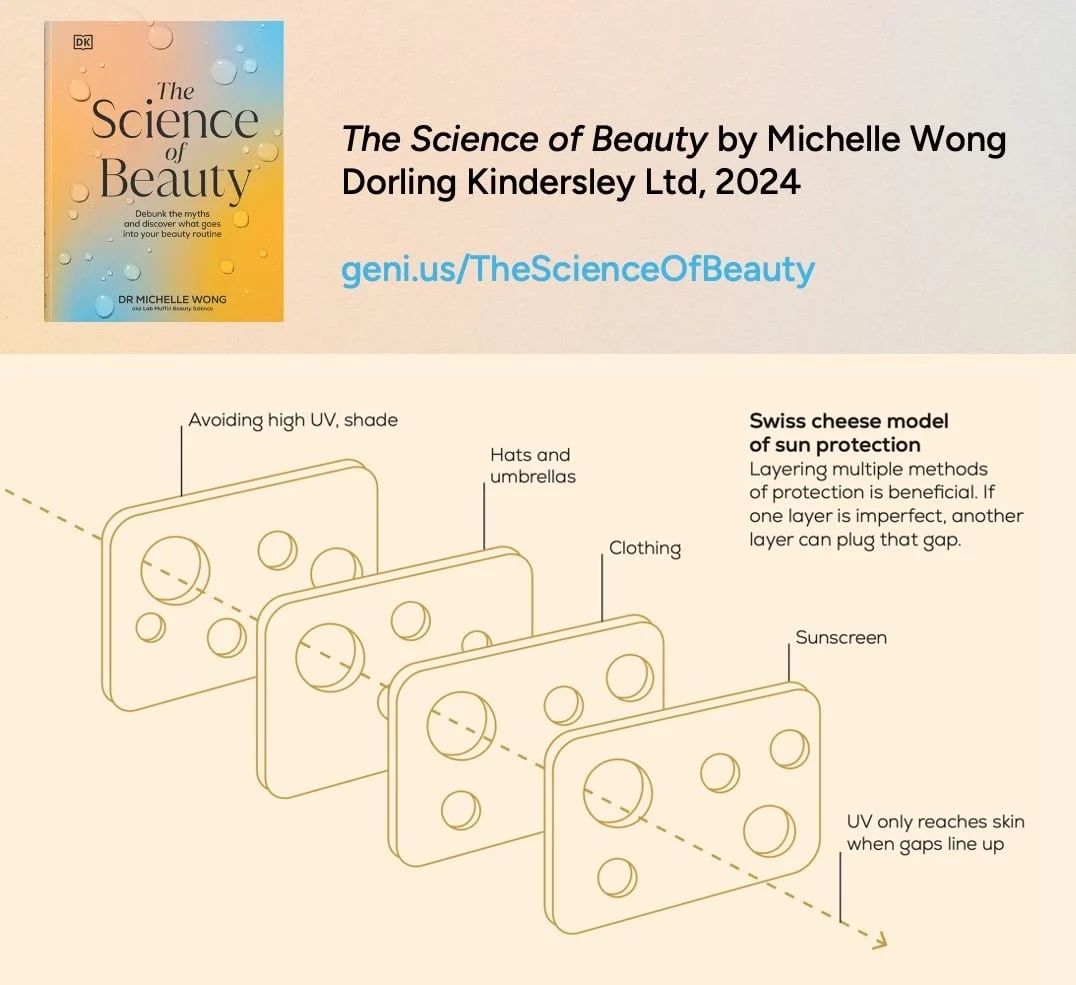
Rather than placing the entire burden of protection on topical lotions, Australia’s public health messaging adopted a multi-layered approach often conceptualized through the "Swiss cheese model" of risk mitigation. Popularized by memorable public slogans such as "Slip, Slop, Slap, Seek, Slide"—encouraging citizens to slip on a shirt, slop on sunscreen, slap on a hat, seek shade, and slide on sunglasses—the campaign recognized that human behavior is prone to error.
Institutional policies reinforced these educational efforts. Australian schools famously implemented strict rules such as "no hat, no play," requiring children to wear specialized legionnaire hats featuring extended neck flaps during outdoor activities or remain in shaded areas. This systematic integration of behavioral habits, environmental architecture, and protective apparel successfully altered societal norms regarding sun exposure.
Implications for Public Health and Consumer Safety
The persistence of online misinformation regarding sunscreen safety poses a tangible threat to public health. When consumers are persuaded to abandon established protective measures based on flawed statistical correlations, they expose themselves to cumulative UV radiation, significantly raising their long-term risk of photoaging, actinic keratoses, and life-threatening skin malignancies.
Medical consensus remains unequivocal: while sunscreen is not an impenetrable shield and must be viewed as just one component of a comprehensive sun-safety strategy, it remains an indispensable chemical defense against solar radiation. Public health communication moving forward faces the ongoing challenge of cutting through viral digital noise to reinforce evidence-based science, ensuring that public perception aligns with verified clinical outcomes.
