
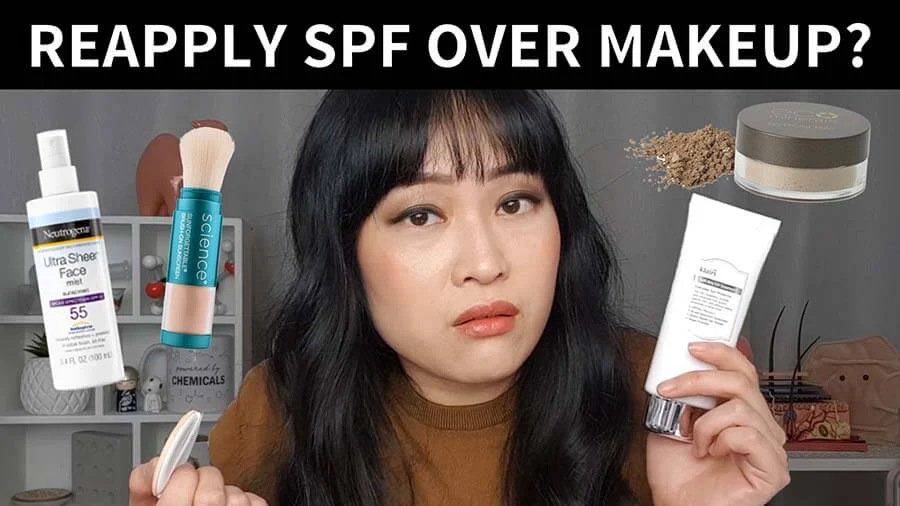
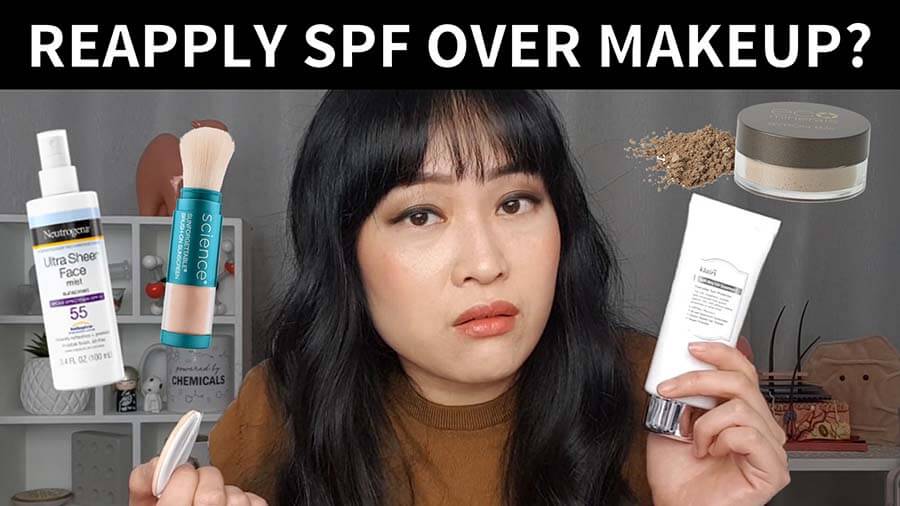
The daily ritual of skincare and cosmetics often presents a frustrating logistical dilemma for millions of beauty consumers worldwide: the necessity of reapplying facial sunscreen every two hours directly conflicts with the preservation of a carefully applied morning makeup routine. While dermatological guidelines uniformly stress the importance of continuous ultraviolet (UV) protection to mitigate the risks of photoaging, hyperpigmentation, and skin malignancies, executing this reapplication without disrupting foundation, blush, and contour has long challenged both casual makeup wearers and industry professionals. Addressing this common friction point requires an analytical examination of how sunscreens degrade over time, a critical evaluation of alternative reapplication vehicles—such as powders and sprays—and the implementation of practical techniques that balance cosmetic integrity with rigorous skin protection.
Understanding Sunscreen Degradation and Longevity
To comprehend why reapplication is formally recommended, one must first examine the physical and chemical evolution of a sunscreen film after initial application. When a sunscreen lotion is first smoothed over the face, it establishes an even, continuous protective barrier designed to absorb or reflect UV radiation. However, this protective film naturally deteriorates over several hours through a combination of mechanical disruption, chemical migration, and environmental exposure.
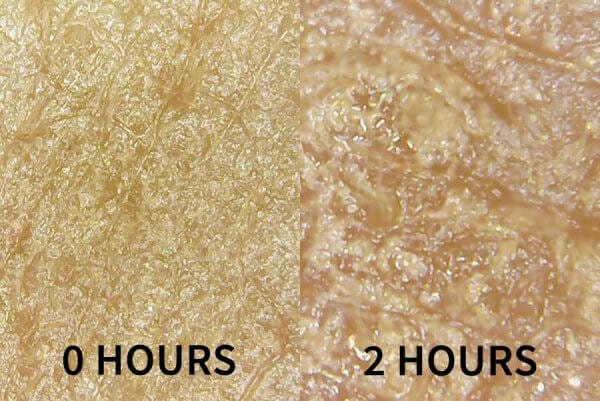
Mechanical displacement occurs constantly throughout the day as skin comes into accidental contact with hands, clothing, and hair, physically wiping away active protective compounds. Furthermore, natural physiological processes—namely the continuous secretion of sebum and perspiration—interact with the emulsion, causing the uniform film to break up and clump together. Microscopic evaluations of cosmetic layers over time reveal that products gradually migrate away from high-friction zones and pool into pores and dermal creases. Simultaneously, volatile components within the formulation evaporate or absorb into the upper strata of the epidermis, progressively thinning the protective barrier.
While older organic filters were prone to rapid photolysis—breaking down structurally upon absorbing a threshold quantity of UV photons—modern formulations overwhelmingly utilize photostable organic and inorganic filters designed to withstand sustained radiation exposure. Nevertheless, because modern formulas remain vulnerable to physical migration, friction, and sebum breakdown, the overall efficacy of the product diminishes steadily as the hours pass.
Quantifying Residual Protection Over Time
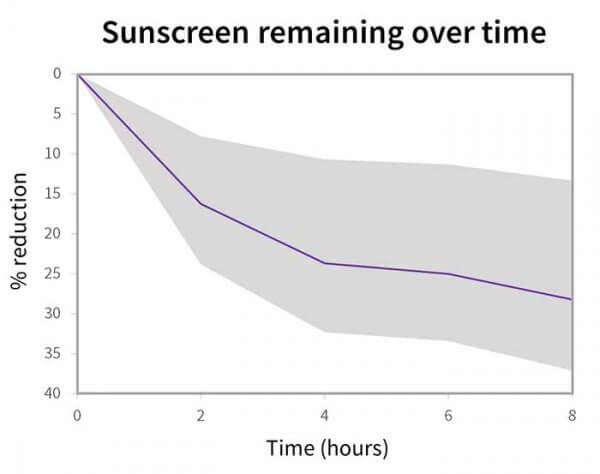
Empirical data regarding the exact degradation rate of sunscreen on stationary human skin remains surprisingly sparse within dermatological literature. A foundational open-label trial published in the Journal of Dermatological Treatment investigated how sunscreen persistence on the face behaves among indoor workers over extended periods. Researchers utilized a tagged formulation containing a visual dye, enabling precise photographic tracking of the product’s distribution across twenty participants who spent minimal time outdoors.
The study’s findings indicated that after an initial two-hour window, participants retained an average of roughly 84 percent of the original sunscreen distribution, translating to an approximate 16 percent reduction in coverage. Over subsequent intervals, marginal losses accumulated, culminating in an overall reduction of nearly 30 percent in product coverage by the end of an eight-hour period.
Translating these metrics into Sun Protection Factor (SPF) ratings demonstrates a roughly linear relationship between product retention and protective capability. For instance, an initial application of SPF 50 degrades under low-activity conditions to roughly SPF 35, while an SPF 30 formulation drops closer to SPF 21. While these residual percentages suggest that a substantial baseline of protection persists for individuals with minimal sun exposure, the adequacy of this remaining coverage ultimately depends on individual exposure levels and personal risk tolerance regarding UV-induced damage.
Evaluating Reapplication Products: Powders and Sprays
When consumers attempt to bolster their waning protection midday without washing off their cosmetics, they frequently turn to alternative formulations marketed for convenience, such as mineral powders and aerosol or pump sprays. However, independent scientific evaluations and consumer safety reports highlight significant performance shortfalls in these categories.
Face powders have historically presented severe limitations regarding sun protection. Historical consumption data compiled by regulatory bodies indicates that the average application mass of facial powder is approximately 85 milligrams across a standard 400-square-centimeter face. Calculations based on these application parameters yield fractions of the labeled SPF, falling far short of the standardized testing density of two milligrams per centimeter squared. Furthermore, powders struggle to form a continuous, cohesive film capable of blocking UV uniformly.
While specialized mineral powders—such as those engineered by brands like Colorescience—utilize proprietary particle treatments to improve adherence and achieve water-resistance ratings through rigorous testing protocols (including immersion trials), practical execution remains daunting. Achieving laboratory-grade protection with these specialized powders necessitates prolonged, heavy application techniques, such as continuous brushing for up to a minute combined with multiple cartridge primes. Given that standard commercial units contain limited product volumes, relying on powder as a primary reapplication method proves both economically burdensome and operationally impractical for most consumers.
Similarly, aerosol and pump sprays have faced heightened scrutiny regarding their real-world efficacy. Comprehensive testing conducted by consumer advocacy organizations and public health researchers—including aerosol reports from Australian safety authorities—indicates that standard spray applications deposit only a fraction (frequently between one-fifth and one-ninth) of the total expelled product onto the facial skin, with the remainder lost to airborne drift or occupied by propellant gases. Consequently, unless users spray the product directly into their hands and pat it onto the skin like a conventional lotion, relying on a direct mist over makeup fails to deliver sufficient or even coverage.
Strategic Approaches to Midday Protection
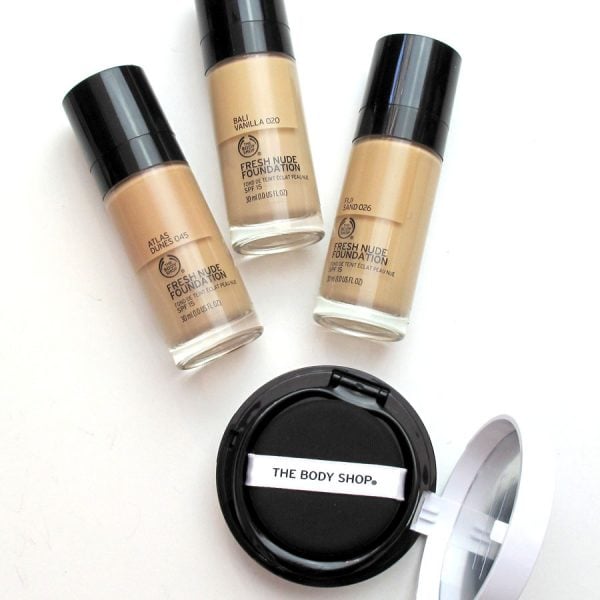
Given the structural limitations of alternative formats, skin science educators and dermatological advocates generally recommend categorized approaches tailored to specific daily environments:
-
Minimal Sun Exposure: For individuals commuting primarily indoors, working in office environments, and experiencing little direct sunlight, reapplication is frequently unnecessary. Relying on the residual protective film, combined with basic behavioral modifications such as walking on shaded pathways or avoiding direct window glare, is often deemed sufficient to manage incidental exposure.
-
Heavy Sun Exposure: For scenarios involving prolonged outdoor activity, heavy perspiration, and unavoidable radiation—such as beach outings or extended walks—cosmetic priorities must be suspended. In these instances, individuals should forgo complex makeup routines in favor of water-resistant, high-SPF lotions, reapplying the product directly every two hours alongside protective accessories like wide-brimmed hats and UV-blocking textiles.
-
Moderate Sun Exposure: For transitional scenarios involving mixed indoor and outdoor environments—such as lunch breaks or sunny afternoon commutes—maintaining existing makeup while adding a layer of sunscreen requires specialized application mechanics.
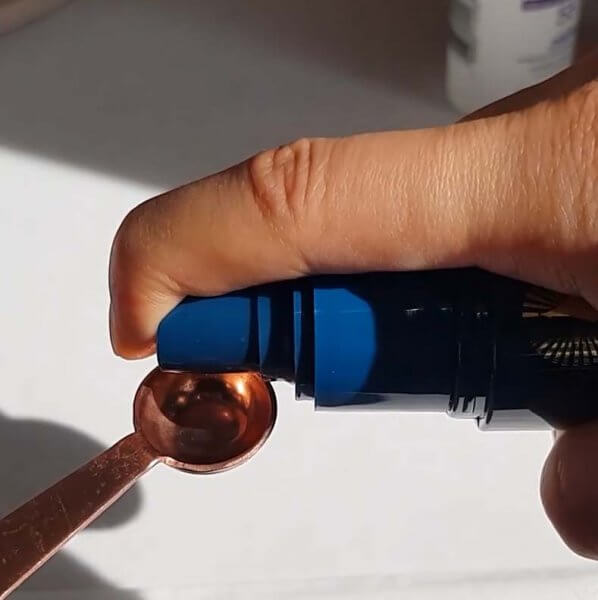
The Cushion Puff Application Technique
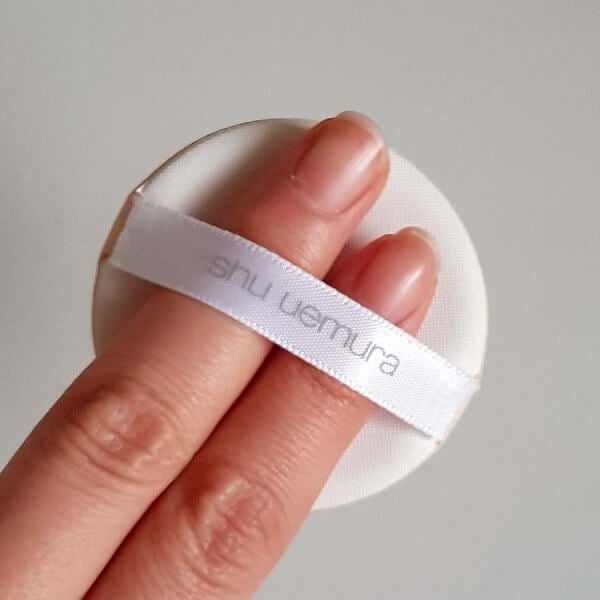
To effectively layer conventional sunscreen lotion over existing makeup without causing severe disruption, skincare specialists increasingly advocate for the use of a cushion makeup puff—inexpensive, densely bonded polyurethane sponges commonly found in Asian beauty cushions.
Unlike traditional beauty blenders, which absorb large quantities of liquid product into their porous matrices, cushion puffs are thin and non-absorbent, ensuring that the majority of the sunscreen is transferred directly to the skin rather than wasted in the sponge. Furthermore, their flexible structure allows the user to fold the applicator precisely, facilitating seamless navigation around the contours of the nose and eyes.
The application protocol involves dispensing a measured amount of a lightweight, fluid sunscreen—preferably a silicone-based or fast-absorbing emulsion—onto the puff and gently pressing, rather than swiping, the product onto the face. To prevent the migration of colored cosmetics from the cheeks or lips onto unpigmented areas, users should initiate the process on bare or neutral zones before lightly tapping over colored cosmetic regions. While eye makeup like heavy eyeshadow cannot realistically be preserved during this process, utilizing a cushion puff for the complexion significantly minimizes foundation displacement compared to traditional fingertips or bristle brushes.
Implications and Broader Perspectives
The ongoing discourse surrounding sunscreen reapplication over cosmetics highlights a broader tension within modern dermatology: balancing rigorous clinical recommendations with the practical realities of consumer behavior. While public health messaging consistently emphasizes the two-hour rule, scientific scrutiny demonstrates that rigid adherence is rarely practical for individuals wearing professional or social cosmetics.
By understanding the mechanics of product degradation, consumers can better assess their actual daily UV risk rather than adhering blindly to blanket timelines. For those requiring midday top-ups, shifting away from inefficient mists and sparse powders toward precise lotion application via specialized cushion puffs offers a scientifically sound compromise. Ultimately, integrating these evidence-based techniques empowers individuals to maintain high standards of cutaneous photoprotection without sacrificing their daily cosmetic routines.
