
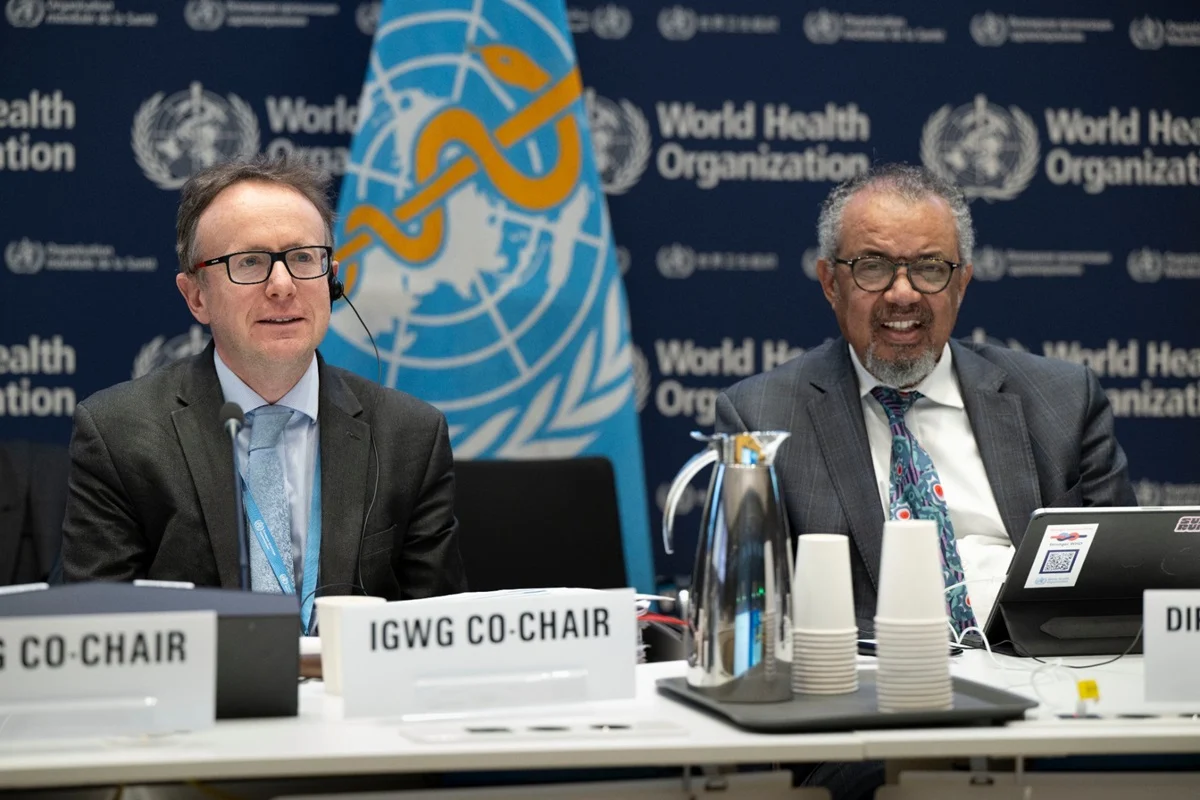
The World Health Organization (WHO) Member States have reached a pivotal consensus to prolong intensive negotiations regarding the Pathogen Access and Benefit Sharing (PABS) annex, a foundational element of the proposed WHO Pandemic Agreement. This decision, finalized during the most recent round of deliberations in Geneva, ensures that discussions will resume from April 27 to May 1, 2024. This extension provides a critical window for diplomatic resolution and technical refinement before the agreement is scheduled for formal consideration by the 77th World Health Assembly (WHA) in late May.
The decision to facilitate informal intersessional discussions leading up to the late-April session reflects a heightened sense of urgency among the 194 Member States. The PABS system is widely regarded as the "heart" of the broader Pandemic Agreement, designed to rectify the systemic failures and inequities that characterized the global response to the COVID-19 pandemic. By extending the timeline, negotiators aim to bridge significant gaps in how biological materials and genetic sequence data are shared, and how the resulting benefits—such as vaccines and therapeutics—are distributed across the globe.
Context and Background: The Genesis of the Pandemic Agreement
The impetus for a legally binding international instrument on pandemic preparedness stems from the catastrophic global impact of COVID-19. Since the virus first emerged in late 2019, it has caused millions of deaths and trillions of dollars in economic losses. More significantly, the pandemic exposed a fractured global health architecture where competition for resources often superseded cooperation.
In December 2021, during a rare Special Session of the World Health Assembly, Member States established an Intergovernmental Negotiating Body (INB) to draft and negotiate a WHO convention, agreement, or other international instrument. The primary goal was to ensure that the "vaccine apartheid" and supply chain collapses seen between 2020 and 2022 would not be repeated. The PABS annex was conceived as a mechanism to create a predictable, equitable, and efficient system for sharing pathogens with pandemic potential.
Under the current status quo, pathogen sharing often relies on ad hoc arrangements or the Nagoya Protocol on Access to Genetic Resources and the Fair and Equitable Sharing of Benefits Arising from their Utilization. However, critics argue that the Nagoya Protocol’s bilateral nature is ill-suited for the rapid pace required during a public health emergency. The PABS system seeks to create a multilateral framework specifically tailored for health security.
The PABS Mechanism: Balancing Access and Equity
The PABS system is built upon two interdependent pillars: "Access" and "Benefit Sharing." The "Access" component mandates that countries rapidly share samples of pathogens with pandemic potential—and their genetic sequences—with WHO-coordinated laboratories and databases. This rapid sharing is essential for scientists to develop diagnostic tests, treatments, and vaccines in real-time.
The "Benefit Sharing" component is the reciprocal obligation. In exchange for access to these biological materials, manufacturers of "relevant products" (such as pharmaceutical companies) would be required to contribute to a global benefit-sharing pool. This could include providing a percentage of their production to the WHO for distribution to low- and middle-income countries at affordable prices or as donations, as well as contributing to a financial fund to support pandemic preparedness.
Negotiations have focused on the specific percentages of production that should be reserved for global equity. Preliminary drafts have suggested that at least 20% of pandemic-related health products—10% as donations and 10% at affordable prices—should be allocated to the WHO for equitable distribution. This remains one of the most contentious points of the negotiation, as Member States balance public health imperatives with the commercial interests of their respective pharmaceutical sectors.
Chronology of Negotiations and Key Milestones
The path toward the May 2024 deadline has been marked by several critical phases:
- December 2021: The WHA Special Session establishes the INB to begin drafting the agreement.
- February 2023: The first "Zero Draft" of the Pandemic Agreement is published, introducing the concept of a formal PABS system.
- May 2023: At the 76th WHA, Member States reaffirm their commitment to a May 2024 deadline for the final text.
- September 2023: The UN General Assembly holds a High-Level Meeting on Pandemic Prevention, Preparedness, and Response, providing political momentum.
- March 2024: The ninth round of INB negotiations takes place in Geneva. While progress is made on several chapters, the PABS annex is identified as requiring additional specialized focus.
- April 2024 (Upcoming): Intersessional informal meetings followed by the formal resumption of PABS negotiations from April 27 to May 1.
- May 2024 (Upcoming): The 77th World Health Assembly is expected to vote on the adoption of the final Pandemic Agreement.
Supporting Data: The Economic and Human Cost of Inequity
The necessity of the PABS system is underscored by data from the COVID-19 era. According to a study published in The Lancet, nearly 15 million "excess deaths" were associated with the pandemic by the end of 2021. However, the distribution of life-saving tools was starkly uneven. By early 2022, while over 70% of the population in high-income countries had been vaccinated, less than 10% of the population in low-income countries had received a single dose.
Furthermore, the International Monetary Fund (IMF) estimated that the pandemic would cost the global economy over $12.5 trillion through 2024. Proponents of the PABS system argue that a structured, multilateral approach to sharing pathogens and benefits would significantly reduce these costs by accelerating the global response and preventing localized outbreaks from becoming global catastrophes.
The "equity gap" also extends to research and development. Data from the WHO’s R&D Blueprint indicates that during the height of the pandemic, 90% of clinical trials were conducted in high-income or upper-middle-income countries. The PABS annex aims to foster technology transfer and regional manufacturing hubs, particularly in the Global South, to decentralize the production of medical countermeasures.
Official Responses and Diplomatic Perspectives
The decision to extend negotiations has drawn reactions from high-level officials, emphasizing both the difficulty of the task and the collective will to succeed.
Dr. Tedros Adhanom Ghebreyesus, WHO Director-General, lauded the dedication of the negotiators but issued a stern reminder of the stakes involved. "The Pathogen Access and Benefit Sharing system lies at the heart of the WHO Pandemic Agreement and I thank WHO Member States for their commitment to work to bring it to life," Dr. Tedros stated. He emphasized the need for "solidarity and equity," urging delegations to trust one another to transcend national differences for the common public good.
Ambassador Tovar da Silva Nunes of Brazil, serving as the IGWG Bureau Co-Chair, highlighted the intensity of the current phase. "Member State negotiators are working intensively towards having an ambitious and equitable Pathogen Access and Benefits Sharing annex ready for adoption," he noted, signaling that the Global South’s priorities regarding benefit-sharing remain a central focus of the Brazilian delegation and its peers.
Representing the Global North’s perspective, Mr. Matthew Harpur of the United Kingdom, also a Bureau Co-Chair, welcomed the "commitment shown this week by Member States towards finding consensus on outstanding areas." His comments reflect the delicate balancing act required to satisfy countries with large pharmaceutical industries while meeting global health obligations.
Broader Impact and Global Health Implications
The successful finalization of the PABS annex would represent a landmark shift in international law and global health governance. It would move the world away from "charity-based" models of global health toward a "rights-based" and "contractual" model.
However, several hurdles remain. One significant point of contention is the legal nature of the contractual arrangements. Negotiators are debating whether the benefit-sharing obligations should be legally binding on private entities or if governments should be the primary duty-bearers. There are also concerns regarding intellectual property (IP) rights. While some Member States advocate for IP waivers during pandemics to facilitate rapid manufacturing, others argue that IP protections are necessary to incentivize innovation.
The PABS system also has implications for the "One Health" approach, which recognizes the link between human, animal, and environmental health. Many pathogens with pandemic potential emerge from animal populations. Ensuring that animal health data is integrated into the PABS framework without creating undue burdens on the agricultural sector is a complex technical challenge.
If the negotiations conclude successfully in May, the PABS annex will serve as a blueprint for future crisis management. It will establish a permanent, standing system that does not need to be reinvented every time a new virus emerges. This predictability is seen as essential for both public health officials and the private sector.
Conclusion: The Final Push Toward the 77th WHA
As the international community moves toward the late-April negotiations, the focus remains on finding a "middle ground" that ensures both the rapid sharing of scientific data and the equitable distribution of health products. The extension of the talks is not seen as a sign of failure, but rather as a recognition of the complexity and importance of the PABS annex.
The outcome of these negotiations will likely define global health security for the next generation. A robust PABS system could transform the world’s ability to respond to "Disease X"—the unknown pathogen that experts warn could trigger the next pandemic. With the lessons of COVID-19 still fresh, the mandate for Member States is clear: to build a system where the pursuit of science and the pursuit of equity are inextricably linked.
