
The global food manufacturing industry is currently navigating a severe structural supply crisis centered around one of its most ubiquitous ingredients: whey protein. Across the United States and Europe, extreme market pressures have driven the cost of dairy-derived whey up by a staggering fivefold over the past year, leaving food and beverage brands scrambling for resilient, cost-effective alternatives. Enter Revyve, a pioneering Dutch food technology startup born out of Wageningen University & Research, which has officially launched an innovative yeast-derived protein and fibre solution designed to offer manufacturers a seamless, economical exit ramp from the beleaguered whey market.
For decades, whey protein has reigned supreme in the formulation of sports nutrition products, functional beverages, baked goods, and dietary supplements due to its exceptional nutritional profile and functional versatility. However, unprecedented spikes in global demand, compounded by agricultural supply chain bottlenecks, feed cost inflation, and shifting dairy production models, have severely compromised the availability and affordability of whey. This market volatility has forced manufacturers to evaluate alternative proteins, yet many have historically encountered frustrating technical roadblocks. Traditional plant-based proteins—derived from sources such as peas, soy, or rice—frequently introduce undesirable sensory attributes, including a thin mouthfeel, gritty textures, and prominent beany off-notes. Furthermore, single-source plant proteins often fail to match the complete amino acid profiles and high digestibility scores found in animal-based counterparts, requiring complex blending strategies that complicate formulation and drive up R&D costs.
Revyve’s newly commercialized yeast protein ingredient directly addresses these persistent industry challenges. By transforming upcycled brewer’s yeast into highly functional powdered proteins and fibres, the Dutch startup is providing brands with a clean-label, allergen-free solution that matches the functional capabilities of whey and eggs while undercutting them on price. Produced at the company’s industrial-scale manufacturing facility in Dinteloord, the new ingredient boasts a Protein Digestibility-Corrected Amino Acid Score (PDCAAS) of 1.0—the highest possible rating for protein quality—while simultaneously delivering a valuable boost of dietary fibre and health-promoting beta-glucans.
The Origins and Evolution of Revyve: From University Spin-Out to Industrial Scale
The journey of Revyve began in 2019, when co-founders Corjan van den Berg and Edgar Suarez Garcia identified a massive, unexploited opportunity in the upcycling of sidestreams from the brewing industry. Recognizing that massive volumes of Saccharomyces cerevisiae—commonly known as brewer’s yeast—were being discarded or underutilized by some of the world’s largest beverage producers, the founders set out to harness the inherent functional properties of these microorganisms.
Unlike other fermentation-based protein companies that rely on complex, energy-intensive precision fermentation bioreactors, Revyve takes a distinct approach centered on upcycling existing biomass. The company sources spent brewer’s yeast directly from commercial brewing giants. Through a proprietary, mild, and low-temperature processing technique, Revyve breaks down the yeast cell walls without destroying their natural architecture. This delicate extraction method preserves the native functional elements of the yeast, yielding ingredients that exhibit exceptional foaming, gelation, and emulsification properties.
Initially, Revyve focused its commercial efforts on replacing whole eggs in bakery applications and savory sauces, leveraging the remarkable texture-building and binding characteristics of its yeast fractions. As food manufacturers increasingly demanded sustainable ingredients that could replicate complex mouthfeels without synthetic additives, Revyve expanded its technological applications. The company successfully adapted its platform to enhance ready-to-mix protein beverages, providing the creamy body and smooth viscosity typically associated with dairy, while simultaneously locking in moisture and maintaining softness in high-protein nutrition bars.
Under the leadership of CEO Cedric Verstraeten, Revyve has scaled its operations to meet industrial demands. The commissioning of its flagship production facility in Dinteloord marked a critical milestone in the company’s chronology, transitioning Revyve from a promising academic spin-out into a commercial-grade ingredient supplier capable of competing directly with legacy agricultural commodities.
Riding the Wave of Shifting Consumer Demands for Protein and Fibre
Revyve’s strategic market entry coincides with a massive, structural transformation in global consumer dietary habits. Across Western markets, everyday consumers are placing unprecedented emphasis on functional nutrition, with protein and fibre leading the charge. Recent data from the United States indicates that approximately 57 percent of American consumers prioritized increasing their protein intake, while 44 percent of young Europeans report a conscious desire to consume more protein-rich foods.
Simultaneously, a parallel movement is underway regarding dietary fibre. Health authorities have long noted a pervasive fibre gap in modern diets, where the vast majority of consumers fail to meet recommended daily intake levels. This nutritional shortfall has been propelled into mainstream cultural consciousness by viral digital wellness trends, such as the Gen Z-driven "fibermaxxing" movement on social media platforms like TikTok. Market research underscores this shift: while 38 percent of European consumers actively seek to increase their fibre consumption, that figure reaches an astonishing 100 percent among surveyed American demographics.

This growing appetite for functional nutrition has been dramatically accelerated by the explosive rise and cultural normalization of GLP-1 receptor agonist weight-loss medications, such as Ozempic and Wegovy. According to insights from Innova Market Insights, the percentage of American consumers who have utilized prescription weight-loss drugs surged from 10 percent in 2024 to 18 percent in 2025.
Clinical data reveals that patients undergoing GLP-1 therapies experience significant physiological changes, including a 25 to 40 percent reduction in total muscle mass over an eight- to sixteen-month period—a rate of lean tissue loss far exceeding natural age-related degradation or traditional calorie-restricted diets. Consequently, medical professionals and dietitians heavily emphasize high-protein diets as a mandatory therapeutic intervention to preserve muscle integrity during weight loss. Furthermore, clinical studies show that specialized dietary fibres stimulate the body’s natural endogenous GLP-1 production while drastically improving gastrointestinal microbiome health.
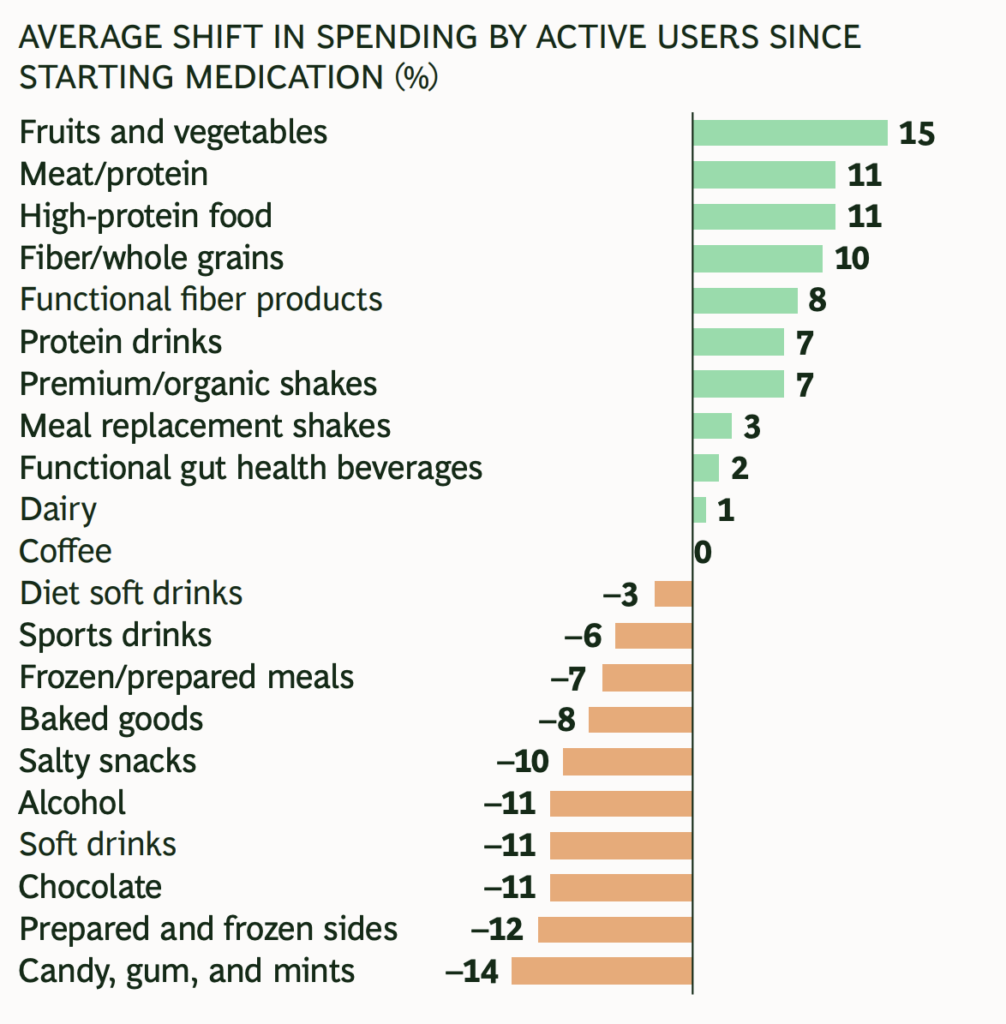
Data compiled by the Boston Consulting Group illustrates the profound market impact of these pharmaceutical developments on consumer spending habits. GLP-1 users demonstrate a marked dietary divergence from the general population, consuming roughly 40 percent more protein and 30 percent more fibre. On a global scale, individuals utilizing these medications plan to increase their monthly expenditure by 11 percent on high-protein foods, 10 percent on general fibre products, 8 percent on functional fibres, and 7 percent on ready-to-drink protein beverages.
Industry Reactions and Formulation Implications
For commercial food and beverage developers, navigating this hyper-focused nutritional landscape while contending with skyrocketing whey prices has created an acute operational dilemma. Traditional plant proteins often introduce severe organoleptic compromises, forcing product developers to mask bitter tastes or heavy, chalky textures with excessive masking agents, artificial sweeteners, or high fat contents.
Revyve’s executive leadership believes their yeast-derived innovation provides the exact technical solution the industry desperately requires.
"Brands are being forced to move away from whey, but plant protein on its own still asks consumers to compromise on texture and taste," stated Revyve CEO Cedric Verstraeten. "A small amount of our yeast protein changes that. We spent years learning how yeast can build texture in food, and now we’re putting that to work in the nutrition space."
Food science analysts point out that integrating Revyve’s yeast-based proteins into existing product pipelines offers multiple distinct advantages. Because the ingredient is derived from Saccharomyces cerevisiae, it sidesteps major agricultural land-use pressures, water footprints, and supply chain vulnerabilities associated with traditional dairy farming and monoculture crop cultivation. Furthermore, its clean-label profile aligns perfectly with consumer aversion to highly processed chemical additives and synthetic thickeners.
Fact-Based Analysis of Market Implications
The introduction of Revyve’s yeast protein solution arrives at a critical inflection point for the global alternative protein sector. For years, the industry narrative has been dominated by the binary choice between animal-derived commodities—such as whey, casein, and eggs—and agricultural plant proteins like soy, pea, and wheat gluten. While plant proteins have captured significant market share, their growth has consistently hit technical ceilings dictated by mouthfeel, solubility, and taste profiles.
By validating microbial upcycling as a viable, scalable source of high-performance functional proteins and dietary fibres, Revyve is expanding the boundaries of cellular and fermentation-adjacent agriculture. The ability to deliver a PDCAAS score of 1.0 without relying on animal agriculture or intensive crop farming positions the company favorably within a rapidly tightening regulatory and economic environment.
As food manufacturers continue to absorb the financial shock of inflated dairy commodity prices and adjust product portfolios to meet the nutritional demands of GLP-1 consumers, ingredient solutions that simultaneously solve cost, texture, and nutritional deficits will dominate the market. Revyve’s strategic positioning at the intersection of upcycling, functional performance, and health-conscious consumer trends signals a maturing food technology landscape—one where sustainable ingredients no longer require sensory compromises.
