

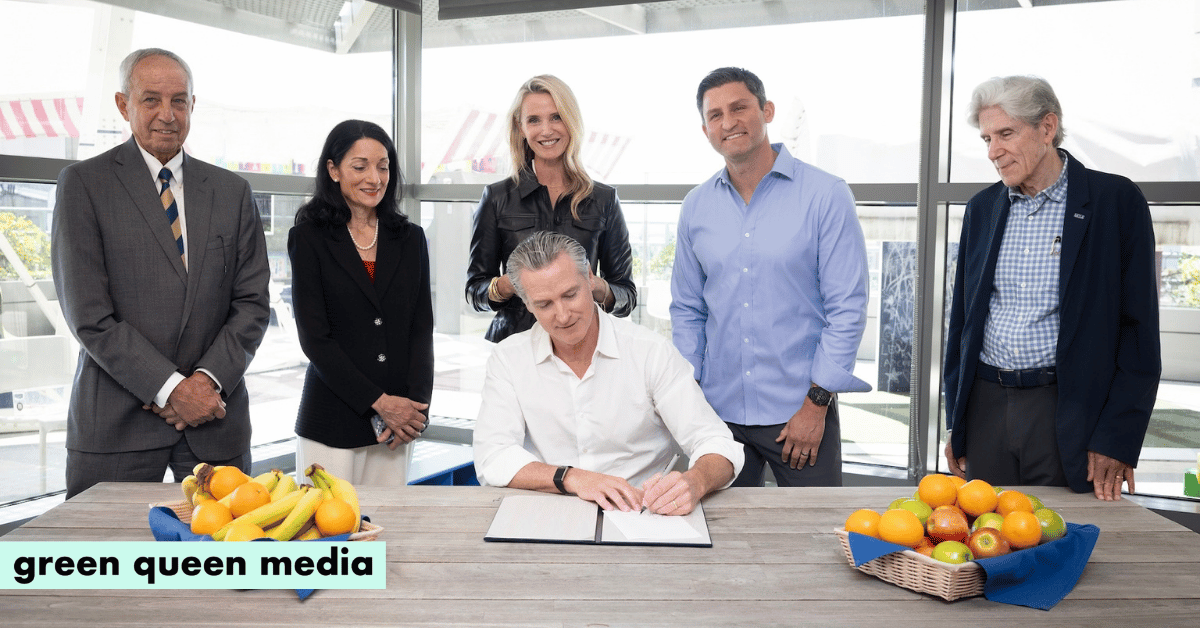
California has established a pioneering benchmark in American food policy, becoming the first state in the nation to institute a voluntary certification and labeling system for non-ultraprocessed foods (UPFs). Governor Gavin Newsom signed Assembly Bill 2244 into law, a bipartisan legislative measure designed to provide consumers with transparent, trustworthy front-of-pack information regarding the level of industrial processing involved in their food purchases. Modelled after the successful USDA Organic framework, the legislation seeks to bridge a critical regulatory gap that has long complicated federal efforts to address the proliferation of UPFs in the American diet.
The enactment of AB 2244 marks the latest escalation in California’s concerted legislative campaign against ultra-processed foods and artificial additives. By introducing a formalized "Non-Ultraprocessed Certified" seal, the state aims to empower shoppers to make health-conscious decisions effortlessly, reinforcing a preventative approach to public healthcare. While federal authorities grapple with defining and regulating processed food categories, California’s proactive framework establishes a measurable market-based standard that manufacturers can adopt voluntarily starting in June 2028.
Legislative Background and Chronology
The path to AB 2244 represents a multi-year legislative evolution within the California state legislature, spearheaded primarily by Assemblymember Jesse Gabriel. Over the past several years, California has systematically shifted the national discourse surrounding food safety, establishing a precedent that has since influenced regulatory discussions in more than 30 other states.
The chronology of California’s anti-UPF regulatory push includes several key milestones:
- 2023: The passage of the California Food Safety Act, which initiated sweeping prohibitions against specific hazardous chemical additives commonly found in processed foods.
- 2024: The enactment of the California School Food Safety Act, expanding restrictions on harmful additives within public educational institutions.
- 2025: Governor Newsom signed legislation to systematically phase out the most concerning ultra-processed foods from school meal programs, supported by the introduction of the Healthy Foods, Healthy Kids Act.
- February 2026: Assemblymember Gabriel officially introduced AB 2244 to establish a state-administered non-UPF certification label.
- Spring 2026: The bill advanced swiftly through the state legislature, securing unanimous bipartisan backing with a 72-0 vote in the Assembly and a 32-0 vote in the Senate before landing on Governor Newsom’s desk for enactment.
Under the provisions of the newly signed law, food manufacturers will be permitted to apply for the official certification beginning in June 2028. Once granted, companies must renew their certifications every three years to maintain compliance with the state’s rigorous standards.
Defining Ultra-Processed Foods: Overcoming the Nova Classification Dilemma
Establishing a regulatory definition for ultra-processed foods has historically presented a formidable challenge for policymakers. The terminology first emerged globally in 2009 via the Nova food classification system, which categorized foods based on the degree and nature of industrial processing. While the Nova framework successfully brought international attention to the proliferation of hyper-palatable, additive-heavy products, health experts and nutritionists frequently criticized its parameters as excessively broad.
By grouping everything from industrial soft drinks and snack chips to fortified plant-based milks and whole-grain breads under a single umbrella, the traditional Nova definition risked stigmatizing nutrient-dense products. Consequently, leading scientific and medical organizations have consistently cautioned against conflating industrial processing techniques with poor nutritional profiles.
To resolve this ambiguity, California’s AB 2244 establishes a precise, localized definition of ultra-processed foods for the purposes of state certification. The legislation explicitly designates UPFs as food items containing specific stabilizers, thickeners, emulsifiers, artificial flavoring agents, synthetic coloring agents, non-nutritive sweeteners, and disproportionately high concentrations of saturated fat, sodium, or added sugars.
This targeted approach ensures that the "Non-Ultraprocessed Certified" label preserves nutritional nuance, allowing consumers to distinguish between heavily formulated items and minimally processed, health-promoting alternatives.
Implementation, Retail Requirements, and Oversight
Modelled closely on the operational framework of the USDA Organic seal, California’s non-UPF program relies on an independent, market-driven verification system. Rather than implementing an immediate mandatory ban across all retail inventories, the state has opted for a voluntary certification model overseen by the California Department of Public Health.
Under this framework, food manufacturers may apply to accredited third-party certification agents to verify that their products meet the established non-UPF criteria. To ensure robust market visibility and consumer accessibility, the legislation imposes specific merchandising requirements on major grocery retailers:

- Retail Applicability: Supermarkets with annual gross sales exceeding $10 million and stocking more than 25 certified non-UPF products are subject to the retail display mandate.
- Prominent Placement: Qualifying stores are required to prominently display at least three items bearing the Non-Ultraprocessed Certified label at high-visibility traffic areas, such as store entrances and checkout counters.
- Public Accountability: The state will maintain an accessible, publicly available registry of all certified products, conduct regular audits of certification records, and rigorously enforce compliance standards to prevent misleading marketing practices.
Proponents of the law emphasize that these structural requirements mirror the proven success of organic labeling, which transformed niche agricultural products into mainstream consumer mainstays through clear and trustworthy identification.
Stakeholder Reactions and Official Statements
The passage of AB 2244 has elicited strong commentary from political leaders, public health advocates, and industry analysts, highlighting a stark contrast between state-level action and federal policy stagnation.
Governor Gavin Newsom framed the legislation as a vital component of a modern public health strategy, emphasizing prevention over reactionary treatment. "We should be about healthcare, not sick-care, recognizing that preventing illnesses is far preferable to finding—and affording—treatments," Newsom stated during the bill signing. "It’s why California is focused on making whole, healthy foods as accessible as possible, why we’re making healthier choices easier."
Assemblymember Jesse Gabriel, the author of the legislation, contrasted California’s decisive governance with the legislative gridlock observed at the federal level. "While Washington DC is paralysed by inaction, Republicans and Democrats in California are joining forces to empower consumers to avoid harmful UPFs," Gabriel noted. "California began this movement three years ago by banning the most dangerous food additives, and with Governor Newsom’s continued leadership, we are taking another big step forward today."
Health advocates have similarly lauded the initiative for offering a pragmatic alternative to federal delays. By establishing a clear state-level standard, California provides food manufacturers with a structured incentive to reformulate products and remove synthetic additives to capture consumer market share.
Broader Economic, Consumer, and Federal Implications
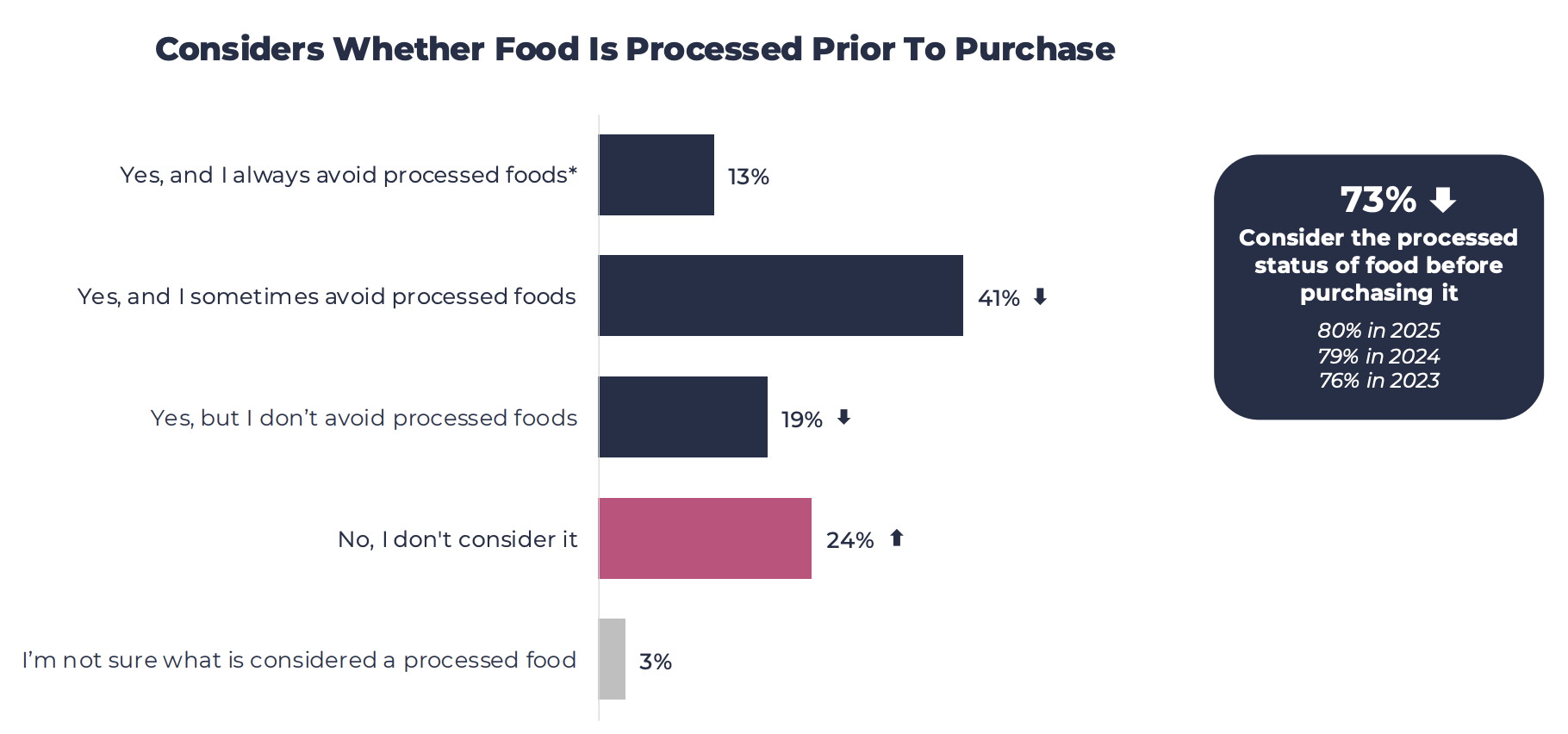
The introduction of California’s non-UPF label arrives at a time of shifting consumer attitudes regarding nutrition and food processing. According to data from the International Food Information Council (IFIC), ultra-processed foods have emerged as a primary health concern for American consumers, with approximately 72% of individuals actively attempting to avoid UPFs in their daily diets. Furthermore, nearly 79% of surveyed consumers perceive ultra-processed foods as a significant threat to public health.
Despite this widespread consumer awareness, national policy efforts have encountered significant bureaucratic hurdles. At the federal level, the administration has formally attributed diet-related chronic illnesses to highly processed formulations within updated dietary guidelines, and federal lawmakers have introduced measures to restrict the marketing of UPFs to children while mandating front-of-pack warning labels.
Simultaneously, federal health officials, including health agency leadership, have faced pressure to revoke the Generally Recognized as Safe (GRAS) status of certain food additives frequently utilized in ultra-processed goods. However, the U.S. Food and Drug Administration (FDA) has consistently ruled out an outright ban on the category, while repeatedly delaying the release of an official, standardized federal definition for ultra-processed foods.
This federal inaction has left a regulatory vacuum that individual states are increasingly eager to fill. Alongside California, jurisdictions such as Arizona, Texas, Louisiana, and West Virginia have begun exploring or implementing various forms of restrictions on UPFs or concerning additives. Concurrently, private verification initiatives—including the Non-UPF Program, the Non-GMO Project, and digital verification applications like Wisecode—have proliferated to meet rising consumer demand for processing transparency.
As the June 2028 implementation date for California’s certification program approaches, agricultural and food manufacturing sectors are expected to closely monitor the state’s rollout. Analysts suggest that given California’s massive economic footprint and status as a bellwether for national consumer trends, the Non-Ultraprocessed Certified label could effectively establish a de facto national standard, compelling food brands nationwide to reformulate their portfolios to meet the state’s rigorous health parameters.
