
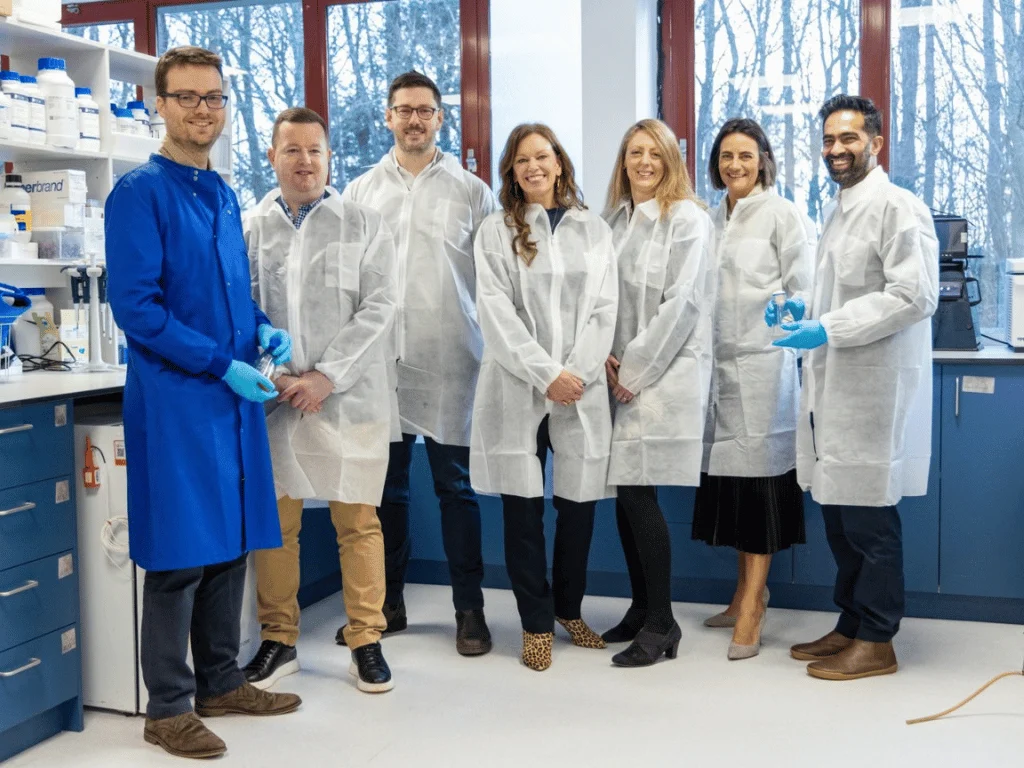
The transition toward sustainable biotechnology achieved a significant milestone as MiAlgae, an innovative spinout from the University of Edinburgh, secured a £2.5 million ($3.3 million) investment from the Scottish National Investment Bank (SNIB). This infusion of capital is earmarked for the construction of a pioneering commercial-scale manufacturing plant in Grangemouth, Scotland. By harnessing nutrient-rich byproducts from the nation’s iconic whisky sector, the startup aims to revolutionize the production of omega-3 fatty acids—traditionally derived from marine fisheries—while spearheading a localized green industrial renaissance.
The funding arrives at a critical juncture for both ecological conservation and regional economic renewal. As global fish stocks dwindle and climate phenomena destabilize traditional supply chains, biotechnological alternatives like MiAlgae’s fermentation platform offer a vital lifeline. The Grangemouth facility is not merely an industrial expansion; it represents a cornerstone of Scotland’s broader transition away from fossil fuels, turning a decommissioned industrial zone into a thriving center for sustainable manufacturing.
From Academic Research to Commercial Real Estate: The MiAlgae Timeline
The trajectory of MiAlgae reflects the growing commercial viability of academic research in the biotechnology sector. Founded in 2016 by Douglas Martin following his studies at the University of Edinburgh, the company was born out of a desire to address systemic resource inefficiencies within food and beverage production.
- 2016: MiAlgae officially spins out of the University of Edinburgh, establishing its core premise of utilizing industrial byproducts to cultivate high-value microalgae.
- 2023–2024: The company scales its pilot operations, proving the commercial efficacy of its fermentation technology and establishing supply chain partnerships within the Scottish whisky industry.
- Late 2025: MiAlgae formally breaks ground on its flagship commercial site in Grangemouth, setting the stage for exponential production growth.
- April 2025: The backdrop of the Grangemouth location is marked by the closure of the century-old Petroineos oil refinery, which displaced approximately 430 workers and catalyzed government intervention to reindustrialize the area.
- Mid-2025: The startup secures £3 million ($4 million) from the United Kingdom government as part of a broader £14.5 million regional pledge, running parallel to Scotland’s £25 million Grangemouth Just Transition Fund.
- Current Phase (2026): The injection of £2.5 million from the Scottish National Investment Bank provides the necessary capital to accelerate plant construction, with expectations to multiply current production capacity tenfold by the end of the decade.
Closing the Loop: The Science of Whisky-Fed Microalgae
At the core of MiAlgae’s operation is an advanced fermentation platform designed to upcycle liquid byproducts generated during whisky distillation. Traditional whisky production yields vast quantities of nutrient-dense waste liquids that require energy-intensive treatment before disposal. MiAlgae intercepts these streams, utilizing them as an organic feed substrate to cultivate microalgae naturally rich in docosahexaenoic acid (DHA), an essential omega-3 fatty acid.
DHA is widely recognized for its health benefits, particularly in pet nutrition, where it supports cognitive function, joint mobility, skin and coat health, and immune system resilience. By feeding microalgae within specialized bioreactors, the company bypasses the need for wild-caught marine life.
The manufacturing process is engineered for comprehensive environmental stewardship:
- Upcycling: Whisky industry byproducts are collected and fed into large-scale fermentation vessels.
- Cultivation: Microalgae consume the organic nutrients, rapidly multiplying and synthesizing high concentrations of DHA omega-3.
- Processing: The biomass is harvested, dried, and rigorously tested for quality before being distributed in wet, dry, or supplement formats to global markets.
- Water Reclamation: The closed-loop fermentation system purifies the remaining liquid, yielding clean water that is safely returned to local watercourses.
This circular model yields a vegan, fully traceable ingredient with a carbon and ecological footprint exponentially smaller than conventional fish oil extraction methods.
The Macroeconomic Crisis Facing Marine Omega-3 Supplies
The urgency driving MiAlgae’s expansion is underscored by systemic vulnerabilities in the global fish oil market. For decades, the aquaculture and pet food industries have relied heavily on pelagic fisheries—harvesting small fish such as anchovies and sardines—to meet the demand for omega-3 fatty acids. However, this model has pushed marine ecosystems to their absolute limits.
According to data from the United Nations Food and Agriculture Organization (FAO), approximately 90% of the world’s evaluated fish stocks are currently fully exploited, over-exploited, or depleted. Independent marine studies have warned that persistent overfishing for human consumption and industrial feed could lead to a near-total collapse of marine biodiversity by mid-century.
Compounding these anthropogenic pressures are severe climatic disruptions. The ongoing super El Niño phenomenon has significantly disrupted marine upwelling off the coast of South America, drastically reducing the availability of forage fish. Recent industry metrics indicate that fish oil supplies across leading producer regions have plummeted to levels roughly 31% below historical averages recorded just a year prior.
These supply shocks have triggered unprecedented price volatility. With El Niño impacts projected to linger, industry analysts forecast that traditional fish oil prices will reach record highs. Consequently, market research indicates that approximately 75% of consumers are actively seeking sustainable, non-marine sources of omega-3, accelerating commercial demand for innovations like MiAlgae’s algal alternative.
Grangemouth’s Green Transition and Regional Economic Impact
The choice of Grangemouth as the home for MiAlgae’s new commercial plant is strategically significant. The site sits upon land formerly occupied by the Petroineos oil refinery, an industrial anchor that operated for over a century before shutting its doors in April 2025. The closure dealt a severe blow to the local labor market, resulting in hundreds of layoffs and creating an urgent need for economic diversification.
Through government initiatives such as Project Willow—an executive effort designed to transform Grangemouth into a leading hub for green technology—former industrial assets are being repurposed for the net-zero economy. MiAlgae’s facility aligns directly with these regional revitalization goals.
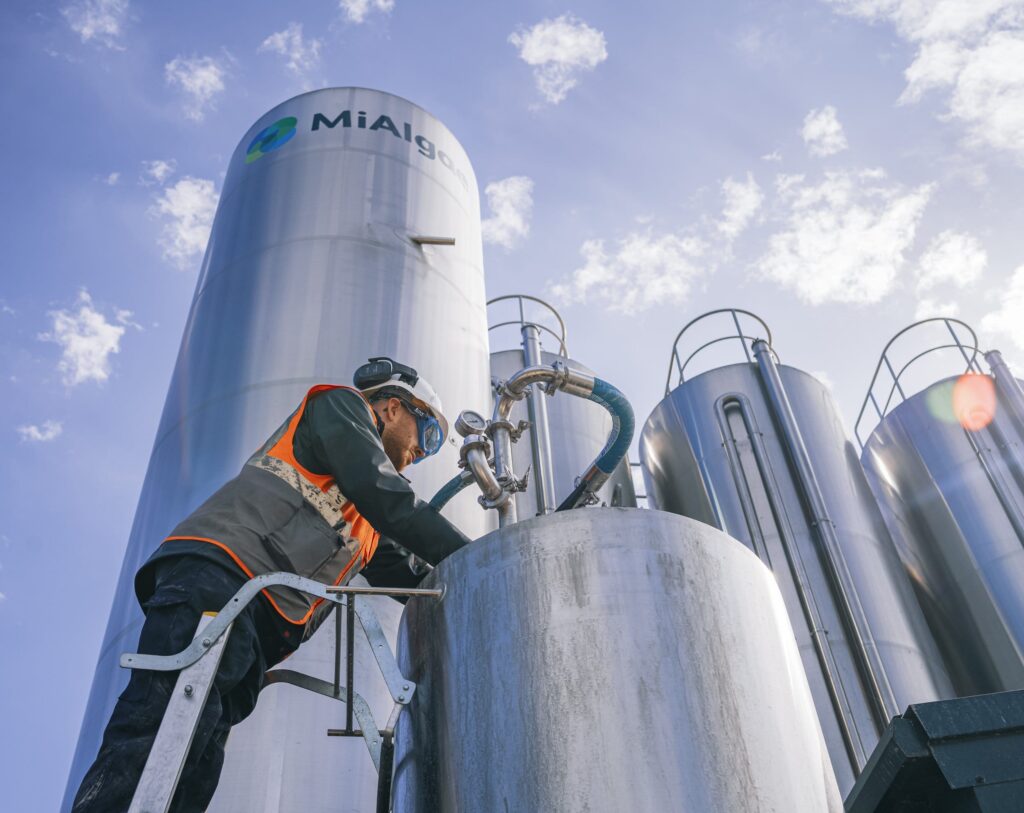
When the Grangemouth plant reaches operational capacity, it is projected to recycle over 36 million liters of whisky industry byproducts annually. Furthermore, the modular design of the facility ensures that the company can scale horizontally, establishing similar localized hubs near other distillery clusters to minimize transport emissions.
Employment projections reflect substantial local growth. MiAlgae anticipates adding 90 specialized jobs in biotechnology, biochemical engineering, and facility operations by the end of 2028, bringing its total workforce to 156 employees.
Institutional Endorsements and Competitive Landscape
The alignment between private biotechnology innovation and public policy has been a primary driver of MiAlgae’s recent momentum. Leadership from both the enterprise and investment sectors emphasized the multi-faceted value of the recent funding round.
"This investment brings us closer to achieving our mission of protecting our oceans while meeting growing global demand for sustainable nutrition," stated Douglas Martin, founder and CEO of MiAlgae. "By transforming whisky industry by-products into high-value Omega-3 ingredients, we are reducing pressure on marine ecosystems, preventing waste, and creating a truly circular solution."
Jane Reoch, executive director of innovation at the Scottish National Investment Bank, highlighted how the project satisfies the bank’s core institutional mandates. "MiAlgae is one of Scotland’s most promising biotech companies. It has stellar innovation credentials and true scale-up potential, all while reducing any negative impact on our oceans and contributing to our circular economy," Reoch noted. "This investment ticks all three of our impact missions: innovation, net zero, and our place mission, which aims to support thriving communities."
MiAlgae is not operating in a vacuum; it is part of a rapidly expanding global cohort of alternative omega-3 producers striving to decouple nutritional supplements from marine extraction. In Denmark, biotech startup Algiecel recently inaugurated an industrial-scale microalgae facility housed within a Novonesis site. Meanwhile, Canada’s Mara Renewables secured $9.1 million in recent financing to scale its own proprietary algae-derived DHA production lines.
As these alternative platforms mature, the biotechnology sector is increasingly well-positioned to replace extractive industries with circular, biomanufacturing paradigms. For Scotland, MiAlgae’s expansion represents a blueprint for industrial transition—proving that heritage industries, such as whisky distillation, can serve as the foundational building blocks for a sustainable, low-carbon future.
