
The multi-billion-dollar global haircare industry is built upon a foundational premise that consumers rarely question: that hair needs to be "hydrated," and that water is the primary agent of life and health for our locks. From shampoos boasting "deep moisture" complexes to leave-in sprays promising constant hydration, marketing campaigns uniformly teach us that thirsty hair drinks up water just like a parched houseplant. However, a comprehensive examination of trichological science reveals a starkly different reality—one where water is neither a nutrient to be absorbed nor a permanent moisturizer, but rather a powerful, disruptive chemical solvent that fundamentally alters the physical architecture of human hair.
To understand the friction between consumer perception and hard chemistry, scientists in the cosmetic and materials chemistry sectors have long studied the complex relationship between hair fibers and moisture. The discussion transcends mere semantics, shedding light on why certain hair types react poorly to humidity, how styling tools cause microscopic damage, and why the concept of "hygral fatigue"—the idea that hair swells and damages itself from repeated wetting—is largely misunderstood.
The Molecular Architecture: How Water Disrupts Hair Bonds
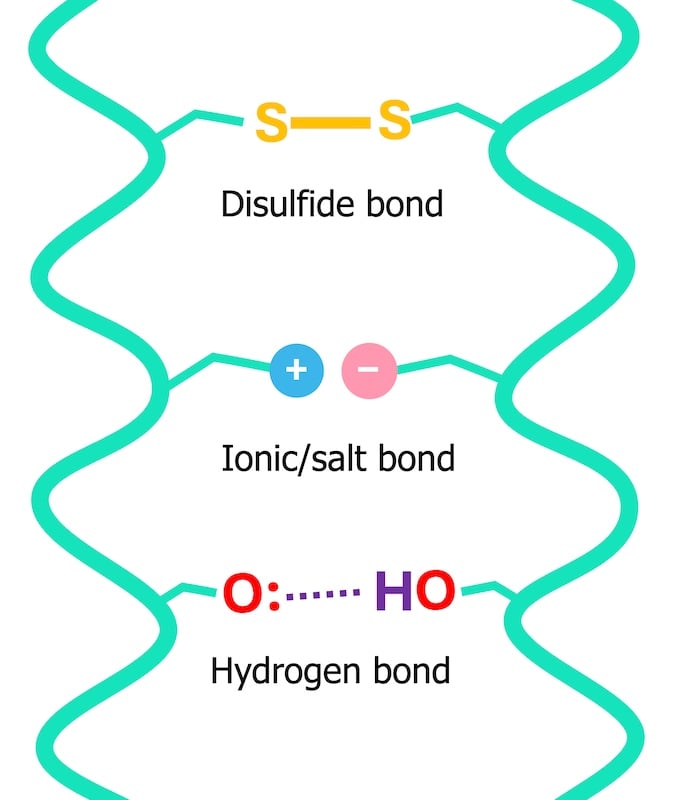
Human hair is primarily composed of a fibrous protein called keratin. Within the internal structure of the hair shaft, particularly in the cortex, protein chains are held together by a dense network of chemical bonds. These bonds dictate the hair’s overall strength, elasticity, and shape.
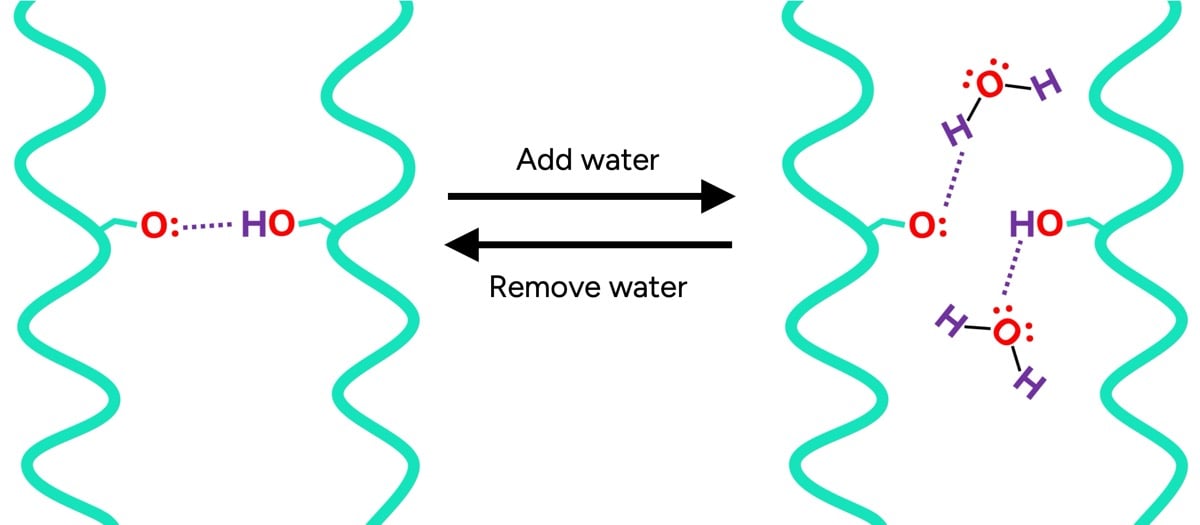
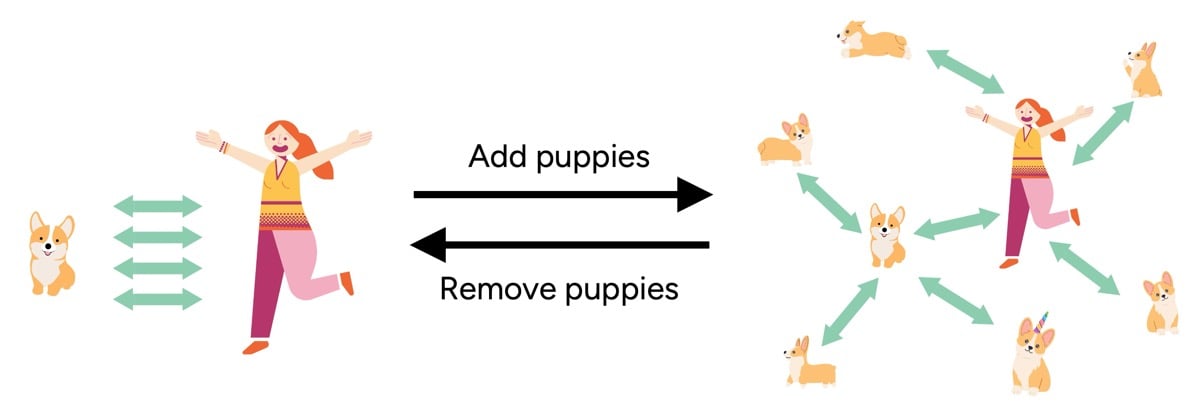
In dry hair, temporary bonds—specifically hydrogen bonds—act like microscopic molecular glue, connecting protein chains to one another and keeping the hair relatively stiff. When water is introduced to the hair shaft, however, water molecules aggressively compete with these protein chains. Instead of proteins holding hands with each other at a molecular level, they form hydrogen bonds with the incoming water molecules. Consequently, wet hair possesses significantly fewer internal bonds holding its primary protein framework together.
This chemical shift creates a dramatic physical dichotomy: dry hair is stiffer and more brittle because it has a high density of internal bonds, whereas wet hair is significantly stretchier and more elastic because those bonds have been temporarily broken and replaced by water interactions.
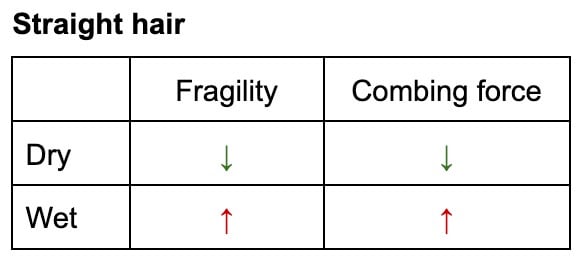
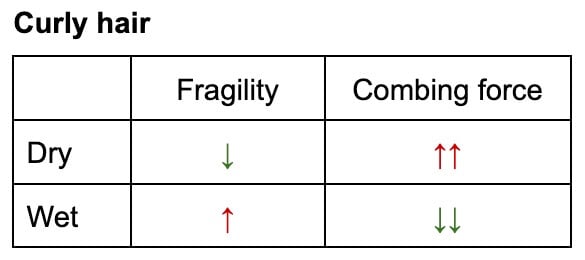
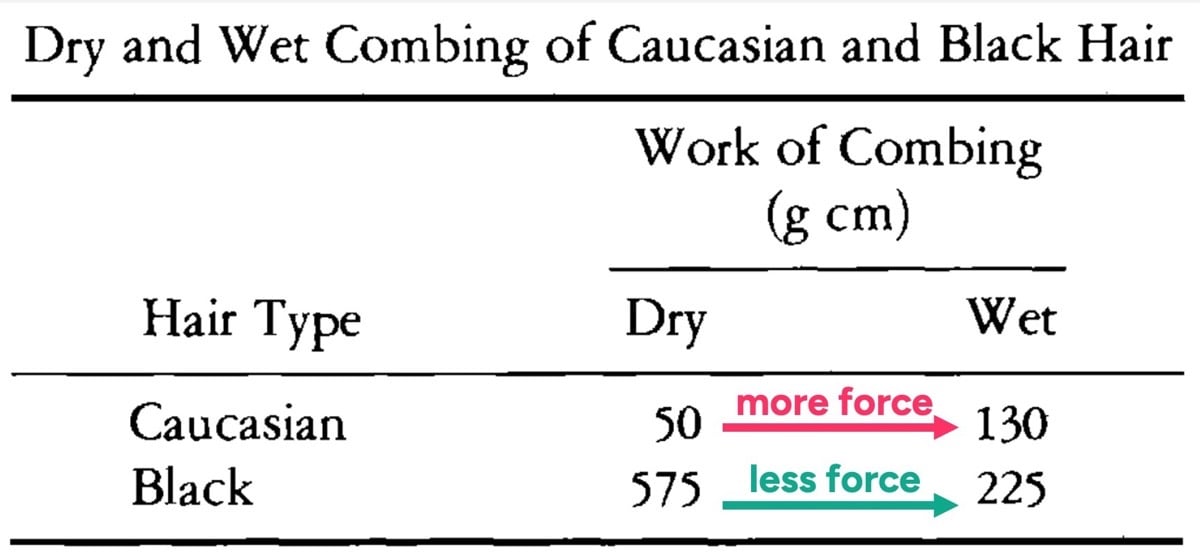
This molecular disruption explains why hair behaves so differently when wet versus dry, and why the physical act of detangling carries vastly different risks depending on hair texture. For straight hair, which lacks natural bends to ease tension, being wet means it is simultaneously weaker and subject to higher surface friction, as water acts almost like an adhesive between strands. Combing straight hair while wet routinely results in a higher rate of mechanical damage. Conversely, for curly and coily hair, the looser geometric configuration means that despite the individual strands being weaker when wet, the overall resistance and tangling forces decrease, making wet detangling safer than dry detangling.
The Sensory Paradox: Why "Hydrated" Hair Actually Has Less Water
One of the most persistent ironies in hair science is that hair perceived by consumers as soft, smooth, and "healthy" frequently contains less water than hair that feels rough, coarse, and damaged.
In consumer testing panels, participants consistently rate hair samples with lower moisture content as feeling more moisturized, smoother, less tangled, and less damaged. To understand why, one must look at the outermost layer of the hair shaft: the cuticle. The cuticle consists of overlapping, scale-like structures that lie relatively flat against the hair shaft in dry, undamaged conditions.
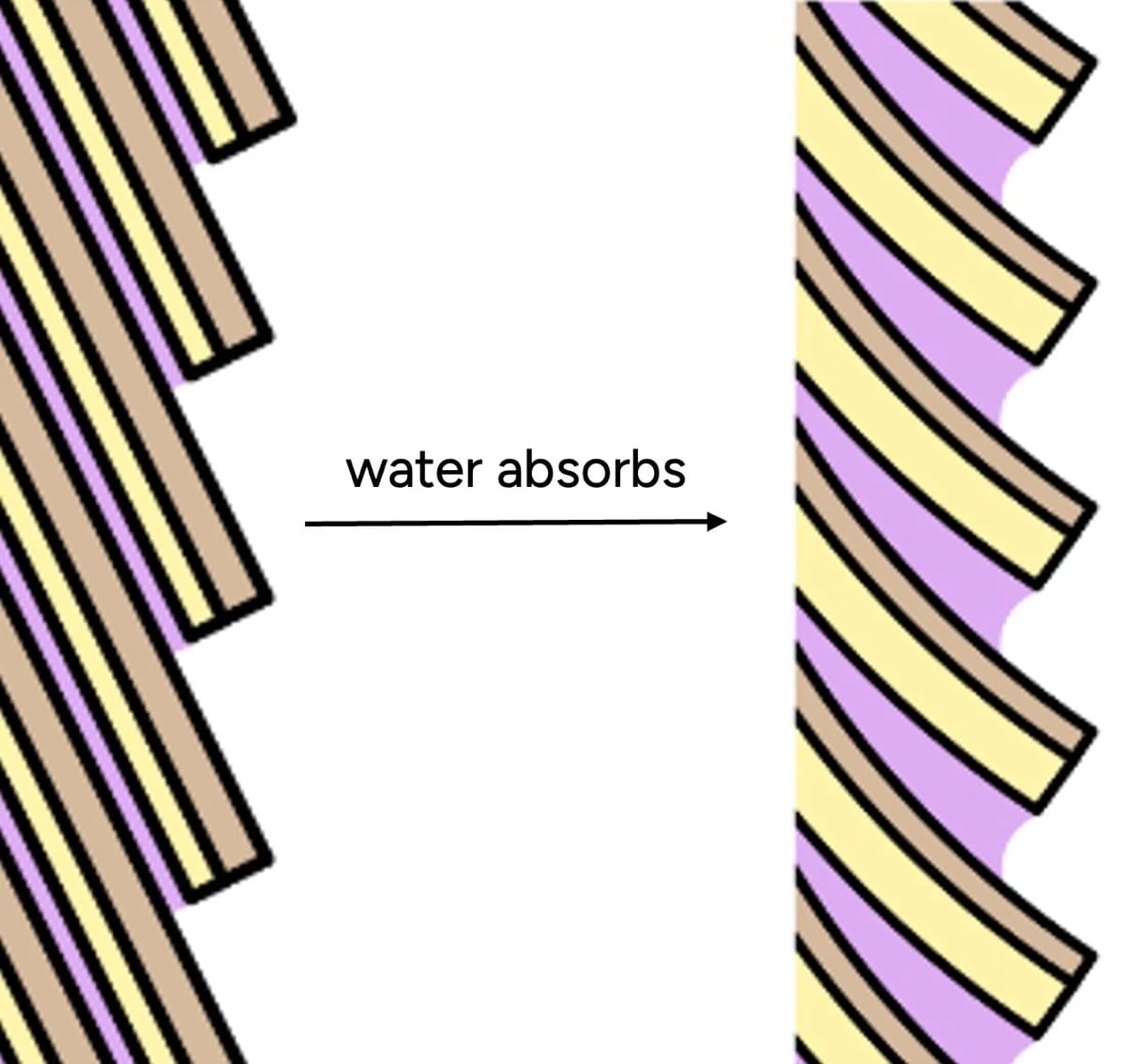
When water floods the hair, the internal sub-structures of the cuticle—specifically the endocuticle and the cell membrane complex—absorb significantly more moisture than the upper layers of the scales. This uneven swelling causes individual cuticle scales to lift and buckle outward, creating a microscopic landscape that is remarkably bumpy and rough. Furthermore, water increases surface friction. Just as one might lick a finger to gain better traction when turning a smooth page of a book, water molecules create a grippier surface texture at a microscopic level.
To human touch, this microscopic roughness is misinterpreted as dryness, highlighting a profound disconnect between scientific metrics and consumer sensory language.
The Mechanics of Conditioning and the Illusion of Hydration
Given that water alone makes the hair surface rougher and weaker, the commercial success of "hydrating" hair products relies entirely on auxiliary ingredients rather than the water itself. Modern conditioners and treatments do not actually infuse water into the hair cortex in a lasting manner; instead, they deposit hydrophobic, oily substances—such as silicones and fatty alcohols—onto the cuticle.
These ingredients form microscopic protective films that smooth out the lifted cuticle scales, reduce surface friction, and mimic the natural lipid barrier known as the F-layer, which is stripped away through environmental weathering, chemical processing, and heat styling.
When consumers wash their hair and notice a dramatic improvement in texture and manageability, they are rarely experiencing the direct benefits of retained water. Instead, the washing process facilitates several critical secondary mechanisms:
- Uniform Product Distribution: Water acts as an efficient fluid vehicle, allowing conditioning agents to spread evenly across every strand rather than clumping in isolated areas.
- Shape Resetting: Because water breaks temporary hydrogen bonds, it allows the hair’s permanent bonds to pull the fiber back into its natural, unstressed configuration, effectively erasing heat styling memory and the distorting effects of humidity.
- Strand Alignment: In curly and coily hair, surface tension created by water causes adjacent wet strands to clump together in a process akin to self-assembly. These aligned formations increase surface area contact with the hand, transferring heat faster and creating a sensory impression of coolness and smoothness that the human brain interprets as "hydration."
- Microscopic Scale Recovery: Rapid drying with high heat can cause cuticle scales to buckle unevenly due to differential shrinkage. Soaking the hair in water and allowing it to dry naturally relieves this mechanical stress, resetting the microscopic topography of the cuticle.
The Ideal Moisture Equilibrium: Striking the Balance
While excessive water compromises hair integrity and low moisture leads to brittleness, human hair—much like human skin—operates best within a middle-ground equilibrium.
When hair is subjected to environments with exceptionally low humidity, such as pressurized airplane cabins or arid winter climates, the lack of ambient moisture gives rise to severe static electricity buildup. Without water molecules present to help dissipate electric charges, individual hair strands lose electrons upon friction and repel one another, resulting in aggressive flyaways.
Conversely, hair that is entirely deprived of moisture loses its flexibility and shock-absorbent properties. Without a baseline level of internal flexibility, mechanical actions like brushing cause stress to accumulate into microscopic fractures that eventually propagate and result in structural breakage. This phenomenon can be readily observed in human fingernails, which share similar keratin protein compositions: nails clipped immediately after a shower, when they possess higher flexibility, resist cracking far better than dry, brittle nails.
Broader Implications and Industry Impact
The scientific demystification of hair hydration carries significant implications for both cosmetic formulation and consumer habits. For decades, marketing narratives have capitalized on the intuitive appeal of "quenching" hair’s thirst. However, industry experts emphasize that true hair health is not about trapping water inside the fiber—a physical impossibility given the porous nature of dead keratin structures—but about protecting the cuticle and managing the hair’s mechanical response to environmental stressors.
Cosmetic chemists continue to pivot toward formulations that reinforce the lipid barrier, protect against thermal buckling, and manage friction rather than promising unachievable moisture retention. For consumers, the practical takeaways are clear: water is a vital utility for cleansing, reshaping, and distributing conditioning agents, but it must be handled with care.
Because hair is structurally weaker when wet, gentle handling, generous use of lubricating conditioners during detangling, and minimizing rapid thermal shock are far more critical to long-term hair integrity than any topical product claiming to infuse deep cellular hydration. Ultimately, understanding the true science of water and hair allows consumers to look past marketing buzzwords and adopt evidence-based routines that prioritize structural preservation over marketing myths.
