
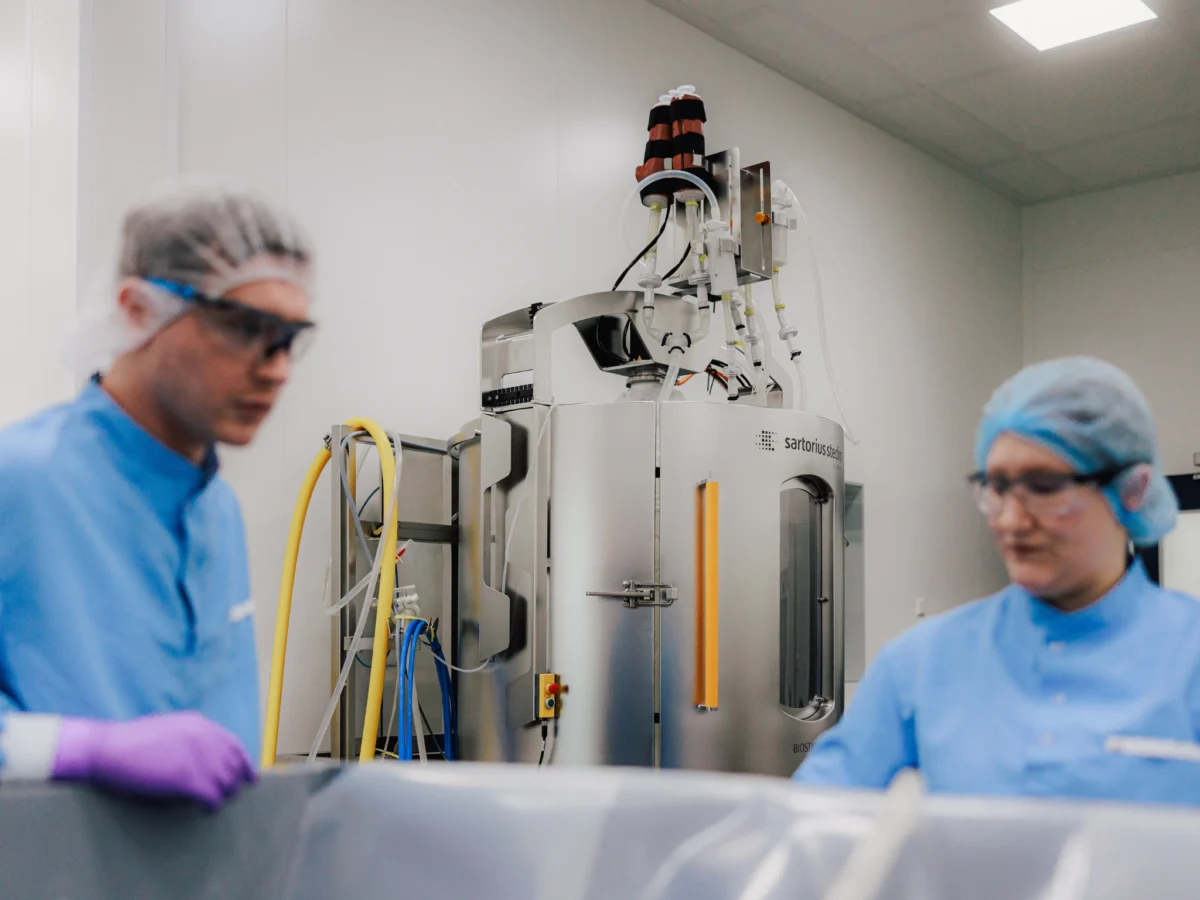
Months after strategically broadening its scope beyond cultivated seafood to encompass health and beauty applications, Hamburg-based Bluu has achieved a significant milestone in industrial-scale production of its cultivated fish cells. This breakthrough was realized at the state-of-the-art facility of Dutch company Cultivate at Scale, a specialist in facilitating the scale-up of cellular agriculture production processes. The partnership leverages the expertise of leading suppliers in cell feed, cell lines, and bioreactor technology to accelerate innovation in the cultivated marine ingredient space.
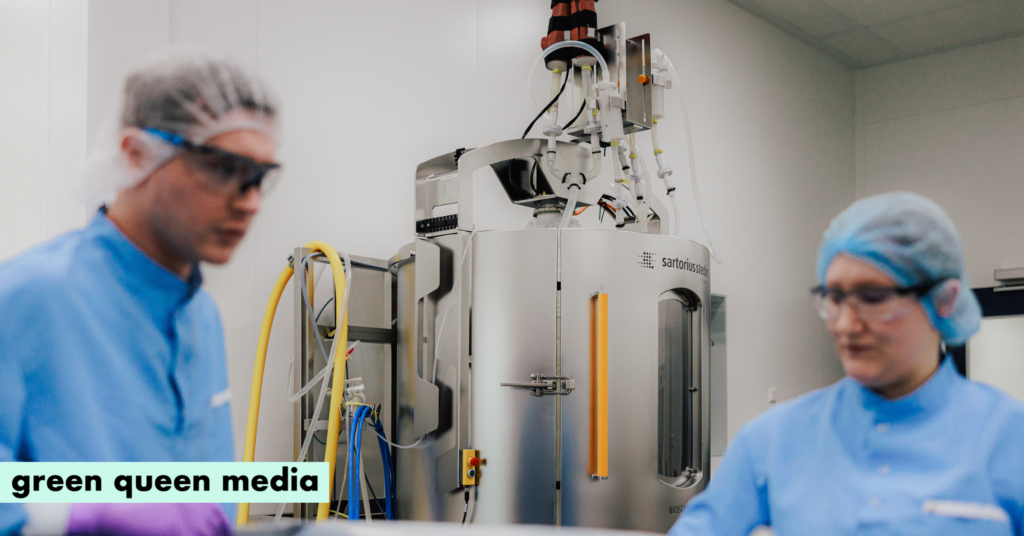
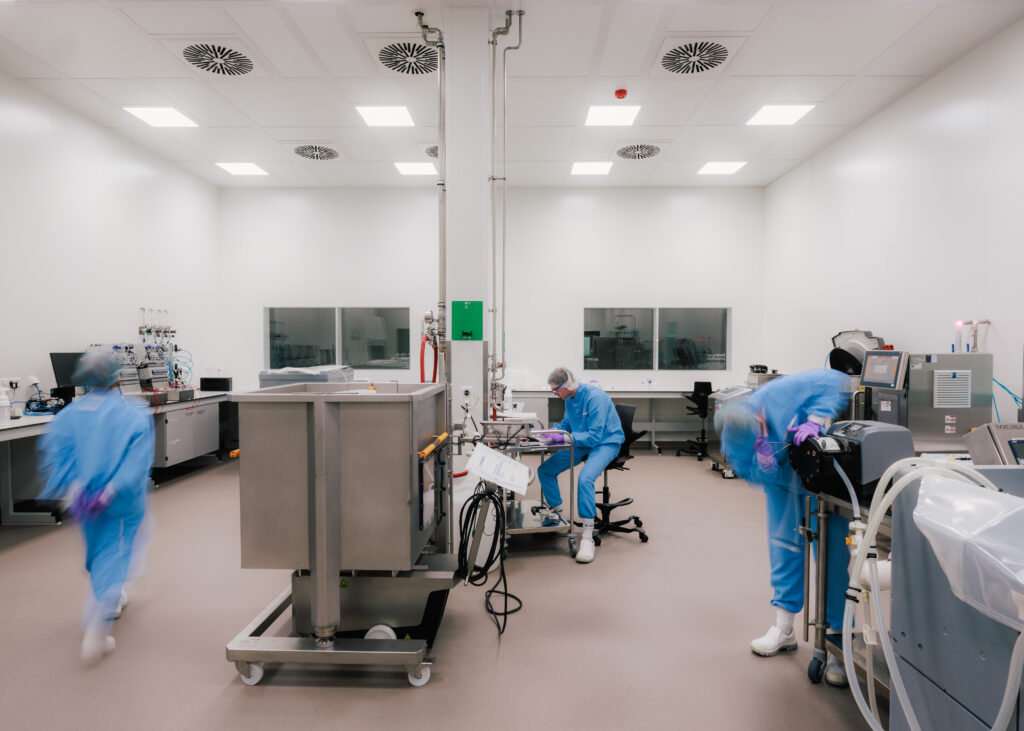
The collaboration between Bluu and Cultivate at Scale establishes a joint industrial platform dedicated to the production of cell-cultured marine ingredients. Bluu contributes its specialized knowledge in cultivating Atlantic salmon and rainbow trout cells, while Cultivate at Scale provides the crucial infrastructure for large-volume bioreactor production. This strategic alliance has enabled the two firms to produce fish cells in 1,000-liter bioreactors, a development they assert is a pioneering achievement for the cultivated marine ingredient sector.
Cornelius Lahme, Marketing and Communications Lead at Bluu, elaborated on the process: "We grow rainbow trout and Atlantic salmon cells in a nutrient medium outside the fish’s body within a bioreactor. These cells can then be harvested." He further emphasized the significance of their latest accomplishment: "For the first time, we have been able to harvest a 1,000-litre reactor with rainbow trout cells. To our knowledge, no other startup has ever been able to harvest fish cells in bioreactors of this size." This represents a substantial leap forward in the technological capabilities required for commercial-scale cellular agriculture.
Industrial Expansion Paves the Way for Cost Reduction and Market Access
Bluu’s initial venture was centered on the commercialization of cultivated fish for seafood applications. However, recognizing the evolving market landscape and the potential for more immediate commercial viability, the company strategically diversified into other product categories last year. "Our core expertise lies in the growth of fish cells outside the animal’s body in a bioreactor. These cells can be used for various purposes," explained Lahme.
Under its Bluu Seafood division, the company had already been developing salmon- and trout-derived seafood ingredients. The expansion into Bluu Skincare aims to produce pharmaceutical-grade bioactives, while the Bluu Health brand focuses on an all-in-one marine bioproduct with multiple health benefits. At the core of this strategic pivot is Bluu’s proprietary Bluu Zone technology platform, which facilitates the precisely controlled cultivation of fish cells to create bioidentical marine ingredients.
The utilization of Cultivate at Scale’s advanced facility in the Netherlands underscores the flexibility of Bluu’s production approach and the robustness of its underlying processes. Sebastian Rakers, Co-founder and CEO of Bluu, commented on the achievement: "This is an important breakthrough for Bluu. Not only can we produce the ingredient, but we also ensure that our cells are produced consistently in real production environments." He further highlighted the anticipated benefits of this industrial expansion: "The industrial expansion will enable further development and acceleration of our technology, particularly cell growth, ultimately leading to significant cost reductions."
Rakers expressed pride in the company’s progress: "We have already impressively demonstrated our ability to grow fish cells in bioreactors in an ocean-friendly and animal-friendly manner in recent years. We are proud to be able to show that we can implement this on an ever-larger scale and serve our first market with personal care products."
Regulatory Hurdles Drive Diversification into Personal Care
The long-term production partnership with Cultivate at Scale is integral to Bluu’s strategy of establishing localized production capabilities and positions the company for potential future expansion into other European markets. Jaco van der Merwe, Managing Director of Cultivate at Scale, hailed the collaboration as a significant achievement: "This joint project is a milestone in European cell cultivation and a significant step for us, and it is a fine example of efficient German-Dutch cooperation."
Cultivate at Scale itself emerged from the pioneering Dutch cultivated meat company Mosa Meat in 2025. The firm secured a substantial €25 million investment from the Dutch government’s National Growth Fund, supplemented by private investors, to establish its operations and facilitate the scaling of cellular agriculture.
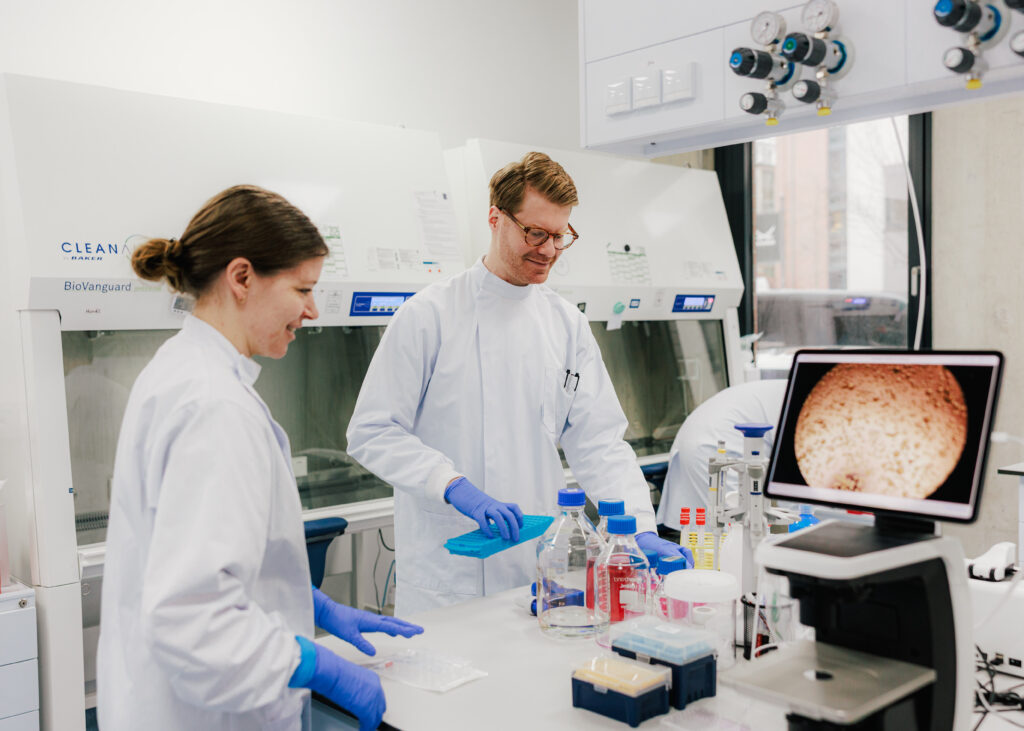
Lahme provided further insight into Bluu’s strategic decision to diversify its market focus: "Our work and expertise focus on the cell culture of fish cells in bioreactors. This has not changed. However, due to the unfortunately still very lengthy approval processes in the food sector, access to other markets – such as the personal care sector – is significantly faster." This pragmatic approach, driven by the desire for more rapid market entry, has made the personal care industry the immediate priority for Bluu. "This is currently the most important factor for Bluu as a business," Lahme stated, explaining the initial focus on cosmetics and beauty products. "However, this does not change our long-term strategy. The food sector will follow. Food product development is merely on hold."
Regarding the company’s regulatory and launch strategy for the personal care market, Lahme outlined their current objective: "We are currently aiming to operate as a manufacturer of ingredients (raw materials) for the personal care industry. To do so, safety and efficacy studies are first required to substantiate our claims. We are currently working on this."
To date, Bluu has successfully secured €30 million in funding. "The next round of funding is currently underway. The money will be used to scale up the business," Lahme confirmed, indicating continued investor confidence in the company’s innovative approach and market potential.
Broader Industry Trends: Cultivated Seafood Beyond Food
Bluu’s strategic pivot into the personal care sector mirrors a growing trend among cultivated seafood startups. Several companies are recognizing the potential for their cell-cultured ingredients in high-value, less regulated markets. Singaporean company Umami Bioworks, for instance, has also announced a move into marine bioactives for skincare, initially focusing on the regenerative compound PDRN. Similarly, Avant diversified from seafood into skincare in 2021. They have since launched ZelluGen, a regenerative peptide complex, under their newly unveiled Biotecq brand, catering to the cosmetic and beauty industry.
These industry shifts highlight a strategic adaptation within the cellular agriculture space. While the ultimate goal for many remains the disruption of traditional food systems, companies are leveraging their core technological competencies in cell cultivation to access markets with more streamlined regulatory pathways. This allows for earlier revenue generation, provides valuable operational experience, and builds market familiarity with cell-derived ingredients, potentially smoothing the path for future food product approvals. The success of these early entrants in the personal care sector could serve as a significant catalyst for the broader adoption of cultivated ingredients across various industries.
The partnership between Bluu and Cultivate at Scale represents a tangible step towards making cultivated marine ingredients a scalable reality. The ability to produce these ingredients in large-volume bioreactors not only addresses the critical challenge of cost reduction but also positions Bluu to become a key supplier in the burgeoning personal care market. This development signifies a maturing phase for cellular agriculture, where innovation is increasingly being matched by industrial-scale production capabilities and strategic market diversification. The long-term implications suggest a future where bio-identical ingredients, cultivated sustainably and ethically, could become a cornerstone of various consumer products, from high-end cosmetics to potentially everyday foods.
