
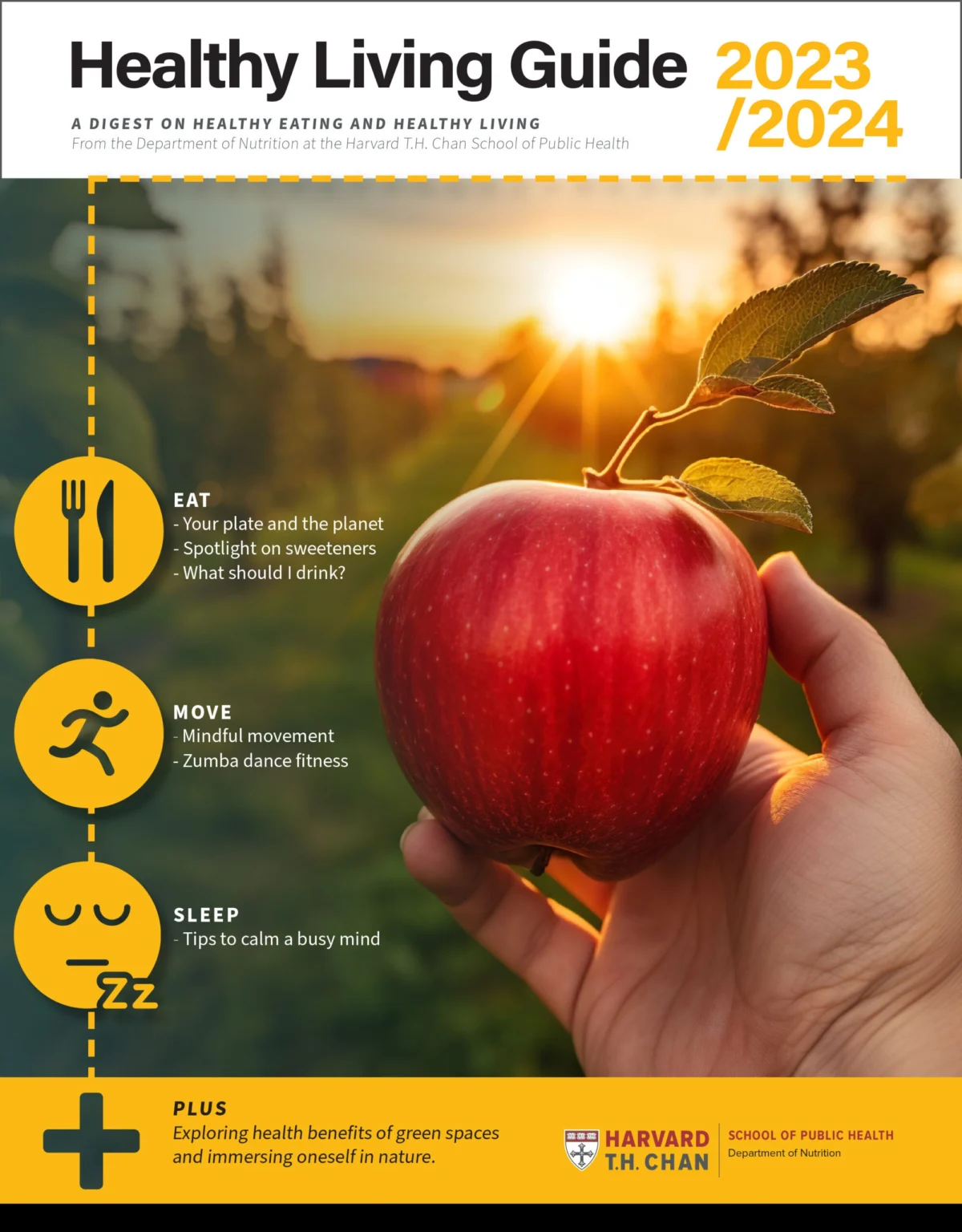
The Department of Nutrition at Harvard T.H. Chan School of Public Health has released its fourth annual Healthy Living Guide, offering a comprehensive resource for individuals seeking to enhance their well-being through informed choices in nutrition, physical activity, and sleep. This year’s edition, published at the outset of 2024, is particularly notable for its integration of mindfulness principles, a reflection of the Department’s commitment to fostering holistic health at both individual and societal levels.
A significant development underpinning this year’s guide is the recent launch of the Thich Nhat Hanh Center for Mindfulness in Public Health. Established within the Department of Nutrition, this Center is dedicated to exploring and promoting the application of mindfulness practices to improve public health outcomes. The Center’s overarching mission aligns with the growing body of scientific evidence suggesting that mindfulness can play a crucial role in shaping healthier behaviors, particularly in areas such as eating habits and stress management, which in turn have profound implications for both personal health and the sustainability of global food systems.
The Healthy Living Guide serves as a practical compendium of research findings, expert insights, and actionable tips. It delves into critical contemporary issues, including the pervasive impact of ultra-processed foods on mental health, the motivational power of music and structured activities like Zumba for physical fitness, and the nuanced science behind individual sleep patterns, often referred to as "chronotypes." The inclusion of these diverse topics underscores a holistic approach to health, recognizing the interconnectedness of diet, exercise, sleep, and mental well-being.
Evolution of the Healthy Living Guide and the Rise of Mindfulness in Public Health
The Healthy Living Guide has evolved over its four-year tenure, consistently aiming to distill complex nutritional science and lifestyle recommendations into accessible formats for the general public. The inaugural guide, released in early 2021, likely focused on foundational principles of healthy eating and the importance of physical activity and adequate sleep, potentially in the context of the emerging global health challenges of that period. Subsequent editions have built upon this foundation, incorporating emerging research and addressing more specific public health concerns.
The establishment of the Thich Nhat Hanh Center for Mindfulness in Public Health marks a strategic expansion of the Department’s research agenda. This initiative, launched in 2023, signifies a deliberate effort to bridge the gap between contemplative practices and evidence-based public health interventions. The Center’s focus on applying mindfulness to population-level well-being is particularly relevant in an era characterized by rising rates of chronic diseases, mental health challenges, and environmental concerns.
Mindful eating, a core tenet of the Center’s work, is presented in the Guide as a powerful tool for fostering a healthier relationship with food. This approach encourages individuals to pay full attention to the experience of eating, noticing the sensory qualities of food, recognizing hunger and satiety cues, and understanding the emotional and environmental factors that influence food choices. Research suggests that mindful eating can lead to reduced overeating, improved digestion, and a greater appreciation for nutritious foods.
Key Research Highlights and Practical Applications
This year’s Healthy Living Guide prominently features research on the detrimental effects of ultra-processed foods (UPFs). A growing body of scientific literature links high consumption of UPFs – typically characterized by industrial formulations, low nutritional value, and high levels of added sugars, unhealthy fats, and sodium – to an increased risk of various health problems. These include obesity, type 2 diabetes, cardiovascular disease, and certain types of cancer. Emerging research also points to a significant association between UPF consumption and negative mental health outcomes, such as depression and anxiety. The Guide aims to inform readers about these risks and provide practical strategies for reducing UPF intake, such as prioritizing whole, unprocessed foods and understanding food labels.
The Guide also champions the role of physical activity, with a spotlight on the motivational benefits of music and engaging group fitness programs like Zumba. Studies have consistently shown that physical activity is essential for maintaining a healthy weight, strengthening bones and muscles, improving cardiovascular health, and enhancing mood. Music has been demonstrated to increase enjoyment during exercise, reduce perceived exertion, and improve performance. Zumba, a dance fitness program, combines high-energy music with Latin-inspired dance moves, making physical activity fun and accessible for a wide range of fitness levels. The Guide likely offers tips on incorporating such activities into daily routines.
Furthermore, the Guide addresses the critical aspect of sleep, exploring the concept of "chronotypes." Chronotypes refer to an individual’s natural inclination to sleep and wake at certain times, often categorized as early birds (larks), night owls, or intermediate types. Understanding one’s chronotype can be crucial for optimizing sleep quality and duration, which are fundamental for cognitive function, emotional regulation, immune health, and overall metabolic well-being. The Guide likely provides insights into how to align daily schedules with natural chronobiological rhythms and the potential health implications of consistently ignoring these internal clocks.
Data Supporting Healthy Lifestyle Choices
The recommendations within the Healthy Living Guide are underpinned by extensive scientific research and epidemiological data. For instance, the World Health Organization (WHO) estimates that inadequate physical activity is one of the leading risk factors for noncommunicable diseases (NCDs) globally, contributing to approximately 3.2 million deaths annually. Similarly, the prevalence of obesity has reached epidemic proportions worldwide, with the Centers for Disease Control and Prevention (CDC) reporting that over 40% of U.S. adults are classified as obese. These statistics highlight the urgent need for accessible and evidence-based guidance on healthy eating and active living.
Research on ultra-processed foods has also gained significant traction. A 2022 study published in The BMJ analyzed data from over 100,000 participants and found a 25% increased risk of all-cause mortality and a 48% increased risk of cardiovascular disease mortality among those with the highest consumption of UPFs. These findings underscore the profound impact of dietary patterns on long-term health outcomes.
The importance of sleep is equally well-documented. The National Sleep Foundation recommends that adults aged 18-64 years get 7-9 hours of sleep per night. Chronic sleep deprivation has been linked to a myriad of health issues, including impaired immune function, increased risk of accidents, and exacerbated symptoms of mental health disorders.
Broader Impact and Future Directions
The Healthy Living Guide and the ongoing work of the Thich Nhat Hanh Center for Mindfulness in Public Health represent a forward-thinking approach to public health. By integrating mindfulness into nutritional science and lifestyle recommendations, the Department of Nutrition is not only empowering individuals to make healthier choices but also contributing to a broader societal shift towards more conscious and sustainable living.
The implications of this approach are far-reaching. At an individual level, adopting mindful eating habits, engaging in regular physical activity, and prioritizing sufficient sleep can lead to significant improvements in physical and mental health, reducing the burden of chronic diseases and enhancing overall quality of life. At a population level, fostering a culture of mindfulness and healthy living can contribute to more resilient communities, reduced healthcare costs, and a more sustainable relationship with the environment.
The emphasis on population-level well-being through mindfulness suggests a commitment to addressing systemic factors that influence health behaviors. This could include advocating for policies that promote access to healthy foods, create opportunities for physical activity, and support healthy sleep environments. The integration of mindfulness into public health frameworks holds the potential to create lasting positive change, addressing not just the symptoms of ill health but also the root causes.
The Healthy Living Guide is made available as a downloadable PDF, including printable tip sheets and summaries, allowing for easy access and integration into daily life. Readers are also encouraged to access full online articles through provided links, facilitating deeper exploration of the featured topics. This dual approach ensures both immediate utility and the opportunity for comprehensive learning.
As the Department of Nutrition continues to advance research in these critical areas, the Healthy Living Guide serves as an annual beacon, illuminating the path towards a healthier, more fulfilling, and mindful future for individuals and communities alike. The commitment to evidence-based practices, coupled with innovative approaches like the integration of mindfulness, positions the Department at the forefront of public health advancement.
