
A comprehensive new analysis by the Changing Markets Foundation has revealed a significant gap in climate action among major dairy and coffee producers in Europe and North America. Despite widespread acknowledgment of the critical link between agriculture, livestock, and the escalating climate crisis, only three leading companies – Danone, General Mills, and FrieslandCampina – have publicly committed to specific targets for reducing methane emissions. This lack of concrete action from the vast majority of the sector raises serious concerns about the industry’s commitment to mitigating its substantial environmental impact.
The non-profit organization examined the practices of 23 prominent businesses within these sectors. Their findings underscore a concerning trend: while 91% of these companies acknowledge the connection between livestock farming and the climate crisis, most have failed to translate this recognition into actionable emission reduction goals. This disparity highlights a critical need for greater transparency and accountability within the dairy and coffee industries regarding their contribution to greenhouse gas emissions.
Danone Leads the Pack with Ambitious Methane Goals
Within this landscape, Danone stands out as the sole company demonstrably aligned with the Global Methane Pledge’s ambitious target of reducing methane emissions by 30% by the end of the decade. General Mills and FrieslandCampina have established broader benchmarks aimed at reducing their overall dairy emissions by 2030, representing a step in the right direction but lacking the specific methane focus of the Global Methane Pledge. The Bel Group has privately disclosed a methane reduction target, but this disclosure lacks a clear baseline, making it difficult to assess its true impact or progress.
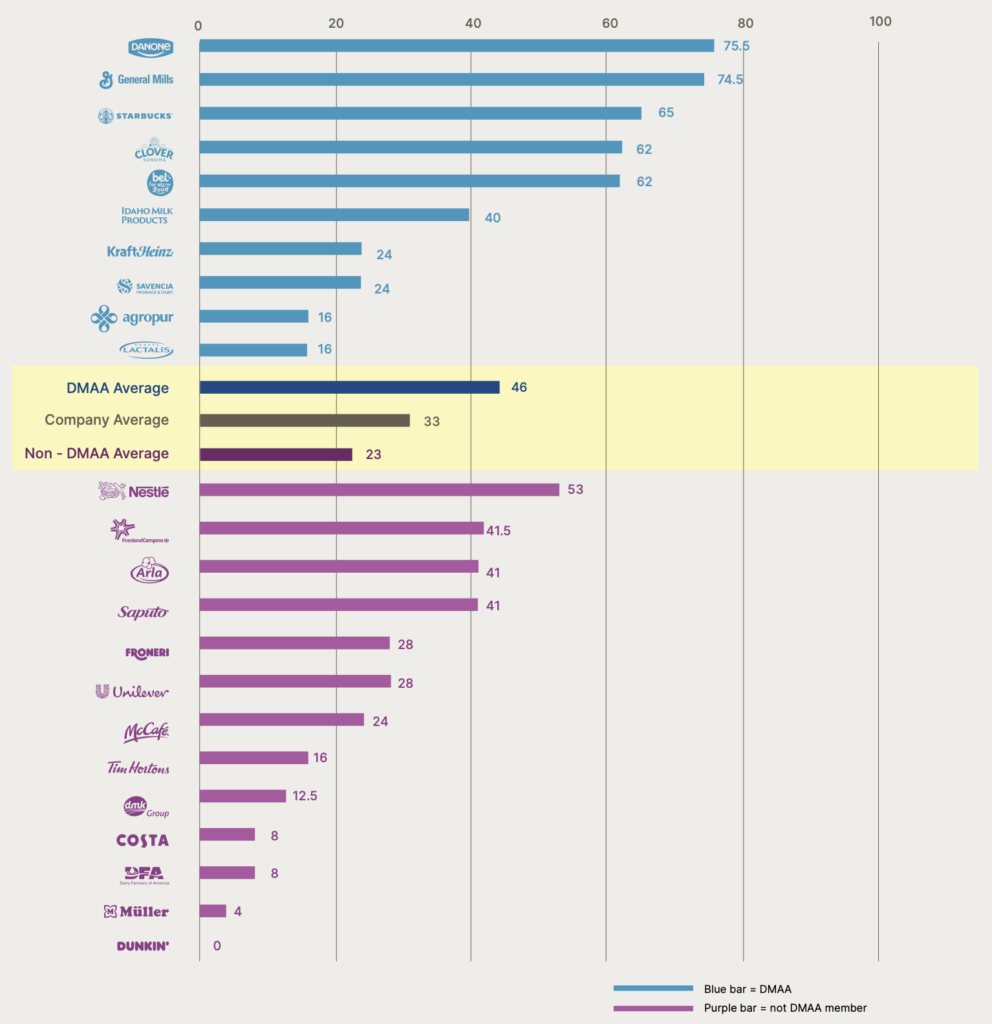
This commitment to quantifiable methane reduction has propelled Danone to the top of the Changing Markets Foundation’s rankings, earning it 75.5 out of a possible 108 points. The company, owner of well-known brands such as Actimel, Alpro, Silk, and Oikos, has demonstrated that setting ambitious, publicly accountable targets can drive meaningful change. Following closely behind Danone are General Mills, with 74.5 points, and Starbucks, with 65 points.
Nusa Urbancic, CEO of the Changing Markets Foundation, emphasized the impact of such commitments: "Danone’s progress shows that targets focus minds when backed by regular reporting and accountability." This statement underscores the crucial role of transparency and consistent reporting in ensuring that corporate climate pledges translate into tangible environmental benefits.
A Transparency Deficit in Methane Emissions Reporting
The analysis further highlighted a significant transparency deficit concerning the disclosure of methane emissions. A total of eight companies, including Starbucks, Nestlé, Clover Sonoma, and Danone, reported their livestock methane emissions, either in methane (CH4) or carbon dioxide equivalent (CO2e) figures. This provides a crucial, albeit limited, insight into their operational impact.
However, the remaining 15 companies, encompassing major players like Unilever, Kraft Heinz, Dunkin’, and McDonald’s, failed to disclose their methane emissions for the 2024 or 2025 reporting periods. This lack of disclosure creates a significant "transparency gap," hindering external assessment of their environmental performance and making it difficult for consumers and investors to make informed decisions.
Early Reductions and the Importance of Scope 3 Emissions
Amidst the broader lack of transparency, Danone, Nestlé, and Bel Group were identified as the only companies to report actual methane reductions in either 2024 or 2025. Danone, in particular, has made substantial progress, recording a nearly 30% cut in methane emissions from its fresh milk production, over 17% from procurement processes, and 11% from farm performance management. This impressive performance means Danone is already close to achieving its overall methane emissions goal of 30% reduction, a full five years ahead of its 2030 target.
Nestlé reported a 20% reduction in methane emissions, though the specific methodologies employed to achieve this reduction were not detailed in the analysis. Bel Group managed to slash methane emissions by 23%, using a 2017 baseline for comparison. For all these companies, a significant portion of their methane emissions stems from Scope 3, specifically emissions associated with milk purchases, which account for an average of 31.7% of their overall environmental footprint. This finding emphasizes the critical need for companies to address emissions not only within their direct operations but also throughout their supply chains.
Dairy Methane Action Alliance Members Show Stronger Performance
The analysis also revealed a correlation between corporate membership in the Dairy Methane Action Alliance (DMAA) and better performance in methane emission reporting and target setting. Companies that are members of the DMAA outperformed non-members, scoring, on average, twice as highly in the rankings. This suggests that collaborative initiatives and industry-wide commitments can be powerful drivers of progress.
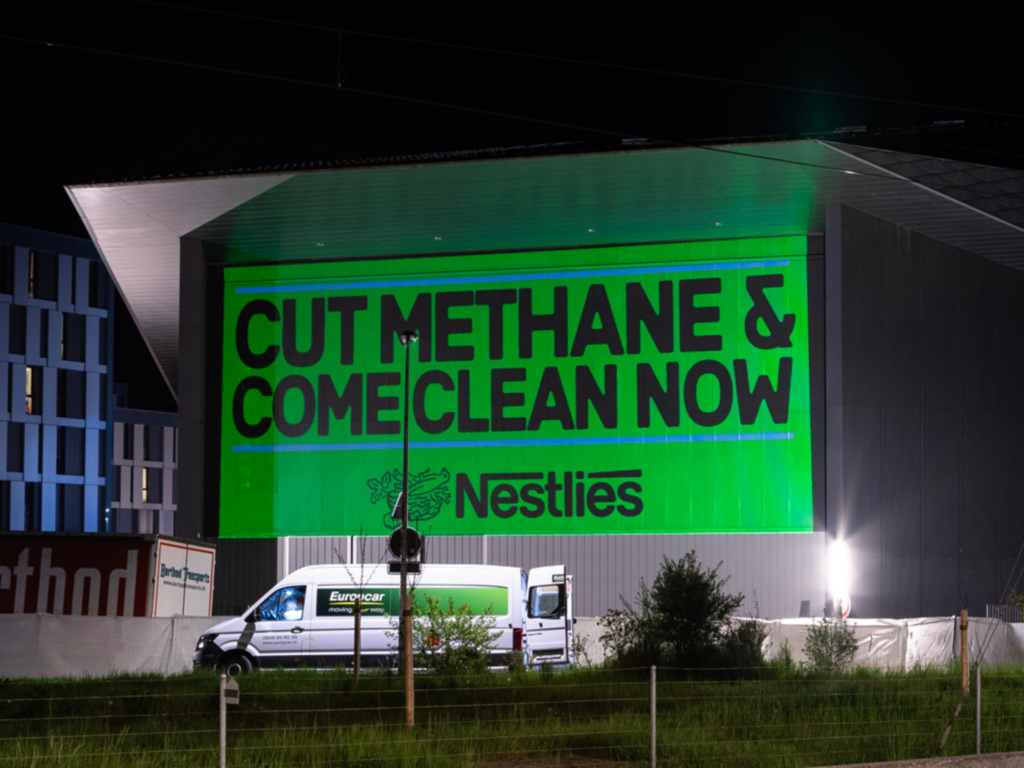
Nestlé, a founding member of the DMAA, notably left the association last year without providing an explanation. This departure raises questions about the company’s continued commitment to collaborative methane reduction efforts, despite its reported emission reductions.
Starbucks, another DMAA member, emerged as the sole coffee company to disclose its methane emissions and achieve a high score in the ranking. In contrast, other prominent coffee brands such as Tim Hortons (16 points), Costa (eight points), and Dunkin’ (zero points) ranked near the bottom of the assessment. Similarly, German dairy company Müller received a low score of four points, placing it second-to-last, just ahead of Dairy Farmers of America, which scored eight points.
"Our rankings show that setting a science-based methane target is one of the most important levers to drive emissions reductions," stated Urbancic. "Methane is a crucially important climate emergency brake, and we need other food companies to ramp up ambition." Her remarks highlight the urgent need for broader industry adoption of ambitious methane reduction strategies.
The Potent Impact of Methane and the Urgent Need for Action
Methane (CH4) is a potent greenhouse gas with a disproportionately significant impact on global warming, particularly in the short term. It is responsible for approximately 0.5°C of the Earth’s observed warming and is 86 times more powerful than carbon dioxide (CO2) over a 20-year period. Beyond its warming potential, methane is a primary contributor to ground-level ozone, a harmful air pollutant linked to an estimated one million premature deaths annually worldwide.
The trajectory of methane emissions is alarming. Between 2000 and 2020, human-caused methane emissions grew by as much as 20%. Projections indicate that without significant intervention, these emissions could increase by up to 13% between 2020 and 2030, pushing the world further away from the critical goal of limiting global warming to 1.5°C.
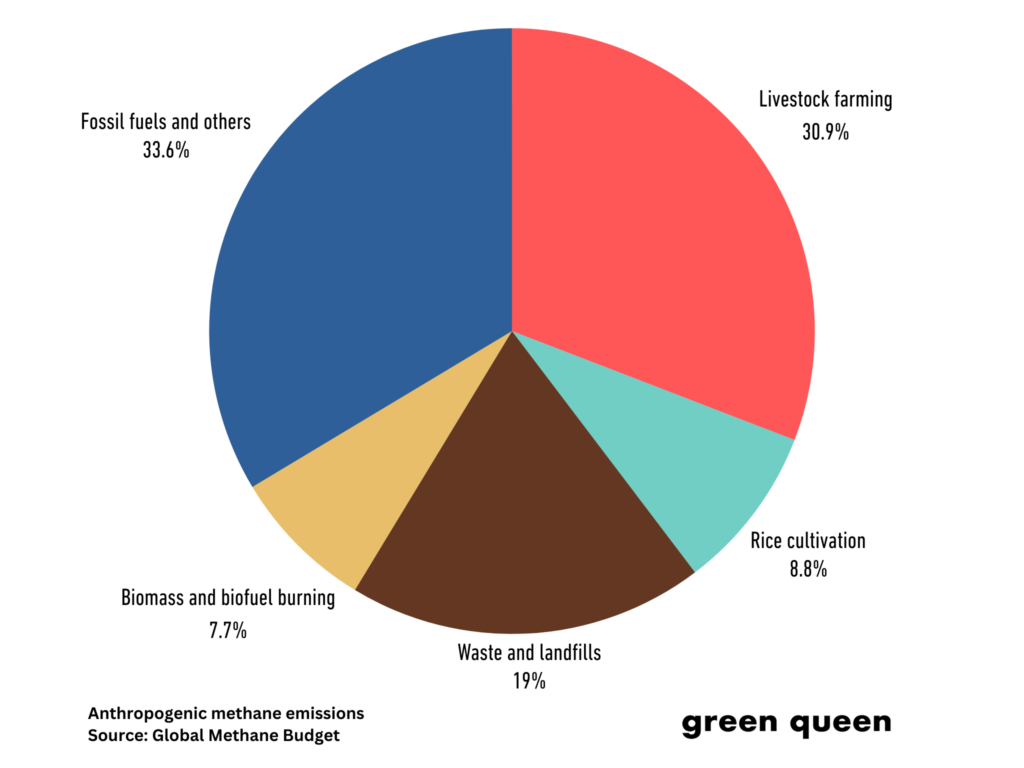
Agriculture stands out as the leading source of human-caused methane emissions, with livestock farming accounting for the majority of these emissions. Methane alone constitutes between 25% and 80% of the total emissions from livestock producers. Danone’s research indicates that the dairy sector is responsible for approximately 8% of global methane output. This significant contribution is primarily attributed to enteric fermentation, the digestive process in ruminant animals like cattle. As these animals digest their food, specialized microbes in their digestive systems produce methane, which is then released into the atmosphere through belching and flatulence.
The scale of the problem is further underscored by research indicating that 52 of the largest meat and dairy producers collectively emit 22 million tonnes of methane annually. If this collective emission were attributed to a single country, it would rank as the fifth-highest global emitter. This stark reality makes the achievement of the Global Methane Pledge "unachievable without a step change in action" from the livestock sector.
Policy Shifts and the Future of Methane Reporting
The increasing global focus on climate action is beginning to translate into policy changes that will likely compel companies to improve their methane reporting. The European Union’s Corporate Sustainability Reporting Directive (CSRD), for instance, is poised to increase pressure on companies to enhance their climate disclosure practices. Under strengthened reporting and double materiality requirements, businesses will be obligated to account for their methane emissions more explicitly.
Despite the lagging performance of dairy and coffee companies in terms of "weak disclosure, limited transparency and little evidence of meaningful methane action," they are, in some respects, ahead of the supermarket sector. The Changing Markets Foundation’s previous research indicated that no major global retailer publicly discloses methane emissions or targets, highlighting a broader systemic challenge in the food retail landscape.
"The direction of travel is clear: companies will need to put systems in place to account and report methane emissions," the report concluded. "As scrutiny increases, companies that already have these systems in place will be better prepared for incoming regulations." This forward-looking statement suggests that proactive engagement with methane emissions reporting and reduction is not only an environmental imperative but also a strategic necessity for future regulatory compliance and corporate resilience. The analysis serves as a critical call to action for the dairy and coffee industries to accelerate their efforts in addressing methane emissions, a vital step in the global fight against climate change.
