
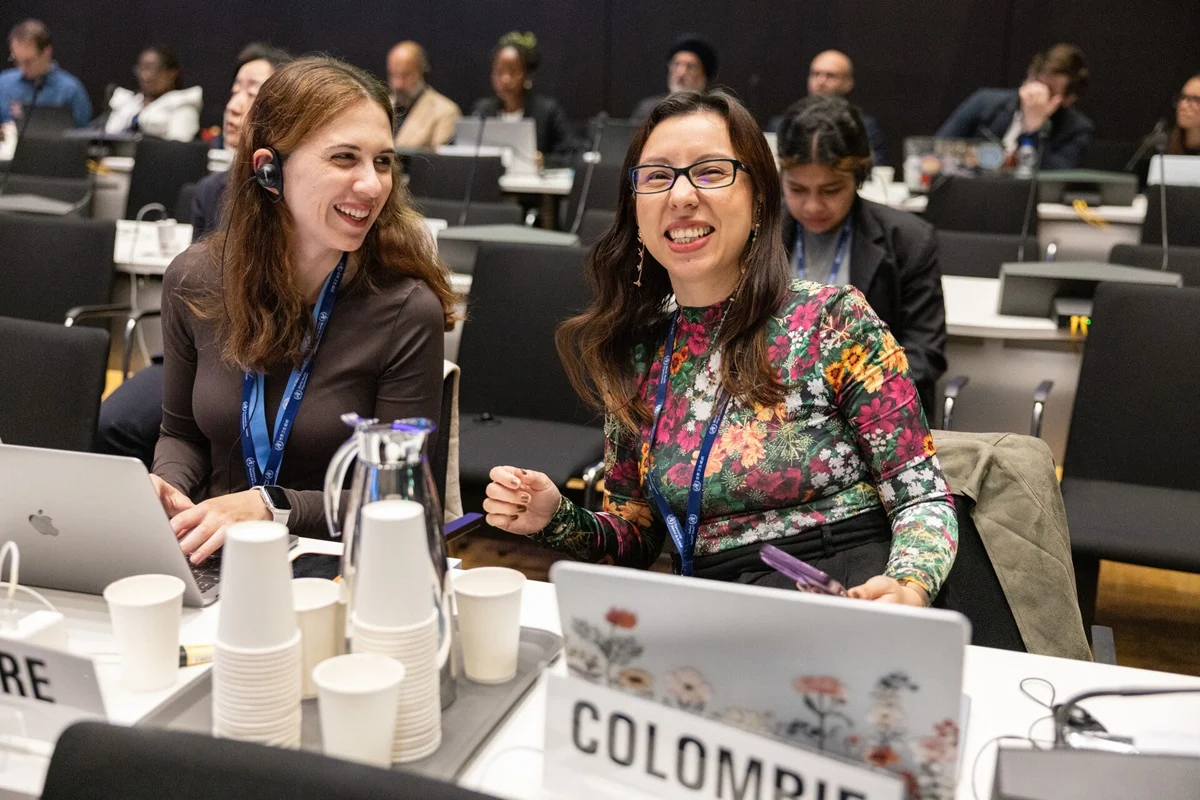
The Seventy-ninth World Health Assembly (WHA) concluded this week in Geneva, Switzerland, marking a pivotal moment in global health governance as Member States adopted more than 20 decisions and 13 resolutions aimed at reshaping the international medical landscape. Attended by delegations from 194 Member States, the Assembly addressed a formidable agenda ranging from specific clinical conditions—such as stroke, liver disease, tuberculosis, and haemophilia—to systemic overhauls of the global health architecture. The week-long summit served as a platform for intense diplomatic negotiation, resulting in a series of landmark agreements designed to bolster pandemic preparedness, ethical recruitment, and the integration of health into macroeconomic policy.
The closing of the Assembly was marked by a ceremonial transition and a call to action from the World Health Organization (WHO) leadership. WHO Director-General Dr. Tedros Adhanom Ghebreyesus presented a ceremonial gavel to the President of the Seventy-ninth WHA, Dr. Víctor Atallah Lajam, Minister of Health of the Dominican Republic, in recognition of his stewardship. Similar honors were bestowed upon the Chairs of the two main working committees: Dr. Timur Sultangaziyev, Deputy Minister of Health of Kazakhstan (Committee A), and Dr. Kwabena Mintah Akandoh, Minister of Health of Ghana (Committee B). In his final address, Dr. Tedros emphasized that the true measure of the Assembly’s success lies not in the text of the resolutions, but in their tangible impact on the ground. He noted that every agreement only holds value when it manifests as a vaccinated child, a surviving mother, or a contained outbreak, requiring sustained political and financial commitment to bridge the gap between policy and practice.
Strengthening the Global Health Workforce and Ethical Recruitment
One of the most significant outcomes of the 79th WHA was the approval of critical amendments to the WHO Global Code of Practice on the International Recruitment of Health Personnel. This update represents the first major revision to the Code in 16 years, reflecting the drastic shifts in the global labor market since its inception in 2010. The resolution aims to ensure that the international mobility of health workers does not undermine the health systems of developing nations, which often bear the cost of training professionals only to lose them to wealthier "destination" countries.
The revised Code now explicitly includes provisions for care workers and provides clearer guidance on how recruitment should be managed during global health emergencies. A key addition is the encouragement of "co-investment," where destination countries are urged to provide financial or technical support to the health systems of source countries. This ensures a more equitable distribution of benefits from international migration. The amendments were informed by an Expert Advisory Group (EAG), which highlighted that while there has been progress in migrant worker rights and data availability, significant gaps remain in supporting the infrastructure of source nations. As the world faces a projected shortage of 10 million health workers by 2030, these ethical guidelines are seen as foundational to achieving Universal Health Coverage (UHC) and maintaining global health security.
A New Economic Paradigm: The Strategy on the Economics of Health for All
In a move that signals a departure from traditional fiscal policy, Member States adopted the "Strategy on the Economics of Health for All (2026–2030)." This strategy seeks to reframe health not as a budgetary cost to be minimized, but as a primary driver of economic stability and sustainable development. For decades, global economic systems have often prioritized short-term growth over long-term well-being; the new WHO strategy aims to flip this script by placing equity and people at the center of financial decision-making.
Delegates at the Assembly emphasized that the world is currently facing a "global health financing emergency," exacerbated by the lingering economic shocks of the COVID-19 pandemic and rising debt burdens in low-income countries. The strategy outlines a framework for "well-being-oriented economies," urging governments to integrate health outcomes into industrial, fiscal, and environmental policies. By strengthening the technical capacity of health ministries to engage with ministries of finance, the WHO hopes to enable more informed decision-making that views investment in public goods—such as resilient health systems and clean water—as essential infrastructure for a prosperous economy.
Addressing the Silent Pandemic: Antimicrobial Resistance (AMR)
The Assembly also took decisive action against the escalating threat of antimicrobial resistance (AMR), approving an updated Global Action Plan (GAP-AMR) for the decade spanning 2026–2036. The data presented to the Assembly painted a sobering picture: currently, one in six common bacterial infections is resistant to standard antibiotic treatments. Research estimates that in 2021 alone, 4.71 million deaths were associated with bacterial AMR. Projections suggest that without intervention, this figure could rise to 39 million deaths by 2050, with a disproportionate impact on low- and middle-income countries.
The 2026–2036 plan adopts a "One Health" approach, recognizing that the health of humans, animals, and the environment are inextricably linked. The strategy sets an ambitious target to reduce bacterial AMR-associated deaths by 10% by 2030, a goal aligned with the 2024 UN General Assembly targets. Key pillars of the plan include expanding equitable access to effective antimicrobials, reducing the use of antibiotics in agrifood systems, and minimizing environmental pollution from pharmaceutical residues. To date, over 170 countries have developed national action plans on AMR, but the Assembly stressed that sustainable financing and cross-sectoral accountability are the missing links required to turn these plans into effective defenses.
First-Ever Resolution on Radiation and Health
For the first time in the history of the WHO, Member States agreed on a comprehensive resolution regarding radiation and health. This landmark decision covers both ionizing radiation (such as X-rays and gamma rays) and non-ionizing radiation (such as ultraviolet rays and electromagnetic fields). The resolution acknowledges the widespread exposure of the global population to radiation through medical imaging, occupational hazards, and environmental sources like radon and sunlight.
The new framework commits countries to strengthening national radiation protection systems, with a particular focus on protecting vulnerable populations, including children and pregnant women. Beyond the physical risks of cancer and acute radiation syndrome, the resolution also addresses the psychosocial impacts of radiation emergencies, such as those following industrial accidents. Member States agreed to scale up public awareness campaigns regarding natural radiation sources—notably UV radiation, a leading cause of skin cancer—and to ensure that the use of radiopharmaceuticals and radiotherapy in medical settings is both safe and equitable. Progress on these initiatives is slated for review at the 81st World Health Assembly in 2028.
Reforming the Global Health Architecture
Beyond specific disease interventions, the Seventy-ninth WHA addressed the structural vulnerabilities of the international health system. Member States reached a consensus to reform the global health architecture through a process that is led by Member States but hosted by the WHO. This reform is intended to streamline emergency responses and ensure that the WHO remains a neutral, evidence-based authority in an increasingly polarized political climate.
The administrative decisions included agreements on precision medicine, diagnostic imaging, and emergency care systems. These are viewed as critical "enablers" of health; without robust diagnostic tools and emergency response protocols, clinical resolutions on diseases like stroke or tuberculosis cannot be effectively implemented. The Assembly’s focus on precision medicine also highlights a shift toward more personalized healthcare, leveraging genetic data and advanced technology to improve treatment outcomes while grappling with the ethical implications of data privacy and equity.
Chronology of the 79th World Health Assembly
The proceedings in Geneva followed a rigorous timeline that reflected the urgency of the post-pandemic era:
- Opening Plenary: The Assembly began with high-level statements emphasizing the need for a "Pandemic Treaty" and the renewal of the WHO’s mandate.
- Mid-Week Negotiations: Committees A and B held concurrent sessions to debate the technical merits of the AMR action plan and the Economics of Health strategy.
- Late-Week Consensus: Following intense consultations, the amendments to the Recruitment Code were finalized, addressing concerns from both "source" and "destination" nations.
- Closing Session: Dr. Tedros delivered his final remarks, focusing on the "last mile" of healthcare delivery—ensuring that the resolutions reach the communities that need them most.
Analysis of Implications and Future Outlook
The outcomes of the Seventy-ninth World Health Assembly represent a strategic pivot for the WHO. By addressing the economics of health and the ethics of the workforce, the organization is moving beyond a purely biomedical model toward a more holistic, systemic approach to global well-being. The "Economics of Health for All" strategy, in particular, could redefine how international financial institutions like the World Bank and IMF interact with national health ministries.
However, the success of these resolutions remains contingent on "sustained financing," a recurring theme throughout the week. While the political will appeared strong in Geneva, the reality of domestic budget constraints and geopolitical tensions poses a significant challenge. The emphasis on "political commitment" from Dr. Tedros serves as a reminder that the WHO has the power to set the agenda, but it is the individual Member States that must provide the resources and legislation to enact change.
As the delegates depart Geneva, the focus shifts to the implementation phase. The targets for 2030—including the reduction of AMR deaths and the achievement of universal health coverage—are fast approaching. The 79th WHA has provided the legal and strategic framework; the coming years will determine whether the world has the collective resolve to fund and follow it.
