

The artificial intelligence industry is experiencing unprecedented growth, with projections indicating a 25-fold expansion of the global AI market between 2023 and 2033, potentially reaching $5 trillion. This technological revolution, powering the fourth industrial revolution, is accompanied by a significant environmental question that current assessments often overlook. While much of the discourse surrounding AI and climate change focuses on the energy consumed during the training of large models, a new report by the UN University Institute for Water, Environment and Health (UNU-INWEH) argues that these estimates are incomplete, failing to adequately account for the substantial impact of running AI systems in real-time.
The sheer scale of AI adoption is staggering. Corporate investment in AI exceeded $580 billion last year, with 78% of organizations reporting AI usage in their operations. This surge is also leading to significant shifts in the labor market, as 40% of global employers anticipate workforce reductions for tasks amenable to automation. Generative AI tools, such as ChatGPT, Claude, and Perplexity, currently constitute 20% of the global AI market, a share expected to double by the end of the decade. Notably, ChatGPT alone boasts over a billion monthly active users, representing 12% of the global population.
This rapid and pervasive growth is not without its consequences. Beyond the well-documented ethical concerns, including AI’s potential to exacerbate mental health issues and facilitate harmful content, the environmental footprint of AI is emerging as a critical area of concern. While some research suggests AI could potentially reduce global emissions by up to 10%, the UNU-INWEH report posits that current environmental impact evaluations are systematically mismeasured.

Sam Altman, co-founder and CEO of OpenAI, has previously drawn parallels between the energy required to train AI models and the energy needed to train humans, highlighting the extensive resource investment over decades of human development. However, even Altman has acknowledged the industry’s imperative to transition rapidly towards renewable energy sources like nuclear, wind, and solar power. Yet, the UNU-INWEH report suggests that this transition, while crucial, does not present a complete solution and introduces its own set of challenges.
A Critical Gap in AI’s Environmental Estimates
The UNU-INWEH report identifies a "critical gap" in the way AI’s environmental impact is currently assessed. The predominant focus on carbon emissions from training AI models is insufficient for several reasons. Firstly, every kilowatt-hour of electricity used in AI operations, whether for training or running models, carries a significant water footprint associated with cooling and power generation, as well as a land footprint linked to energy infrastructure and supply chains.
The report cautions that a shift to renewable energy sources, while reducing carbon emissions, can have unintended consequences. For instance, transitioning from coal to bioenergy might decrease the carbon footprint of electricity by 70%, but it could simultaneously increase water usage by over 30-fold and land use by more than 100 times. This could disproportionately burden regions already facing severe water scarcity or land degradation. "Low-carbon is not automatically low-water or low-land," the report emphasizes, warning that evaluating sustainability through a single metric can obscure critical trade-offs and shift environmental burdens onto vulnerable communities.

Secondly, the report highlights that training AI models constitutes only a fraction of the technology’s overall energy consumption. The vast majority, an estimated 80-90%, of AI’s energy footprint arises from "inference"—the continuous processing of models to respond to user queries and perform tasks in real-time. This is particularly pronounced when AI is embedded in widely used platforms like search engines, where the cumulative energy demand escalates dramatically.
The Rise of Resource-Intensive AI Applications
The specific applications of AI significantly influence its resource consumption. A standard conversational interaction with an AI model can consume approximately 200 times more energy than basic text classification tasks. The generation of AI-powered images represents a substantial escalation in resource demand, with a single image generation requiring about 1,450 times the energy of baseline text tasks. This energy expenditure is equivalent to powering a 10-watt LED bulb for 17 minutes and consumes an estimated two tablespoons of water per generation.
Video generation pushes these demands even further. High-resolution, long-form video clips generated by large models can consume over 415 watt-hours (Wh) of energy. The energy required to create a single AI video is substantial, comparable to running the aforementioned LED bulb for 42 hours. Complex video generation can also demand up to four liters of water, approaching the minimum daily drinking water requirement for an individual.

The report also points to the Jevons Paradox, an economic theory suggesting that as technologies become more efficient and cheaper, their use tends to increase, leading to a net rise in resource consumption. Without explicit limitations on factors like output length, resolution, or token usage, the resource demands of AI are projected to accelerate.
The Colossal Energy Footprint of Data Centers
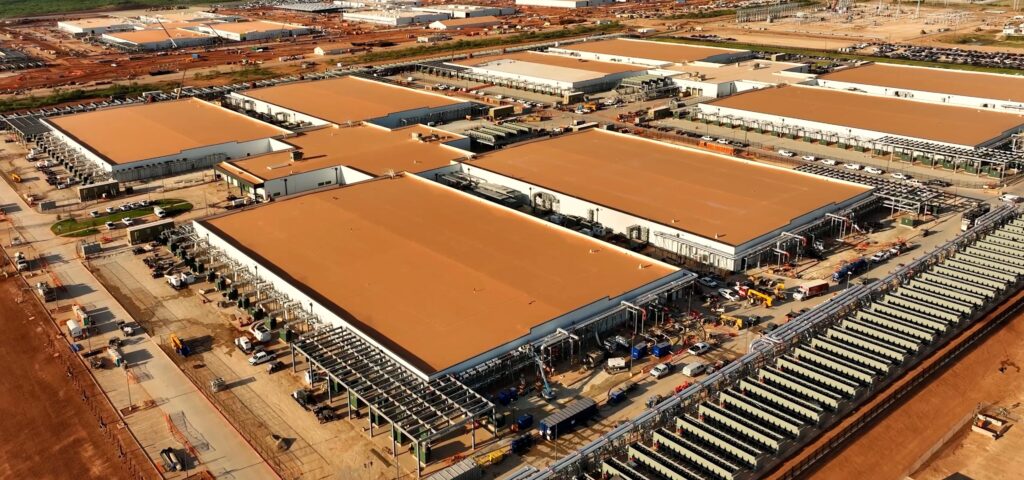
The infrastructure underpinning AI—data centers—is a major contributor to its environmental impact. In 2025, global data centers consumed an estimated 448,000 GWh of electricity, a figure that would place them as the 11th largest electricity consumer worldwide, surpassing Saudi Arabia. Projections indicate a significant increase by 2030, with data center electricity consumption potentially reaching over 945,000 GWh, accounting for 3% of global electricity use. This volume is triple the combined annual energy consumption of Pakistan, Bangladesh, and Nigeria, nations with a combined population exceeding 650 million. This energy demand is substantial enough to power the residential needs of all 1.3 billion people in Sub-Saharan Africa for over five and a half years.
The water footprint associated with this projected energy consumption is equally concerning. The estimated 9.3 million liters of water required by data centers by 2030 could fulfill the minimum annual domestic water needs of the entire Sub-Saharan African population for a full year. Furthermore, the land footprint required for the electricity generation powering these data centers in 2030 is projected to exceed 14,500 square kilometers, an area roughly ten times the size of Mexico City or twice the size of the Jakarta metropolitan area.
Data Centers: A Strain on Public Infrastructure and Resources
The UN report highlights how the expansion of AI infrastructure is creating a "digital divide," with the environmental impacts not being evenly distributed. In several countries, data centers represent a substantial portion of national electricity consumption. In other regions, the increasing demand for water from expanding data center facilities is straining precious freshwater resources.
The extraction of critical minerals essential for AI hardware production also raises significant concerns regarding environmental degradation and social inequities in mining regions. Moreover, specific case studies illustrate the intense local pressures created by the global distribution of AI infrastructure.
In Ireland, data centers accounted for over a fifth of the total metered electricity consumption in 2023, surpassing the combined consumption of all urban households. This surge prompted the national grid operator to temporarily halt new approvals for data center construction around Dublin until 2028. Similarly, in Querétaro, Mexico, the expansion of computing infrastructure is exacerbating water shortages amid prolonged droughts. In Uruguay, plans for a water-intensive data center faced opposition during a severe 2023 drought that depleted Montevideo’s freshwater reserves, rendering tap water unsafe for consumption.
The physical lifecycle of AI hardware also presents a growing environmental crisis. By 2030, the production of this hardware could generate up to 2.5 million tonnes of electronic waste annually. A significant portion of this e-waste is likely to be processed in low-income nations with limited capacity for safe disposal and weak environmental oversight, raising serious environmental justice concerns.
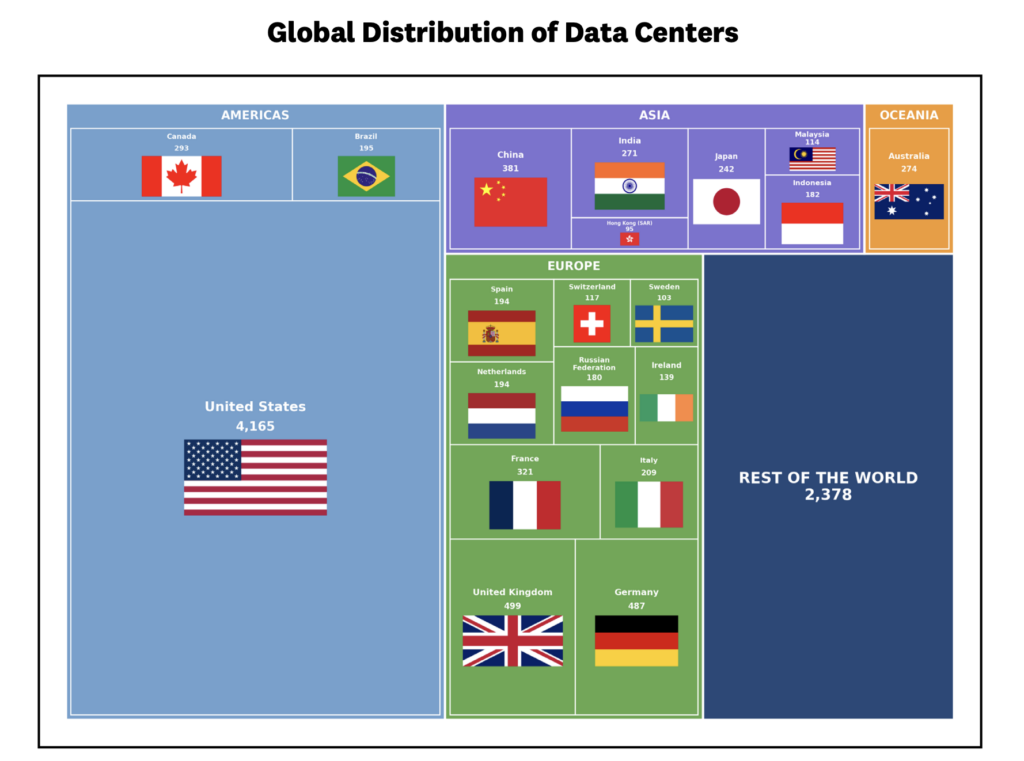
The concentration of AI infrastructure also creates disparities in access and influence. Currently, only 32 countries host AI-specialized data centers, with 90% of these located in just two nations: the United States and China. This leaves over 150 nations without significant domestic AI infrastructure, potentially widening the global technological and economic divide.
Understated and Outdated Climate Impacts of Leading AI Models
The environmental implications of training leading AI models, such as those developed by OpenAI, are significant and often understated. Estimates suggest that OpenAI’s GPT-3 model required approximately 1.3 GWh of electricity for training. Its more advanced successor, GPT-4, which powers ChatGPT, consumed an estimated 50-70 GWh during its training phase. The water usage for GPT-4 training is estimated at 600 million liters, sufficient to meet the minimum annual domestic water needs of 81,000 people in Sub-Saharan Africa.

Future iterations, such as GPT-5, are projected to require even more substantial resources. Training for GPT-5 is estimated to demand 100 GWh of electricity, equivalent to the annual residential power usage of 770,000 residents in Sub-Saharan Africa. This is also projected to have a carbon footprint of 42,000 tonnes of CO2 equivalent (CO2e) and consume one billion liters of water.
However, these figures are considered outdated by the UNU-INWEH report, as they primarily reflect training costs and do not fully encompass the ongoing energy demands of inference. ChatGPT alone processes an estimated 2.5 billion prompts daily, translating to an annual electricity consumption of approximately 383 GWh for this single product.
Achieving AI Within Planetary Limits
The UN report strongly advocates for a shift beyond carbon-only metrics in assessing AI’s sustainability. It calls for disclosure standards that encompass water and land footprints for both AI model training and inference, emphasizing that the latter deserves equal policy attention to training.
The report suggests that governance frameworks should focus on influencing product defaults, model selection, and user behavior. Decisions regarding the siting of AI infrastructure and environmental impact assessments should be integrated into permitting processes. Local capacity planning must also evolve to keep pace with the rapidly changing global landscape of computing.
Furthermore, the report frames computing access as an equity issue, proposing that international institutions can play a role in supporting capacity-building, harmonizing disclosure practices, and mitigating incentives for cross-border burden-shifting. The governance of AI must extend across its entire value chain, from the extraction of raw materials to the management of electronic waste. Investors and financial institutions are urged to integrate environmental impacts as material risks in their due diligence processes for AI infrastructure.
The UN has put forth a six-principle framework for a responsible AI ecosystem: transparency, efficiency by design, equity and environmental justice, lifecycle responsibility, global cooperation, and sustainable use. Prof. Kaveh Madani, Director of UNU-INWEH and former Deputy Prime Minister of Iran, who led the investigation team, stressed that the report is not an indictment of artificial intelligence but a call for its responsible development and proactive addressing of unintended impacts to ensure sustainability and equity. He emphasized the critical need to ensure that the foundational technologies of the current era operate within planetary limits, and that the communities contributing critical minerals and hosting AI infrastructure and its waste also benefit from its advancements.
