
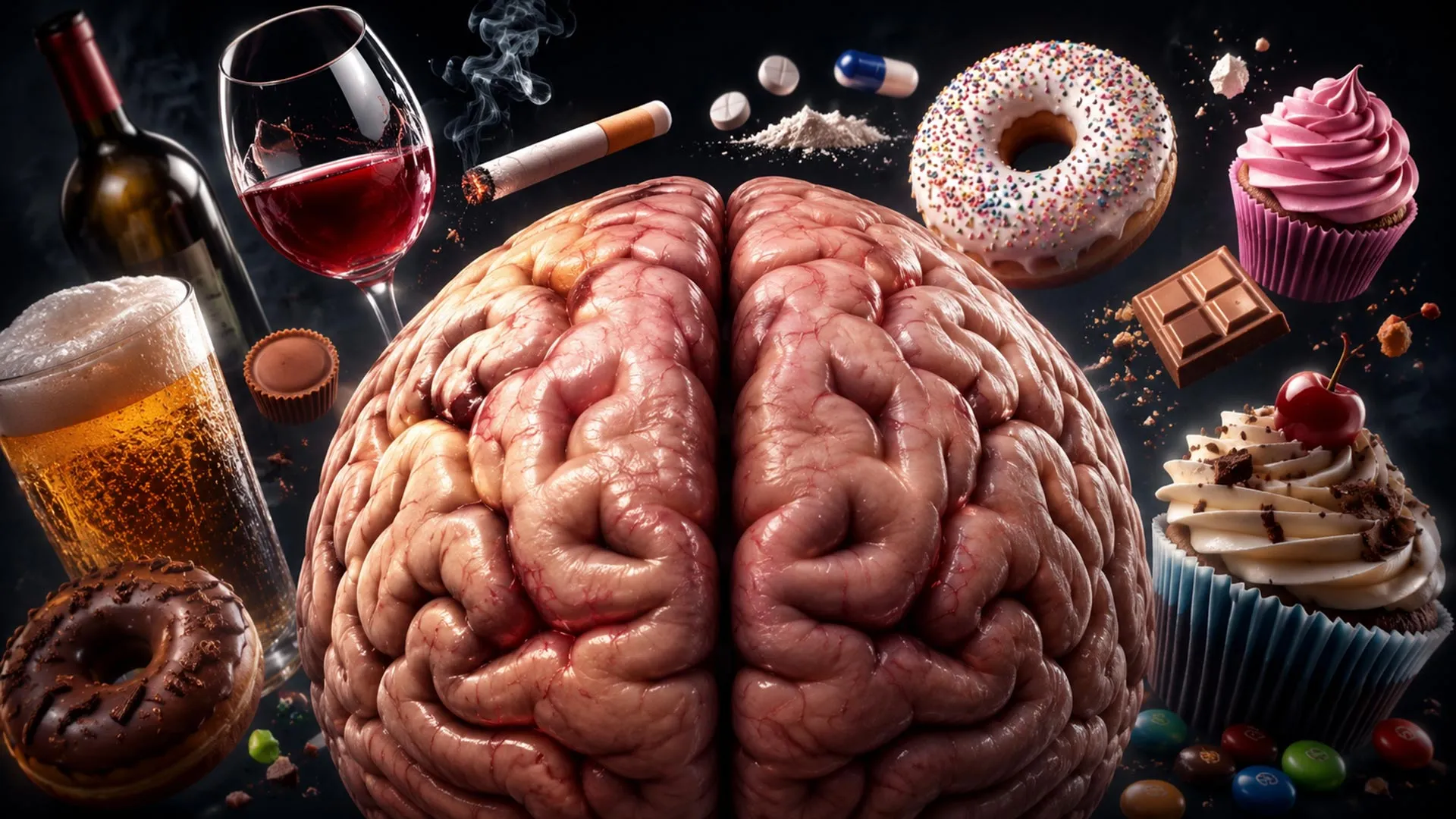
For millions of individuals worldwide, the mere thought of a savory burger, a sweet pastry, or a cold pint of beer conjures up an intensely vivid mental image that ultimately drives consumption behavior. This deeply ingrained evolutionary link between cognitive thought and physical action serves a vital biological function: it motivates human beings to seek out and acquire life-sustaining necessities such as nutrients, calories, and hydration. However, for a significant portion of the population, this complex neurobiological process undergoes a detrimental malfunction. A chronic, overwhelming preoccupation with these rewarding stimuli can spiral into severe disorders of substance overuse, manifesting clinically as compulsive overeating leading to morbid obesity, or destructive patterns of alcohol and drug abuse.
Scientific investigations tracing back to the early 1970s have consistently linked vivid mental imagery with substance abuse disorders, establishing that the internal visualization of a reward heavily primes the brain for consumption. Understanding the intricate mechanics of this bridge connecting craving and consuming remains the ultimate key to unlocking the mysteries of addiction. For decades, this mechanism has largely eluded the global neuroscience community. Yet, the recent, explosive clinical introduction of a revolutionary class of medications originally designed for metabolic disorders has unexpectedly provided researchers with the exact neurological lever needed to decode how the brain processes and acts upon cravings.
The Rise of Metabolic Miracles and Unintended Side Effects
The medications driving this seismic shift in neuropharmacology are glucagon-like peptide-1 receptor agonists, commonly referred to as GLP-1 agonists, which include widely prescribed brand-name drugs such as Ozempic and Wegovy. These synthetic compounds mimic the natural human incretin hormone GLP-1, stimulating insulin release from the pancreas, slowing gastric emptying to prolong digestion, and significantly enhancing physiological feelings of satiety and fullness. Initially developed and deployed to assist patients with type 2 diabetes in effectively managing dangerous blood sugar fluctuations, these pharmaceuticals quickly demonstrated an extraordinary secondary outcome during clinical evaluations: substantial, rapid, and sustained weight loss. In many trial participants, the scale of weight reduction closely mirrored outcomes traditionally expected only from invasive bariatric surgeries.
Beyond metabolic regulation, however, a profound and initially under-publicized behavioral side effect began to emerge from both clinical observations and patient self-reporting. Human epidemiological and clinical studies confirmed that GLP-1 agonists significantly curtail voluntary alcohol consumption. Simultaneously, a robust body of preclinical animal research began to accumulate, suggesting that these exact same receptor-stimulating drugs systematically suppress the self-administration and consumption of a wide array of highly addictive substances, including cocaine, amphetamines, opiates, and nicotine.
These empirical discoveries are fundamentally reshaping contemporary clinical paradigms regarding the brain’s reward circuitry. Rather than viewing addiction solely as a failure of willpower or a localized dopamine imbalance, researchers are beginning to understand that metabolic and reward pathways are deeply intertwined. Consequently, these therapies are opening entirely unprecedented avenues for the pharmacological treatment of obesity, alcohol dependence, and various substance use disorders.
Tracing the Neurobiology of Reward Circuitry
To comprehend how GLP-1 medications exert such a powerful suppressive effect on human cravings, neuroscientists must first examine the foundational architecture of the brain’s established reward circuitry. For decades, academic research has focused heavily on deep brain structures responsible for producing and regulating the neurotransmitter dopamine, the chemical messenger fundamentally tied to reinforcement, motivation, and pleasure.
The primary anatomical structures of this traditional reward network include the ventral tegmental area (VTA) and the nucleus accumbens (NAc). For generations, these interconnected regions served as the primary candidates in scientific investigations seeking to isolate the neurological mechanism driving addiction and reward-seeking behavior. Surprisingly, however, detailed histological and receptor-mapping studies revealed a crucial biological mismatch: while the VTA and NAc process the chemical outputs of reward, they lack a significant density of receptors capable of binding GLP-1. Therefore, these dopamine-producing hubs cannot serve as the direct site of action for GLP-1 receptor agonists.
To solve this scientific puzzle, researchers were forced to look beyond the immediate dopamine centers and investigate anatomical structures positioned upstream within the brain’s complex neural hierarchy. This search directed neuroscientists toward the lateral septum, a bilateral structure situated deep within the forebrain that has historically been implicated in emotional processing and behavioral regulation.
A Chronological Evolution: From Septal Rage to Modern Cravings
The historical understanding of the lateral septum has undergone a remarkable evolution over the past century. The chronology of research into this enigmatic brain structure highlights a steady shift from observing crude behavioral anomalies to mapping intricate, high-resolution neural networks.
In 1953, pioneering American behavioral researchers Joseph Brady and Walle Nauta published landmark findings that permanently stamped the septum into psychiatric history. They coined the term “septal rage” after observing that laboratory animals subjected to surgical lesions within the lateral septum exhibited profoundly increased aggression and hypersensitivity to environmental stimuli. Conversely, subsequent experiments demonstrated that the direct electrical stimulation of this exact same brain region effectively reduced aggressive behaviors, proving that the lateral septum acts as a critical behavioral brake.
For decades, the prevailing scientific consensus attributed these aggressive and emotional responses primarily to the structural communication channel linking the lateral septum to the nearby hypothalamus. However, much more recent technological breakthroughs in neuroimaging and optogenetics have completely reframed this perspective. Contemporary mapping studies reveal that the lateral septum is not merely a localized regulator of aggression, but rather occupies a central hub within an extensive neural connectivity network, projecting to and receiving signals from numerous distinct brain regions associated with memory, motivation, and executive function.
The Brain’s Reward Control Center and the Hippocampal Input
The newly discovered prominence of the lateral septum stems largely from its primary anatomical input, which originates within the hippocampus. The hippocampus is universally recognized across neuroscience as the vital cerebral engine responsible for encoding and consolidating long-term episodic memories—the conscious recollection of personal experiences situated in specific times and locations.
The absolute necessity of the hippocampus for human continuity was famously illustrated by the clinical case of Henry Molaison, historically known as patient H.M. Following surgical resections intended to control severe epilepsy, Molaison was rendered entirely incapable of forming new conscious, declarative memories. He lived the remainder of his life trapped in a permanent present tense, retaining memories from his early life but incapable of recording any new events.
Beyond memory consolidation, the hippocampus contains specialized neurons known as place cells. These remarkable cells fire electrical impulses corresponding directly to an organism’s physical thoughts and actual spatial positioning within an environment. More recent neuroscientific research has revealed that these place cells also encode temporal information, effectively tracking the passage of time alongside spatial coordinates.
This sophisticated “where and when” data stream is continuously forwarded directly to the lateral septum. Cutting-edge neurophysiological research demonstrates that the lateral septum also houses its own specialized population of place cells, but with a critical functional distinction: these septal place cells strongly respond to rewarding stimuli. Essentially, the lateral septum integrates the raw spatial and temporal data received from the hippocampus and injects the emotional valuation of “what is good in this place.”
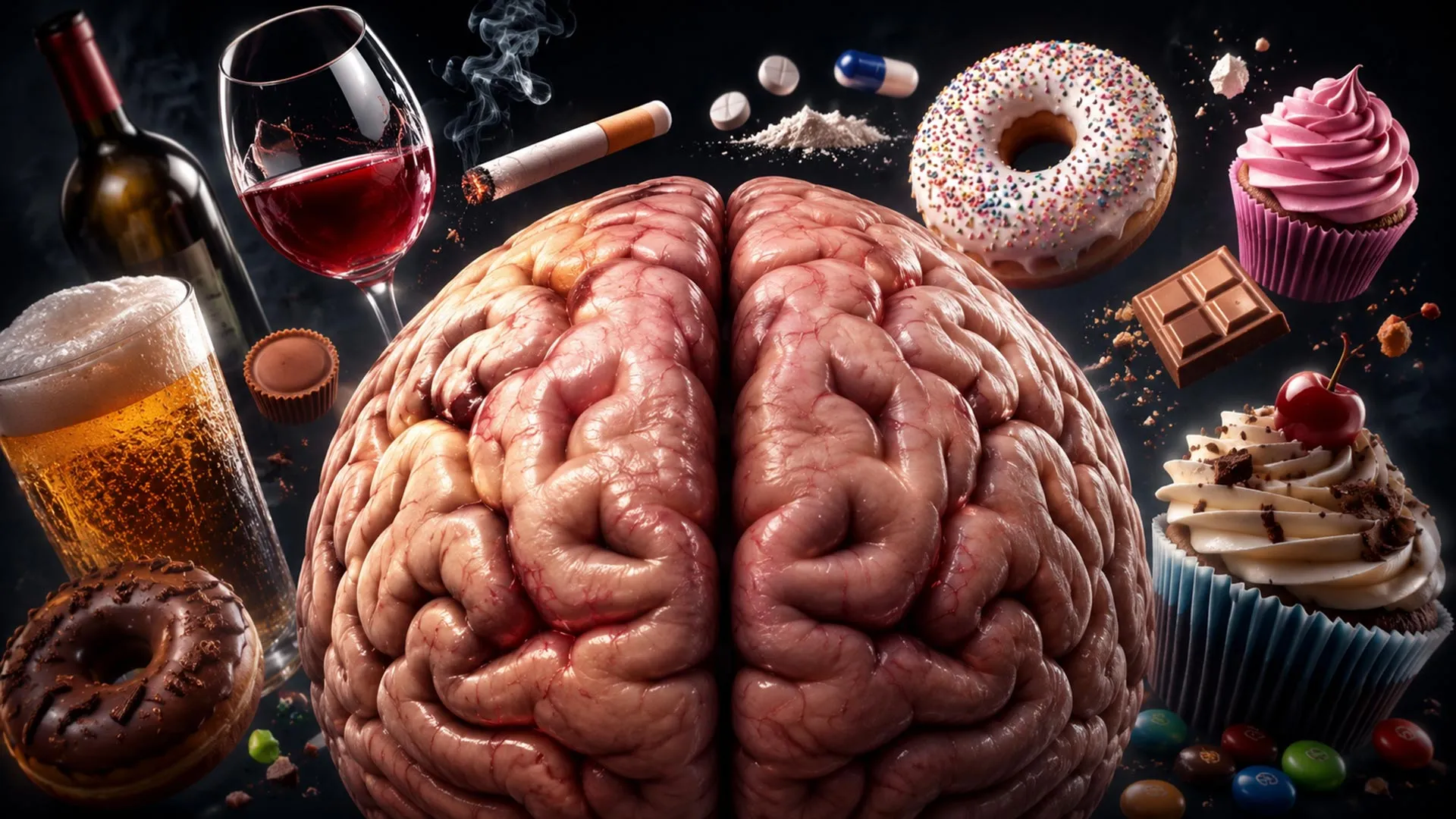
Once this integrated valuation is computed, the lateral septum communicates directly downstream with the dopamine-producing machinery of the traditional reward system, ultimately generating the conscious sensation of pleasure and anticipation associated with a craving. Modern neuroscientists increasingly conceptualize the lateral septum as the brain’s ultimate conscious perception center for rewards—the neurological bridge where an individual actively thinks about a reward and signals the physiological systems that make them feel compelled to pursue it.
The Smoking Gun: GLP-1 Receptors in the Lateral Septum
The final and most compelling piece of the scientific puzzle linking metabolic drugs to suppressed cravings involves the sheer biochemical composition of the lateral septum itself. Unlike the dopamine-producing regions of the VTA and NAc, the lateral septum is densely populated with GLP-1 receptors.
This anatomical abundance has turned the spotlight firmly onto the lateral septum as the primary physical site where anti-consumption medications exert their behavioral effects. Emerging preclinical studies have begun providing direct empirical validation for this hypothesis. Research teams utilizing targeted micro-injections have demonstrated that directly activating GLP-1 receptors specifically within the lateral septum leads to a marked reduction in food consumption in murine models. Complementary studies published earlier this year have replicated these findings regarding voluntary alcohol consumption, showing that targeted receptor stimulation successfully dampens the drive to imbibe.
Furthermore, recent investigations conducted by academic research laboratories have illustrated that administration of GLP-1 receptor agonists alters specific patterns of neural firing within the lateral septum. By modulating this activity, the drugs effectively prevent the lateral septum from communicating as efficiently with downstream brain regions, thereby short-circuiting the neurological feedback loop that generates intense psychological cravings.
Broader Implications and Future Therapeutic Horizons
The convergence of metabolic science and behavioral neuroscience represents a watershed moment in the medical understanding of addiction, compulsive behaviors, and chronic metabolic diseases. For public health officials, the implications are staggering. Obesity and substance use disorders have traditionally carried severe social stigmas, often mischaracterized purely as failures of personal discipline or moral fortitude.
By illuminating the precise neurobiological mechanisms through which metabolic hormones regulate the brain’s perception of rewards, these findings validate the biological underpinnings of compulsive disorders. The revelation that the lateral septum acts as a master control center for cravings opens up entirely new pathways for pharmacological development. Pharmaceutical developers are now actively designing next-generation targeted compounds that can fine-tune these neural circuits without necessarily inducing the heavy peripheral metabolic side effects associated with current diabetic therapies.
As clinical trials continue to expand, researchers remain cautiously optimistic. The ongoing integration of metabolic medications into psychiatric and addiction medicine protocols promises to transform the standard of care for millions of patients worldwide. By successfully interrupting the neurological dialogue between memory, space, and reward, modern science is moving closer to decoupling the biological drive of addiction from the human brain, offering a renewed sense of hope for effective, long-term therapeutic interventions.
