
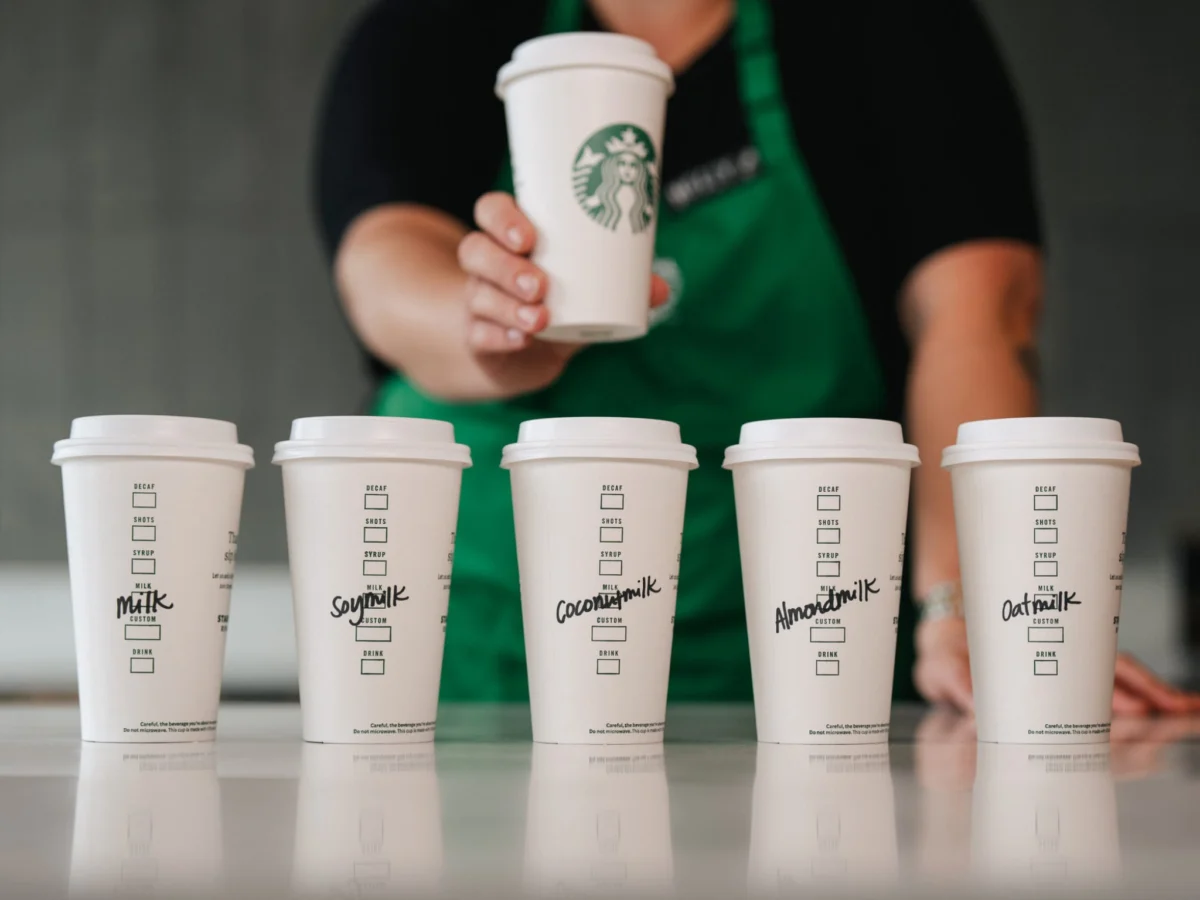
A landmark decision by a Quebec judge has paved the way for a class-action lawsuit against major coffee retailers, including Starbucks, Tim Hortons, and Foodtastic, for what is alleged to be excessive charging for plant-based milk alternatives. Superior Court Justice Catherine Martel has authorized the legal action, which centers on the significant price premiums consumers paid for non-dairy options, with evidence suggesting that Starbucks, in particular, profited handsomely from these upcharges, reportedly charging over six times the actual cost of the milk alternative. This ruling could have far-reaching implications for pricing practices within the foodservice industry across Canada and potentially beyond.
The lawsuit, which commenced following a period where consumers were charged extra for substituting cow’s milk with options like oat, almond, soy, or coconut milk, targets the period from December 30, 2021, until the chains eventually removed these surcharges. The legal challenge argues that these premium charges violated Quebec’s Consumer Protection Act, contending that the cost disparity between dairy and non-dairy milk was disproportionate to the actual expense incurred by the businesses.
The Growing Divide: Cost vs. Consumer Charge
At the heart of the legal battle lies a stark financial discrepancy. According to court documents and admissions made by Starbucks, the cost to the company for swapping cow’s milk with a plant-based alternative was a mere 12 cents per drink. However, consumers were consistently charged an additional 80 cents for this substitution. Justice Martel’s judgment explicitly highlighted this margin: "By its own admission, Starbucks therefore charges consumers more than six times the cost it incurs when it replaces cow’s milk with plant-based or lactose-free milk in its beverages." This staggering markup has fueled the plaintiffs’ argument that the charges were not reflective of actual operational costs but rather a significant profit-generating practice.
While Starbucks eventually ceased charging this premium in Canada and the United States in the fall of 2024, Tim Hortons and Foodtastic followed suit in early 2025. Despite the removal of the surcharge, the legal action seeks redress for consumers who bore these increased costs during the period in question. The class action encompasses all consumers within Quebec who paid a premium for plant-based milk at these establishments.
A Legal Foundation: Consumer Protection and Disproportionate Pricing
The primary contention of the lawsuit, as articulated by Joey Zukran, a lawyer with LPC Avocats representing the plaintiff, is the financial burden placed upon consumers. "I think it’s unfair, I think it’s egregious, and that’s why we wanted to hold them accountable," Zukran stated in comments to CTV News. He emphasized the aggregate impact of these charges, noting that while individual premiums might seem minor, "when you take the total sales figures on an aggregate basis for all coffees or beverages sold across Quebec, for which a non-dairy substitute was added at a cost of 80 cents per item, well, that could be an amount in the millions of dollars, potentially."
The judge, however, did not accept an initial argument based on a study suggesting non-dairy milk costs were roughly equivalent to cow’s milk at retail prices. Justice Martel reasoned that retail pricing does not necessarily reflect the wholesale costs that restaurants incur, especially given that cow’s milk prices are regulated in Quebec. Instead, the lawsuit’s progression was authorized based on the companies’ own reported cost figures for plant-based milk alternatives.
These internal cost assessments revealed varying degrees of difference between dairy and non-dairy milk expenses:

- Starbucks: Plant-based alternatives cost approximately 16% more than cow’s milk.
- Tim Hortons: Franchisees faced a 63-67% higher cost for non-dairy options.
- Foodtastic: Experienced an 98% increase in cost for plant-based milk.
Even with these higher costs, the surcharges levied by the coffee chains were deemed disproportionate by the court. For instance, Tim Hortons charged consumers 50 cents for a milk swap that cost the company an estimated 28 cents in eastern Quebec. Similarly, Second Cup, another chain involved in similar litigation, imposed an 80-cent levy for a substitution that cost approximately 43 cents. While these gaps were narrower than Starbucks’, they were sufficient for the claim to move forward.
Justice Martel’s judgment underscored the significant disparity: "It does not appear frivolous or manifestly unfounded to argue that it is disproportionate to charge the consumer more than six times what it costs the merchant to substitute cow’s milk with plant-based milk in their tea or coffee, and that this disproportion is sufficiently significant to cause serious harm to the consumer." This statement specifically addressed Starbucks’ substantial markup, setting a critical precedent for the assessment of such pricing practices.
Broader Context: Discrimination, Environmental Concerns, and Industry Trends
Beyond the financial aspect, the lawsuit touches upon broader societal and health considerations. A significant argument against non-dairy milk surcharges is their potential discriminatory nature towards individuals with milk allergies or lactose intolerance. In Canada, a notable percentage of the population, estimated at 16%, suffers from lactose intolerance, making plant-based alternatives a dietary necessity rather than a preference.
The legal action also emerges against a backdrop of shifting consumer preferences and growing environmental awareness. Milk consumption in Canada has been on a steady decline for years, coinciding with a significant rise in the popularity of plant-based alternatives. By 2024, data indicated that approximately 30% of Canadians were regularly consuming plant-based milk. This trend is further bolstered by the well-documented environmental benefits of plant-based milks compared to dairy. Studies consistently show that alternatives like oat and almond milk have a considerably smaller environmental footprint in terms of greenhouse gas emissions, water consumption, and land use. In fact, Starbucks itself has acknowledged that dairy milk is the single largest contributor to its overall carbon footprint, a statement that adds a layer of irony to the surcharges imposed on more sustainable options.
Navigating Legal Nuances: Franchisor Liability and Future Precedents
While the class action has been authorized to proceed, the judge clarified certain aspects of potential liability. Justice Martel rejected the argument that Tim Hortons’ 50-cent markup unilaterally set the market value for plant-based milk surcharges. Furthermore, claims seeking direct remedies against the franchisors were also dismissed. The judge stated that relief is typically available only against the direct sellers of the beverages. However, she left open the possibility of franchisor liability if it can be demonstrated that they actively set or encouraged unfair pricing practices.
Despite the removal of the surcharges by the implicated chains, the plaintiff’s legal team remains committed to holding them accountable for their past practices. Lawyer Joey Zukran expressed hope that this case will establish a significant legal precedent, potentially influencing pricing strategies for other coffee shops and food service providers across the country.
This legal development in Quebec follows similar challenges faced by Starbucks in the United States. The company has previously been the target of a disability discrimination lawsuit concerning its non-dairy milk surcharge. In that instance, plaintiffs argued that for individuals with lactose intolerance or dairy allergies, choosing oat milk should not be considered an optional customization but a necessary accommodation, thus rendering any additional charge discriminatory.
The Quebec ruling represents a critical step in scrutinizing the economic practices of large corporations and their impact on consumer wallets, particularly when catering to evolving dietary needs and preferences. As the class-action lawsuit progresses, it is poised to shed further light on the balance between business operations, consumer rights, and the increasing demand for sustainable and inclusive food options.
