
NS/TX Industries, a Canadian innovator in plant-based food technology, has announced the successful closure of a $10.5 million funding round, comprised of Series A venture capital and significant non-dilutive grants. This substantial financial injection is earmarked for the construction of an advanced, automated assembly line, poised to tenfold the company’s production capacity for its sophisticated whole-cut plant-based meat and seafood alternatives. The move signifies a pivotal moment for the Toronto-based startup, allowing it to scale its proprietary manufacturing technology and address key challenges in the rapidly evolving alternative protein market.
The funding round was co-led by Inter Ikea Development BV, a strategic investor from the global furniture giant, and Lever VC, a venture capital firm focused on the alternative protein sector. Additional participation came from Good Startup, Verdex Capital, and NS/TX Industries’ own founder and CEO, Chris Bryson, underscoring strong confidence in the company’s vision and execution capabilities.
A significant portion of the capital, $4.9 million, comes from Protein Industries Canada (PIC), a national innovation cluster dedicated to advancing Canada’s plant-based food industry. This non-dilutive funding is part of a larger $10.9 million project initiated last month, specifically targeting the scaling of NS/TX Industries’ manufacturing technology for whole-cut meat and seafood alternatives. This government backing highlights Canada’s commitment to fostering innovation in the agri-food sector and supporting companies like NS/TX that are developing next-generation food products.
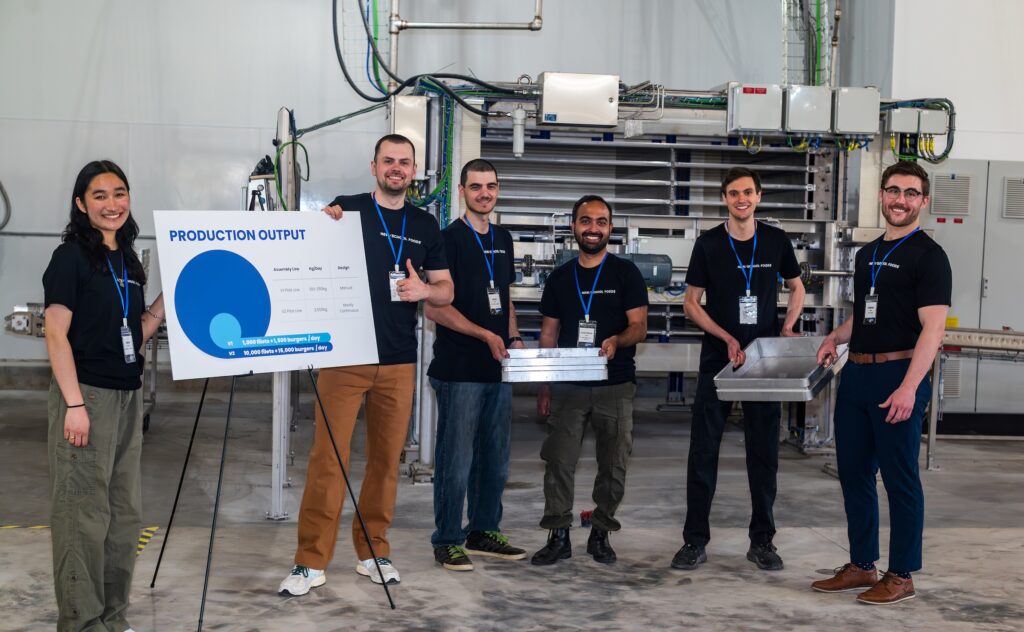
With this latest funding, NS/TX Industries has now raised over $30 million in total capital. The funds will be instrumental in commencing work on its V2 commercial assembly line, projected for completion in 2027. A primary objective of this expansion is to significantly reduce the production costs of its plant-based proteins, making them more accessible and competitive with conventional animal products.
Raffaele Govinazzi, Innovation Ventures Leader at Inter Ikea Group, expressed strong optimism about the company’s trajectory. "We have been very impressed with NS/TX’s rapid progress in solving key scale-up challenges and demonstrating the versatility of its manufacturing platform," Govinazzi stated. "We are excited to support them through this next chapter of growth." Inter Ikea Group’s continued investment reflects a long-term strategic interest in sustainable food solutions.
A Decade of Innovation and Evolution
NS/TX Industries’ journey began with its predecessor, New School Foods, which initially focused on plant-based salmon. A year ago, the company underwent a strategic reorganization, rebranding as NS/TX Industries to encompass a broader portfolio of plant-based meat and seafood analogues. This strategic pivot has allowed the company to leverage its core technology across a wider range of products, from beef and pork to poultry and fish alternatives.
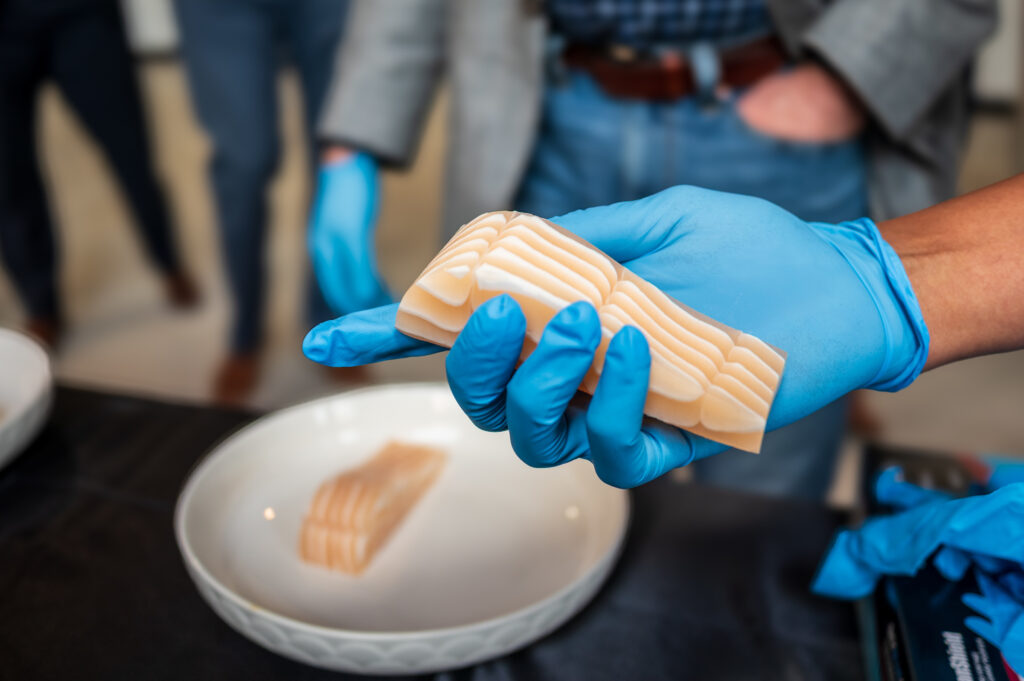
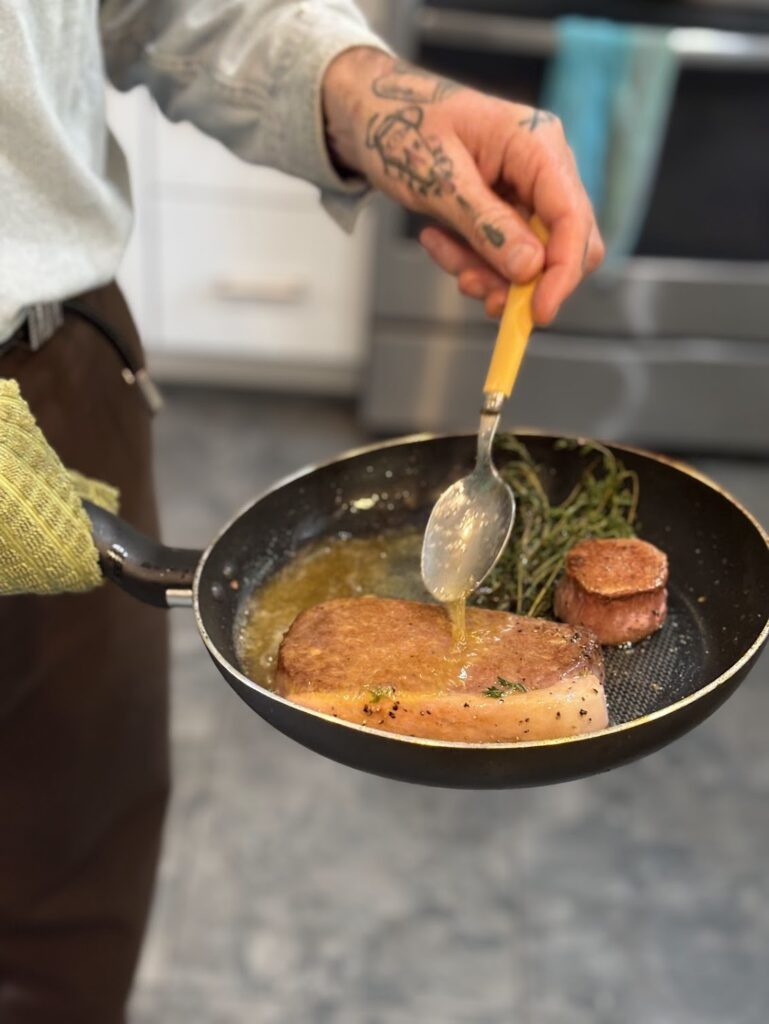
The company’s proprietary technology centers around a unique scaffolding system that mimics the macrostructure and microstructure of animal tissues. This "directional freezing" process allows plant-based products to begin in a raw state and cook similarly to conventional meat. The scaffolding, created through a patent-pending injection process, replicates the complex arrangement of muscle and connective tissues, including fat and lean portions, with remarkable fidelity.
"Our process uses a proprietary scaffolding technology," explained Chris Bryson, CEO of NS/TX Industries, in a previous statement. "These scaffolds mimic both the macrostructure of the animal product, including the shape and the arrangement of fat versus muscle tissue sections, while also recreating the microstructure. Our scaffolds have thousands of small channels that emulate muscle fibres. Our scaffolds and these channels are then infused with proteins, fats, flavors, and colors. This process enables flexibility to create multiple products, all while using the same equipment."
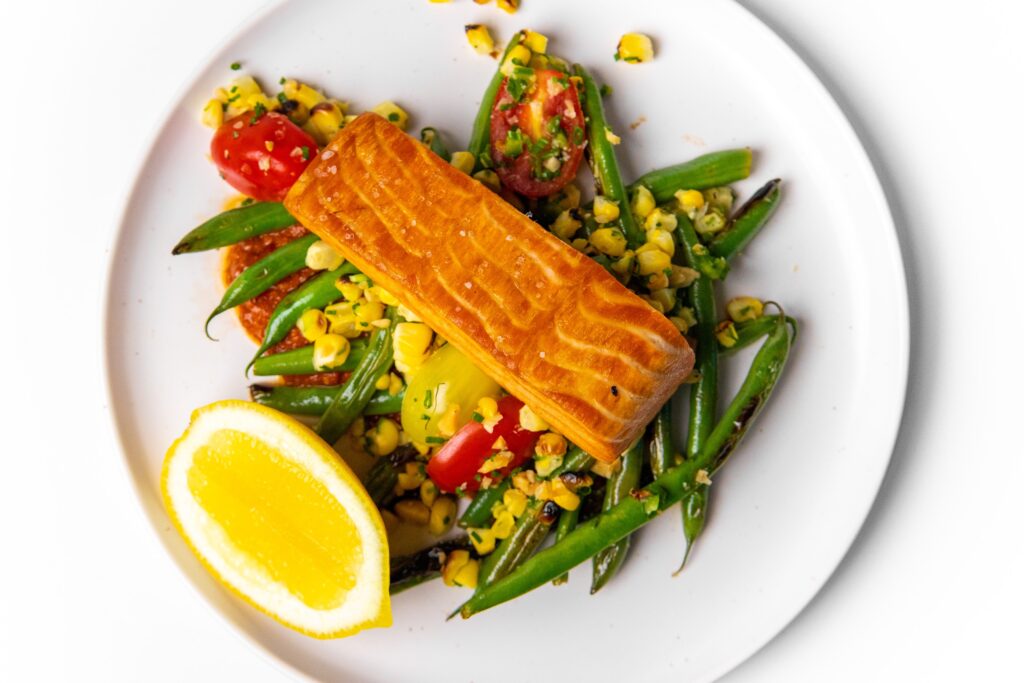
This innovative approach addresses common limitations of traditional extruded plant proteins, enabling the production of true whole-cut alternatives—not just processed formats like burgers or strips—all on a single assembly line. The technology also allows for precise control over flavor profiles and offers multiple flavor delivery systems within each scaffold, contributing to a cleaner-label nutritional profile.
Scaling Up for Mass Market Adoption
The V1 assembly line, launched in 2024, represented a significant milestone, allowing NS/TX Industries to move beyond initial R&D and into commercial production. This initial system demonstrated the scalability of their technology, leading to the development of a broader product range that now includes red meats like beef and pork, in addition to their signature plant-based salmon. The upcoming V2 system is designed to dramatically increase output and efficiency.
Operating from a 28,000-square-foot facility in Toronto, NS/TX Industries utilizes off-the-shelf food manufacturing equipment, a strategic choice that significantly reduces capital expenditure compared to more complex technologies like extrusion or cellular agriculture. Since the development of the V1 system, the company reports a tenfold reduction in manufacturing costs, alongside the validation of their technology’s scalability, the filing of new patents, and the development of proprietary equipment designs.
Bryson elaborated on the company’s cost-reduction strategy: "Firstly, we’re fully vertically integrated; we do not use a co-manufacturer. We do all the development and production ourselves in our SQF-certified food facility. Secondly, we have created an assembly line and manufacturing technologies that are purpose-built for creating whole-cuts, and we design and build a lot of the equipment ourselves to support an efficient production process. Thirdly, we can take any waste/scraps from the production of our whole cuts and use them to create additional products, improving our overall unit economics."
The V2 assembly line, which will be commissioned at the Toronto facility, is engineered to fully automate the company’s production process. This automation is expected to boost daily capacity to an impressive 2,500 kilograms of product and further drive down per-unit costs. This increased output is crucial for meeting the growing demand for plant-based options from consumers, foodservice operators, and white-label brands across Canada and potentially international markets.
Canada’s Strategic Role in the Plant-Based Revolution
NS/TX Industries’ expansion aligns with Canada’s ambitious national strategy to become a global leader in plant-based food innovation. The company’s focus on utilizing locally grown ingredients, such as peas, fava beans, and soybeans, directly supports Canada’s agricultural sector and enhances the nutritional profiles of its products. This approach is also central to the project backed by Protein Industries Canada, where NS/TX is collaborating with New Protein International and Infusd Nutrition to boost output, reduce costs, and facilitate B2B manufacturing.
Tyler Groeneveld, CEO of Protein Industries Canada, acknowledged NS/TX Industries’ significant contribution. "New School Foods and NS/TX Industries have been a valuable partner in the development of new technologies and talent in the Canadian food production and value-added agriculture sector," Groeneveld remarked. "Their advancements in whole-cut plant-based alternatives are a testament to the innovation happening within our industry."
Canada has demonstrated a strong commitment to state-led financing for the alternative protein sector. Between 2018 and 2028, the federal government has committed C$353 million to Protein Industries Canada, supporting numerous research and commercialization projects. The nation’s plant-based sector is recognized as a cornerstone of its broader food tech ecosystem, accounting for a quarter of all domestic food tech companies and attracting 12% of the industry’s total funding.
The market landscape in Canada further supports NS/TX Industries’ mission. A recent survey indicated that 54% of Canadians are looking to increase their consumption of plant-based foods. Crucially, 36% of these consumers cite taste and texture as significant barriers to adoption. NS/TX Industries’ technology, which directly addresses these sensory concerns by replicating the eating experience of whole-cut meats and seafood, is well-positioned to capture this substantial market segment.
Addressing Market Challenges and Future Outlook
Chris Bryson has been vocal about the inherent difficulties in the plant-based food industry. "Food is incredibly challenging. Authentically emulating the sensory experience of meat is very difficult, and ensuring that the products have a compelling value proposition in terms of nutrition and/or price makes it even harder. Accomplishing all of this requires a lot of R&D, vertical integration, and time," he stated.
He also commented on the broader funding environment, noting a misalignment between the long-term R&D needs of companies like NS/TX and the investment horizons of many venture capital funds. This observation comes in the wake of a reported 20% drop in global funding for alternative proteins last year, indicating a more cautious investment climate.
"The current funding market and the maturity of most VC funds are not well aligned with this – many do not have the ability to invest in longer-term opportunities," Bryson observed.
To navigate these challenges, NS/TX Industries has adopted a deliberate strategy focused on creating "defensible technology that enables differentiated products, and creating a manufacturing technology that solves root issues with conventional alt-protein production methods," Bryson explained. The company has also actively sought out "patient capital" and leveraged substantial non-dilutive funding available in Canada, thereby mitigating risk for its investors.
"This also allows us to invest in our own manufacturing infrastructure. This is key, because if you don’t own your manufacturing, you can’t control your COGS, and your R&D is extremely limited. And in our view, both of those are necessary for long-term success," Bryson concluded.
With the new funding and the impending V2 assembly line, NS/TX Industries is strategically positioned to scale its innovative whole-cut plant-based products, offering consumers a more authentic and accessible alternative to traditional meat and seafood, and reinforcing Canada’s role as a leader in the global food tech revolution. The company’s focus on technological innovation, cost reduction, and vertical integration suggests a robust strategy for long-term success in a competitive and rapidly growing market.
