
Millions of individuals worldwide carry the APOE4 genetic variant, recognized as the single most formidable known genetic risk factor for the development of late-onset Alzheimer’s disease. While the correlation between this gene and cognitive decline has been documented for decades, the precise biological mechanisms operating in the human brain have remained a subject of intense scientific inquiry. Recent findings published in the journal Nature Aging by researchers at the Gladstone Institutes offer a transformative perspective, revealing that APOE4 begins structurally and functionally altering neural activity long before outward symptoms of memory loss or cognitive impairment ever manifest.
By mapping out a complex molecular sequence in preclinical models, the research team not only illuminated how these early cellular disruptions occur but also successfully demonstrated a method to reverse them. The study centers on a protein known as Nell2, which is overproduced in the presence of APOE4, leading to microstructural shrinkage and profound hyperactivity in critical memory-related neurons. Crucially, when the scientists suppressed Nell2 expression in adult subjects, the affected neurons returned to their normal size and healthy firing patterns. This breakthrough suggests a viable therapeutic window to protect vulnerable populations before irreversible neurodegeneration takes hold.
Decoding the Scale of the APOE4 Risk Factor
To fully understand the gravity of the Gladstone Institutes discovery, it is essential to examine the prevalence and clinical weight of the APOE gene. The gene exists in three primary structural isoforms: APOE2, APOE3, and APOE4. Among these, APOE3 is considered the neutral baseline associated with standard population-level risk, while APOE2 offers a degree of protective shielding against cognitive decline. APOE4 stands in stark contrast. Epidemiological data indicates that approximately one in four people carry at least one copy of the APOE4 variant, and its presence is disproportionately high among clinical populations, appearing in roughly 60 to 75 percent of all diagnosed Alzheimer’s disease cases.
Despite this well-established epidemiological link, the precise temporal sequence of events has puzzled neurologists. Human imaging studies have previously captured anomalous bursts of brain activity in the hippocampus—the brain’s primary memory center—of young, cognitively healthy APOE4 carriers decades before they reach typical retirement age. However, correlation does not equal causation. Until now, researchers could not definitively prove whether this early hyperactivity was a direct byproduct of the gene or merely an incidental finding, nor could they explain why these electrical anomalies reliably presaged later dementia.
Tracing the Cellular Chronology in Preclinical Models
To bridge this critical knowledge gap, the Gladstone research team embarked on a comprehensive investigation utilizing advanced murine models engineered to express human APOE variants. Led by a collaborative group including senior author Dr. Misha Zilberter, principal staff research scientist, and co-senior author Dr. Yadong Huang, associate director of the Gladstone Institute of Neurological Disease, along with first author Dr. Dennis Tabuena, the team examined real-time electrical recordings and cellular morphology across various developmental stages.
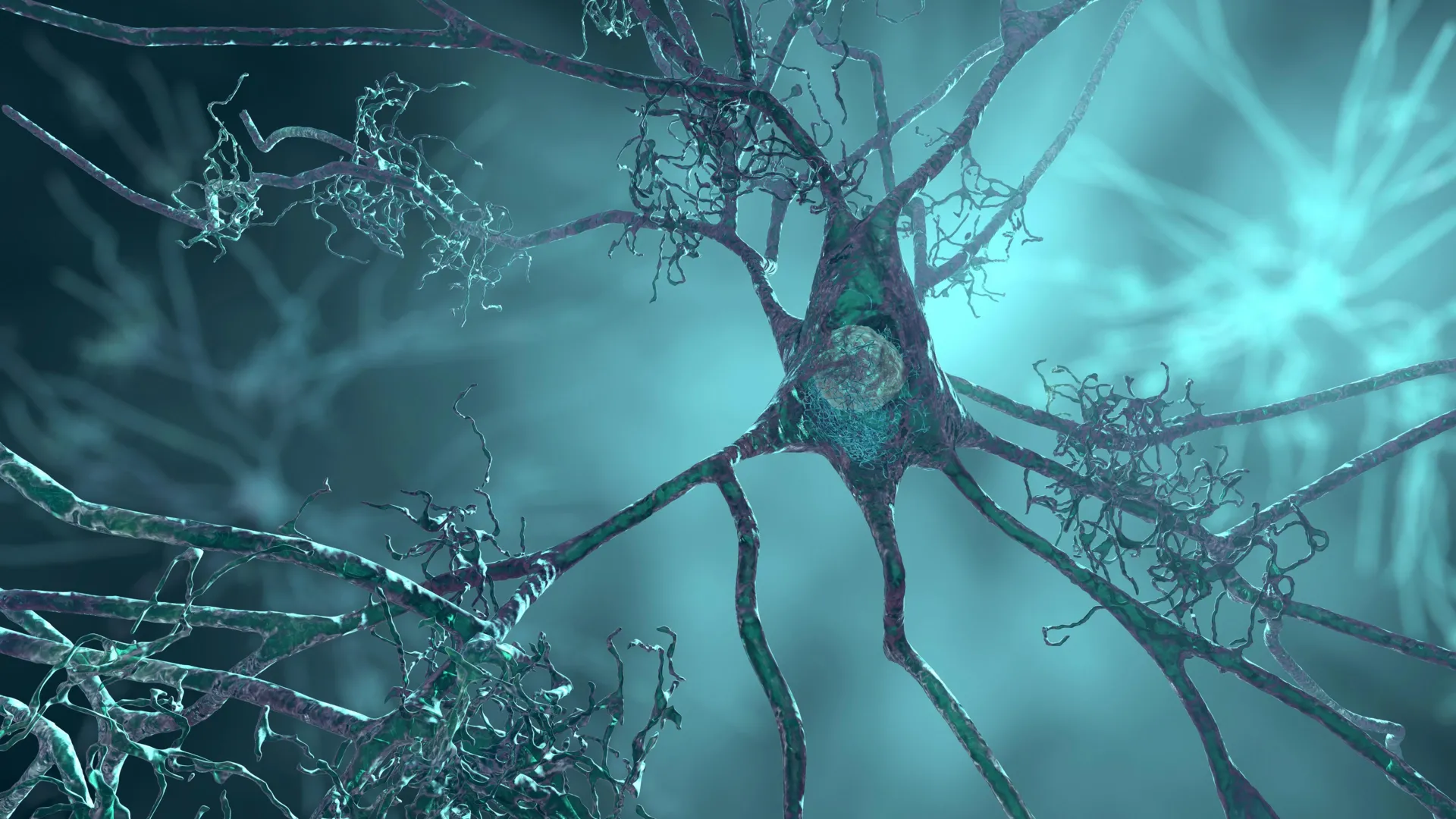
The chronology revealed by the study is striking. In young mice carrying the APOE4 gene who still exhibited entirely normal spatial learning and memory functions, the researchers detected severe neuronal hyperactivity localized specifically within two subregions of the hippocampus. Furthermore, quantitative analysis of individual cells uncovered a distinct structural phenotype: neurons in these regions were significantly smaller in APOE4 carriers compared to their APOE3 counterparts.
In neurophysiology, physical size dictates electrical properties. Smaller neurons possess a higher input resistance, meaning they require less electrical current to fire and are vastly more susceptible to excessive stimulation. As these APOE4 mice matured, the degree of their early hippocampal hyperactivity served as a direct statistical predictor of how poorly they would perform on spatial learning and memory assessments in later life. Conversely, while mice expressing the protective APOE3 variant eventually displayed increased neuronal excitability, this shift did not occur until the animals reached advanced age.
"To the best of our knowledge, this is the first study that has directly examined what APOE4 does to the function of neurons at different ages," Dr. Zilberter stated, emphasizing the paradigm-shifting nature of the timeline. "We found fundamental changes in brain circuits occurring in young mice that still had normal learning and memory, and importantly, that those changes predicted the development of cognitive deficits at older ages."
Dr. Huang expanded on this observation, framing the genetic mechanism within the broader context of human aging. "This suggests APOE4 accelerates a process that resembles normal aging, and could explain why people with the gene variant are more likely to develop Alzheimer’s disease earlier in life."
Shifting the Paradigm: The Source Within Neurons
For years, mainstream neuroscientific consensus held that the detrimental effects of the APOE4 gene were mediated primarily by support cells within the central nervous system known as astrocytes. Astrocytes are responsible for producing the vast majority of APOE in a healthy brain, maintaining metabolic homeostasis, and providing structural and nutritional support to neurons. Consequently, drug discovery pipelines targeting APOE4 have frequently focused on correcting glial dysfunction.
The Gladstone study upended this long-held assumption through a series of genetic knockout experiments. When the researchers selectively deleted the APOE4 gene from astrocytes, observed brain activity and neuronal morphology remained entirely unchanged. However, when they deleted the APOE4 gene specifically from neurons, the outcome was profoundly different. The neurons expanded back to their normal physiological dimensions and resumed stable, regulated firing behavior.
This discovery decisively proves that the hippocampal hyperactivity driving future cognitive decline is cell-autonomous, originating directly from the presence of APOE4 inside the neurons themselves rather than being imposed externally by surrounding support cells. This fundamental shift in understanding redirects future therapeutic strategies toward intracellular neuronal targets.
Unlocking the Molecular Pathway via Nell2
With the cellular origin identified, the research team sought to map the precise molecular cascade triggered by intracellular APOE4. By performing comprehensive transcriptomic analyses examining gene expression patterns across individual cells within the hippocampus, the investigators isolated a critical downstream player: Nell2.
The data revealed that Nell2 was expressed at abnormally high concentrations within neurons carrying the APOE4 variant. To test whether this protein was merely a marker of disease or the active driver of pathology, the team deployed CRISPR interference (CRISPRi), an advanced molecular technique that transiently and safely reduces the expression of a targeted gene without inducing permanent mutations in the underlying DNA.
When the researchers applied CRISPRi to lower Nell2 levels in the hippocampal neurons of adult APOE4 mice, the structural and functional abnormalities systematically corrected themselves. The shrunken neurons expanded to normal size, and their hyperexcitable firing patterns stabilized. While elevated levels of Nell2 had previously been correlated with human Alzheimer’s pathology in post-mortem tissue studies, this research provides the first causal link, establishing Nell2 as the direct mediator of APOE4-induced neuronal hyperactivity.
"What’s exciting about Nell2 is that we were able to reverse the disease manifestations in adult mice by lowering its level," Dr. Huang noted. "That tells us the damage is not irreversible, and that there may be a window for intervention even after disease processes have been triggered."
Broader Impact and Implications for Future Therapeutics
The implications of this published research extend far beyond the laboratory, offering a beacon of hope for the millions of individuals who carry the APOE4 genetic variant. By identifying Nell2 as a tractable molecular bottleneck, the Gladstone team has outlined a clear path for pharmaceutical developers.
Historically, Alzheimer’s therapeutics—particularly monoclonal antibodies targeting amyloid-beta plaques—have faced criticism for being deployed too late in the disease etiology, often after substantial, irreversible neurodegeneration has already occurred. By contrast, targeting neuronal hyperactivity and Nell2 pathways in early adulthood or midlife represents a preventive paradigm. If translational clinical trials can safely modulate Nell2 activity in humans, physicians may soon possess the tools to intercept the pathogenic cascade before clinical symptoms of memory loss emerge.
The research was supported by significant grants from federal health institutions, including multiple divisions of the National Institutes of Health such as the National Institute on Aging and the National Institute of Neurological Disorders and Stroke, underscoring the high priority placed on early-intervention neurodegeneration research. As the scientific community digests these findings, the focus will inevitably shift toward drug discovery efforts aimed at neutralizing Nell2, transforming a lifelong genetic vulnerability into a manageable and treatable condition.
