
New York City has dramatically accelerated its progress toward its 2030 climate targets by implementing a comprehensive overhaul of its food purchasing practices, significantly boosting the procurement of plant-based proteins while simultaneously reducing meat and dairy consumption across municipal institutions. New data reveals that the city government’s food-related greenhouse gas emissions have seen a substantial 36% reduction from 2019 levels, reaching 1.04 million tonnes of CO2e in 2025. This achievement surpasses the initially projected 33% reduction by the end of the decade, marking a four-year advancement in meeting its ambitious climate goals.
The cornerstone of this success lies in New York City’s strategic commitment to a "protein transition," a policy initiative that has positioned the city as a leader in sustainable public sector food procurement. This commitment is demonstrably reflected in the purchasing decisions made for a vast network of public institutions, including schools, hospitals, correctional facilities, senior centers, and homeless shelters. These entities collectively serve millions of meals annually, making their procurement choices a significant factor in the city’s overall environmental footprint.
A Dramatic Shift in Procurement: The Data Unveiled
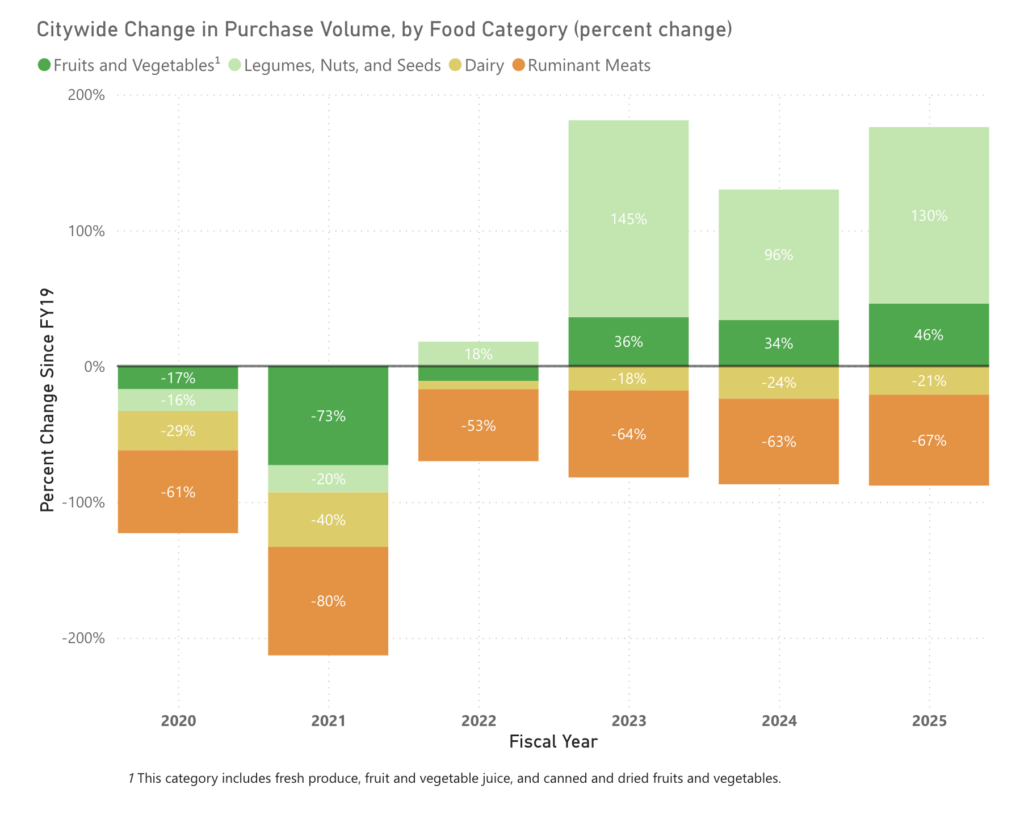
The latest data, compiled for the period between 2019 and 2025, highlights a remarkable transformation in the city’s food supply chain. Purchases of plant-based protein sources, encompassing legumes, nuts, and seeds, have surged by an impressive 130%. This substantial increase is complemented by a 46% rise in the procurement of fruits and vegetables, underscoring a broader commitment to plant-forward diets.

Concurrently, the city has made significant strides in reducing its reliance on animal products. In 2025, purchases of dairy products saw a 21% decrease compared to 2019 figures. The reduction in ruminant meats, such as beef and lamb, was even more pronounced, dropping by 67%. Cumulatively, the overall volume of animal protein purchased by the city government declined by 15% over the same period.
Sierra Hollowell, a senior policy analyst at the Mayor’s Office of Food Policy, commented on the significance of these findings, stating in a LinkedIn post, "These numbers reflect the collective work of the Mayor’s Office of Food Policy, the NYC Health Department, and food- and meal-buying agencies to serve healthy, delicious meals while advancing values-based procurement." This statement emphasizes the collaborative effort and the dual focus on both public health and environmental sustainability inherent in the city’s strategy.
Understanding the Environmental Impact of Food Choices
The impetus behind New York City’s aggressive shift in food procurement is deeply rooted in the disproportionate environmental impact of traditional meat and dairy production. Analysis of the city’s food purchasing data reveals that these sectors are major contributors to its greenhouse gas emissions.
In 2022, the city formalized its commitment to sustainable food systems through the establishment of its "Good Food Purchasing" program. This initiative encourages institutions to prioritize food procurement based on five core values: supporting local economies, promoting environmental sustainability, ensuring a valued workforce, upholding animal welfare, and guaranteeing nutritional quality. The program aims to foster greater transparency in the city’s food supply chain, from sourcing to consumption.
The data from 2019 to 2025 illustrates the economic landscape of the city’s food purchases. Dairy emerged as the largest expenditure category, with $439 million spent. Despite accounting for nearly a quarter of total food spending by value, dairy represented 35% of all food purchased by weight. Grains and produce followed closely in expenditure, at $394 million and $345 million, respectively. These categories, along with plant-based milk, roots, tubers, legumes, nuts, and seeds, collectively constituted approximately half of all food purchases by weight.
The financial implications of animal protein consumption are also stark. The city spent $241 million on poultry, which represented 13% of total spending. However, poultry accounted for only 6% of purchases by volume, a clear indication of the higher cost associated with meat products. Ruminant meats, pork, and seafood, despite their lower purchase volumes, carry a significant environmental burden.
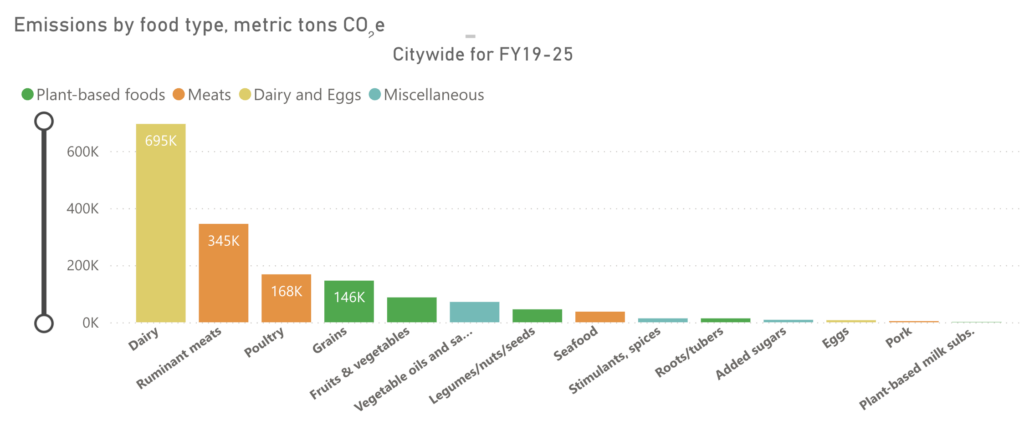
The environmental toll of these food choices is equally significant. Dairy is the leading driver of the city’s food-related emissions, contributing 42% of the total. Ruminant meats follow at 21%, and poultry at 10%. This data underscores a critical point: even relatively small volumes of certain animal products can have a disproportionately high impact on the climate. In stark contrast, all plant-based foods, excluding oils, spices, and sugars, are responsible for a mere 17.5% of the city’s food-linked emissions.
The impact extends to land use as well. Ruminant meat dominates land utilization, accounting for 30%, followed by dairy at 21% and poultry at 13%. When considering total carbon costs – which encompass emissions and the opportunity costs of land use – these three food groups are responsible for 79% of the total burden.
A Vision for Public and Planetary Health: NYC’s Plant-Forward Policies
While animal proteins have historically held a prominent position in New York City’s institutional food menus, a discernible shift has been underway. In the fiscal year 2024-2025, a significant milestone was reached: the city government allocated more expenditure to fruits and vegetables than to dairy products. This strategic rebalancing is a direct reflection of the city’s commitment to promoting healthier diets and reducing its environmental impact.
Further cementing this commitment, the city has implemented targeted policy changes. Last year, eleven municipal agencies were directed to eliminate all processed meats from their offerings and to substantially increase the use of minimally processed plant proteins in meals and snacks. This directive is set to take effect in the immediate future, signaling a proactive approach to dietary reform.
New York City has consistently demonstrated its leadership in enacting food policies that benefit both public and planetary health. In 2022, under the leadership of then-Mayor Eric Adams, who personally follows a plant-forward diet, the city launched a "plant-based by default" initiative across its 11 public hospitals. This groundbreaking policy made vegan meals the standard offering for patients and their families, with the option to opt for other choices. The program has yielded remarkable results, with half of all patients choosing meat-free dishes and an impressive 90% expressing satisfaction with the food provided. Beyond patient well-being, this initiative has also contributed to reduced emissions and operational costs for the hospitals.
The influence of New York City’s pioneering efforts has reverberated across the nation. In 2023, a resolution endorsed by 1,400 U.S. mayors promoted a nationwide shift towards plant-based diets, drawing direct inspiration from Mayor Adams’ hospital campaign.
More recently, in the past year, the city government initiated the "Plant-Powered Carbon Challenge." This initiative, supported by the non-profit Greener by Default, collaborates with partner organizations to track their carbon emissions and share best practices in designing plant-forward menus. The challenge has garnered significant participation from diverse entities, including Columbia University, The Rockefeller Foundation, the catering giant Aramark, and the organizers of the U.S. Open, demonstrating a broad adoption of plant-forward strategies across various sectors.
Broader Implications and Future Outlook
New York City’s proactive approach to sustainable food procurement offers a compelling model for other municipalities and large institutions globally. The success in achieving climate goals ahead of schedule underscores the tangible impact of strategic policy implementation and the power of collective action. The significant reduction in food-related emissions, driven by a substantial increase in plant-based protein consumption and a decrease in meat and dairy, highlights the critical role of dietary shifts in mitigating climate change.
The "Good Food Purchasing" program, with its emphasis on values-based procurement, provides a robust framework for institutions seeking to align their purchasing power with environmental and social responsibility. The transparency it fosters allows for a clearer understanding of the true cost of food, both economically and ecologically.
The data clearly indicates that meat and dairy products, while often perceived as staples, carry a disproportionately heavy environmental burden. The city’s strategy to shift away from these products, while simultaneously embracing plant-based alternatives, not only contributes to climate mitigation but also promotes healthier dietary patterns among its citizens. The success in public hospitals and the expansion of the "Plant-Powered Carbon Challenge" suggest a growing awareness and commitment to these principles across various sectors.
Looking ahead, New York City’s continued commitment to plant-forward policies is poised to yield further environmental benefits and set new benchmarks for sustainable governance. The early achievement of its 2030 climate goals serves as a powerful testament to the efficacy of its food procurement strategy and its dedication to building a more sustainable and healthier future for its residents and the planet. The ripple effect of these initiatives is likely to inspire further action, encouraging a broader societal transition towards more sustainable food systems.
