

The beauty and personal care industry has long relied on active ingredients promising youth, hydration, and cellular repair, yet few compounds have achieved the ubiquitous status of hyaluronic acid (HA) and its derivative, sodium hyaluronate. Celebrated across dermatology, cosmetic chemistry, and consumer cosmetics, this substance occupies a unique space between biological necessity and cosmetic enhancement. While modern marketing frequently portrays hyaluronic acid as a fountain of youth in a bottle, a closer examination of its chemical properties, molecular sizing, and physiological behavior reveals a more nuanced picture of how topical formulations interact with human skin.
Understanding the prominence of hyaluronic acid requires examining its natural distribution within the human body. As a key glycosaminoglycan—a long, unbranched carbohydrate composed of repeating disaccharide units—hyaluronic acid is heavily concentrated within the extracellular matrix, the complex structural network that supports surrounding cells. While small amounts are found throughout the body, the majority resides within the skin, split between the outer epidermis and the deeper dermis. In these layers, endogenous hyaluronic acid serves critical biological functions, including maintaining tissue hydration, facilitating metabolic transport, supporting cellular repair, and mitigating oxidative stress caused by free radicals and ultraviolet radiation.
Despite popular assertions that natural hyaluronic acid stores steadily deplete as individuals age, contemporary dermatological research challenges this premise. Current scientific consensus indicates that intrinsic aging does not necessarily destroy the total volume of hyaluronic acid within the skin. Instead, chronological and environmental aging—driven by factors such as chronic solar exposure and pollution—causes hyaluronic acid to physically redistribute across the skin layers. This structural shift alters tissue elasticity and moisture retention, contributing to the visual characteristics commonly associated with mature skin.
The commercial integration of hyaluronic acid into serums, moisturizers, and cosmetic treatments stems primarily from its exceptional humectant properties. Because of its highly polar molecular structure, hyaluronic acid attracts and binds water molecules efficiently. When applied topically, it functions by drawing moisture into the stratum corneum, the outermost layer of the skin. This immediate surface hydration temporarily plumps the tissue, effectively smoothing the appearance of fine lines and wrinkles caused by transient dehydration.
While glycerin has traditionally served as a more cost-effective humectant in commercial formulations, it frequently draws criticism for leaving a sticky or heavy residue on the skin. Formulators regularly combine glycerin with hyaluronic acid to alter the sensory profile of the product, creating lighter, more cosmetically elegant textures that appeal to consumers.
The efficacy of topical hyaluronic acid is further dictated by molecular weight, a critical factor in product formulation and performance. Raw hyaluronic acid can be broken down into varying fragment sizes, categorizing ingredients into high molecular weight and low molecular weight variants. Sodium hyaluronate, frequently listed on cosmetic ingredient labels, typically denotes smaller molecular fragments than whole hyaluronic acid, though a wide spectrum of sizes exists within both classifications.
High molecular weight hyaluronic acid possesses a large molecular structure that remains on the skin’s surface, forming a breathable, moisture-binding film that prevents transepidermal water loss. Conversely, low molecular weight variants feature smaller fragments capable of penetrating deeper into the upper layers of the epidermis. This structural divergence allows formulators to target different depths of the skin depending on the intended clinical or cosmetic outcome.
The utilization of low molecular weight hyaluronic acid has occasionally generated debate within scientific circles regarding its potential to act as an inflammatory signal. Some researchers have questioned whether smaller fragments could trigger immune responses within the skin. However, dermatological literature demonstrates that localized inflammatory signaling is not inherently detrimental and frequently plays a vital role in cutaneous defense and tissue regeneration.
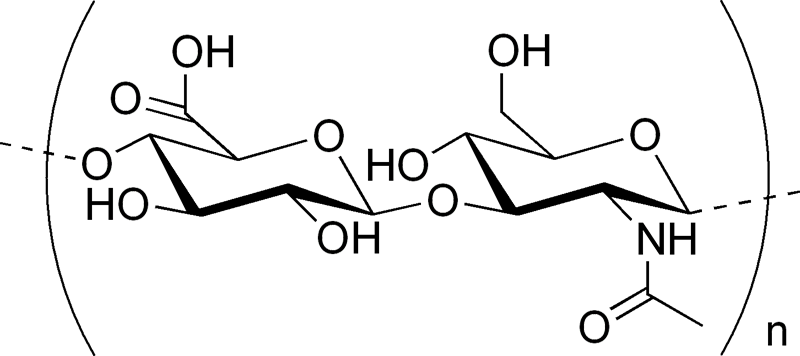
Controlled studies examining skin cells and tissue samples indicate that low molecular weight hyaluronic acid can enhance the skin’s intrinsic repair mechanisms, strengthen antimicrobial defenses, and provide therapeutic benefits for conditions such as seborrheic dermatitis. Clinical trials focusing on topical low molecular weight gels have highlighted improvements in barrier function and symptom management for patients with chronic inflammatory skin disorders, though researchers emphasize the need for continued investigation into its long-term effects on healthy skin architecture.
Despite these advanced delivery mechanisms, cosmetic scientists emphasize clear limitations regarding what topical application can achieve. Applying hyaluronic acid topically does not replenish the body’s deep, endogenous dermal stores, as even the smallest molecular fragments are largely restricted to the upper epidermis. The benefits derived from commercial skincare products are overwhelmingly tied to surface hydration, enhanced barrier function, and minor antioxidant and anti-inflammatory activity, rather than structural tissue reconstruction.
The sourcing of commercial hyaluronic acid involves distinct supply chains that impact both manufacturing costs and consumer preferences. Historically, and continuing into contemporary production, the ingredient is harvested from animal tissues, most notably rooster combs, which contain concentrations of hyaluronic acid approximately fifteen times greater than human skin. For vegetarian and vegan consumers, this animal-derived origin necessitates careful label scrutiny. Consequently, the industry has increasingly turned to microbial biofermentation, utilizing targeted bacterial cultures to synthesize high-purity, cruelty-free hyaluronic acid on an industrial scale.
Beyond traditional serums and moisturizers, hyaluronic acid has found innovative applications in decorative cosmetics and advanced aesthetic procedures. In the realm of makeup, particularly skin-smoothing primers, manufacturers incorporate dehydrated hyaluronic acid spheres into anhydrous, water-free formulations. When applied to the skin, these microscopic spheres settle into fine lines and microscopic skin crevices. Once embedded, they absorb ambient moisture from the surrounding air and underlying tissue, swelling to physically fill and smooth the appearance of wrinkles for the duration of wear.
In clinical dermatology, hyaluronic acid undergoes chemical cross-linking to serve as the foundational material for injectable dermal fillers. Products such as Juvéderm, Restylane, and Voluma utilize these modified gels to restore structural volume, contour facial features, and correct deep static wrinkles or age-related fat pad depletion. While generally considered safe when administered by qualified medical professionals, cross-linked hyaluronic acid fillers have occasionally been utilized in controversial body-contouring applications, such as large-volume breast and buttock augmentations, which carry heightened risks of localized complications and nodule formation.
Concurrently, the oral supplement market features numerous hyaluronic acid capsules and liquids marketed for joint health and skin anti-aging. However, independent scientific backing for oral ingestion remains limited. Skepticism persists among pharmacologists regarding whether intact hyaluronic acid molecules can survive the human digestive tract, break down into absorbable components, and successfully travel via the bloodstream to deposit within the dermal matrix of the skin.
As scientific understanding of cosmetic ingredients evolves, regulatory bodies and researchers continue to audit foundational claims within the literature. A notable milestone in scientific transparency occurred when historical claims regarding the exact water-holding capacity of hyaluronic acid were formally retracted and corrected in professional journals. For years, literature cited a widely accepted assertion that a single gram of hyaluronic acid could bind up to six liters of water—a figure originally published in safety assessment documents without a primary empirical reference. Subsequent investigations by cosmetic scientists exposed this metric as an unsupported urban legend perpetuated through academic citations. This correction underscored a broader industry-wide push for rigorous skepticism, illustrating how anecdotal or exaggerated figures can permeate peer-reviewed literature and consumer media alike.
Looking forward, the trajectory of hyaluronic acid in personal care remains anchored by ongoing clinical research and formulation chemistry. As consumers demand higher transparency regarding ingredient sourcing, molecular sizing, and physiological efficacy, manufacturers continue to refine how this versatile compound is synthesized, delivered, and utilized. Whether functioning as a surface humectant in a daily moisturizer, a mechanical filler in a makeup primer, or a cross-linked gel in a clinical setting, hyaluronic acid retains its position as a cornerstone of modern dermatological science, driven by a balance of biological compatibility and continuous empirical scrutiny.
