
Dublin, Ireland — The Vegan Society of Ireland has officially urged the national government to pivot toward sustainable agricultural policies by introducing a comprehensive national plant-based action plan and dedicated financial fund ahead of Budget 2027. Set to be unveiled on October 6, the upcoming national budget represents, according to the advocacy group, a critical window of opportunity to revitalize the country’s struggling agricultural and horticultural sectors while aligning food production with modern environmental and public health demands.
The organization’s core proposal asks Dublin to emulate Denmark’s pioneering food sustainability model. By establishing a well-resourced financial framework and a strategic roadmap, the Irish government could systematically address structural declines in domestic horticulture, bolster national food security, and assist traditional livestock farmers in transitioning toward diversified, plant-based crop production.
The State of Irish Horticulture: A Critical Reliance on Imports
To understand the urgency behind the Vegan Society of Ireland’s appeal, one must examine the state of domestic Irish agriculture and horticulture. For decades, the nation’s agricultural output has leaned heavily toward livestock, dairy, and beef production, cementing Ireland’s status as a major global meat and dairy exporter. However, this heavy specialization has come at the expense of domestic fruit and vegetable cultivation.
Current agricultural metrics highlight a stark vulnerability in Ireland’s food supply chain: the country now imports approximately 83% of its total fruit and vegetable supply. Furthermore, the commercial growing landscape has contracted dramatically over the last generation. In the 1990s, Ireland boasted more than 600 commercial vegetable growers; today, that figure has plummeted to fewer than 70 active operations.
This steep decline leaves the island nation highly susceptible to external supply chain shocks, climate disruptions, and geopolitical trade fluctuations. James O’Donovan, chairperson of the Vegan Society of Ireland, argues that the current systemic crisis offers a compelling rationale for structural intervention. By providing financial incentives and professional guidance, the government can help farmers diversify their land use, transforming a struggling sector into a thriving, domestic source of fresh produce.
The Danish Blueprint: A Precedent for Cross-Sector Reform
In pressing their case, advocates point directly to Denmark as an international trailblazer in sustainable food systems. In 2023, the Danish government launched the world’s first national action plan specifically designed to promote plant-based foods, backed by an initial allocation of one billion Danish kroner (approximately €168 million at the time) in dedicated sector grants.
Danish lawmakers expanded this forward-thinking framework in 2024 by brokering a historic Green Deal. This sweeping legislative package established the world’s first carbon tax on livestock farming while designating billions of dollars to acquire agricultural land and reforest it. Crucially, these initiatives were forged through collaborative consensus-building among a diverse coalition of politicians, trade unions, environmental organizations, and traditional farming lobbies.
O’Donovan emphasizes that Denmark’s success demonstrates how structural food system reforms can transcend ideological divides. "Denmark is a major meat producer, yet its farmers, politicians, and environmental groups kept talking until they agreed on a plan," O’Donovan noted. "The measure was introduced by a right-leaning agriculture minister. There is no reason Ireland cannot do the same."
Three Core Demands for Budget 2027
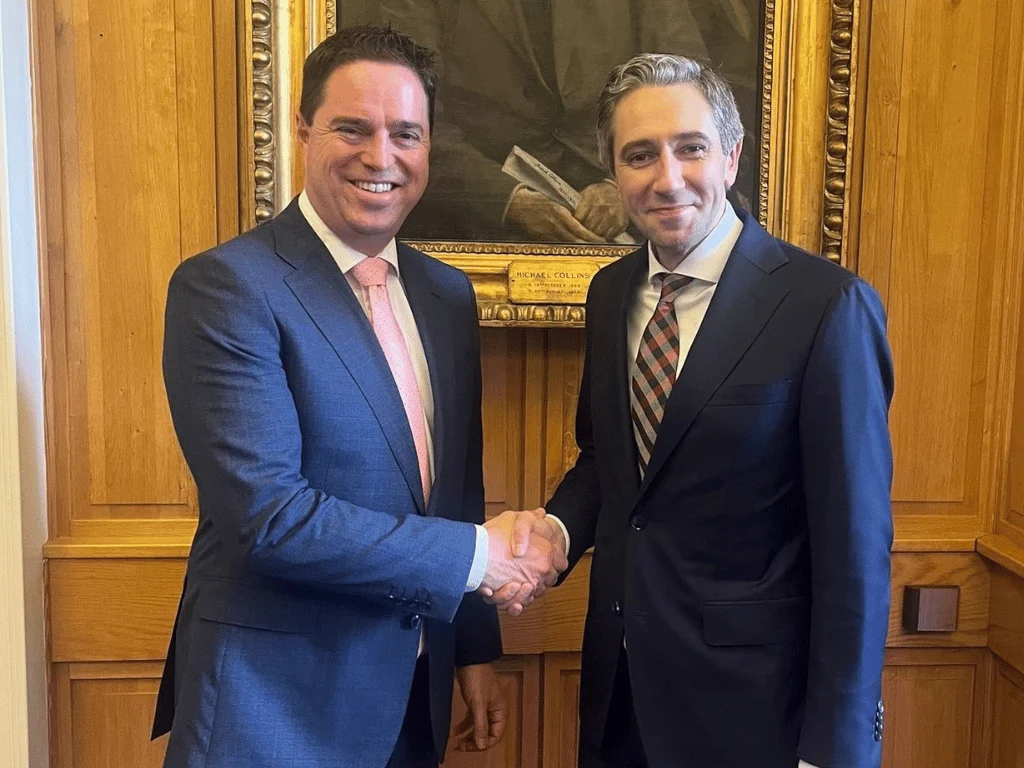
The Vegan Society of Ireland’s formal submission to Minister for Agriculture, Food and the Marine Martin Heydon outlines three primary policy interventions for the upcoming budgetary cycle:
- A National Plant-Based Transition Fund: The establishment of a dedicated financial fund, scaled comparably to Denmark’s pioneering model, accessible to farmers, growers, and innovative food businesses looking to scale plant protein production and sustainable horticulture.
- A National Plant-Based Strategy: A formal governmental commitment to draft and publish a comprehensive national strategy for plant-based foods and sustainable dietary shifts.
- Dedicated Horticulture Diversification Support: Specialized assistance for farmers wishing to integrate fruit, vegetable, and legume cultivation into their operations. This includes capital infrastructure grants, direct financial aid, and hands-on advisory services delivered through Teagasc, the Agriculture and Food Development Authority.
These proposals expand upon an open letter sent by the charity to the Department of Agriculture earlier in the month, which formally requested that horticulture be officially recognized as a viable diversification option alongside forestry, carbon farming, and renewable energy production.
Public Opinion and Consumer Demand
While policy advocacy often faces friction from established agricultural interests, recent data suggests that the Irish public is overwhelmingly receptive to agricultural diversification and sustainable dietary shifts.
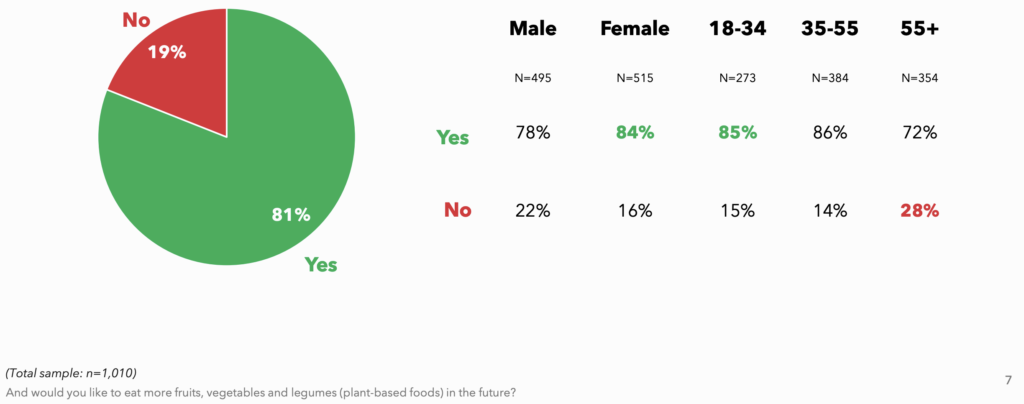
A nationally representative survey conducted in May by Opinions Market Research on behalf of the vegan advocacy group revealed robust public backing for systemic change. According to the findings, more than four in five Irish adults (81%) expressed a personal desire to consume higher quantities of fruits, vegetables, and legumes.
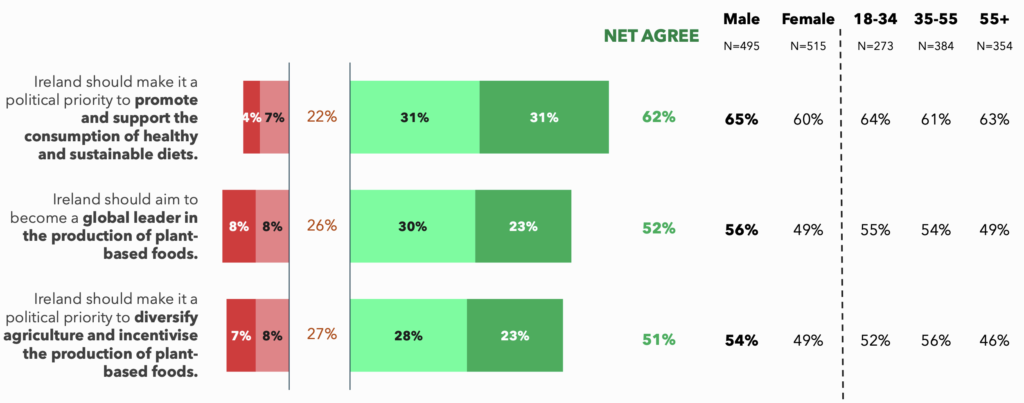
Moreover, 51% of respondents asserted that government policy should actively prioritize the diversification of the agricultural sector, specifically through economic incentives for plant-based food production—a sentiment that transcends age, urban-rural divides, and demographic boundaries. Additional findings indicate that 62% of Irish citizens believe healthy and sustainable diets should be established as a formal national political priority, while 52% want Ireland to position itself as a global leader in plant-based food innovation.
Addressing Affordability and the Cost-of-Living Barrier
Despite high consumer interest, significant structural roadblocks continue to hinder wider adoption. Chief among these is financial accessibility. The Opinions survey revealed that high retail prices prevent roughly 32% of the population from incorporating more plant-based foods into their daily diets. Furthermore, consumers experiencing financial stress were found to be 10 percentage points less likely to purchase fresh plant-based alternatives compared to more economically secure households.
Advocates argue that by subsidizing domestic production, scaling up localized supply chains, and reducing reliance on costly imported fresh produce, government intervention could help drive down consumer prices. Increased domestic supply would democratize access to sustainable diets, ensuring that economic hardship does not preclude healthy eating.
A Broader European Movement
Ireland’s domestic debate does not occur in a vacuum; it is part of a broader, continent-wide reassessment of European food security and agricultural policy. Similar calls for structural reform are echoing across Western Europe. In the Netherlands, a coalition of 46 major civil society and environmental organizations recently petitioned the Dutch government to implement a national plant-based action plan backed by a €65 million annual acceleration fund.
At the European Union level, policymakers have introduced the bloc’s comprehensive Protein Plan, designed to scale up regional plant protein production and enhance food self-sufficiency. While the EU framework has historically concentrated heavily on animal feed production rather than human consumption, regional pressure for human-centric plant protein strategies continues to mount.
Implications for Ireland’s Future
As October 6 approaches, the Vegan Society of Ireland intends to maintain sustained pressure on policymakers, framing its requests not as an attack on traditional farming, but as an economic and environmental lifeline for rural communities facing uncertain futures.
"We will support any party that backs a move towards a food system that is kinder to animals, healthier for people, and better for the planet," O’Donovan stated. "We believe Ireland’s future lies in relying less on animals and more on what we can grow."
Whether the Irish government will incorporate these Denmark-inspired frameworks into Budget 2027 remains to be seen. However, the convergence of shifting consumer preferences, dwindling domestic horticulture numbers, and sweeping European sustainability trends ensures that the debate over the future of Ireland’s plate—and its pastures—will remain at the forefront of national politics.
