
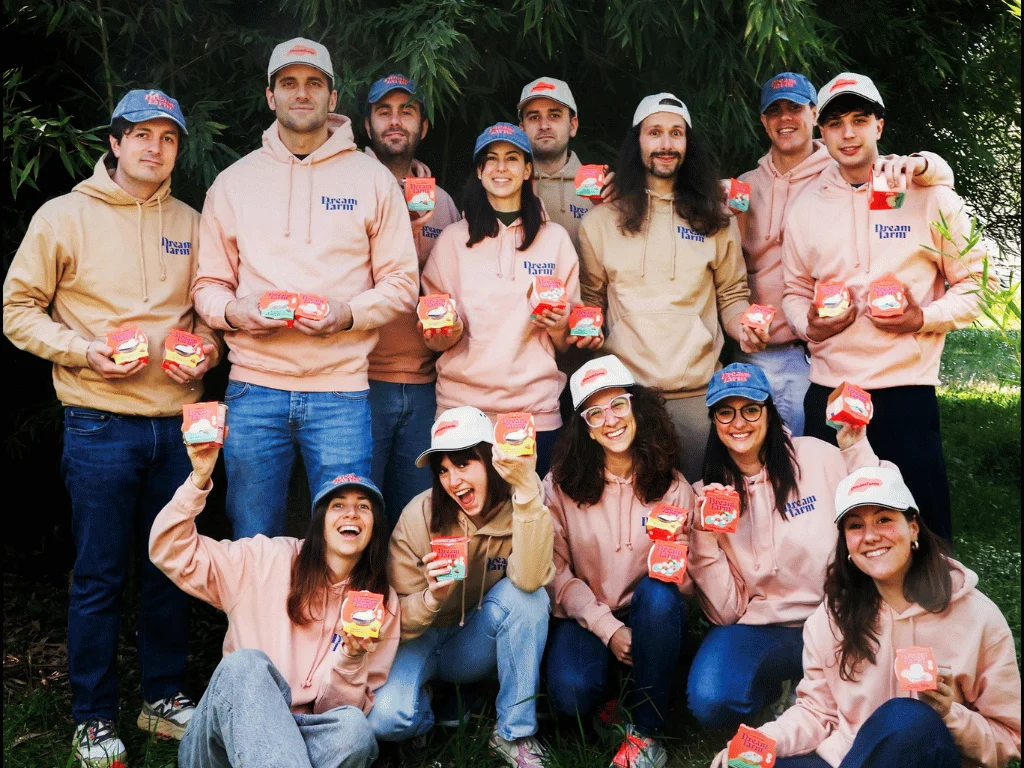
The global market for plant-based alternatives has encountered significant headwinds in recent years, with consumer skepticism frequently targeting dairy-free cheese. Early iterations of plant-based cheeses were widely criticized for synthetic textures, unpleasant aftertastes, and a failure to melt or brown comparably to dairy counterparts. However, a shifting landscape led by food science innovation and artisanal craftsmanship is beginning to alter consumer perceptions. At the forefront of this transformation is Dreamfarm, an Italian vegan cheese startup that has posted a 45% year-on-year revenue increase during the first eight months of the year, defying broader market stagnation and redefining consumer expectations within the category.
The resurgence of plant-based dairy in specific European markets reflects a maturing industry pivoting away from ultra-processed formulations toward traditional culinary methods. Founded five years ago, Dreamfarm recognized early on that the primary barrier to mainstream adoption was not ideological resistance among consumers, but rather the inferior sensory quality of existing products.
Re-Engineering Plant-Based Dairy Through Fermentation Science
For years, mass-market vegan cheeses relied heavily on refined starches, heavy fats, and artificial flavorings to simulate the characteristics of dairy. According to Giovanni Menozzi, co-founder and chief executive officer of Dreamfarm, this shortcuts-driven manufacturing process severely damaged the reputation of the entire category. He acknowledges that consumer resistance is historically justified, noting that negative initial experiences create lasting impressions.
To counteract this, Dreamfarm rejected conventional formulations in favor of traditional food science techniques, specifically focusing on controlled fermentation. Utilizing bases derived from almonds and cashews, the company developed a proprietary fermentation platform anchored by five distinct bacterial strains. This technological advancement, now protected by a European patent, imparts a complex flavor profile and authentic mouthfeel previously absent in most plant-based cheeses.
The resulting product portfolio—which includes fresh mozzarella packed in water, ricotta, stracciatella, and cream-cheese spreads—has achieved notable validation, securing top-tier Nutri-Score A ratings. By prioritizing taste and texture followed by a concise, clean-label ingredient deck, the company successfully bridged the gap between artisanal dairy traditions and plant-based manufacturing.
Financial Trajectory and Market Penetration
Dreamfarm’s strategic emphasis on product quality has translated directly into accelerated commercial momentum. Following a revenue doubling in the previous fiscal year, the company maintained its upward trajectory into the current year. July marked the highest-performing month in the five-year history of the enterprise. By the close of August, Dreamfarm commanded an 11% market share within Italy’s plant-based cheese sector, expanding significantly from 7.4% recorded twelve months prior.
Financial metrics illustrate a rapid scale-up from early-stage production. Annual revenue surged from €130,000 in 2023 to approximately €1.8 million, with ongoing performance indicating sustained expansion. This commercial growth coincides with data from industry groups like the Good Food Institute (GFI) and Circana, which highlight cheese as the fastest-growing plant-based category in Italy, registering a 26% year-on-year expansion.
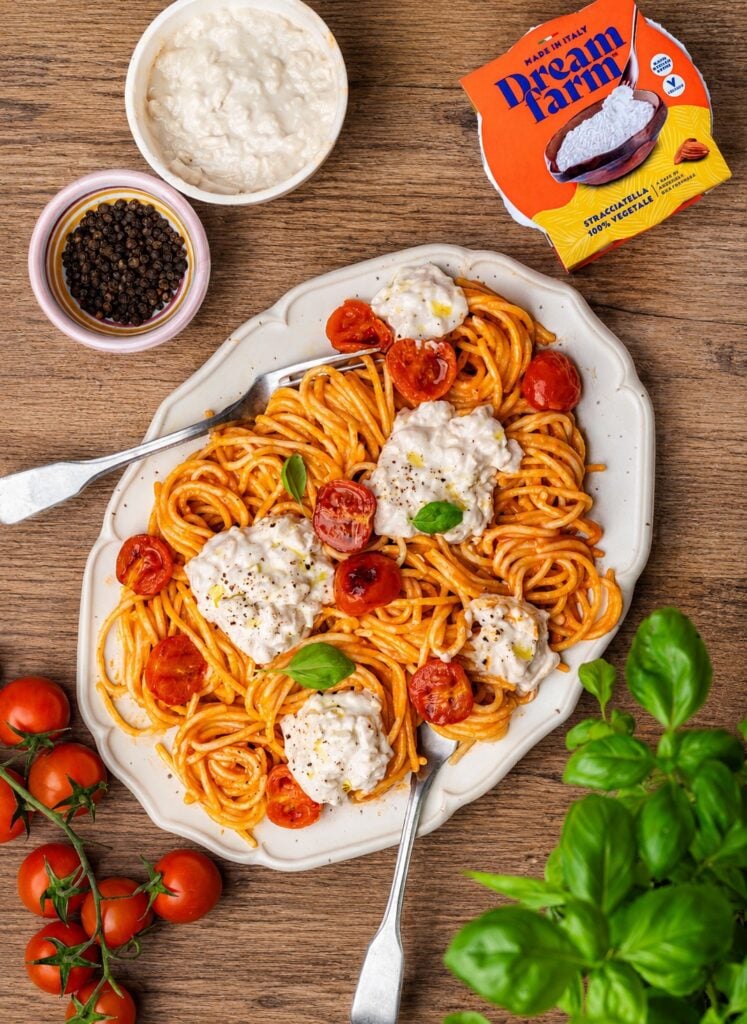
The brand’s physical footprint has widened concurrently. Weighted distribution for Dreamfarm’s flagship fresh mozzarella reached 43% in August, up from 35% the previous year, while its vegan ricotta increased its distribution reach from 25% to 30%. The company currently collaborates with roughly 50 active commercial partners, distributing its products through more than 2,000 retail points of sale spanning Italy, France, Belgium, the Netherlands, and Germany. Major European retail banners—including Esselunga, Coop, Conad, Monoprix, Delhaize, Albert Heijn, and EDEKA, alongside online grocery platform Picnic—stock the brand’s offerings, with entry into the Swiss market slated for the near future. International sales currently account for roughly one-quarter of total revenues.
Targeting the Flexitarian Consumer Base
A critical component of Dreamfarm’s distribution and marketing strategy is the intentional shift toward flexitarian consumers. Industry analysts note that future growth in the plant-based sector relies less on converting strict vegans and more on capturing mainstream shoppers seeking to reduce their animal-product consumption for health, environmental, or culinary reasons.
Menozzi emphasizes that flexitarians are generally driven by culinary satisfaction and convenience rather than dogmatic adherence to a cause. Consequently, Dreamfarm markets its products not as substitutes requiring sacrifice, but as versatile, premium ingredients suitable for everyday consumption, such as stracciatella on pizza or mozzarella in salads.
To lower the barrier to entry, the company relies heavily on direct-consumer engagement through in-store samplings and culinary events. Management notes that once consumers experience the product firsthand, conversion rates and subsequent weekly repeat purchases increase substantially. Retail partners frequently report high customer retention, validating the commercial viability of a taste-first approach.

Strategic Outlook and Path to Profitability
Having invested significantly during the current fiscal year into expanding its production facility in Parma, Italy, as well as scaling its workforce and strengthening brand awareness, Dreamfarm is positioning itself for long-term financial sustainability. Management anticipates that these capital expenditures will yield operational efficiencies as production volumes rise, effectively absorbing fixed manufacturing overhead.
Looking ahead to the upcoming strategic cycle, Dreamfarm plans to optimize its channel mix by reducing reliance on heavy promotional discounting, a practice Menozzi warns can artificially inflate short-term volume without building brand loyalty. Furthermore, the company advises emerging brands within the sector to focus on achievable product segments—such as fresh, high-moisture Italian cheeses—rather than attempting complex, long-aged varieties that present insurmountable technical challenges in plant-based formats.
With foundational distribution networks established across key Western European markets and production capabilities optimized at its Parma plant, Dreamfarm has set a clear financial target: achieving company-wide profitability by the end of 2028. As consumer demand for clean-label, high-sensory plant-based foods continues to mature, the startup’s trajectory offers a blueprint for how artisanal quality and scalable manufacturing can successfully intersect within the modern retail ecosystem.
