
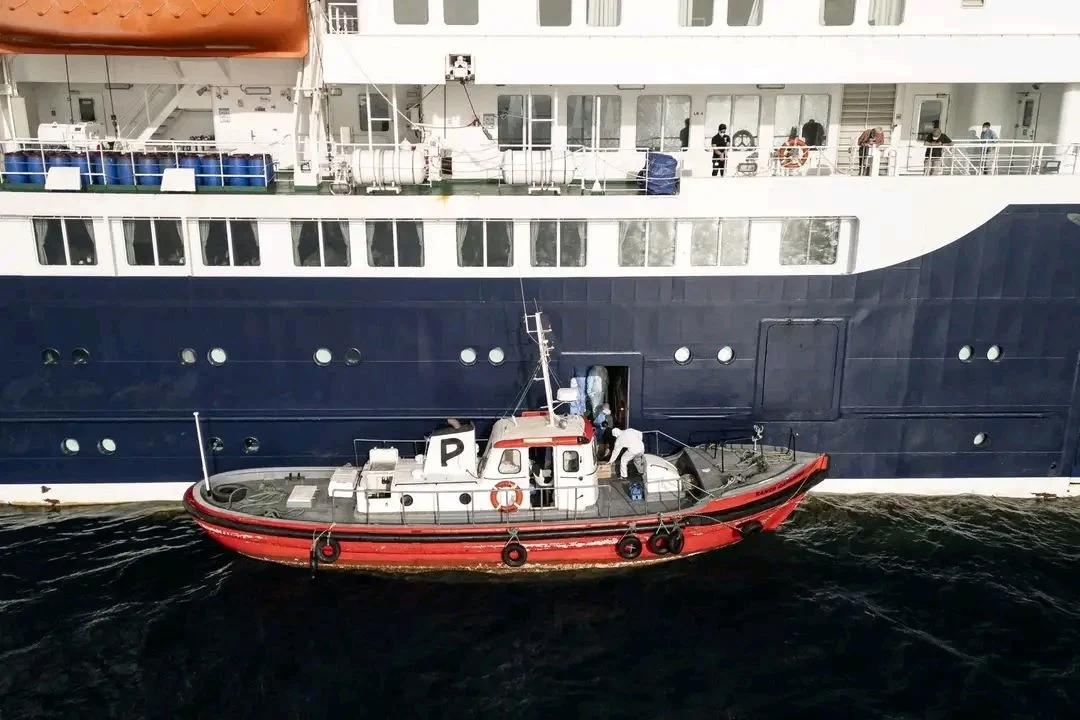
The World Health Organization (WHO) has confirmed its direct involvement in the management of a public health event involving the expedition vessel MV Hondius, which is currently navigating toward the port of Granadilla in Tenerife. Dr. Tedros Adhanom Ghebreyesus, the Director-General of the WHO, issued an unprecedented direct communication to the residents of the Canary Islands, seeking to clarify the nature of the health risk and the stringent protocols in place to ensure the safety of the local population. The vessel, carrying approximately 150 passengers and crew members from 23 different nations, has reported an outbreak of the Andes strain of hantavirus, a serious respiratory illness. While the virus has tragically claimed the lives of three individuals on board, global health authorities have emphasized that the current risk to the public in Tenerife remains exceptionally low.
The decision to dock in Tenerife was reached following high-level diplomatic and health consultations between the WHO and the Spanish government. Under the framework of the International Health Regulations (IHR), Spain has agreed to provide a humanitarian corridor for the repatriation of those on board. Dr. Tedros characterized the decision by Spanish Prime Minister Pedro Sánchez as an "act of solidarity and moral duty," highlighting the necessity of international cooperation in managing infectious disease outbreaks in maritime environments. To underscore the importance of the operation and to provide personal oversight, the Director-General announced his intention to travel to Tenerife to observe the disembarkation and repatriation process firsthand.
Understanding the Pathogen: The Andes Strain of Hantavirus
The primary concern regarding the MV Hondius involves the Andes virus (ANDV), a specific lineage of hantavirus indigenous to South America. Unlike many other strains of hantavirus found in North America, which are typically transmitted solely through contact with infected rodent excreta, the Andes strain is noted in medical literature for its potential, albeit limited, person-to-person transmission. This specific characteristic necessitates a higher level of biocontainment than other hantavirus variants.
Andes virus causes Hantavirus Pulmonary Syndrome (HPS), a severe respiratory disease. The incubation period can range from one to six weeks, making the management of shipboard outbreaks particularly complex. However, Dr. Tedros and WHO experts have been quick to distinguish this situation from the COVID-19 pandemic. Hantaviruses are not highly contagious in the same manner as respiratory viruses like SARS-CoV-2; they do not spread through casual contact in open-air environments or through wide-scale aerosolization in a way that would threaten a city’s general population. The WHO’s assessment that the risk to Tenerife residents is low is based on the virus’s transmission dynamics and the total isolation of the passengers during the transit process.
Chronology of the MV Hondius Crisis
The crisis aboard the MV Hondius, a vessel frequently used for polar expeditions, began several weeks ago during its journey through international waters. While the exact point of exposure remains under investigation by epidemiologists, the presence of the Andes strain suggests a connection to the southern regions of South America.
- Initial Outbreak: Several weeks prior to the current date, the first symptoms were reported among passengers. Despite the presence of medical facilities on the vessel, the condition of three individuals deteriorated rapidly, resulting in their deaths.
- Notification and Quarantine: Upon identification of the hantavirus strain, the ship’s captain, Jan Dobrogowski, initiated strict quarantine protocols. The WHO was notified in accordance with international maritime health requirements.
- Diplomatic Negotiation: With the vessel requiring a port capable of handling a complex medical repatriation, the WHO identified Tenerife as the most suitable location due to its advanced medical infrastructure and the industrial layout of the Port of Granadilla.
- The Spanish Agreement: Following a direct request from the WHO, Prime Minister Sánchez authorized the entry of the vessel, triggering a multi-agency response involving the Spanish Ministry of Health, the Canary Islands regional government, and port authorities.
- Current Status: As of the latest briefing, no other passengers on board are currently symptomatic. A WHO medical expert has already been deployed to the ship to monitor health status and coordinate with the ship’s medical team.
Operational Logistics: The "Cordon Sanitaire" at Granadilla
To mitigate any theoretical risk to the public, the Spanish authorities and the WHO have designed a "step-by-step" plan that prioritizes total isolation. The selection of the Port of Granadilla is central to this strategy. Unlike the Port of Santa Cruz, which is integrated into the capital city’s urban fabric, Granadilla is an industrial facility located further south, allowing for a controlled environment far from residential and tourist areas.
The repatriation process will follow a strictly managed sequence. Passengers will be transferred from the MV Hondius to the pier in a controlled manner. From there, they will be moved into "sealed, guarded vehicles" that will travel through a "completely cordoned-off corridor." This corridor will lead directly to the airport for immediate repatriation to the passengers’ 23 respective home countries. The WHO has guaranteed that there will be no interaction between the passengers and the local community. Medical supplies and specialized personnel are already in place at the port to facilitate this transition without utilizing local hospital beds unless a life-threatening emergency occurs during the transfer.
Legal and Ethical Framework: The International Health Regulations
The arrival of the MV Hondius is governed by the International Health Regulations (2005), a legally binding instrument of international law. The IHR requires member states to develop and maintain core capacities to detect, assess, and respond to public health risks. A key component of these regulations is the obligation of countries to assist vessels in distress or those carrying ill passengers, provided the country has the capacity to do so safely.
Dr. Tedros emphasized that the choice of Tenerife was not arbitrary. The island represents one of the most capable medical hubs in the mid-Atlantic, possessing the infrastructure necessary to execute a complex repatriation while maintaining a "cordon sanitaire." By honoring these regulations, Spain is fulfilling a legal obligation that prevents the "ping-ponging" of infected vessels between ports, a practice that historically has exacerbated maritime health crises.
Analysis of Global Health Implications
The handling of the MV Hondius serves as a significant case study in post-2020 global health governance. The direct intervention of the WHO Director-General and his physical presence on the island signal a shift toward more transparent and communicative crisis management.
Health analysts suggest that the WHO is keen to prevent the "stigma and fear" that characterized early responses to previous outbreaks. By providing clear data on the low transmission risk of the Andes hantavirus and detailing the logistical safeguards, the organization aims to maintain public trust. Furthermore, the cooperation between the vessel’s operator, the ship’s captain, and the Spanish government is being cited as a model for future maritime health emergencies.
The ship’s captain, Jan Dobrogowski, has received praise from the WHO for his transparency and collaboration. In many historical instances, ship masters have been hesitant to report outbreaks for fear of being turned away from ports—a phenomenon known as "leper ship" syndrome. The successful execution of the Tenerife plan could encourage better reporting and faster international responses in the future.
Conclusion and Outlook
As the MV Hondius nears the shores of Tenerife, the global health community remains focused on the successful execution of the repatriation plan. The arrival of Dr. Tedros Adhanom Ghebreyesus is expected to coincide with the final stages of the operation, providing a high-level endorsement of the island’s humanitarian efforts.
The residents of Tenerife have been urged to rely on official channels for information. The WHO has reiterated that the sophisticated preparations made by Spanish health authorities are sufficient to contain any risk. While the tragedy of the three lives lost hangs over the event, the focus remains on the safe return of the remaining 150 individuals to their families. The operation stands as a testament to the principle of global solidarity—the idea that even in the face of a serious viral threat, coordinated human action and adherence to international law can provide a path to safety without compromising public health.
The WHO Media Team and Spanish health officials are expected to provide a final briefing once the last passenger has been successfully repatriated, concluding an event that has tested the logistical and moral capabilities of the international health system.
