
The food technology sector is witnessing an accelerated integration of artificial intelligence (AI), with significant advancements poised to reshape protein production and consumption. Food System Innovations (FSI), a philanthropic organization dedicated to fostering a sustainable agrifood system, has unveiled its AI-led Food Intelligence Lab. This initiative, bolstered by a substantial $2 million grant from the Bezos Earth Fund, aims to overcome critical barriers in the development of alternative proteins, primarily focusing on enhancing their taste, texture, and overall consumer appeal.
The urgency for such advancements is underscored by a growing consumer disconnect with the sensory experience of many plant-based alternatives. Large-scale taste tests conducted by Nectar, FSI’s sensory analysis division, reveal a significant preference gap: only about one-third of American consumers find the taste of typical vegan products appealing, a stark contrast to the over three-fifths who favor the taste of conventional meat and dairy. This sensory deficit is a well-recognized impediment to broader adoption, even as major food corporations continue to invest heavily in plant-based product lines. Analysis indicates that 90% of the world’s largest food producers, including Nestlé, Walmart, and Kraft Heinz, are launching and promoting new plant-based products, despite 77% acknowledging that taste, cost, and nutrition concerns are hindering consumer uptake.
The Food Intelligence Lab is designed to directly address this bottleneck by developing open-source infrastructure. This infrastructure will accelerate AI-driven alternative protein development, refine sensory profiles, and compress commercialization timelines. The lab’s approach involves integrating diverse data streams, including sensory panel data from Nectar, instrumental measurements like texture and pH, molecular composition data, and historical experiment results. This comprehensive dataset will inform the design of algorithms capable of guiding the optimization process.
Anna Thomas, a computer scientist at Stanford University and director of machine learning at the Food Intelligence Lab, elaborated on the lab’s methodology. "We treat food formulation as an optimization problem: how do you maximize consumer satisfaction—taste, texture, overall liking—while meeting constraints like cost, nutrition, and manufacturability," she explained to Green Queen. This formulation-centric approach aims to systematically improve alternative protein products by treating them as complex systems with quantifiable variables.
A Timeline of Innovation and the Rise of AI in Food
The integration of AI into the food industry is not a nascent trend. Companies like Shiru have been employing AI to discover novel sustainable proteins and ingredients. Simultaneously, Israeli firm Celleste Bio is leveraging a combination of biotechnology and computational AI to create cell-based chocolate bars, notably in partnership with Mondelēz International. Chile’s NotCo has undergone a significant pivot, transforming from a consumer packaged goods (CPG) company into an AI startup focused on accelerating product development for other food companies.
The Bezos Earth Fund’s commitment to sustainable food systems has been a consistent theme. Last year’s $2 million grant to Food System Innovations for its work in AI for climate and nature, specifically targeting the transition to a sustainable agrifood system, laid the groundwork for the Food Intelligence Lab. This funding has been described as "catalytic" for the lab’s establishment and initial data development.
Bridging the Sensory Gap: The Food Intelligence Lab’s Strategy
FSI identifies a critical need for enhanced research and development (R&D) in improving the taste of animal-free proteins. However, companies often face limitations due to constrained budgets, fragmented datasets, and protracted development cycles. While AI offers a potential accelerant, the sector has historically lacked the integrated data infrastructure necessary for reliably predicting consumer responses, particularly concerning taste and texture.
The Food Intelligence Lab is set to tackle this challenge by generating and curating large-scale datasets. These datasets will encompass sensory data from Nectar and instrumental measurements of alternative proteins, such as texture profile analysis, pH, and shear tests. The objective is to establish public benchmarks for sensory prediction and formulation design, thereby democratizing access to crucial data for the industry.
A cornerstone of the lab’s strategy is the development of open-source models. These models will be designed to enhance product design and prediction capabilities. FSI plans to collaborate closely with companies, non-profit organizations, and researchers to translate these advancements into practical applications within real-world R&D workflows.
Partnerships and Technological Advancements
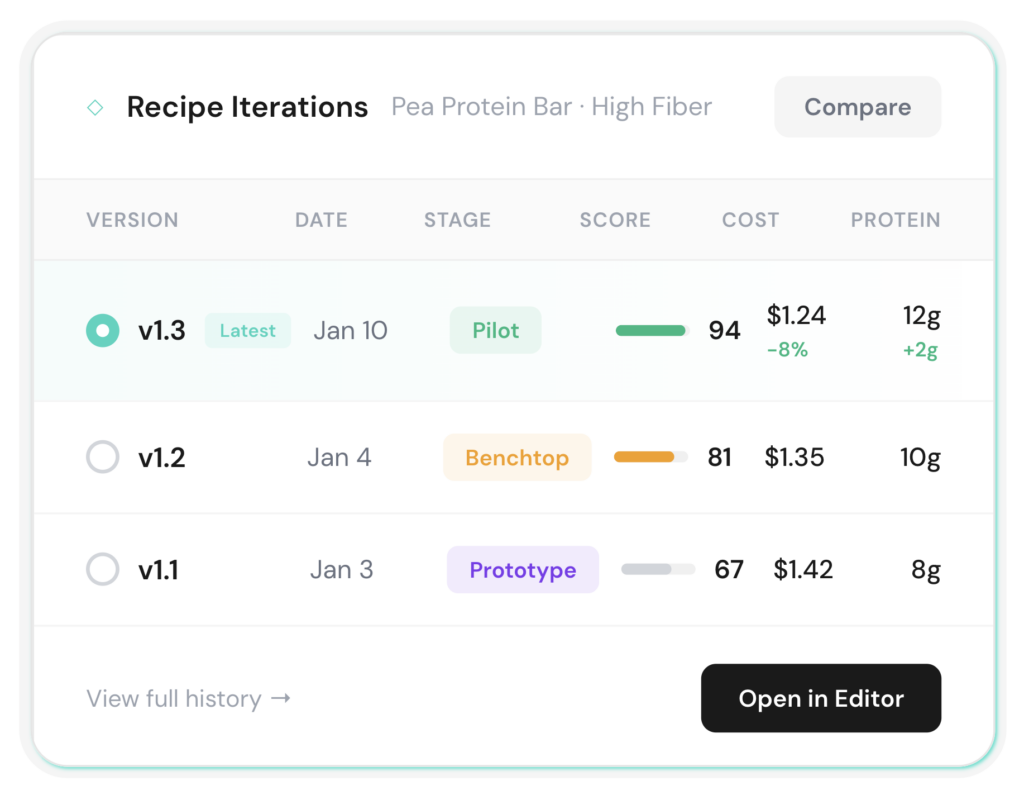
In a significant move towards practical application, the lab has partnered with Proxy Foods AI, a Washington D.C.-based company. Together, they are co-developing an Expert-Guided Bayesian Optimization (EGBO) system, which utilizes Proxy Foods AI’s AI food scientist agent. This EGBO system is an algorithm designed for black-box function optimization. In this context, a domain expert, whether human or a large language model, strategically selects a subset of variables for Bayesian optimization, with the flexibility to expand this set over time.
Early results from this collaboration have been promising. The EGBO system successfully improved the sensory performance of a dairy-free Greek yogurt by 29% in just 10 formulation iterations over a five-day period. Notably, the optimized yogurt matched its animal-based counterpart on three out of four key sensory attributes: consistency, creaminess, and tanginess.
"Our model is designed to work alongside food scientists, allowing domain experts to guide which variables matter most while the algorithm efficiently searches for better formulations," Thomas explained. "The system recommends the ‘next best experiment,’ helping teams iterate far more quickly than traditional trial-and-error approaches."
Beyond specific model development, the lab is focused on building a broader ecosystem. "We’re also building a broader ecosystem beyond a single model," Thomas stated. "The lab is developing open-source benchmarks like TasteBench, evaluating foundation models for sensory prediction, and working with a range of partners across startups, academia, and industry to translate these tools into real-world R&D workflows."
TasteBench, developed by FSI researchers, provides publicly accessible food- and molecular-level prediction tasks. Initial evaluations of existing foundation models and baseline methods for predicting sensory similarity to target animal products revealed that the best AI models demonstrated performance competitive with the median individual Nectar panellist. This suggests that AI can achieve a level of sensory prediction previously attainable only by trained human experts.
Addressing the Climate Imperative and AI’s Environmental Footprint
The initiative by FSI and the Bezos Earth Fund is intrinsically linked to addressing one of the most pressing environmental challenges: climate change. Animal agriculture is a significant contributor to global emissions, accounting for approximately 20% of the total. It also places immense strain on planetary resources, consuming about 30% of the world’s freshwater and occupying 77% of all agricultural land, yet providing only 17% of global calories and 38% of protein intake. The inherent inefficiency and unsustainability of this system highlight the critical need for a transition towards more sustainable protein sources.
However, the very technology being employed to solve these issues, AI, also presents its own set of environmental concerns. Research indicates that AI technologies are likely to increase energy consumption and potentially fuel climate disinformation. A recent United Nations report underscored that the environmental impact of AI often fails to account for the energy required for inference—the process of using trained models to respond to everyday queries.
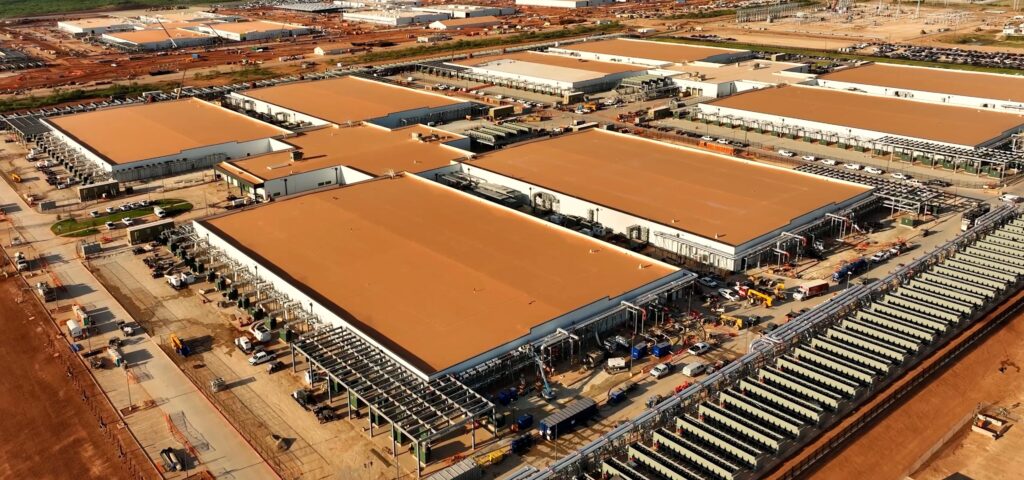
For instance, generating a single AI image can consume enough energy to power a 10-watt LED bulb for 17 minutes and require two tablespoons of water. Furthermore, data centers that power AI are increasingly scrutinized for their demand on public infrastructure. In Querétaro, Mexico, the expansion of computing infrastructure has strained water supplies amidst prolonged droughts. Similarly, in Uruguay, plans for a water-intensive data center clashed with the realities of a severe 2023 drought that depleted Montevideo’s freshwater reserves, rendering tap water unsafe for consumption.
Thomas acknowledged these concerns, stating, "It’s a valid and important concern, and one we take seriously. Our view is that AI in this context needs to be evaluated on net impact." She elaborated on the potential for AI to drive substantial emissions reductions: "Food systems account for roughly 26% of global greenhouse gas emissions, with livestock alone responsible for a significant share. If AI can materially accelerate the shift toward better-performing, more affordable sustainable proteins, the downstream emissions reductions can be substantial."
The lab’s approach prioritizes efficiency. "Our work is focused on targeted, domain-specific models rather than extremely large, general-purpose systems," Thomas noted. "Techniques like Bayesian optimization are extremely lightweight compared to frontier AI approaches, and they are designed to reduce the number of physical experiments required, which carry a material resource and emissions footprint."
The concept of open infrastructure is also central to their strategy for mitigating environmental impact. "We also see open infrastructure as part of the solution: by sharing datasets and models, the field can avoid duplicative training and move toward more efficient, standardized approaches," she added. This collaborative, open-source model aims to prevent redundant efforts and promote resource efficiency across the entire sector.
The Bezos Earth Fund’s Catalytic Role in Open-Source Food Innovation
The $2 million grant from the Bezos Earth Fund has been instrumental in enabling the Food Intelligence Lab to establish itself, develop initial datasets and models, and demonstrate early proof points. This funding is viewed as "catalytic," providing the necessary impetus for the lab’s foundational work. However, FSI envisions this as a long-term, collaborative endeavor, anticipating continued partnerships with industry, philanthropy, and academia to expand and sustain the ecosystem.
The Bezos Earth Fund’s support extends beyond FSI, also backing similar initiatives aimed at developing open-access AI platforms for sustainable proteins. These include projects by Australia’s national research agency, CSIRO, and the UK’s University of Leeds. Furthermore, Tufts University is slated to launch a food innovation hub featuring an open-source cell bank for cultivated meat research later this year.
"A core barrier in food is the lack of shared data infrastructure," Thomas observed. "Unlike fields like drug and materials discovery, food R&D is highly fragmented, with limited public datasets and benchmarks. That slows progress across the entire sector." The Food Intelligence Lab’s commitment to open-sourcing models, datasets, and benchmarks is a deliberate strategy to dismantle this barrier. By providing a common foundation, startups, researchers, and established companies can build upon existing work, enhancing comparability, reducing duplicated effort, and accelerating collective learning.
The Food Intelligence Lab is actively building an engine designed to recommend the most effective "next best experiment" in the development of sustainable protein products. Over time, the lab aims to foster a more open and collaborative framework for sustainable food innovation, empowering the industry to develop superior products.
"In year one, key goals include demonstrating measurable gains in formulation efficiency and sensory outcomes across multiple product categories, and improving model performance on benchmarks like TasteBench," Thomas concluded, referencing the encouraging early validation results from the dairy-free yogurt trials. This focus on tangible, measurable progress underscores the lab’s commitment to driving real-world impact in the critical transition towards a more sustainable and palatable protein future.
