
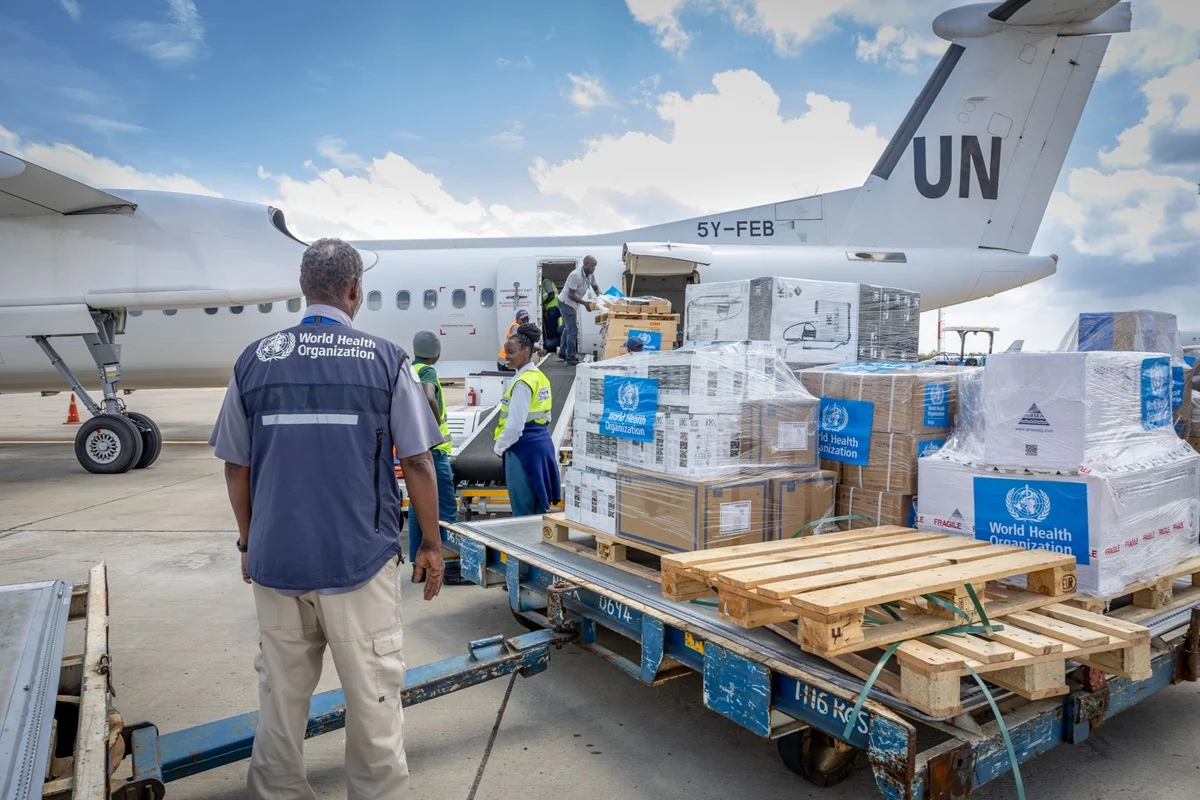
The Director-General of the World Health Organization (WHO), acting under the authority of the International Health Regulations (2005), officially determined on May 17, 2026, that the ongoing epidemic of Ebola disease caused by the Bundibugyo virus (BDBV) constitutes a Public Health Emergency of International Concern (PHEIC). This declaration follows a significant escalation of cases within the Democratic Republic of the Congo (DRC) and the subsequent cross-border transmission into neighboring Uganda. While the situation has been classified as a PHEIC—the highest level of global health alert—the WHO clarified that the event does not currently meet the specific criteria for a "pandemic emergency" as defined under the updated IHR frameworks.
The determination was made following extensive consultations with the affected States Parties and a formal meeting of the IHR Emergency Committee on May 19, 2026. The Committee’s consensus supported the Director-General’s assessment, highlighting that the epidemic is unfolding within an exceptionally complex operational environment, characterized by logistical hurdles and security challenges that necessitate a specialized, context-aware international response. As of May 22, 2026, the WHO Secretariat has categorized the risk level as “Very High” for the DRC and “High” for Uganda, while the broader regional risk is also deemed “High.”
Chronology of the 2026 Bundibugyo Outbreak
The current crisis began to take shape in early 2026, when unusual clusters of hemorrhagic fever were reported in remote regions of the DRC. By early May, laboratory sequencing confirmed the pathogen as Bundibugyo virus, a species within the Orthoebolavirus genus. Unlike the more common Zaire ebolavirus, which has been the focus of major vaccination campaigns in recent years, the Bundibugyo strain is less frequently encountered, leading to a gap in available medical countermeasures.
On May 17, 2026, the Director-General issued the formal PHEIC determination. This was followed two days later by the first meeting of the IHR Emergency Committee, which gathered experts to review epidemiological data and operational constraints. By May 22, the situation in Uganda became a focal point of the briefing. Uganda reported two confirmed cases of BVD, both of which were epidemiologically linked to known transmission chains in the DRC. Fortunately, as of the latest reporting period, no secondary transmission has been documented within Ugandan borders, suggesting that rapid contact tracing and isolation protocols have been effective in the immediate term.
Understanding the Bundibugyo Virus (BDBV)
The Bundibugyo virus was first identified in 2007 during an outbreak in the Bundibugyo District of Western Uganda. Historically, it has demonstrated a lower case-fatality rate than the Zaire strain—ranging from 25% to 40% compared to the Zaire strain’s 60% to 90%—but it remains a severe and lethal pathogen.
A critical factor in the current emergency is the lack of approved therapeutics or vaccines. The highly effective Ervebo vaccine, which was instrumental in controlling Zaire ebolavirus outbreaks in West Africa and the DRC, does not provide cross-protection against the Bundibugyo strain. Similarly, monoclonal antibody treatments like Ebanga and Inmazeb are specifically engineered for the Zaire strain and are not indicated for BDBV. This scientific gap places the burden of containment entirely on traditional public health interventions, such as early detection, isolation, contact tracing, and safe burial practices.
Regional Risk Assessment and Operational Challenges
The WHO’s assessment of "Very High" risk for the DRC stems from the intersection of the viral outbreak with long-standing humanitarian crises. The affected regions in the eastern DRC are currently navigating internal displacement and localized instability, which complicates the deployment of medical teams and the establishment of stable surveillance networks.
In Uganda, the risk is categorized as "High" primarily due to the frequent movement of people and goods across the DRC-Uganda border. The two confirmed cases in Uganda represent the constant threat of "spillover" infections. The WHO has emphasized that the success of the response in Uganda depends on maintaining high vigilance at points of entry and ensuring that healthcare workers in border districts are equipped with personal protective equipment (PPE) and trained in infection prevention and control (IPC).
For neighboring countries, including Rwanda, South Sudan, and Burundi, the regional risk remains "High." These nations are urged to enhance their preparedness, though they have not yet documented cases of BDBV. The global risk is currently assessed as "Low," reflecting the virus’s typical transmission patterns, which require direct contact with bodily fluids, making rapid international spread via air travel less likely than respiratory pathogens, provided that exit screening and clinical awareness are maintained.
Official WHO Temporary Recommendations
In response to the PHEIC declaration, the Director-General has issued a series of temporary recommendations tailored to the risk profiles of different States Parties. These mandates are designed to be implemented with full respect for human rights and the dignity of the affected populations, in accordance with Article 3 of the IHR.
For the DRC and Uganda (Affected States)
The primary focus for these nations is the aggressive scaling of public health interventions. This includes:
- Coordination: Establishing high-level engagement to ensure that the response is multi-sectoral, involving not just health ministries but also security, finance, and local leadership.
- Surveillance and Laboratory: Strengthening decentralized laboratory capacity to reduce the "turnaround time" for blood sample testing, which is vital for quick isolation.
- Infection Prevention: Implementing rigorous IPC measures in all health facilities to prevent "nosocomial" (hospital-acquired) transmission, which has historically been a major driver of Ebola outbreaks.
- Safe and Dignified Burials (SDB): Ensuring that burial teams are trained to handle remains safely while respecting local cultural and religious traditions, a balance that is essential for maintaining community trust.
For Adjoining States
Countries sharing land borders with the DRC and Uganda are advised to:
- Increase cross-border collaboration and information sharing.
- Enhance surveillance at official and unofficial points of entry.
- Conduct "readiness" assessments to ensure that isolation units are functional and staff are trained in BDBV-specific protocols.
For All Other States Parties
The WHO does not currently recommend any restrictions on international travel or trade. Instead, all countries are advised to:
- Maintain clinical awareness among healthcare providers regarding the symptoms of BVD in travelers arriving from the affected region.
- Avoid unnecessary interference with international traffic, as such measures can discourage reporting and harm local economies without providing significant public health benefits.
Research and Development for Medical Countermeasures
A major pillar of the WHO’s current strategy involves the rapid acceleration of Research and Development (R&D). With no approved vaccines, the global health community is looking toward candidate vaccines that have shown promise in early-stage trials. The WHO is working with the DRC and Uganda to establish protocols for "ring vaccination" trials should a viable candidate be ready for field testing.
On the therapeutic front, clinical trials are being fast-tracked to evaluate the efficacy of new antiviral compounds. The Director-General has called on international partners and pharmaceutical developers to prioritize BDBV research, noting that the "reactive" nature of outbreak response must be replaced by a "proactive" scientific framework.
Analysis of Implications and Future Outlook
The declaration of a PHEIC for a Bundibugyo outbreak carries significant economic and social implications for the Great Lakes region of Africa. Previous Ebola outbreaks have led to a decrease in cross-border trade, which is a lifeline for local communities. By choosing not to declare a "pandemic emergency," the WHO is signaling that the virus is currently manageable within a regional framework, provided that international support is forthcoming.
The "Pandemic Emergency" designation is a relatively new tier under the IHR, reserved for events that show high risk of sustained global spread and significant social/economic disruption. The decision to omit this label for the BDBV outbreak suggests that the WHO believes the transmission dynamics of Ebola—which are not airborne—remain controllable through targeted, localized action rather than global lockdowns.
However, the "Very High" risk in the DRC serves as a reminder of the fragility of the current situation. If the virus reaches major urban centers or if security conditions prevent health workers from reaching affected villages, the trajectory of the epidemic could shift rapidly. The international community’s response over the coming weeks will be a litmus test for the revised International Health Regulations and the world’s ability to respond to a pathogen for which we currently have few medical "silver bullets."
As the situation evolves, the WHO has committed to updating its interim technical guidance based on new scientific evidence. States Parties are required to report regularly on their implementation of the temporary recommendations, ensuring a transparent and coordinated global effort to contain the Bundibugyo virus before it can establish a wider foothold in the region.
