
Europe’s policymakers have acknowledged the critical role of plant-based proteins in bolstering food security, enhancing public and planetary health, and improving farmer incomes. However, the European Commission’s long-awaited Protein Plan, while outlining a framework for increased plant protein production, has been criticized for a significant omission: a lack of concrete targets to boost production specifically for human consumption. This strategic gap has led to concerns that the plan prioritizes livestock feed over the growing demand for plant-based foods, potentially hindering the EU’s broader sustainability and self-sufficiency goals.
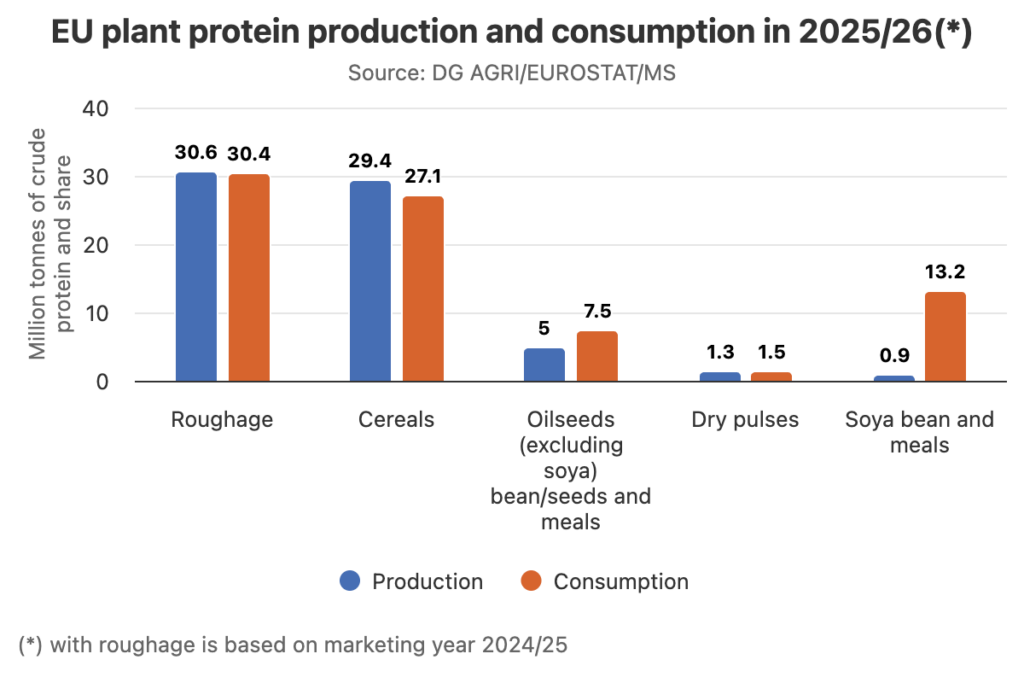
The Protein Plan, unveiled by the European Commission, aims to reduce the European Union’s substantial reliance on imported plant-based proteins. The bloc currently faces a significant deficit in high-protein sources like oilseeds and protein crops, with an overwhelming 74% of these vital ingredients being imported. This dependence renders the EU’s food system vulnerable to global market volatility, supply chain disruptions, and geopolitical uncertainties, thereby impeding progress towards a sustainable future. While the plan sets an ambitious target to increase the domestic production share of proteins for animal feed from 25.8% to 35% by 2035, it conspicuously lacks similar measurable objectives for proteins intended for direct human consumption.
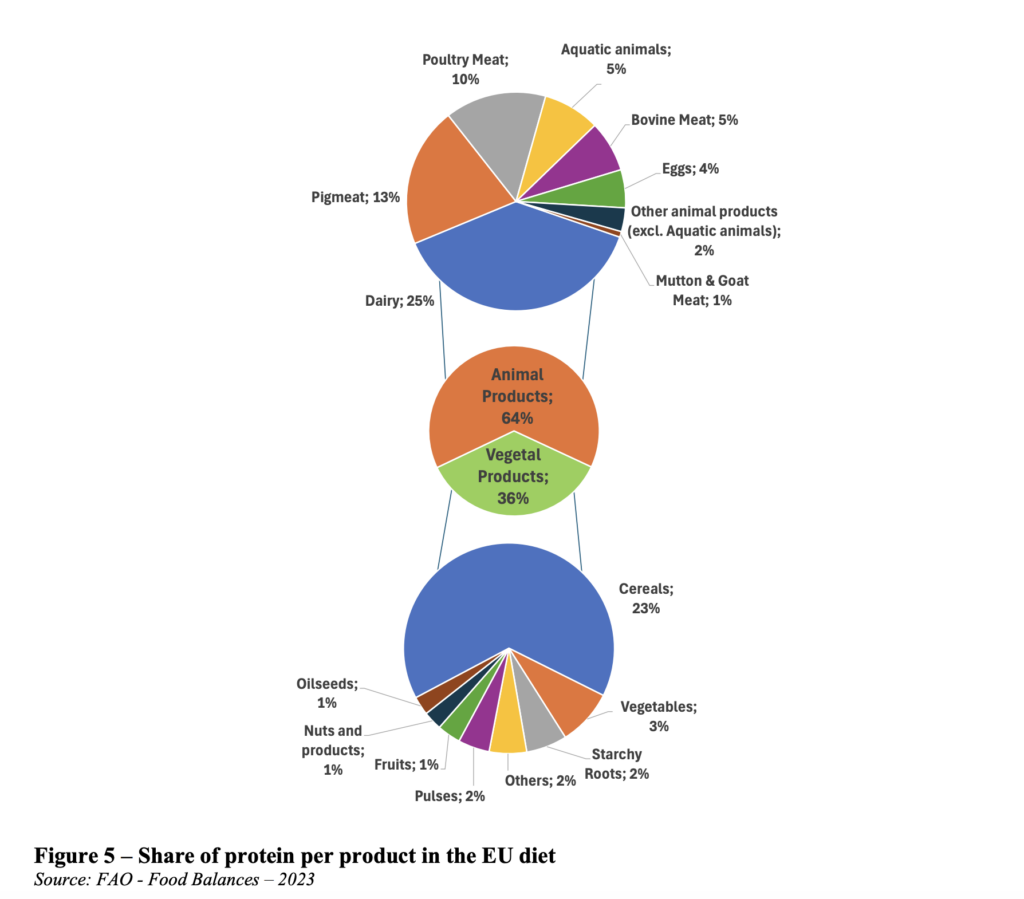
This focus on feed, experts argue, represents a missed opportunity to address the existing protein imbalance within the EU population. Current data reveals a stark contrast in protein consumption patterns. Livestock is the dominant consumer of plant protein, utilizing approximately 74 million tonnes annually for feed. For human diets, animal-derived proteins still constitute a significant majority, accounting for 64% of consumption. This figure is notably higher than in countries like China (41%) and South Korea (57%). Compounding this issue, the consumption of animal protein per capita in the EU has seen a steady rise, increasing by 5.7% between 2010 and 2023, from 69g to 73g daily. Conversely, the intake of plant-based proteins has experienced a decline, dropping by 4.2% over the same period, from 43g to 41g per day. This trend exacerbates the EU’s protein imbalance and highlights the need for a strategic shift towards more plant-rich diets.
A Strategic Framework with Limited Scope
The Protein Plan does, however, acknowledge the multifaceted benefits of increasing plant protein production within the EU. It recognizes that greater domestic cultivation can contribute to the bloc’s food security, bolster energy independence, foster new economic opportunities for farmers and rural communities, and advance the EU’s climate neutrality objectives by 2050. The plan further concedes that diversified diets, incorporating both animal and plant-based proteins, are essential for transitioning to a sustainable food system, and that plant-rich diets actively support climate goals.
The document explicitly states that "From an economic and social standpoint, increased sales of plant-based protein products create opportunities for farmers and rural communities," and notes the established and accepted presence of plant-based foods and beverages across Europe. It identifies plant-based alternatives as holding significant market potential, supported by a stable regulatory framework and widespread consumer acceptance. While acknowledging the existence of novel protein sources like those derived from fermentation and algae, the plan singles out plant-based proteins as the most immediate and accessible avenue for growth.
However, the EU’s approach to plant-based foods faces several hurdles. The plan references the ongoing debate surrounding ultra-processed foods, acknowledging that some plant-based alternatives undergo significant processing to mimic the taste, texture, and nutritional profile of traditional animal products. Furthermore, labeling restrictions, which prevent plant-based alternatives from using terms traditionally associated with dairy or meat, present a challenge to widespread adoption. Beyond labeling, the plan identifies affordability, taste, convenience, and nutritional aspects as key constraints, underscoring the necessity for enhanced consumer education.
Other significant obstacles highlighted include the lower profitability of protein crops, often linked to a lack of dedicated knowledge, skills, and appropriate inputs. An underdeveloped value chain, insufficient storage and processing infrastructure, investment gaps, and the need for closer stakeholder cooperation to mitigate transition risks are also cited as critical challenges.
Fermentation: A Promising, Yet Undefined, Pathway
The Protein Plan also gives a nod to advanced fermentation technologies, specifically biomass and precision fermentation, suggesting their potential to "create new circular business models for farmers and the feed industry." These technologies are presented as a complementary route within the broader protein landscape, with potential applications across agricultural value chains. They could generate new markets for specific feedstocks, agricultural by-products, and feed-related inputs, thereby diversifying protein sources.
The extent to which farmers and rural areas will benefit from these advancements, however, is contingent on the organization of value chains. The plan anticipates that fermentation-based technologies will integrate with existing agricultural systems and practices. In response to these evolving possibilities, the European Commission is reportedly finalizing a study to explore these interdependencies further.
The document observes that innovative fermentation processes are already developing and scaling in other global jurisdictions, generating economic benefits and new income streams for farmers outside the EU. It suggests that similar advantages could accrue to EU farmers through direct demand for agricultural feedstock and the valorization of agricultural side streams. The upcoming Biotech Act II is positioned as a legislative instrument intended to strengthen the EU’s industrial competitiveness in industrial biotechnology and biomanufacturing, explicitly including advanced fermentation.
Experts have previously urged the EU to officially recognize fermentation-derived food ingredients as a covered technology category within the second Biotech Act. This call comes after the EU’s failure to include novel foods within its food and feed regulatory sandboxes. Nevertheless, the European Commission did allocate approximately €350 million in funding opportunities last year to stimulate food and biotech innovation, recognizing the "significant potential" of fermentation within its broader life sciences strategy.
Divergent Paths: Strengths and Weaknesses of the Protein Plan
Despite its shortcomings, the Protein Plan contains several positive elements. Food awareness organization ProVeg International has commended the plan for advocating increased support for European protein value chains. It also highlights the recognition of carbon and nature credits for legume-based farming systems as a potential avenue for farmers to diversify their incomes through protein cultivation.
The plan acknowledges the nutritional significance of legumes and pulses, despite their current modest contribution (2%) to EU protein intake, emphasizing their role in a balanced and sustainable diet. It suggests that locally sourced pulses align with a "best value" public procurement strategy and should be actively promoted in educational institutions and through public awareness campaigns. Furthermore, the plan proposes the establishment of a dedicated protein crop sector to enhance the value chain and implement sector-specific interventions to stimulate investment. The crucial need for research and development funding, coupled with adequate processing infrastructure and technologies, is also duly noted.
The EU has recognized Denmark’s pioneering plant-based action plan as a best practice. The Protein Plan recommends that member states consider fiscal measures, such as reduced VAT rates for plant-based proteins, encourage livestock farmers to diversify their operations, incentivize farmers who integrate crop and animal husbandry, and offer compensation for the higher production costs associated with switching to protein crops.
However, the plan’s limitations are significant. A notable absence is the lack of concrete targets for increasing plant protein production for human consumption. The proposed food-related measures are largely left to the discretion of individual member states, framing taxation, procurement, and promotional activities as optional considerations rather than binding commitments at the EU level. The substantial and measurable ambition directed towards animal feed is conspicuously absent when it comes to human food. This stands in contrast to the calls from farmer lobby groups and climate activists during the Strategic Dialogue on the Future of EU Agriculture for a dedicated EU-wide action plan for plant-based foods.
Rafael Pinto, senior policy manager at the European Vegetarian Union, stated, "The plan still falls short on concrete measures to solve the EU’s protein imbalance. To unlock the full potential of plant proteins, the EU needs concrete policies that stimulate demand for plant foods and support a shift towards increased human consumption." He further noted the absence of a target to balance plant and animal protein production and consumption, as well as earmarked funding, despite the mention of public procurement’s role. Pinto suggested that the objective to boost protein production for feed could "be easily achieved in the next few years simply by increasing human consumption of plant proteins, since our current dependency is caused by imbalanced diets."
Alex Holst, head of EU policy at the Good Food Institute Europe, echoed these concerns, stating, "The plan lacks funding commitments to scale up plant-based proteins and fermentation, and proposals to support farmers to grow the crops needed for these foods." He warned, "With China threatening Europe’s position as a world leader in protein diversification, the EU risks missing out on significant economic opportunities and remaining exposed to fragile global supply chains."
Broader Implications and the Path Forward
The simultaneous release of the EU’s Livestock Strategy, which proposes differential treatment for livestock-generated methane compared to fossil fuel emissions despite scientific consensus on their equivalent warming impact, has drawn sharp criticism. Caitlin Smith, campaign manager at the Changing Markets Foundation, commented, "The lobby’s influence is now in plain sight with the release of a Livestock Strategy littered with industry narratives and failing to meaningfully address the EU’s largest source of the super-heating pollutant methane." She added, "Almost every other sector is recognising the value of reducing methane emissions, but Big Ag continues to get the special treatment it has spent millions lobbying for, delaying much-needed action. Burying your head in the sand is not a strategy – it’s a capitulation to the mob."
The implications of the Protein Plan’s current structure are far-reaching. By prioritizing animal feed production targets over human consumption, the EU risks reinforcing existing dietary patterns that contribute to health and environmental challenges. The lack of robust policy levers and financial incentives for increasing plant-based protein production for human use could hinder the growth of a nascent but promising sector, impacting farmer livelihoods and the EU’s ability to achieve its climate and sustainability goals.
While the plan acknowledges the importance of plant-based proteins, its reliance on voluntary measures and national discretion for human consumption initiatives suggests a cautious, rather than transformative, approach. The contrast with the specific targets set for feed production underscores a disconnect between stated ambitions and concrete policy actions. As other global players, particularly China, actively pursue protein diversification strategies, the EU’s hesitant steps could indeed lead to a missed opportunity, impacting its economic competitiveness and its resilience in the face of future global food system challenges. The success of the Protein Plan will ultimately depend on whether it can evolve beyond its current framework to incorporate more decisive and targeted measures that actively promote the shift towards plant-rich diets for all Europeans.
