
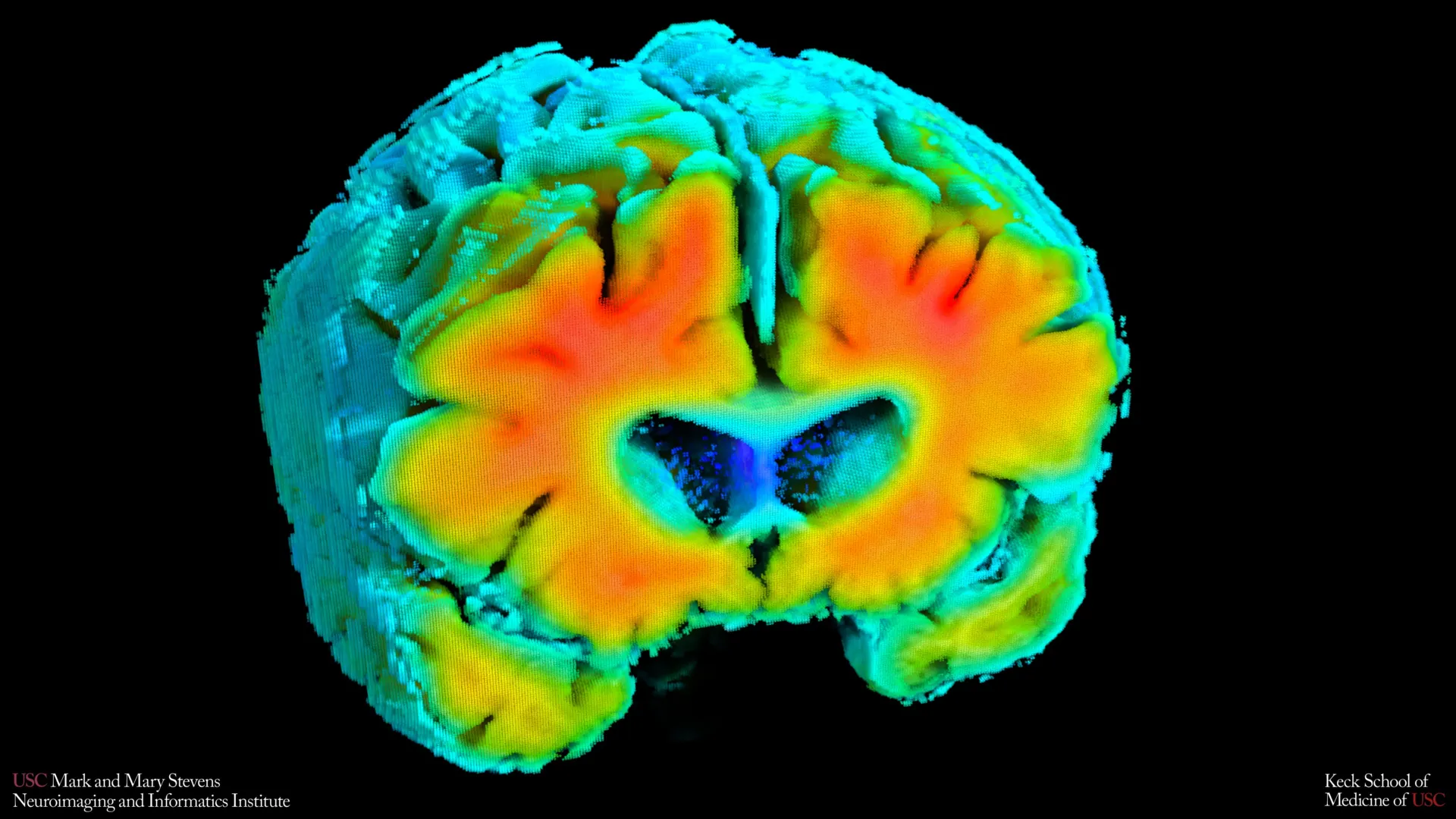
Small shifts in how blood moves through the brain and how brain cells receive oxygen may be closely connected to the risk of Alzheimer’s disease. This is the conclusion of new research from the Mark and Mary Stevens Neuroimaging and Informatics Institute (Stevens INI) at the Keck School of Medicine of USC, suggesting a significant role for vascular health in the early stages of the devastating neurodegenerative condition. The study, published in the esteemed journal Alzheimer’s and Dementia: The Journal of the Alzheimer’s Association, employed noninvasive techniques to uncover these crucial links, potentially paving the way for earlier detection and intervention strategies.
Unveiling the Vascular Connection in Alzheimer’s
For decades, the scientific community has primarily focused on amyloid plaques and tau tangles as the hallmark pathologies of Alzheimer’s disease. However, this latest research from USC provides compelling evidence that the brain’s circulatory system plays an equally critical, and potentially earlier, role in the disease’s progression. By examining older adults, both with and without cognitive impairment, researchers were able to correlate subtle changes in brain blood flow and oxygenation with established indicators of Alzheimer’s disease, such as the buildup of amyloid plaques and the shrinkage of the hippocampus, a region vital for memory formation and consolidation.
"Amyloid and tau are often considered the primary players in Alzheimer’s disease, but blood flow and oxygen delivery are also critical," stated Amaryllis A. Tsiknia, the lead author of the study and a USC PhD candidate. "Our results show that when the brain’s vascular system functions more like it does in healthy aging, we also see brain features that are linked to better cognitive health." This statement underscores a paradigm shift, emphasizing that the health of the brain’s intricate network of blood vessels may exert a significant influence on the disease process from its nascent stages.
Advanced Noninvasive Tools for Measuring Brain Circulation
The groundbreaking nature of this research lies not only in its findings but also in the innovative yet accessible methodologies employed. The research team utilized two painless, noninvasive techniques that can be performed while participants are at rest:
- Transcranial Doppler Ultrasound (TCD): This established technology uses sound waves to measure the speed at which blood flows through the brain’s major arteries. It provides real-time data on the dynamic state of cerebral circulation.
- Near-Infrared Spectroscopy (NIRS): NIRS is a noninvasive optical technique that measures the absorption and scattering of near-infrared light by brain tissue. This allows researchers to assess how effectively oxygen is being delivered to the brain’s cortical surface.
By combining these two modalities, the USC team was able to generate comprehensive indicators of cerebrovascular function. These indicators are not merely static measurements but reflect the brain’s sophisticated ability to adapt and regulate blood flow and oxygen delivery in response to physiological fluctuations, such as changes in blood pressure and carbon dioxide levels. Advanced mathematical modeling was crucial in synthesizing the data from TCD and NIRS into these robust functional metrics. This sophisticated approach allowed for a nuanced understanding of how the brain’s vascular system operates under normal and potentially compromised conditions.
Vascular Health: A Direct Link to Amyloid Burden and Memory Centers
The study’s findings revealed a striking correlation: participants whose cerebrovascular function indicators more closely mirrored those of cognitively healthy individuals exhibited lower levels of amyloid plaque accumulation and a larger hippocampal volume. These are both well-established markers associated with a reduced risk of developing Alzheimer’s disease. The implication is profound: a healthier vascular system appears to be protective, potentially mitigating the pathological processes that lead to cognitive decline.
Dr. Meredith N. Braskie, senior author of the study and an assistant professor of neurology at the Keck School of Medicine, elaborated on the significance of these findings. "These vascular measures are capturing something meaningful about brain health," she remarked. "They appear to align with what we see on MRI and PET scans that are commonly used to study Alzheimer’s disease, providing important information about how vascular health and standard brain measures of Alzheimer’s disease risk may be related." This suggests that these noninvasive vascular assessments could serve as a valuable complement to existing, more resource-intensive diagnostic tools.
Furthermore, the research observed a clear pattern among participants diagnosed with mild cognitive impairment (MCI) or dementia. These individuals consistently demonstrated weaker cerebrovascular function compared to their cognitively normal counterparts. This observation reinforces the growing consensus that declining blood vessel health is not an isolated issue but an integral part of the broader Alzheimer’s disease continuum, potentially acting as an early contributor to the cascade of neurodegenerative changes.
Implications for Early Detection and Broader Screening
The potential for these noninvasive vascular measures to revolutionize Alzheimer’s screening is substantial. Compared to Magnetic Resonance Imaging (MRI) and Positron Emission Tomography (PET) scans, which are the current gold standards for visualizing brain structure and amyloid deposition, TCD and NIRS offer distinct advantages:
- Cost-Effectiveness: These methods are significantly less expensive to implement, making them more accessible for widespread use.
- Ease of Performance: The procedures are simpler and require less specialized equipment and training compared to advanced neuroimaging techniques.
- Patient Comfort and Safety: Crucially, TCD and NIRS do not involve injections of radioactive tracers, radiation exposure, or demanding cognitive tasks that can be challenging for individuals experiencing cognitive difficulties.
This combination of factors makes these techniques particularly promising for large-scale screening initiatives, especially within diverse populations or for individuals who might be unable to undergo more intensive brain imaging due to health conditions, claustrophobia, or logistical constraints.
Dr. Arthur W. Toga, director of the Stevens INI, highlighted the broader implications of this research. "These findings add to growing evidence that Alzheimer’s involves meaningful vascular contributions in addition to classic neurodegenerative changes," he stated. "Understanding how blood flow and oxygen regulation interact with amyloid and brain structure opens new doors for early detection and potentially prevention."
Future Directions and Long-Term Impact
While the current findings are highly encouraging, the research team acknowledges the limitations of a single snapshot in time. The current study design does not establish a direct cause-and-effect relationship between vascular function and Alzheimer’s pathology. To address this, ongoing long-term studies are underway, tracking participants over time to determine whether shifts in these vascular measures can reliably predict future cognitive decline or the efficacy of potential treatments.
"If we can track these signals over time, we may be able to identify people at higher risk earlier and test whether improving vascular health can slow or reduce Alzheimer’s-related brain changes," Tsiknia emphasized, pointing towards a future where proactive interventions based on vascular health could be a cornerstone of Alzheimer’s management.
The implications extend beyond early detection. A deeper understanding of the interplay between vascular health and neurodegeneration could unlock novel therapeutic targets. Interventions aimed at improving blood flow, oxygenation, and the overall health of the brain’s vasculature might prove to be a powerful strategy for preventing or slowing the progression of Alzheimer’s disease. This could involve lifestyle modifications, pharmacological treatments targeting vascular pathways, or a combination of approaches.
Background and Previous Research
The concept that vascular factors contribute to cognitive decline is not entirely new. For years, researchers have observed a strong association between conditions like hypertension, diabetes, and high cholesterol – all of which impact vascular health – and an increased risk of dementia. However, this USC study moves beyond these general associations to pinpoint specific, measurable aspects of brain circulation and oxygenation that are directly linked to early Alzheimer’s pathology.
The identification of amyloid plaques and tau tangles as primary drivers of Alzheimer’s disease began in the late 20th century, leading to decades of research focused on developing therapies to clear these proteins. While some progress has been made, many promising drug candidates have failed in clinical trials, prompting a re-evaluation of the disease’s complex etiology. This has led to a renewed interest in alternative and complementary pathways, including the vascular hypothesis.
The Stevens INI at USC has a long-standing commitment to advancing our understanding of the brain, particularly in the context of aging and neurodegenerative diseases. Their work often integrates advanced neuroimaging techniques with computational modeling to unravel complex neurological processes. This study represents a significant contribution to their ongoing efforts to develop more comprehensive and earlier diagnostic tools for conditions like Alzheimer’s.
Official Recognition and Funding
This significant research was supported by substantial funding, reflecting its importance to the scientific community. The study received support from the Office of The Director, National Institutes of Health, under Award Number S10OD032285, and from the National Institute on Aging (NIA) through grant R01AG058162. These grants underscore the national recognition of the research’s potential impact on public health and the fight against Alzheimer’s disease.
Author Contributions and Study Details
The research was a collaborative effort, with a team of dedicated scientists contributing to its success. In addition to lead author Amaryllis A. Tsiknia and senior author Meredith N. Braskie, the study’s other authors include Peter S. Conti, Rebecca J. Lepping, Brendan J. Kelley, Rong Zhang, Sandra A. Billinger, Helena C. Chui, and Vasilis Z. Marmarelis. Their diverse expertise, spanning neurology, biomedical engineering, and computational science, was instrumental in conducting this complex and multifaceted study.
The publication in Alzheimer’s and Dementia: The Journal of the Alzheimer’s Association signifies that the findings have undergone rigorous peer review and are considered a valuable addition to the existing body of knowledge on Alzheimer’s disease. This journal is a leading platform for disseminating cutting-edge research in the field, ensuring that these findings will reach a broad audience of researchers, clinicians, and policymakers.
Broader Impact and Future Research
The implications of this research are far-reaching. If validated through longitudinal studies, these noninvasive vascular assessments could become a routine part of geriatric care, allowing for earlier identification of individuals at risk for Alzheimer’s disease. This early identification is crucial, as interventions are generally most effective when initiated before significant, irreversible brain damage has occurred.
Furthermore, the findings could spur the development of new therapeutic strategies that focus on enhancing cerebrovascular health. Treatments aimed at improving blood flow, reducing inflammation in blood vessels, or optimizing oxygen delivery to the brain could emerge as a powerful new class of interventions for Alzheimer’s disease.
The integration of vascular health markers into Alzheimer’s risk assessment could also lead to more personalized and precise approaches to prevention and treatment. By understanding an individual’s specific risk profile, which may include both genetic predispositions and vascular vulnerabilities, healthcare providers can tailor interventions to maximize their effectiveness. This personalized medicine approach is increasingly seen as the future of healthcare, particularly for complex chronic diseases like Alzheimer’s.
As the global population ages, the prevalence of Alzheimer’s disease is expected to rise dramatically. This underscores the urgent need for innovative solutions that can improve detection, prevention, and treatment. The work from the Stevens INI at USC offers a beacon of hope, suggesting that by looking beyond the traditional targets of amyloid and tau, we can uncover new pathways to combat this devastating disease. The continued investigation into the intricate relationship between brain circulation and Alzheimer’s pathology promises to yield further insights and, ultimately, improved outcomes for millions worldwide.
