
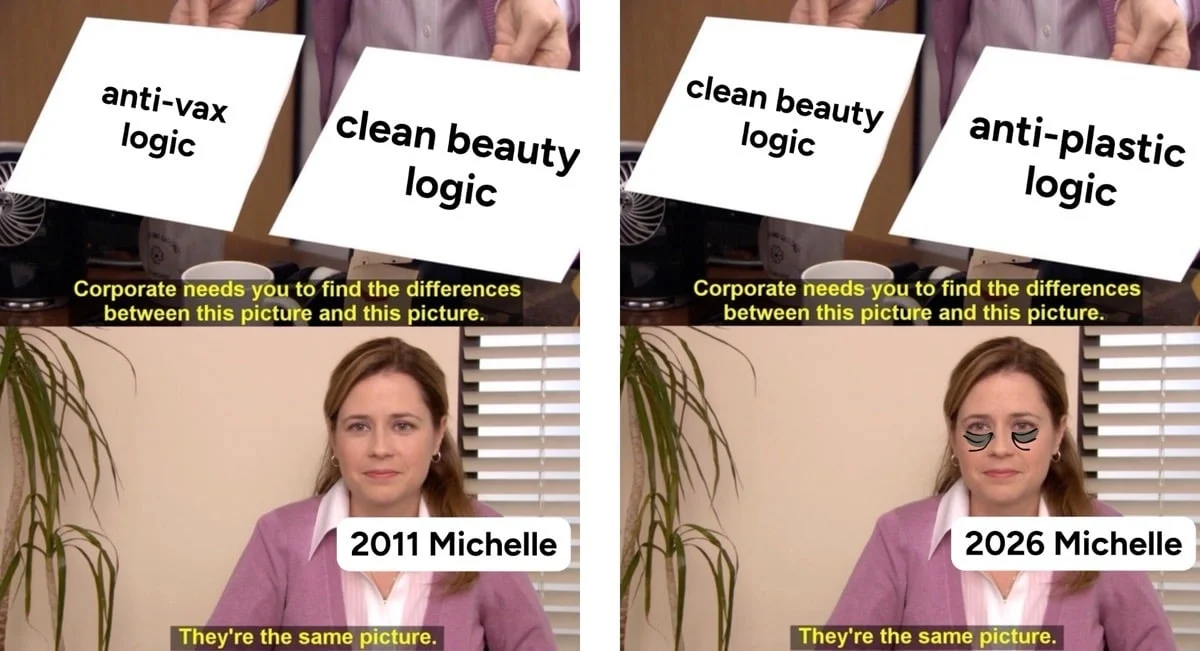
A recent observation on social media platform Threads by user @idea.soup sparked a significant discussion within the scientific communication community, positing that "the anti-polyester movement is about to become a right-wing pipeline." This assertion immediately resonated with Dr. Michelle Wong of Lab Muffin Beauty Science, who recognized striking parallels with the "non-toxic" clean beauty movement that gained prominence in the early 2010s. Dr. Wong, who began her science communication efforts in 2011 to counter the pseudoscientific underpinnings of clean beauty, noted that both movements share a common logical framework, even demonizing similar substances like aluminum and formaldehyde.
The burgeoning "plastic-free" trend, aggressively promoted by beauty brands and influencers, exhibits many of these familiar characteristics. From blanket "plastic-free" claims to alarmist rhetoric surrounding microplastics, the messaging echoes the fear-based marketing tactics previously seen in the clean beauty and anti-vaccination movements. What makes this trend particularly concerning, according to Dr. Wong, is that many proponents of the "plastic-free" movement are aware of the pseudoscientific nature of clean beauty, yet fail to apply the same critical thinking to their anti-plastic stance. This inconsistency highlights a broader challenge in science communication, where even seemingly credible outlets and scientists can inadvertently perpetuate misinformation.
The Precedent of Clean Beauty and its Misguided Principles
The clean beauty movement, with its emphasis on "non-toxic" and "natural" ingredients, fundamentally challenged established scientific principles, particularly in toxicology. It popularized the idea that synthetic chemicals were inherently harmful, while natural substances were inherently safe. This often led to the demonization of ingredients like parabens, sulfates, and phthalates, despite extensive scientific research confirming their safety at typical exposure levels. The movement’s central flaw lay in its disregard for the fundamental principle of toxicology: "the dose makes the poison." It fostered an environment where the mere presence of a chemical, regardless of its concentration or context, was deemed dangerous. This created a fertile ground for misinformation, leading consumers to make choices based on fear rather than evidence. Dr. Wong’s early work aimed to dismantle these myths, recognizing the potential for such logical fallacies to serve as gateways to more extreme anti-science beliefs, such as those found in the anti-vaccination discourse. The shared demonization of substances like aluminum and formaldehyde by both clean beauty and anti-vax proponents serves as a stark illustration of this concerning overlap.
The Rise of the "Plastic-Free" Imperative: A New Frontier for Misinformation?
In recent years, public consciousness has rightly turned to the environmental crisis, with plastic pollution emerging as a major concern. Images of overflowing landfills, plastic-choked oceans, and alarming reports of microplastics in various ecosystems have fueled a widespread desire for "plastic-free" alternatives. This societal shift has been enthusiastically embraced by brands and influencers, who now market "plastic-free" as the ultimate badge of environmental responsibility. However, much like the clean beauty movement, this well-intentioned goal is increasingly being undermined by a lack of scientific rigor and an oversimplification of complex environmental issues.
While acknowledging the undeniable problem of plastic waste and the legitimate concerns surrounding microplastics, Dr. Wong warns against overblowing these issues and blindly adopting "eco" alternatives without robust evidence. Such an approach, she argues, often contravenes the very goals of improving human and environmental health, much like how the removal of "dirty" ingredients in clean beauty led to misaligned outcomes. The following parallels illustrate how the anti-plastic narrative mirrors the pseudoscientific tenets of clean beauty.
1. The Appeal to Nature Fallacy: Plastic as Inherently Bad
The most foundational parallel is the pervasive appeal to nature fallacy. This is the blanket assumption that "plastic equals bad, natural equals good," an idea that extends even to bioplastics derived from natural starting materials. This simplistic dichotomy ignores a crucial scientific reality: a substance’s origin does not dictate its effect on health or the environment. Many naturally occurring substances are highly toxic, while numerous synthetic materials are safe and beneficial.
In the context of clean beauty, this fallacy manifested as the rejection of "chemicals" in favor of "natural" extracts, often overlooking the fact that all matter is chemical, and many natural compounds can be allergens or toxins. Similarly, the "plastic-free" movement often promotes alternatives like glass, aluminum, or paper, assuming their natural origin or perceived recyclability automatically makes them superior. This overlooks the extensive environmental impact associated with the extraction, processing, and transportation of these materials. For instance, while bioplastics might seem "natural," their production can involve intensive agriculture, deforestation, and significant energy consumption, sometimes leading to a larger overall environmental footprint than conventional plastics.
2. Ignoring the Fundamentals of Sustainability Science: Beyond End-of-Life
Just as clean beauty disregarded basic toxicology, the blanket assertion that "plastic-free equals better for the environment" often ignores the core principles of sustainability science, particularly the rigorous methodology of Life Cycle Assessment (LCA). LCA is the scientific standard for quantifiably measuring the holistic environmental impact of a product across its entire life cycle, encompassing:
- Raw material extraction: Sourcing and processing of virgin materials.
- Manufacturing and processing: Energy and resource consumption during production.
- Transportation: Logistics across the supply chain.
- Use phase: Energy and water consumption during product use.
- End-of-life: Disposal, recycling, or composting.
Crucially, for many products, the "end-of-life" stage – which dominates most anti-plastic discussions (microplastics, recycling failures, landfills, slow degradation, ocean gyres) – is not the largest environmental impact. Public perception often fixates on visible waste, leading to an incorrect judgment of which options are truly least environmentally impactful. Scientists overwhelmingly agree that climate change is the paramount environmental threat, yet this critical factor is frequently sidelined in anti-plastic rhetoric.
This is where plastic packaging often demonstrates surprising benefits. A 2011 analysis by Denkstatt for the Biodegradable Plastics Association found that switching from plastic to glass, paper, or aluminum would, on average, require 3.6 times more material, 2.2 times more energy, and result in 2.7 times more carbon emissions. Plastic’s advantages stem from several factors:
- Lightweight: Reduces fuel consumption during transport.
- Durability and barrier properties: Prevents product spoilage, extending shelf life and reducing food waste, which has a massive environmental footprint.
- Efficient production: Many plastics require less energy and water to manufacture compared to alternatives.
It is vital to stress that these are not blanket pro-plastic statements; every case demands a holistic, evidence-based LCA. Blindly replacing plastic with alternatives can lead to "problem shifting," where one environmental issue (plastic waste) is addressed by exacerbating another (e.g., increased carbon emissions, water usage, or deforestation). The ultimate sustainable choice is always to consume less, but if "less plastic" translates to "more of other, often more impactful materials," the net environmental outcome can be negative. Some beauty brands, like Dieux Skin, exemplify this "performative greenwashing" by promoting aluminum samples or nylon/polyester tote bags as "plastic-free" alternatives, while inadvertently increasing overall environmental load or misleading consumers.
3. Citing Studies with Methodological Flaws: The Microplastic Conundrum
A significant concern in the anti-plastic narrative is the reliance on microplastic studies with serious methodological issues. Measuring minute quantities of any substance is challenging, but microplastics present unique difficulties that often lead to inaccurate or exaggerated findings. Well-intentioned researchers may lack the specialized expertise to conduct these experiments robustly, resulting in false positives or inflated numbers that generate sensational headlines.
For example, pyrolysis-GCMS (Py-GCMS), a commonly used quantification method, can misidentify fats as polyethylene unless meticulously corrected through additional experiments. This can lead to overestimations of microplastic content, as seen in the study claiming a "spoon’s worth of microplastics in our brains," which has since been questioned. Furthermore, widespread environmental contamination is a persistent problem. Microplastics are ubiquitous, meaning studies frequently count contaminants from laboratory equipment, clothing (e.g., gloves), or even airborne particles as originating from the sample itself. This makes accurate measurement exceptionally difficult and opens the door for significant misinformation to proliferate.
The Guardian, a mainstream media outlet, commendable for its commitment to complex science, recently reported on these microplastic measurement issues, correcting previous articles. This level of self-correction is rare and crucial for accurate science communication. This parallels the clean beauty movement’s tendency to cite poorly designed or misinterpreted studies to support claims of ingredient toxicity, often overlooking the lack of proper controls, irrelevant doses, or in vitro (test tube) findings that do not translate to in vivo (real-world) human effects.
4. Assuming Presence Equals Harm: The Correlation-Causation Fallacy
Another critical fallacy frequently observed is the assumption that the mere presence of microplastics in diseased tissue (e.g., artery plaque, brains of dementia patients) signifies causation. This is a classic example of confusing correlation with causation. While microplastics might be found in these tissues, it does not automatically mean they are causing the disease. Such observations could be explained by:
- Reverse causation: The disease itself might make the body more susceptible to accumulating microplastics.
- Confounding factors: Other lifestyle, genetic, or environmental factors could be responsible for both the disease and the presence of microplastics.
- Random chance: Given the ubiquity of microplastics, their presence in any tissue might be coincidental.
This mirrors the infamous "parabens in breast tumors" study, frequently cited by clean beauty advocates, which found parabens in breast cancer tissue. However, the study did not measure paraben levels in normal breast tissue, nor did it establish a causal link. Without such comparative data and rigorous epidemiological studies, concluding harm based solely on presence is scientifically unsound.
5. Ignoring Multifaceted Benefits: Why Plastics Are Used
Beyond environmental impacts (often inaccurately assessed), plastics offer numerous practical benefits that are frequently overlooked when they are broadly demonized. These include:
- Hygiene and safety: Crucial in medical devices, food packaging to prevent contamination and spoilage, and protective gear.
- Cost-effectiveness and accessibility: Plastics are often more affordable to produce and transport, making products accessible to a wider demographic.
- Durability and functionality: Enables innovative product designs, protects delicate ingredients, and extends product shelf life.
- Lightweight: Reduces transport emissions, a significant environmental factor.
The clean beauty parallel here is striking with parabens. While demonized, parabens are highly effective, broad-spectrum preservatives that are required in low concentrations, making them safer for many individuals, including those with sensitive skin, compared to other preservatives that might require higher concentrations or trigger more allergic reactions. Removing them often necessitates replacing them with less effective or potentially more sensitizing alternatives. Similarly, ignoring the functional benefits of plastic can lead to choices that compromise product integrity, increase waste (e.g., spoiled food), or make essential goods less accessible.
6. Science-Washing and Convenient Experts: Selling a Narrative
A pervasive issue across both movements is "science-washing" – the deceptive practice of using scientific language, imagery, or selective data to make products or claims appear more scientifically credible than they are. Many brands and influencers, despite proclaiming a love for science, promote anti-plastic myths, supported by cherry-picked evidence and "convenient experts." It is crucial to distinguish between claiming to follow science and genuinely adhering to scientific methodology.
Sustainability claims without robust, verifiable evidence are increasingly being scrutinized by regulators. Bodies like the US FTC, UK CMA, and Australian ACCC have issued guidelines deeming such unsubstantiated claims misleading and deceptive. Responsible brands should engage qualified sustainability experts to vet their claims and genuinely implement their advice. However, a common pattern of science-washing involves brands and influencers misinterpreting or misrepresenting expertise:
- Highlighting "Dr. So-and-So" without checking their relevant qualifications: A medical doctor’s opinion on climate science, for instance, is not necessarily authoritative.
- Citing scientists outside their field of expertise: A chemist might be an expert in formulation but not in ecological impact assessment.
- Elevating unqualified "experts" (e.g., wellness gurus) over credentialed researchers.
This parallels clean beauty’s reliance on self-proclaimed "toxicologists" or "wellness coaches" who lack formal scientific training, or the misinterpretation of scientific papers by non-experts to support predetermined conclusions.
Broader Implications: The Perils of Motivated Reasoning
The parallels between the "plastic-free" movement and clean beauty extend beyond specific scientific fallacies into the realm of cognitive biases, particularly identity-based motivated reasoning and confirmation bias. Individuals tend to accept evidence that aligns with their pre-existing beliefs or political/social alignments, and reject information that challenges them, regardless of its scientific merit. This phenomenon, long observed in anti-science movements, is now increasingly evident in the anti-plastic discourse.
The commendable actions of The Guardian in correcting its previous reporting on microplastic measurement issues, even quoting a former Dow chemist alongside independent scientists, faced immediate accusations of being "bought by Big Plastic." This reaction, despite the article also referencing nine European scientists from public institutions who echoed similar doubts, exemplifies motivated reasoning. As cosmetic scientist Jen Novakovich of The Eco Well rightly points out, "Discounting something solely based on funding source or affiliation is actually the opposite of critical thinking." While financial conflicts of interest are a valid consideration, they should not be the sole basis for dismissing an argument. The harder, but essential, work involves critically evaluating the arguments presented, which in the case of The Guardian article, was presented in an accessible manner.
Conclusion: Towards Evidence-Based Environmentalism
Ultimately, the goal of reducing plastic waste and mitigating environmental impact is laudable and necessary. However, the approach must be grounded in rigorous science, not in fearmongering, pseudoscientific claims, or simplistic narratives. Blanket demonization of plastic, without a comprehensive assessment of evidence through tools like Life Cycle Assessment, risks leading to "misplaced conservation." This occurs when efforts to solve one environmental problem inadvertently create or worsen others, ultimately undermining the overarching goals of human and environmental well-being.
The journey towards a more sustainable future requires critical thinking, a nuanced understanding of scientific principles, and a willingness to challenge emotionally appealing but scientifically flawed narratives. Learning from the pitfalls of the clean beauty movement, consumers, brands, and media alike must prioritize evidence over ideology, and genuinely engage with experts in fields such as sustainability science, toxicology, and materials engineering. The work of communicators like Dr. Michelle Wong and Jen Novakovich is crucial in navigating this complex landscape, advocating for an informed approach that truly serves the planet and its inhabitants.
References:
- Wong, M. "Plastic-free" is the new clean beauty: a treatise. Lab Muffin Beauty Science. January 21, 2026. Accessed June 23, 2026.
https://labmuffin.com/plastic-free-is-the-new-clean-beauty-a-treatise/ - Novakovich, J. The Truth About Microplastic. Podcast Recap. The Eco Well. May 16, 2025.
- Novakovich, J. “Sustainable” Packaging with Dan Coppins Podcast. The Eco Well. January 26, 2022.
- Novakovich, J., Coppins, D. Sustainability in Packaging Fireside Chat. Presentation at: Sustainable Beauty E-Summit; March, 2022.
- Wong, M. Are plastics and petrochemical products bad for the environment? Lab Muffin Beauty Science. June 3, 2023.
- Herbes, C., Beuthner, C., Ramme, I. Consumer attitudes towards biobased packaging – A cross-cultural comparative study. J Clean Prod. 2018;194:203-218. DOI: 10.1016/j.jclepro.2018.05.106.
- Biodegradable Plastics Association. Denkstatt Report. 2011.
- Novakovich, J. Out for 2026: Beauty businesses claiming to be “eco-friendly” because of some buzz word, without any kind of valid proof. Instagram @theecowell. January 7, 2026.
- Wong, M. Plastic Spoon in Your Brain? YouTube @labmuffinbeautyscience. April 14, 2025.
- Novakovich, J. So… we don’t have a spoonful of microplastic in the brain? Instagram @theecowell. January 20, 2026.
- Elias, M. Should you be freaking out about microplastics? SBS News. November 6, 2025.
- Carrington, D. ‘A bombshell’: doubt cast on discovery of microplastics throughout human body. The Guardian. January 13, 2026.
