
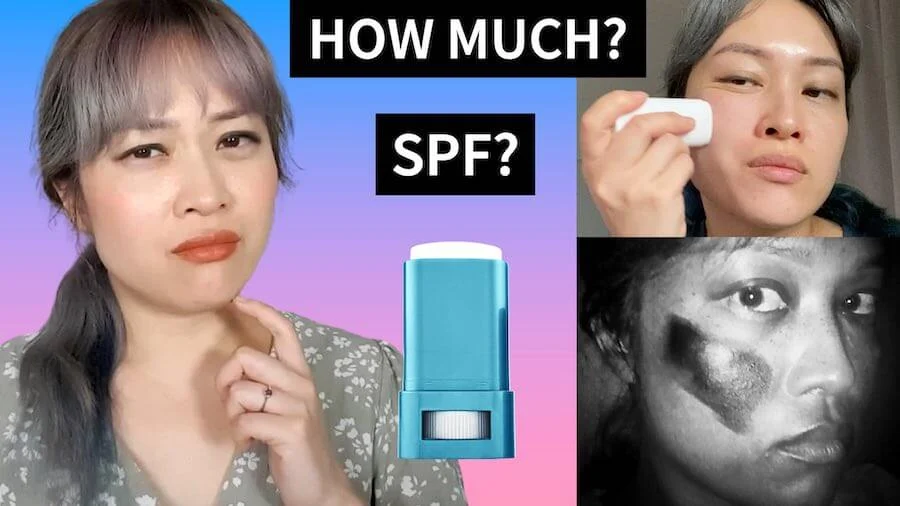
Sunscreen sticks have rapidly gained popularity as a portable, mess-free alternative to traditional fluid lotions for on-the-go UV protection. Marketed heavily for travel, outdoor touch-ups, and children’s quick applications, these cosmetic formats promise hassle-free defense against sun damage. However, a significant operational challenge has long persisted among consumers and dermatologists alike: determining the precise amount of product required to achieve the labeled Sun Protection Factor (SPF). To investigate whether standard application habits meet required safety standards, cosmetic chemist and science communicator Michelle Wong conducted a series of controlled experiments assessing weight, coverage time, application passes, and product performance across three popular Korean SPF 50+ sunscreen sticks.
Background Context and Methodology of the Investigation
Standardized SPF testing protocols established by regulatory bodies worldwide mandate that sunscreen products be applied at a density of 2 milligrams per square centimeter ($2text mg/cm^2$) to achieve their rated protection levels. Because evaluating this coverage visually is notoriously unreliable, Wong utilized precision digital jewelry scales to measure the exact mass of product transferred to the skin during standard application routines.
Drawing from baseline facial surface area measurements established in prior studies, Wong determined that her face required approximately 0.76 grams of sunscreen to fulfill the 2 $textmg/cm^2$ requirement for an SPF 50 rating. Three widely used Korean chemical and mineral sunscreen sticks—Tocobo Cotton Soft Sun Stick, Abib Quick Sunstick Protection Bar, and Benton Mineral Sun Stick—were selected for the initial round of testing. The investigation evaluated how mass, estimated SPF, and total application time scaled across successive layers of generous application.
Chronology and Experimental Procedure
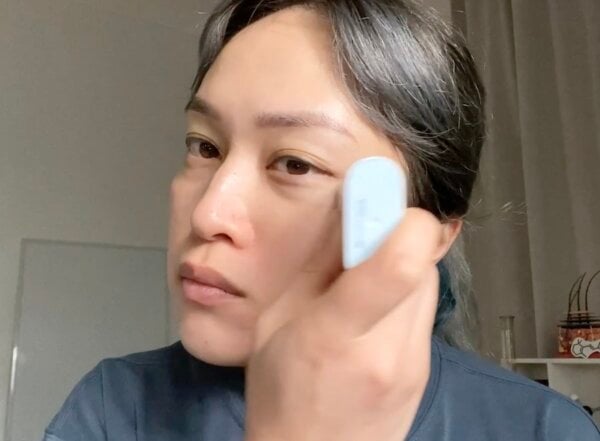
The testing methodology was structured to mirror realistic consumer behavior while maintaining rigorous scientific controls. Initially, each sunscreen stick was weighed on a scale accurate to 0.01 grams. While recording the process via smartphone video in selfie mode to ensure proper visual feedback, Wong applied what she subjectively deemed a "generous" first layer of product to her face. The stick was then reweighed to calculate the exact mass transferred.
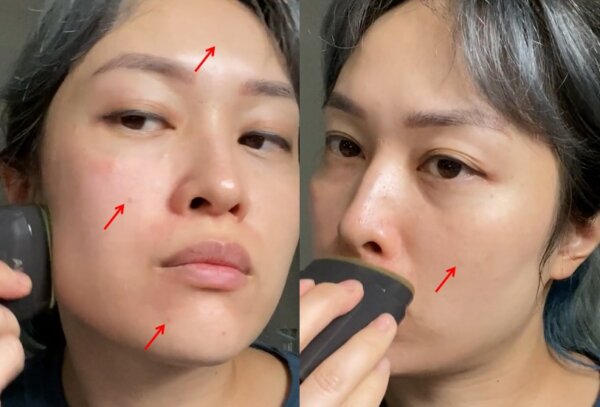
Because initial measurements revealed a significant deficit compared to the target weight, the procedure was expanded to include a second and third layer for each product. Application continued until the skin surface reached a saturation point where additional friction caused product to be removed rather than deposited, creating a heavy, impractical cosmetic layer. Application times were subsequently calculated by analyzing the video footage at a constant frame rate of 30 frames per second, isolating the precise duration the product remained in direct contact with the skin.
Empirical Data and Comparative Findings
The results of the facial application trials challenged common assumptions regarding how much product is transferred during standard cosmetic use. For the first layer, the tested sticks yielded an average of only 0.29 grams for Tocobo, 0.25 grams for Abib, and 0.33 grams for Benton. These figures represent roughly one-third of the 0.76 grams necessary to achieve the labeled SPF 50 protection.
Even after applying three successive layers—a process that required nearly four times the duration of a standard lotion application—the cumulative mass applied averaged just 0.64 grams across the products. This fell short of the required threshold while drastically altering the cosmetic finish.
| Layer | Accrued Mass (g) | SPF Equivalent | Accrued Time on Skin (Sec) | Layer Mass (g) |
|---|---|---|---|---|
| Tocobo 1st | 0.29 | 19.1 | 43.0 | 0.29 |
| Tocobo 2nd | 0.49 | 32.2 | 87.5 | 0.20 |
| Tocobo 3rd | 0.69 | 45.4 | 152.5 | 0.20 |
| Abib 1st | 0.25 | 16.4 | 44.0 | 0.25 |
| Abib 2nd | 0.43 | 28.3 | 111.5 | 0.18 |
| Abib 3rd | 0.59 | 38.8 | 188.0 | 0.16 |
| Benton 1st | 0.33 | 21.7 | 78.5 | 0.33 |
| Benton 2nd | 0.51 | 33.6 | 160.5 | 0.18 |
| Benton 3rd | 0.63 | 41.4 | 220.0 | 0.12 |
The data indicated an inverse relationship between layer count and transfer efficiency. Subsequent layers deposited significantly less product than initial passes, regardless of extended application time. This phenomenon is largely attributed to the formulation chemistry of sunscreen sticks, which generally lack volatile solvents such as water, alcohol, or low-viscosity silicones commonly found in fluid lotions. Consequently, nearly all applied raw materials remain on the skin surface, rapidly accumulating into a heavy, greasy film that resists subsequent product adherence.
Analysis of Official Guidelines and Application Passes
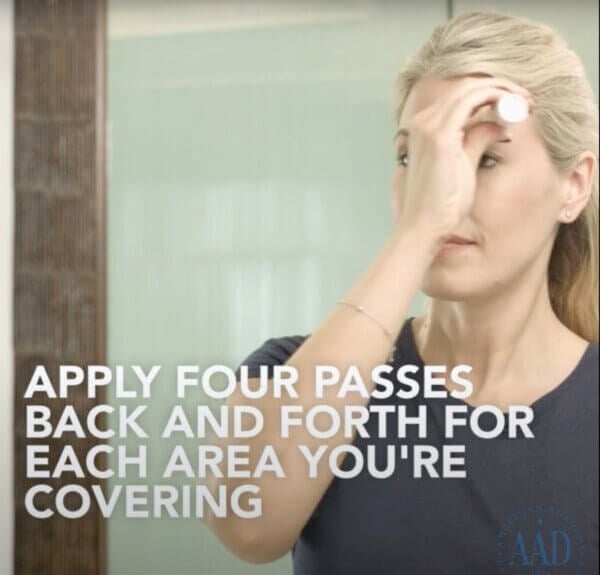
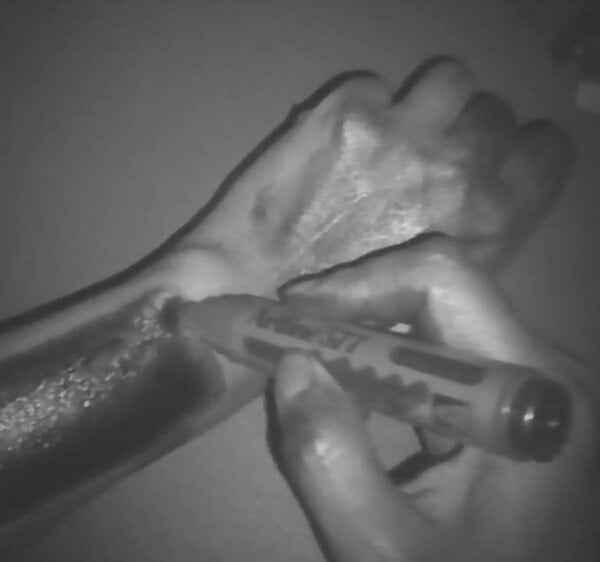
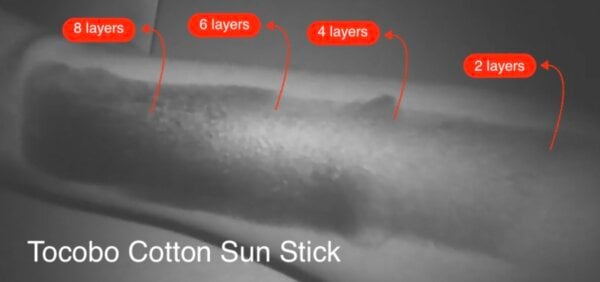
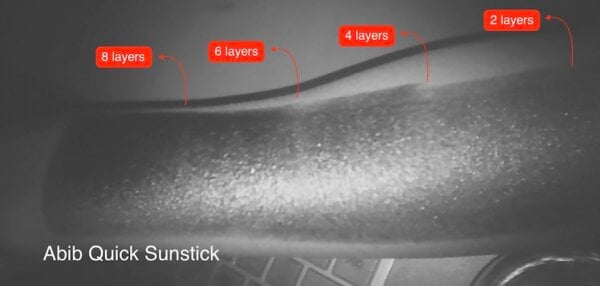
Major dermatological organizations, including the American Academy of Dermatology (AAD), frequently recommend executing approximately four passes of a sunscreen stick over a given area to ensure adequate coverage. To test the efficacy of this recommendation, Wong tracked application passes across distinct facial zones—the left cheek, right cheek, forehead, and chin—as well as flat test areas on the arm.

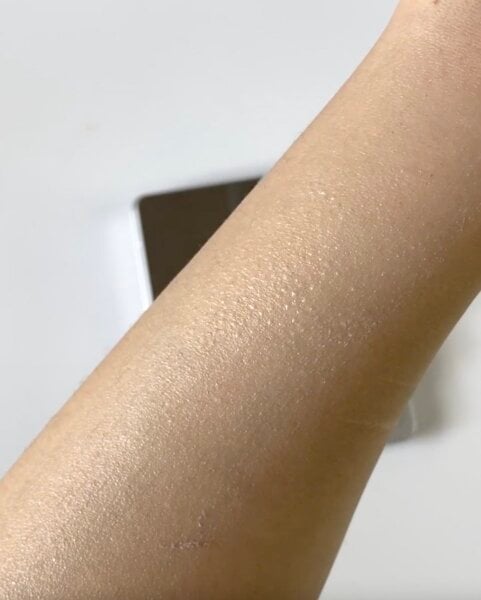
The findings demonstrated that a standard four-pass guideline is largely insufficient for achieving regulatory protection standards. Arm trials utilizing flat, uniform skin surfaces indicated that achieving the target density of 2 $textmg/cm^2$ required between 16 and 21 passes for the Tocobo stick under firm pressure, and up to 64 passes for the Abib stick. Furthermore, UV camera imaging revealed that while visual darkness or opacity of the applied film plateaued after approximately four passes, this optical uniformity did not correlate with actual film thickness or protective efficacy. This observation underscores the limitation of relying on ultraviolet photography to estimate SPF coverage in real-world settings.

Ergonomic Challenges and Missed Coverage Zones
Beyond quantitative mass deficits, the physical geometry of solid sunscreen sticks introduces distinct vulnerability regarding missed spots. Unlike fluid lotions, which easily conform to facial contours and crevices when spread with fingertips, solid sticks possess rigid edges that struggle to interface with complex anatomy.

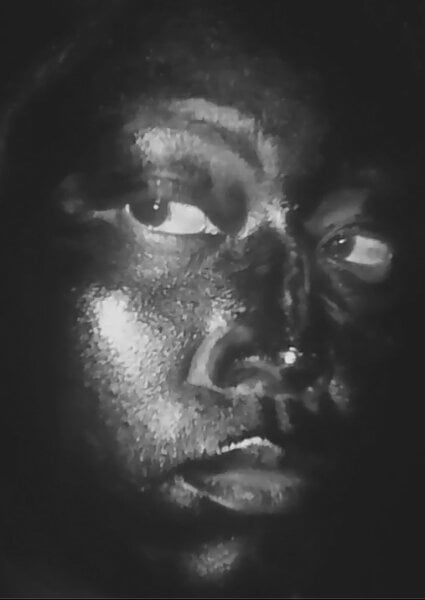
UV camera inspections performed immediately following application highlighted consistent gaps in coverage across standard anatomical landmarks. The central ridge of the nose, the periorbital area beneath the browbone, the hairline, and the crease adjacent to the nostrils frequently retained unprotected patches. Because sunscreen sticks lack the tactile feedback and spreading fluidity of fingers, consumers often leave vulnerable areas exposed unless they deliberately follow up the application by manually rubbing the product into the skin.
Broader Market Implications and Practical Applications
The empirical evidence compiled in these investigations suggests that sunscreen sticks are fundamentally ill-suited to serve as a primary, standalone defense mechanism during periods of intense, prolonged sun exposure. Achieving adequate clinical protection via a stick format requires an exceptionally heavy, glossy, and time-consuming application that compromises cosmetic wearability and significantly increases product consumption rates.
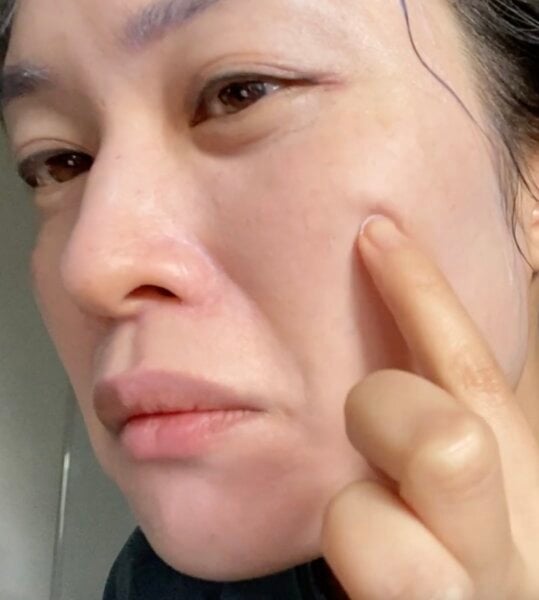
Despite these limitations, dermatological and consumer safety experts note that sunscreen sticks retain substantial utility in specific contexts. Their portability and resistance to spilling make them exceptionally valuable for convenient, low-stakes touch-ups over existing protection throughout the day, as well as for targeted applications on sensitive, highly exposed focal points such as the ears, lips, and nose. For primary sun protection during high-exposure scenarios, however, fluid lotions remain the more reliable, efficient, and thoroughly verified delivery system.
