
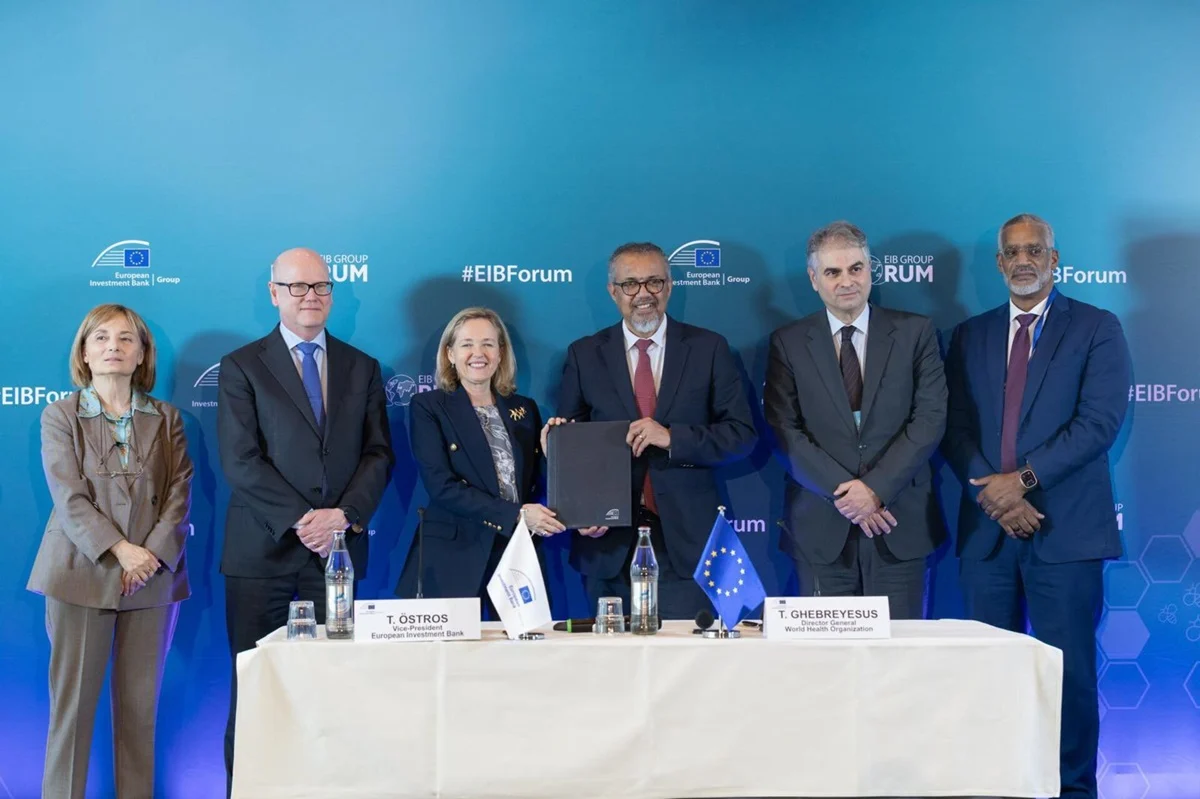
On 6 March 2025, at the EIB Group Forum in Luxembourg, Dr. Tedros Adhanom Ghebreyesus, Director-General of the World Health Organization (WHO), and Thomas Östros, Vice-President of the European Investment Bank (EIB Global), formalized a strategic partnership aimed at stabilizing Lebanon’s fragile health sector. The agreement, which involves a 10 million euro grant, represents a critical intervention designed to address the systemic collapse of public health infrastructure in a country currently grappling with long-term socioeconomic instability, regional security threats, and the resulting strain on its domestic medical supply chains.
The primary objective of this financial injection is the reconstruction and modernization of Lebanon’s Central Public Health Laboratory (CPHL). Beyond infrastructure, the initiative provides a robust framework for the procurement and distribution of essential medications for over 50,000 patients suffering from chronic conditions, including cardiovascular disease, diabetes, and various forms of cancer. By aligning the technical expertise of the WHO with the financial instruments of the EIB, the partnership seeks to bridge the gap between emergency relief and sustainable health system strengthening.
Contextualizing the Crisis in Lebanon’s Healthcare Sector
The Lebanese healthcare system has been under extreme duress for several years, exacerbated by a catastrophic financial crisis that began in 2019. The rapid devaluation of the Lebanese pound, coupled with hyperinflation, has rendered imported medicines largely unaffordable for the average citizen. Furthermore, the exodus of healthcare professionals—often referred to as the "brain drain"—has left many public facilities operating with skeleton crews.
The Central Public Health Laboratory, which serves as the backbone for disease surveillance, diagnostic testing, and health security monitoring, has struggled to maintain operational capacity. Without a functional central laboratory, the country remains vulnerable to outbreaks of infectious diseases and lacks the data-driven intelligence required to manage public health policy effectively. The 10 million euro grant is specifically earmarked to address this gap, ensuring that the CPHL can once again serve as a reliable reference point for national diagnostics and epidemiological monitoring.
Chronology of International Aid and Public Health Intervention
The road to this agreement has been paved by a series of multilateral efforts to prevent the total collapse of Lebanon’s essential services.
- 2019–2020: The onset of the financial crisis and the COVID-19 pandemic placed unprecedented pressure on the Lebanese medical system, leading to a shortage of personal protective equipment and basic medications.
- August 2020: Following the Port of Beirut explosion, the international community mobilized emergency aid. However, the subsequent years saw a shift toward long-term stabilization as the economic situation deteriorated further.
- 2023: WHO and local health authorities identified a critical surge in the prevalence of untreated chronic illnesses, as patients could no longer afford out-of-pocket payments for insulin, antihypertensives, and oncology treatments.
- March 2025: The signing of the EIB Global and WHO agreement marks a transition from ad-hoc emergency funding to a structured, institutionalized support mechanism.
Supporting Data: The Burden of Chronic Disease
The decision to prioritize chronic disease support is backed by sobering health metrics. According to recent WHO reports, nearly 40% of the Lebanese population is currently unable to access essential healthcare services due to cost. Chronic diseases account for the majority of mortality in Lebanon, with cardiovascular diseases representing the leading cause of death.
The initiative aims to provide continuous therapeutic support for 50,000 patients. Given the high cost of oncology medication and the need for consistent insulin supply for diabetic patients, this intervention is expected to prevent thousands of preventable hospitalizations. By subsidizing the supply chain, the initiative ensures that these medications are provided free of charge or at a nominal cost through the public health network, thereby alleviating the financial burden on low-income households.
Official Responses and Strategic Rationale
Speaking at the EIB Group Forum, Dr. Tedros Adhanom Ghebreyesus emphasized that health is not merely a medical necessity but a fundamental pillar of national stability. "In times of crisis, the public health infrastructure is often the first casualty. By restoring the Central Public Health Laboratory, we are not just fixing a building; we are restoring the eyes and ears of the nation’s health system," Dr. Tedros noted.
Thomas Östros, Vice-President of the EIB, highlighted the strategic role of EIB Global in supporting social infrastructure. "The EIB is committed to supporting Lebanon through this challenging period. This grant reflects our belief that resilience is built on strong institutions. By working with the WHO, we ensure that our investment is channeled into projects that have a direct, measurable impact on the lives of vulnerable populations."
Public health analysts observing the agreement suggest that this collaboration is a model for "nexus funding"—a concept where development finance institutions work in tandem with specialized UN agencies to ensure that technical assistance is backed by durable financial commitments.
Broader Implications for Regional Security and Health Stability
The significance of this initiative extends beyond the immediate provision of drugs and the renovation of a laboratory. By re-establishing a functional CPHL, Lebanon will be better positioned to engage in regional health surveillance, a key component of the WHO’s Global Health Security Agenda. In a region prone to cross-border movement and displacement, the presence of a robust national lab is a collective security asset for the Eastern Mediterranean region.
Furthermore, the initiative serves as a litmus test for international confidence in the Lebanese health sector. By working through established ministerial and international frameworks, the WHO and EIB are attempting to bypass some of the systemic corruption and administrative hurdles that have plagued previous aid efforts. The success of this grant could set a precedent for future tranches of funding from international development banks, provided that transparency and oversight mechanisms remain in place.
The Path Forward: Monitoring and Sustainability
The implementation phase of the agreement will involve rigorous monitoring to ensure that medications reach the intended beneficiaries and that construction timelines for the laboratory are met. The WHO has committed to providing technical oversight, while the EIB will monitor the financial disbursement of the grant.
Challenges remain, particularly regarding the unstable security environment in Southern Lebanon and the inflationary pressures that continue to impact the cost of international medical procurement. However, the partnership provides a degree of predictability that has been largely absent in recent years. By securing a reliable supply chain for essential medicines, the project helps decouple health outcomes from the volatility of the local currency, providing a lifeline to those who have been most affected by the economic contraction.
As the international community watches the rollout of this initiative, the focus will remain on the speed of implementation. For the 50,000 chronic disease patients, this partnership is not a matter of bureaucratic policy; it is a vital safeguard against medical complications that could lead to disability or death.
Ultimately, the 10 million euro grant from the EIB Global, facilitated by the World Health Organization, represents a necessary investment in the continuity of the Lebanese state. By fortifying the healthcare sector, the international community is acknowledging that a functioning public health system is a prerequisite for any broader recovery strategy for Lebanon. The commitment serves as both a humanitarian necessity and a strategic investment in the future stability of the Levant, ensuring that even under extreme pressure, the fundamental right to health is upheld.
