
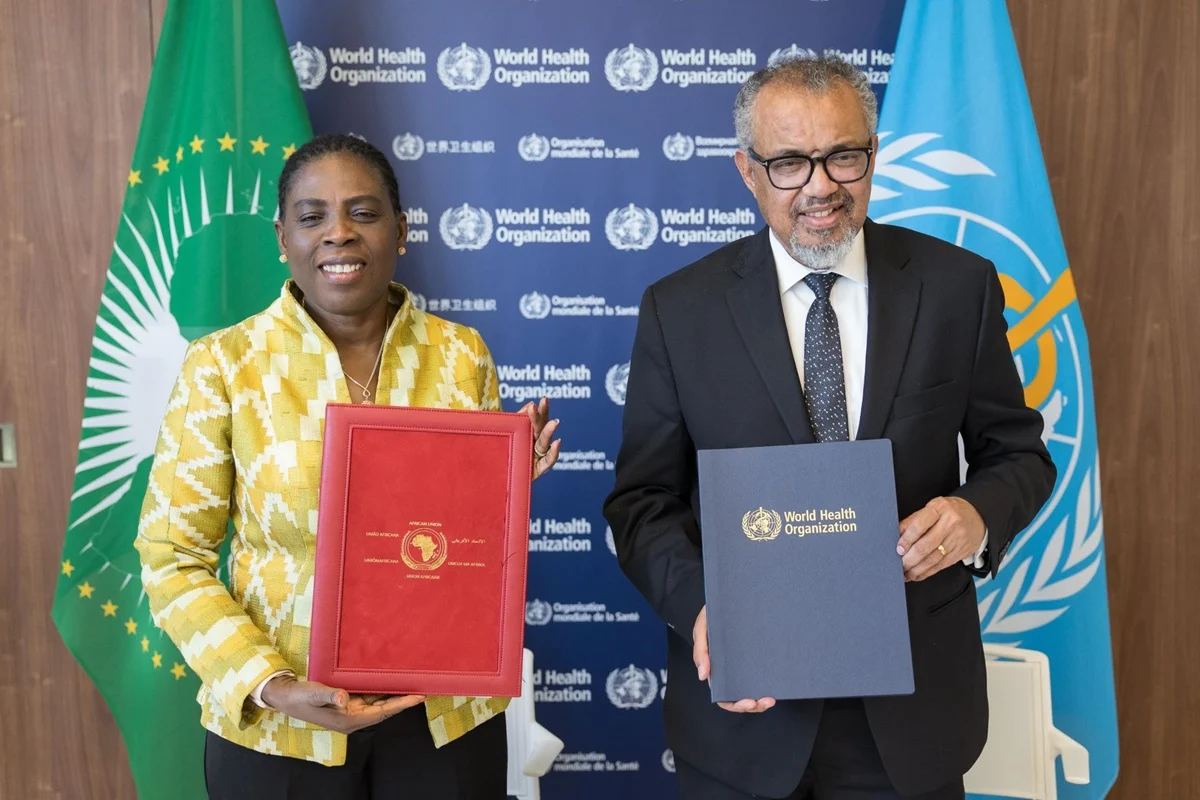
The World Health Organization (WHO) and the African Union (AU) Commission have officially renewed their long-standing strategic partnership, signing an updated Memorandum of Understanding (MoU) on the sidelines of the 78th World Health Assembly in Geneva. This landmark agreement arrives at a pivotal moment in global health, as the African continent navigates a landscape defined by significant financial constraints, shifting geopolitical dynamics, and an urgent need to transition from external aid dependency to long-term health sovereignty. By formalizing this commitment, both organizations aim to harmonize their efforts in advancing universal health coverage, strengthening regional health security, and ensuring the achievement of health-related Sustainable Development Goals (SDGs) across all 55 AU member states.
A Chronology of Collaboration: From 2019 to the Present
The partnership between the WHO and the African Union has evolved significantly over the past decade. The 2019 MoU served as the foundational architecture for this cooperation, providing a framework for the two organizations to align their technical expertise with the political mandates of the AU. That initial agreement focused heavily on emergency preparedness and the establishment of the Africa Centres for Disease Control and Prevention (Africa CDC).
Since 2019, the relationship has been tested by the COVID-19 pandemic, which exposed critical vulnerabilities in global supply chains and regional vaccine manufacturing capabilities. The lessons learned during the pandemic—specifically the necessity of local production and rapid, data-driven responses—are embedded in the spirit of this new 2024 agreement. While the 2019 document was largely operational, the 2024 update represents a more strategic alignment, reflecting the AU’s increased political stature, including its recent admission as a permanent member of the G20, which has provided Africa with a more influential platform to advocate for global health equity.
Addressing the Financial Landscape
The timing of this renewal is not incidental. The global health financing architecture is currently undergoing a period of contraction. Bilateral aid, which has historically been a lifeline for many African public health programs, is facing downward pressure due to competing global fiscal priorities and economic downturns in donor nations.
According to data from the WHO’s Global Health Expenditure Database, health spending in low-income countries remains heavily reliant on external funding, with out-of-pocket expenditure often accounting for more than 40% of total health spending. This reliance makes national health systems susceptible to external shocks. The renewed MoU explicitly aims to mitigate these risks by emphasizing "health sovereignty"—a concept championed by the African Union Commission that prioritizes the development of domestic financing mechanisms, robust primary health care (PHC) systems, and regional manufacturing hubs for essential medicines and diagnostics.
Official Perspectives and Strategic Objectives
The signing ceremony in Geneva was led by Her Excellency Ambassador Amma Adomaa Twum-Amoah, Commissioner for Health, Humanitarian Affairs, and Social Development, representing the Chairperson of the AU Commission, and Dr. Tedros Adhanom Ghebreyesus, WHO Director-General.
Commissioner Twum-Amoah underscored that the partnership is no longer just about technical assistance; it is about policy leadership. "We need to move from budgeting for survival to planning for health sovereignty," she stated, highlighting the AU’s intent to lead the continent’s health policy implementation. The Commissioner noted that the agreement is designed to ensure that no nation is left behind, particularly as the continent grapples with the dual burden of infectious diseases and a rising tide of non-communicable illnesses.
Dr. Tedros echoed these sentiments, framing the agreement as a departure from the "era of aid dependency." He emphasized that the WHO’s role is to act as the primary technical and normative authority, providing the data, evidence, and policy guidelines that allow African nations to build resilient, self-sustaining systems. "This reflects our determination to translate our partnership into tangible results," Dr. Tedros noted, emphasizing that the WHO is committed to supporting the AU’s vision of a self-reliant African health sector.
Five Pillars of Strategic Cooperation
While the full technical annexes of the MoU outline extensive operational protocols, the core collaboration is focused on five fundamental pillars:
- Health Security and Emergency Preparedness: Enhancing the synergy between the WHO’s International Health Regulations (IHR) and the AU’s pandemic preparedness frameworks to ensure faster, more coordinated responses to future outbreaks.
- Universal Health Coverage (UHC): Providing technical support to AU member states to expand their health insurance schemes and primary care networks, specifically targeting the reduction of out-of-pocket costs for the most vulnerable populations.
- Strengthening Health Systems: Focused on the "building blocks" of health—workforce training, digital health integration, and sustainable supply chain management.
- Local Manufacturing and Medical Sovereignty: Supporting the AU’s Pharmaceutical Manufacturing Plan for Africa (PMPA) to increase the production of essential medicines, vaccines, and diagnostic tools within the continent.
- Data, Evidence, and Policy Alignment: Harmonizing health data collection and surveillance systems to provide a unified "African voice" in global health governance, ensuring that policies are informed by accurate, localized data.
Implications for Global Health Governance
The renewed partnership carries significant weight in the arena of global health diplomacy. The African Union’s recent inclusion in the G20 means that health issues championed by the AU are now being debated at the highest levels of global economic decision-making. By aligning its technical agenda with the AU, the WHO is essentially ensuring that its global policies are more responsive to the unique socio-economic realities of the Global South.
Analysts suggest that this closer alignment will likely increase the effectiveness of international health interventions. By streamlining the interaction between the WHO’s regional offices and the AU’s specialized agencies—such as the Africa CDC and the African Medicines Agency (AMA)—the duplication of efforts will be minimized, and the speed of policy adoption is expected to improve.
A Turning Point for Regional Resilience
The success of this agreement will ultimately be measured by its implementation at the national level. Experts in public health policy note that the challenge remains in bridging the gap between high-level diplomatic agreements and ground-level healthcare delivery. Factors such as infrastructure deficits, climate-related health risks, and the persistent shortage of healthcare professionals remain significant hurdles.
However, the shift toward a "sovereignty-first" approach is a departure from previous decades of vertical, disease-specific funding. By focusing on the strength of the system as a whole, the AU and WHO are attempting to build the resilience required to withstand not only future pandemics but also the ongoing challenges of malnutrition, maternal mortality, and the impacts of climate change on health.
Moving Forward
As the 78th World Health Assembly concludes, the focus shifts to the practical execution of the renewed MoU. The Department of Health, Humanitarian Affairs, and Social Development at the AU Commission, under the guidance of Professor Julio Rakotonirina, will now lead the effort to cascade these strategic objectives down to the regional economic communities and individual member states. Simultaneously, the WHO’s DG Envoy for Multilateral Affairs, Ms. Stéphanie Seydoux, will work to ensure that the global health community remains aligned with these African-led priorities.
The message from Geneva is clear: the future of health in Africa is increasingly being written by African institutions, with the WHO serving as the indispensable partner in that endeavor. By pivoting toward sustainable, locally-owned, and regionally-integrated health systems, the African Union and the World Health Organization are attempting to redefine the global health narrative—moving away from a focus on crisis management and toward a future characterized by stability, equity, and long-term health security.
