
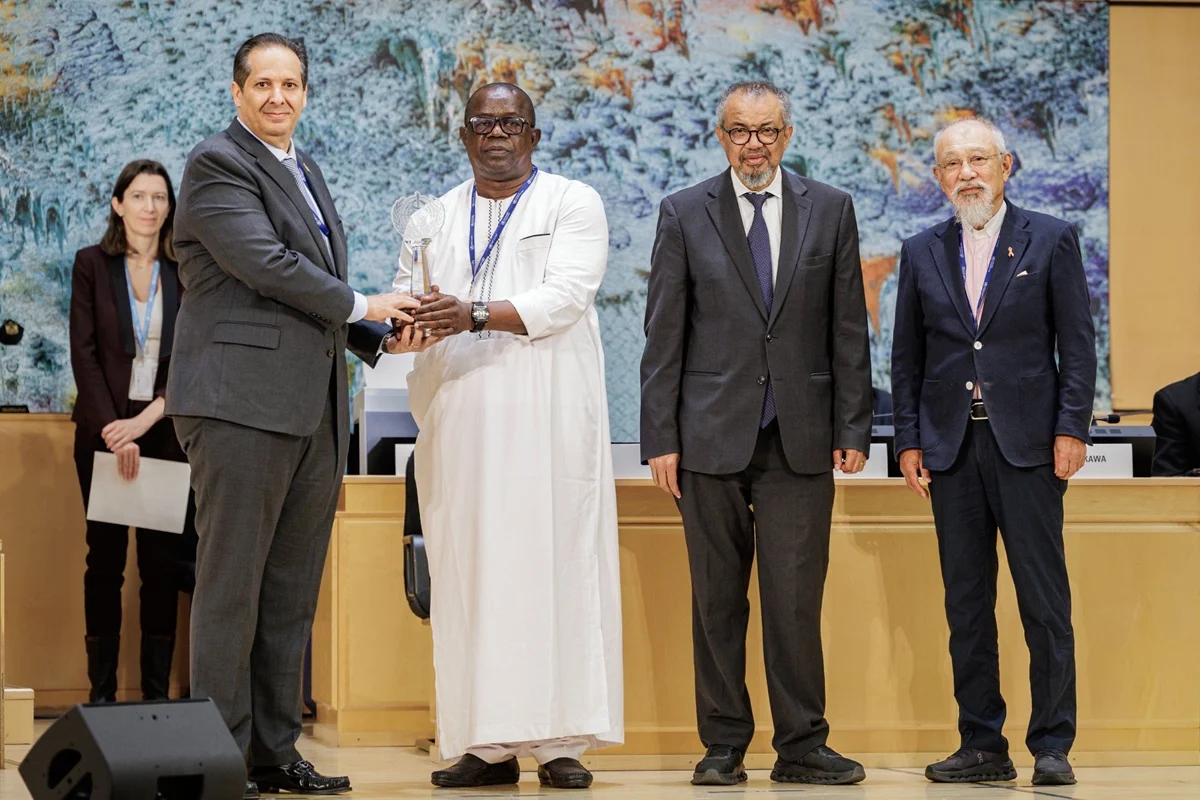
The Seventy-ninth World Health Assembly (WHA) convened in Geneva this week to recognize a distinguished group of individuals and institutions whose tireless efforts have significantly advanced the landscape of global public health. In a high-level ceremony held at the Palais des Nations, six laureates representing diverse geographical regions and professional backgrounds were honored for contributions that extend far beyond their standard professional mandates. The awards were presented by the President of the Seventy-ninth World Health Assembly, Dr. Víctor Elias Atallah Lajam of the Dominican Republic, alongside World Health Organization (WHO) Director-General Dr. Tedros Adhanom Ghebreyesus and representatives from the various foundations that have sponsored these prestigious prizes for over four decades.
The 2026 awards ceremony arrives at a critical juncture for international health policy, as the global community enters the final stretch toward the 2030 Sustainable Development Goals (SDGs). This year’s laureates were specifically lauded for their commitment to strengthening primary health care (PHC) systems, a strategy the WHO identifies as the most inclusive, equitable, and cost-effective way to achieve universal health coverage. The selection of these winners, finalized by the WHO Executive Board during its 158th session in February 2026, highlights a global push for scientific excellence, grassroots innovation, and the empowerment of vulnerable populations.
A Legacy of Leadership: Twenty Years Since Dr. LEE Jong-wook
The 2026 ceremony carried a profound historical weight, marking exactly 20 years since the sudden passing of Dr. LEE Jong-wook, the sixth Director-General of the World Health Organization. Dr. Lee, a visionary leader from the Republic of Korea, passed away in May 2006 while the 59th World Health Assembly was in session. His tenure was defined by a "man of action" philosophy, most notably his "3 by 5" initiative, which aimed to provide antiretroviral treatment to three million people living with HIV/AIDS by the end of 2005.
To honor his enduring impact, the Dr. LEE Jong-wook Memorial Prize for Public Health was among the primary honors bestowed this year. This prize serves as a reminder of Dr. Lee’s dedication to eradicating polio, fighting tuberculosis, and his unwavering belief that the most effective health interventions must reach the "last mile" of the population. His legacy continues to influence the WHO’s current strategic priorities, particularly the emphasis on rapid emergency response and the integration of science-based policy into local health infrastructures.
The 2026 Public Health Prize Categories and Laureates
The prizes awarded during the 79th WHA reflect the multifaceted nature of modern public health. Each award is backed by a specific foundation or member state, focusing on different niches ranging from healthy aging to grassroots health promotion.
The Sasakawa Health Prize
Established in 1984 by Mr. Ryoichi Sasakawa, this prize is awarded to individuals or institutions for outstanding innovative work in health development. In 2026, the focus remained on technological and social innovations that bridge the gap between clinical research and community application. The Sasakawa Health Prize remains one of the oldest and most prestigious awards within the WHO framework, often highlighting projects that serve as blueprints for scalable health interventions in low-income settings.
The United Arab Emirates Health Foundation Prize
Since its inception in 1993, this prize has recognized those who have made significant contributions to health development. The 2026 recipient was honored for expanding access to essential medicines and strengthening health workforce capacity in regions facing chronic instability. The UAE Health Foundation Prize emphasizes the importance of sustainable development and the role of international cooperation in building resilient health systems.
The State of Kuwait Health Promotion Foundation’s His Highness Sheikh Sabah Al-Ahmad Al-Jaber Al-Sabah Prize for the Promotion of Healthy Ageing
As the global population ages, this prize has gained increasing relevance. It recognizes research and programs that improve the quality of life for older persons. The 2026 laureate provided a breakthrough model for integrated care for the elderly, combining digital health monitoring with community-based social support, addressing the dual challenges of non-communicable diseases (NCDs) and social isolation among the aged.
The Nelson Mandela Award for Health Promotion
Created in 2019 to honor the centenary of the birth of the South African leader, this award celebrates those who demonstrate excellence in health promotion through social justice and equity. The 2026 awardee was recognized for advocacy work that successfully reduced health disparities among marginalized indigenous communities, echoing Mandela’s belief that health is a fundamental human right.
Rigorous Selection and Increasing Global Engagement
The process of selecting these laureates is exhaustive, ensuring that the honors remain a benchmark for global excellence. Nominations are submitted by WHO Member States and former laureates, which are then vetted by specialized selection panels. These panels consist of representatives from the respective foundations and members of the WHO Executive Board.
Data released during the 79th WHA indicated a significant surge in global interest in these awards. In 2026, nearly 100 nominations were received across all six WHO regions—Africa, the Americas, South-East Asia, Europe, the Eastern Mediterranean, and the Western Pacific. This represents a 25% increase in nominations compared to five years prior, reflecting a growing recognition of the importance of celebrating public health achievements at the highest diplomatic levels. Over the past 15 years, the WHO has awarded prizes to more than 80 laureates from over 50 countries, showcasing a truly global distribution of public health excellence.
Supporting Data: The Case for Primary Health Care
The central theme of the 2026 awards—advancing primary health care—is supported by compelling global health data. According to WHO statistics, approximately 90% of essential health interventions can be delivered through a primary health care approach. Furthermore, investing in PHC could increase global life expectancy by up to 6.7 years by 2030.
Despite these benefits, the WHO reports a significant funding gap. To reach the PHC targets, low- and middle-income countries require an additional $200 billion per year. The 2026 laureates were praised for their ability to maximize impact with limited resources, often utilizing "frugal innovation"—low-cost, high-impact solutions that can be implemented in resource-constrained environments. For example, several of the honored projects focused on the "Triple Billion" targets: one billion more people benefiting from universal health coverage, one billion more people better protected from health emergencies, and one billion more people enjoying better health and well-being.
Official Responses and Strategic Vision
During the ceremony, WHO Director-General Dr. Tedros Adhanom Ghebreyesus emphasized that the laureates represent the "human face" of science. "In an era where misinformation can spread as quickly as viruses, these awardees stand as beacons of scientific integrity and community trust," Dr. Tedros remarked. He further noted that the 2026 World Health Day theme, "Together for health. Stand with science," is not just a slogan but a necessary operational framework for the future.
Dr. Víctor Elias Atallah Lajam, in his capacity as WHA President, highlighted the role of the Dominican Republic and other middle-income nations in driving health innovation. He noted that the diversity of the 2026 winners—spanning from grassroots activists to high-level researchers—proves that leadership in health does not belong to any single region or economic class.
Analysis: Implications for the Future of Global Health
The 2026 WHA awards ceremony serves as more than a celebratory event; it is a strategic signal to the international community. By prioritizing awards for healthy aging, primary health care, and social equity, the WHO is signaling a shift away from reactive crisis management toward proactive, systemic resilience.
- Integration of Science and Policy: The emphasis on the "Stand with science" campaign suggests a concerted effort to rebuild public trust in health institutions post-pandemic. The awards recognize individuals who have successfully translated complex data into actionable community health programs.
- Addressing the Demographic Shift: The prominence of the Kuwait Prize for Healthy Ageing acknowledges a looming global challenge. By 2050, one in six people in the world will be over age 65. The 2026 awards encourage Member States to view aging not as a burden, but as a sector requiring specialized innovation.
- Decentralization of Health Excellence: The fact that nominations were received from all six WHO regions indicates a decentralization of public health leadership. Innovation is no longer flowing solely from the Global North to the Global South; instead, the 2026 laureates demonstrate a "South-South" and "South-North" exchange of best practices.
Conclusion
As the Seventy-ninth World Health Assembly continues its deliberations on pandemic preparedness, the health impacts of climate change, and the rising burden of non-communicable diseases, the recognition of these six laureates provides a moment of reflection and inspiration. By honoring the 20-year legacy of Dr. LEE Jong-wook alongside modern-day pioneers, the WHO reinforces the continuity of its mission: to serve the vulnerable and keep the world safe.
The stories of the 2026 awardees remind the global community that while the challenges to health are immense, they are not insurmountable when addressed with scientific rigor and a commitment to equity. As these individuals and institutions return to their respective countries with their honors, they carry with them the endorsement of the world’s highest health authority, further empowering them to continue their work in bringing "Health for All" closer to reality.
