
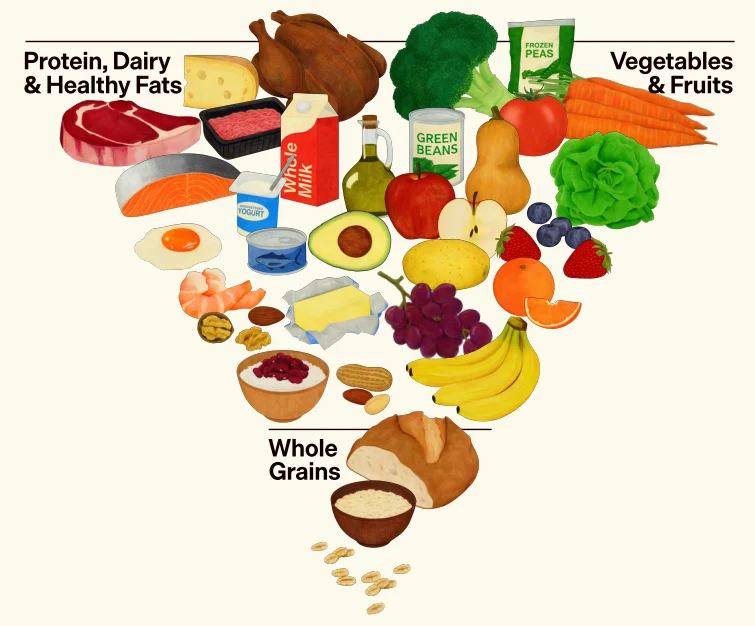
The release of the 2025–2030 Dietary Guidelines for Americans (DGAs) this week has ignited a significant debate within the public health community, pitting the document’s explicit anti-sugar and anti-processed food rhetoric against its confusing visual representation of fats and proteins. While the guidelines aim to simplify nutrition for the average American under the banner of eating "real food," critics argue that the accompanying "New Food Pyramid" creates a dangerous disconnect between textual health recommendations and the dietary habits encouraged by its illustrations.
A Chronology of the 2025–2030 Guidelines Development
The creation of the DGAs is a rigorous, multi-year process mandated by the National Nutrition Monitoring and Related Research Act of 1990. Every five years, the U.S. Departments of Agriculture (USDA) and Health and Human Services (HHS) are tasked with updating these standards, which serve as the cornerstone for federal nutrition policy, including school lunch programs and military rations.
The 2025–2030 cycle followed a unique and controversial trajectory. Typically, an independent Dietary Guidelines Advisory Committee (DGAC)—composed of preeminent nutrition scientists—conducts an exhaustive, transparent review of the latest peer-reviewed literature. This committee produces a comprehensive scientific report that serves as the foundation for the final guidelines. However, in this cycle, the administration took the unprecedented step of rejecting the Advisory Committee’s primary findings. Instead, the final guidelines were informed by a supplemental scientific analysis conducted by a group selected through a federal contracting process. This pivot has raised alarms among experts regarding the transparency, methodology, and potential for industry influence on the final document.
Decoding the New Food Pyramid and Saturated Fat Paradox
Perhaps the most striking feature of the new DGAs is the return of a pyramid-style graphic, albeit one inverted from its predecessors. The new visual emphasizes high-fat animal products, including steak, full-fat dairy, and butter. This design choice stands in direct contradiction to the document’s written text, which maintains the long-standing scientific consensus that saturated fat intake should be capped at 10% of total daily calories.
For an average adult consuming a 2,000-calorie diet, this 10% limit equates to approximately 22 grams of saturated fat per day. When one examines the "daily servings" recommended by the guidelines, the math becomes problematic. Three servings of full-fat dairy—such as a cup of whole milk, a serving of Greek yogurt, and an ounce of cheddar cheese—can easily contribute 17 grams of saturated fat. Adding a single tablespoon of butter or beef tallow, both of which are suggested as cooking fats within the guidelines, pushes the consumer over their daily limit before they have consumed a single gram of fat from other sources like protein or nuts.
Frank Hu, professor of nutrition and epidemiology and chair of the Department of Nutrition at the Harvard T.H. Chan School of Public Health, suggests that this mixed messaging is more than a design flaw. "The mixed messages surrounding saturated-fat-rich foods such as red meat, butter, and beef tallow may lead to confusion and potentially higher intake of saturated fat, which is well-linked to increased LDL cholesterol and cardiovascular risk," Hu noted.
The War on Highly Processed Foods and Added Sugars
On a more positive note, the new guidelines represent a significant step forward in addressing the intake of ultra-processed items. For the first time, the DGAs explicitly call out "highly processed foods" as a category to be minimized. This includes not just sugary sodas, but also packaged salty snacks and ready-to-eat meals that often displace nutrient-dense, whole foods.
Regarding added sugars, the stance has hardened significantly. The guidelines state that no amount of added sugar or non-nutritive sweetener is considered part of a healthy diet. Most notably, the guidance for children has shifted: the new rules advise that added sugars should be avoided entirely until age 10, a substantial increase from the previous threshold of age 2. While these recommendations are scientifically sound in the context of curbing childhood obesity and metabolic dysfunction, the guidelines provide limited practical strategies for how families can implement these changes in a food environment saturated with cheap, processed options.
Protein Quantity and the "Package" Problem
The guidelines have also raised eyebrows by increasing the recommended daily protein intake to 1.2 to 1.6 grams per kilogram of body weight. This represents a 50% to 100% increase over previous minimum intake recommendations. While this may be beneficial for specific demographics, such as athletes or the elderly who are at risk of sarcopenia, nutritionists worry that the broad recommendation lacks nuance.
The scientific consensus is that the "protein package"—the nutrients, fats, and fiber that accompany the protein source—is as important as the protein itself. A steak, for instance, comes with significant saturated fat, whereas a serving of lentils or salmon provides protein alongside fiber or beneficial omega-3 fatty acids. By failing to distinguish between these sources, the guidelines may inadvertently encourage the consumption of red and processed meats, which the World Health Organization and other major health bodies have linked to increased risks of colorectal cancer and heart disease.
Transparency Concerns and Industry Ties
The lack of clarity regarding who authored the final text of the 2025–2030 DGAs remains a point of contention. In a public Q&A regarding the new standards, Dr. Deirdre Tobias, who served on the original 2025–2030 Advisory Committee, highlighted the lack of methodological rigor compared to previous cycles. The transparency deficit is compounded by recent investigative reporting, which has identified financial ties between several members of the supplemental review panel and the beef and dairy industries. These disclosures have cast a shadow of doubt over the impartiality of the guidelines, particularly regarding the prominent placement of animal products in the new food pyramid.
Broader Public Health Implications
Historically, American adherence to the Dietary Guidelines has been low. According to data from the Centers for Disease Control and Prevention (CDC), the majority of the U.S. population fails to meet basic intake requirements for fruits, vegetables, and whole grains, while exceeding limits for sodium and added sugar. By producing a document that sends conflicting signals, the government may be missing a critical opportunity to steer the public toward more sustainable and health-protective habits.
Furthermore, the guidelines continue to ignore the environmental impact of food production. As climate change increasingly impacts global food security, the omission of environmental sustainability metrics—a standard feature in the dietary guidelines of many other developed nations—renders the U.S. approach increasingly isolated.
Conclusion: Navigating the Confusion
For the average consumer, the 2025–2030 DGAs offer a blend of strict, science-backed warnings against sugar and processed foods, paired with confusing, industry-friendly advice regarding fats and proteins. The "New Food Pyramid," while visually modernized and designed to be more consumer-friendly, appears to prioritize aesthetic appeal and political compromise over the clear, evidence-based communication required to combat the nation’s rising rates of diet-related chronic illness.
As the scientific community continues to analyze the nuances of these guidelines, health experts recommend that consumers remain skeptical of broad visual cues. Instead, they suggest relying on well-established, transparent frameworks, such as the Healthy Eating Plate, which prioritizes the consumption of vegetables, fruits, whole grains, and healthy plant-based proteins, while providing clear, consistent guidance on the types of fats that support long-term cardiovascular health. Ultimately, whether these guidelines will successfully shape the American diet remains to be seen, but their initial reception suggests that for many, the confusion they sow may outweigh the health benefits they aim to provide.
