
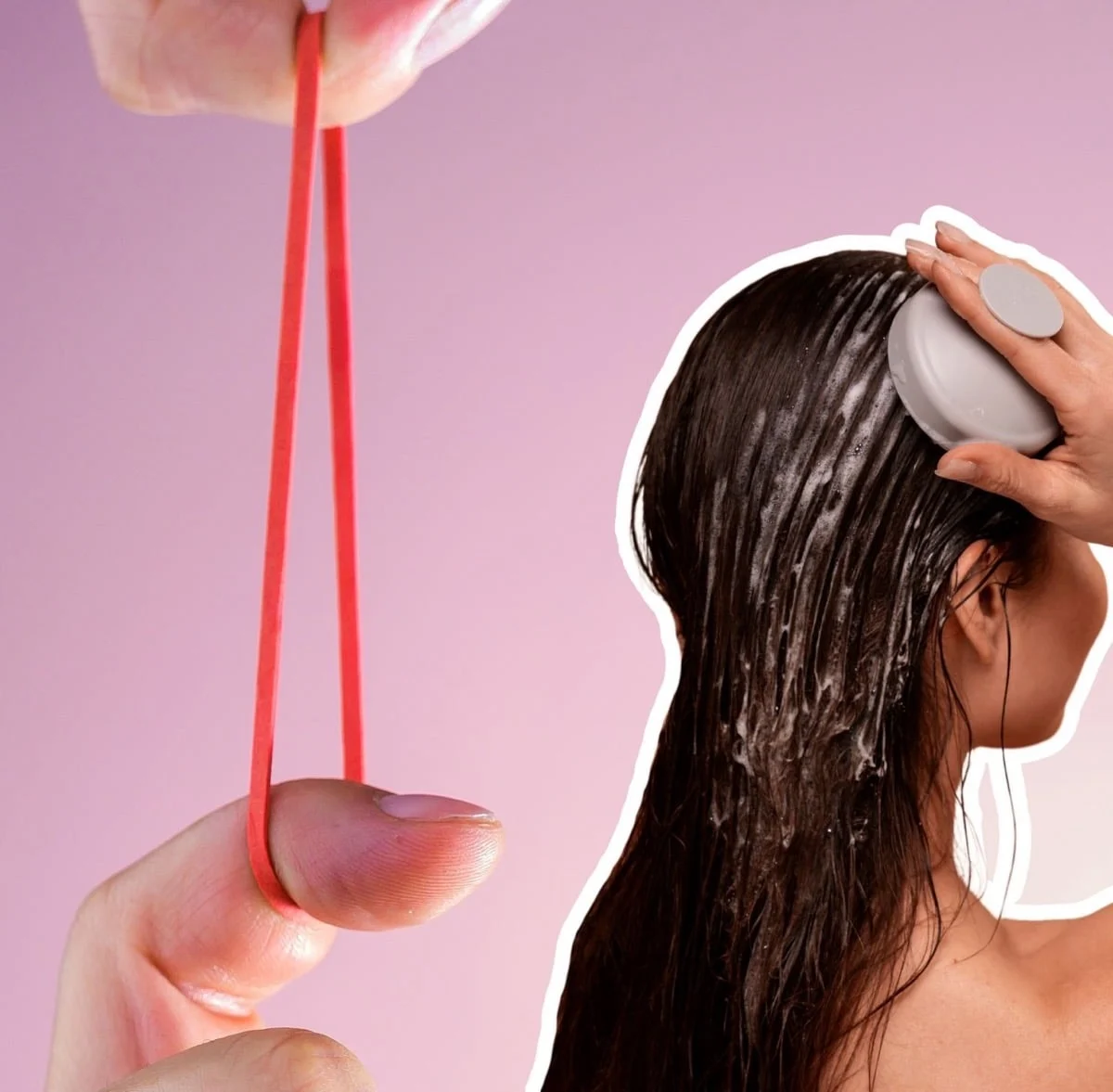
The intricate relationship between water and human hair has long been a fertile ground for both scientific inquiry and persistent myths. Among the most enduring and widely circulated misconceptions is the notion that the repetitive process of wetting and drying hair inherently causes damage, a phenomenon often termed "hygral fatigue." However, a rigorous examination of the scientific literature reveals that this popular belief, despite its mention in some peer-reviewed papers, lacks substantial empirical support. Far from being a destructive force, water is a fundamental component of hair health, and its interaction with hair is a dynamic, reversible process that does not, in itself, lead to cumulative structural degradation.
The assertion of "hygral fatigue" posits that repeated swelling and deswelling of the hair fiber, caused by water absorption and subsequent evaporation, weakens the hair over time, eventually leading to breakage. This analogy often compares hair to a rubber band that loses elasticity and eventually snaps after repeated stretching. However, this comparison fundamentally misrepresents the molecular architecture of hair and its interaction with water.
The Molecular Architecture of Hair and Water Interaction
To understand why the concept of "hygral fatigue" is largely a myth, it is essential to revisit the basic structure of human hair. Hair fibers are complex biological polymers primarily composed of keratin proteins. These proteins are arranged in a hierarchical structure: the outermost layer, the cuticle, consists of overlapping, scale-like cells that protect the inner cortex. The cortex, making up the bulk of the hair fiber, contains elongated keratinocytes packed with keratin filaments. These filaments are held together by various types of bonds, including strong disulfide bonds (permanent), and weaker, temporary hydrogen and ionic bonds.
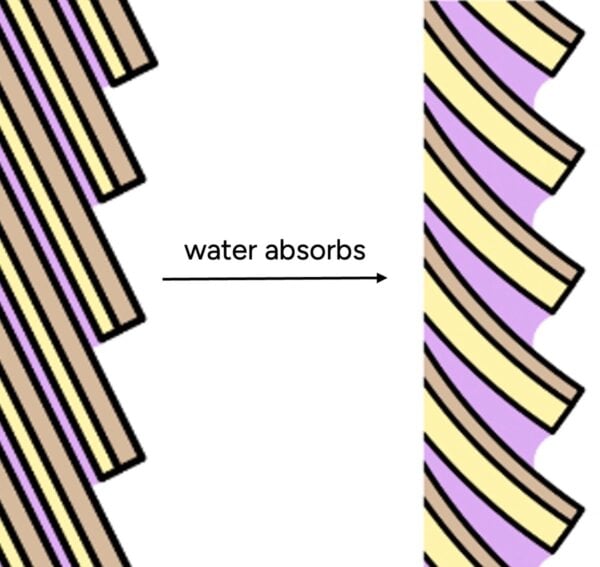
When hair comes into contact with water, it absorbs it readily due to its hygroscopic nature. Water molecules penetrate the hair shaft, primarily interacting with the keratin proteins through hydrogen bonds. These temporary bonds form between the hydrogen atoms of water and the oxygen or nitrogen atoms within the keratin structure. As water molecules form these new hydrogen bonds, they disrupt some of the existing hydrogen bonds between keratin chains, causing the hair fiber to swell. This swelling is a natural and reversible process.
The key distinction from the rubber band analogy lies in the nature of these bonds. While stretching a rubber band breaks permanent covalent bonds, leading to irreversible damage, water’s interaction with hair involves the breaking and reforming of temporary hydrogen bonds. When hair dries, the water molecules evaporate, and the original hydrogen bonds between keratin chains reform spontaneously. This process is akin to repeatedly joining and unjoining Lego pieces; the components themselves are not degraded or "fatigued" by the repeated action. Electrons and protons, the fundamental constituents of these bonds, do not wear down or become damaged through this cyclical process. Therefore, the very mechanism cited as the cause of "hygral fatigue" – the breaking and reforming of hydrogen bonds – is a testament to hair’s remarkable resilience and capacity for reversible hydration.
Challenging the Scientific Support for Hygral Fatigue
Despite its widespread belief, the scientific basis for "hygral fatigue" is surprisingly thin. Even in some peer-reviewed literature where the term is used, the foundational evidence supporting its occurrence is often lacking or based on questionable interpretations of experimental data.
One frequently cited study, published in 2011 by Lee et al. in Annals of Dermatology, investigated the damage caused by different hair drying methods. The researchers compared air drying with blow drying at varying temperatures and distances. Their findings suggested that blow-drying at a low temperature caused the least damage, while air-dried samples exhibited "bulges" on the hair surface, which they attributed to prolonged water swelling. This interpretation was then used to support the idea that air drying, due to extended exposure to water, could lead to damage consistent with "hygral fatigue."
However, this conclusion warrants critical scrutiny. Air drying is a standard and widely practiced method globally, and if it consistently caused such significant structural damage as "bulges," it would be a frequently reported observation in hair science literature. The fact that these bulges are not commonly noted in other studies where hair is air-dried suggests that the findings of Lee et al. might be specific to their experimental setup or represent an anomaly. Potential confounding factors, such as pre-existing damage to the specific hair samples used (e.g., from excessive UV exposure or chemical treatments), or methodological issues, could offer alternative explanations for the observed bulges. Without further replication and more robust controls, it is difficult to definitively conclude that these bulges were a direct result of "hygral fatigue" caused by the simple act of air drying.
The Coconut Oil Debate: Protection Against a Myth?
Another avenue through which "hygral fatigue" has gained traction is in discussions surrounding the benefits of certain hair oils, particularly coconut oil. Several studies have proposed that coconut oil could "block" hair from absorbing water, thereby protecting it from the supposed effects of "hygral fatigue." These studies, some explicitly using the term "hygral fatigue," often lack primary citations demonstrating the actual occurrence of this phenomenon in the first place, thus building a solution for a problem that may not exist.
Experiments designed to assess coconut oil’s water-blocking capabilities often involve coating hair strands with various oils (coconut, mineral, sunflower) and then subjecting them to a dynamic vapor sorption (DVS) apparatus. This device measures the weight of hair at different humidities, with an increase in weight indicating absorbed water. Researchers observed that coconut-oiled hair showed the smallest percentage increase in weight, leading them to conclude that coconut oil effectively prevents water absorption.
However, hair scientist Trefor Evans has critically pointed out a potential experimental error in this interpretation. The addition of coconut oil itself increases the initial weight of the hair sample. When the absorbed water is then calculated as a percentage of this heavier hair-plus-oil composite, the resulting percentage will naturally appear smaller compared to untreated hair, where the absorbed water is calculated against only the hair’s weight. This methodological nuance could significantly skew the results, making it appear as though coconut oil is blocking water when it may simply be a mathematical artifact. Similar issues could affect studies that weigh oil-treated hair after wetting and drying cycles.
Furthermore, considering the microscopic structure of hair, it is highly improbable that any oil, including coconut oil, could effectively "seal" the hair fiber against water molecules. The hair cuticle, with its overlapping scales, presents numerous microscopic gaps and edges. Water molecules are exceedingly small, and the idea of completely impermeabilizing a porous, "pinecone-like" structure against them with an oil film is scientifically dubious. The water content of hair is primarily dictated by the ambient relative humidity, and while oils can certainly influence the rate of water exchange, they are unlikely to prevent it significantly.
This does not negate the benefits of coconut oil for hair health. Research suggests that coconut oil, unlike many other oils, can penetrate deeper into the hair shaft. This penetration allows it to fill gaps in the hydrophobic regions of the hair, particularly within the cell membrane complex (the "mortar" between the "bricks" of hair cells). By reinforcing these internal structures, coconut oil can help reduce internal cracking and overall protein loss, making hair stronger and more resilient, especially against damage from grooming and styling. It also acts as an excellent lubricant on the hair’s surface, smoothing the cuticle and reducing friction during combing, which is a major source of mechanical damage. These are tangible, scientifically supported benefits that contribute to hair health, independent of any unsubstantiated claims about "hygral fatigue" prevention.
Implications for Daily Hair Care and Industry Practices
The debunking of the "hygral fatigue" myth has significant implications for both consumer hair care practices and the beauty industry. For decades, many individuals have been advised to limit hair washing frequency, partly out of fear of this purported water-induced damage. The scientific consensus, championed by cosmetic chemists and trichologists like Michelle Wong (Lab Muffin Beauty Science) and Trefor Evans, affirms that the simple act of wetting and drying hair does not inherently cause damage.
This understanding liberates consumers from the anxiety of daily washing. The frequency of hair washing should instead be guided by individual needs, scalp health, and lifestyle, rather than a baseless fear of water damage. Factors like oiliness, product buildup, and environmental exposure are more pertinent considerations.
However, it is crucial to emphasize a related but distinct point: wet hair is more fragile. When hair absorbs water, it swells, and the cuticle scales can lift slightly, making the hair more susceptible to mechanical damage from friction, brushing, or aggressive towel drying. This increased fragility is why gentle handling of wet hair – using wide-tooth combs, blotting with a microfiber towel instead of vigorous rubbing, and applying leave-in conditioners – remains a critical component of healthy hair care. The damage comes not from the water itself, but from improper handling of hair in its vulnerable wet state.
For the beauty industry, this clarity reinforces the importance of formulating products that address actual hair concerns. Instead of marketing "anti-hygral fatigue" products, the focus should remain on ingredients that provide proven benefits: conditioners and oils for lubrication and cuticle smoothing, protein treatments for strengthening, humectants for maintaining optimal hydration, and heat protectants for mitigating styling tool damage. It underscores the industry’s responsibility to base product claims on robust scientific evidence rather than propagating myths.
The Broader Context: Science Communication in Beauty
The persistence of the "hygral fatigue" myth, even within some scientific circles, highlights a broader challenge in science communication, particularly within the beauty and wellness industries. Misinformation can spread rapidly, often fueled by anecdotal evidence, misinterpretations of scientific studies, or the desire for simple, compelling explanations. The critical analysis of scientific papers, even peer-reviewed ones, is paramount. Researchers and communicators must continually scrutinize methodologies, interpret findings within a broader scientific context, and be wary of conclusions that lack strong, replicable evidence.
In conclusion, the notion of "hygral fatigue" as an inherent damage mechanism from repeated wetting and drying of hair is largely unfounded. Hair’s interaction with water, involving the reversible breaking and reforming of temporary hydrogen bonds, is a natural and non-damaging process. While wet hair is more susceptible to mechanical damage due to its altered physical state, the water itself is not the culprit. The scientific community’s ongoing efforts to clarify these distinctions empower consumers to make informed choices about their hair care, moving beyond myths towards practices grounded in empirical evidence and a deeper understanding of hair biology.
References
Robbins CR. Chemical and Physical Behavior of Human Hair. 5th ed. Springer Berlin Heidelberg 2012.
Lee Y, Kim YD, Hyun HJ, Pi LQ, Jin X, Lee WS. Hair shaft damage from heat and drying time of hair dryer. Ann Dermatol. 2011;23(4):455. doi:10.5021/ad.2011.23.4.455
Evans T. Measuring the water content of hair. Cosmetics & Toiletries. 2014;129(2):64-69.
Keis K, Huemmer CL, Kamath YK. Effect of oil films on moisture vapor absorption on human hair. J Cosmet Sci. 2007;58(2):135-145.
Ruetsch SB, Kamath YK, Rele AS, Mohile RB. Secondary ion mass spectrometric investigation of penetration of coconut and mineral oils into human hair fibers: Relevance to hair damage. J Cosmet Sci. 2001;52:169-184.
Rele AS, Mohile RB. Effect of coconut oil on prevention of hair damage. Part I. J Cosmet Sci. 1999;50(6):327-339.
Rele AS, Mohile RB. Effect of mineral oil, sunflower oil, and coconut oil on prevention of hair damage. J Cosmet Sci. 2003;54(2):175-192.
Kaushik V, Chogale R, Mhaskar S. Single hair fiber assessment techniques to discriminate between mineral oil and coconut oil effect on hair physical properties. J Cosmet Dermatol. 2021;20(4):1306-1317. doi:10.1111/jocd.13724
Gode V, Bhalla N, Shirhatti V, Mhaskar S, Kamath Y. Quantitative measurement of the penetration of coconut oil into human hair using radiolabeled coconut oil. J Cosmet Sci. 2012;63(1):27-31.
