
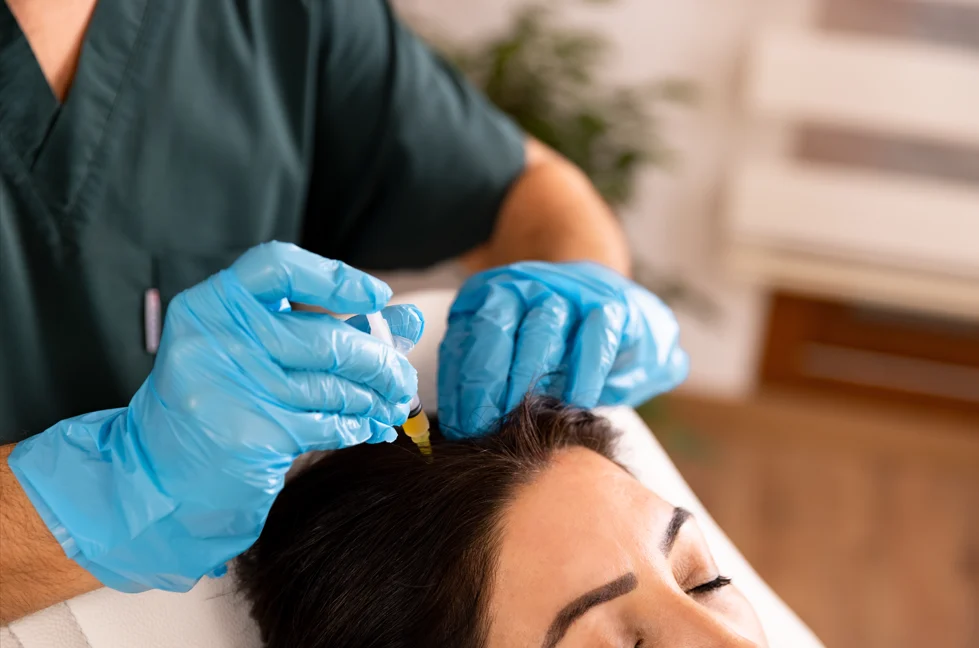
The Joint Council for Cosmetic Practitioners (JCCP) has released comprehensive new guidance regarding platelet-rich plasma (PRP) procedures, establishing a definitive regulatory stance that classifies the treatment of hair loss as a medical procedure. This determination, developed in collaboration with health protection specialists, healthcare professionals (HCPs), and national regulators, carries significant weight for the aesthetics industry, as it dictates that PRP must now be regarded as a medicinal product whenever medicinal claims—such as the reversal of hair loss or the stimulation of new hair growth—are made. The guidance is specifically designed to assist Local Authorities in identifying businesses that may be operating outside of legal frameworks and to provide a basis for investigating complaints related to PRP administration.
Underpinning this shift is a growing concern for patient safety and the standardization of non-surgical cosmetic interventions. By categorizing PRP for hair loss as a medical treatment, the JCCP and its partners, including the Medicines and Healthcare products Regulatory Agency (MHRA) and the Care Quality Commission (CQC), are moving to ensure that such procedures are only performed by qualified individuals within regulated environments. This move aligns with a broader national effort to tighten the oversight of the cosmetic sector in England, which has seen rapid growth and varying levels of practitioner competence over the last decade.
The Regulatory Landscape and Licensing Framework
The classification of PRP therapy occurs within the context of a proposed licensing scheme for non-surgical cosmetic procedures in England. Currently, the government has provisionally placed PRP therapy for cosmetic purposes within the "Amber" category. This category is reserved for procedures considered to have a medium risk of complications, requiring a higher level of oversight than "Green" category treatments, such as chemical peels or microdermabrasion. However, the regulatory environment is fluid; a consultation response published in August 2025 indicated a strong consensus among respondents that PRP should be reclassified into the "Red" category.
A "Red" classification would represent the highest level of restriction. Treatments in this category would be strictly limited to qualified and regulated HCPs, such as doctors, dentists, and certain specialized nurses, and would mandate that the procedures be carried out exclusively in CQC-registered premises. The JCCP guidance reinforces this direction, with the CQC confirming that hair restoration procedures constitute a "regulated activity" when performed by a regulated HCP. This means that clinics offering these services must meet stringent standards regarding clinical governance, safety, and hygiene, or face potential enforcement action.
The MHRA’s involvement is equally pivotal. The agency has clarified that any claims suggesting a product can "reverse permanent hair loss," "cause hair growth," or "act as an alternative to a hair transplant" are medicinal claims. Consequently, the substances used—even if derived from the patient’s own blood—are treated as medicinal products. This prevents practitioners and suppliers who lack the legal authority to possess wholesale stock medicines from promoting PRP for medical purposes, effectively narrowing the field of legitimate providers.
Chronology of Regulatory Evolution in the UK Aesthetics Sector
The path to this new guidance has been paved by several years of legislative and consultative efforts aimed at cleaning up the "Wild West" of the UK beauty and aesthetics industry.
- 2022: The Health and Care Act 2022 granted the Secretary of State for Health and Social Care the power to introduce a licensing scheme for non-surgical cosmetic procedures in England. This was a landmark moment that acknowledged the risks associated with unregulated fillers and injectable treatments.
- 2023: The government launched a public consultation to determine which procedures should be included in the licensing scheme and how they should be categorized (Green, Amber, or Red).
- 2024: Professional bodies like the JCCP began intensive work with the MHRA and CQC to define the specific clinical boundaries of treatments like PRP, which sit on the line between "cosmetic" and "medical."
- August 2025: The publication of the consultation response highlighted the public and professional demand for stricter PRP regulation, specifically regarding hair restoration.
- Present: The JCCP issues the formal Guidance for PRP, providing Local Authorities with the tools to enforce these new standards.
This timeline demonstrates a steady progression toward medicalization, reflecting an acknowledgment that the biological complexity of PRP—involving the extraction, processing, and reinjection of human tissue—carries risks that exceed those of traditional beauty therapy.
The Technicality of "Manufacturing" and the Centrifuge Dilemma
One of the most complex aspects of the new guidance involves the legal definition of "manufacturing." Unlike a pre-packaged prescription drug, PRP is created on-site using the patient’s own blood. The process involves drawing blood and placing it in a centrifuge to separate the platelets and plasma from red blood cells. According to Mr. Greg Williams, a leading hair transplant surgeon, this centrifuge step constitutes the "manufacturing" of a medicine.
Under current UK law, doctors and dentists are granted specific exemptions that allow them to manufacture medicines for their own patients without a separate manufacturing license from the MHRA. However, this exemption does not automatically extend to all healthcare professionals. This creates a significant legal hurdle for nurses and pharmacists who wish to operate autonomously. While they are regulated HCPs, their ability to "manufacture" PRP via centrifugation and then "supply" or "administer" it remains a point of intense legal debate.
Andrew Rankin, acting co-chair of the JCCP, has noted that the context of the procedure is vital. He explains that there are two distinct areas of legislation: the manufacturing itself and the wholesale supply of unlicensed medicines. If a doctor manufactures the PRP, they can use it within their own practice. However, supplying that "unlicensed medicine" across different organizations or to a third party is generally prohibited. This suggests that the future of PRP may be centralized in multi-disciplinary medical clinics where a doctor or dentist provides the necessary oversight for the preparation of the product.
Professional Perspectives and Clinical Accountability
The shift toward CQC registration is viewed by many in the industry as the most significant hurdle for existing aesthetics clinics. Dr. Shirin Lakhani, who chaired the working group that developed the JCCP guidance, emphasizes that CQC registration is not merely a paperwork exercise but a fundamental change in how a clinic operates.
"Its implications are substantial because they involve governance, quality assurance, patient safety, record keeping, incident reporting, and ongoing accountability," Dr. Lakhani stated. She points out that clinics will now need to prove that their equipment—specifically centrifuges and the tubes used for blood collection—is CE or UKCA marked for the specific purpose of PRP therapy. Many low-cost centrifuges used in non-medical settings may not meet these rigorous standards, potentially forcing practitioners to invest in expensive new medical-grade hardware.
Furthermore, the guidance necessitates a review of standard operating procedures (SOPs). Clinics must now have robust pathways for reporting adverse events, such as infections or tissue necrosis, to the MHRA via the Yellow Card scheme. This level of transparency is standard in hospitals but represents a significant shift for high-street aesthetics practitioners.
Marketing Ramifications and the End of Public Advertising
The reclassification of PRP for hair loss as a medical procedure has immediate consequences for how these services are marketed to the public. In the United Kingdom, the advertising of prescription-only medicines (POMs) or treatments that make medicinal claims to the general public is strictly prohibited by the Committee of Advertising Practice (CAP) and the MHRA.
If PRP is used to treat androgenetic alopecia (a medical diagnosis), it is considered a medical treatment. Therefore, clinics can no longer legally use "before and after" photos or promotional language that promises to "cure baldness" or "regrow hair" in public-facing advertisements, such as Instagram or Facebook ads. Mr. Greg Williams explains that if the substance is considered a prescription medication for a medical purpose, advertising it directly to consumers becomes a breach of the Human Medicines Regulations 2012.
This change is expected to significantly impact the "social media clinic" model, where viral marketing and aggressive promotional offers have previously driven high volumes of patients toward PRP treatments. Practitioners will now have to rely on consultations and medical referrals rather than public-facing promotional campaigns.
Impact Analysis: Safety vs. Access
The JCCP’s guidance is a double-edged sword for the aesthetics industry. On one hand, it significantly enhances patient safety. By restricting the procedure to HCPs in CQC-registered facilities, the risk of cross-contamination, improper injection techniques, and misdiagnosis of underlying hair loss conditions is greatly reduced. Hair loss can sometimes be a symptom of systemic diseases, such as thyroid disorders or autoimmune conditions, which a non-medical practitioner might overlook.
On the other hand, these regulations will likely lead to an increase in the cost of PRP treatments. The overhead of maintaining CQC registration, purchasing medical-grade equipment, and employing regulated HCPs will inevitably be passed on to the consumer. Some industry analysts suggest this could lead to a "two-tier" market: a regulated, expensive medical sector and an underground, unregulated sector that continues to operate illegally.
Enforcement and Future Outlook
The responsibility for policing these new standards falls largely on Local Authority Officers and the MHRA’s medicines enforcement team. Under the new guidance, local authorities have the power to assess the risk of a business and serve improvement or prohibition notices. If a clinic is found to be making medicinal claims or performing "manufacturing" without the proper legal standing, they could face prosecution.
Andrew Rankin of the JCCP has advised that any practitioner currently offering PRP for hair loss should seek immediate advice from the MHRA to clarify their legal position. "The JCCP has further work to do to understand the detail of how independent prescribers will operate in practice," Rankin noted, suggesting that further refinements to the guidance may be necessary as the government finalizes its licensing scheme.
As the UK moves toward the formal implementation of the licensing scheme in late 2025 and 2026, the JCCP’s guidance on PRP serves as a blueprint for the future of medical aesthetics. It signals the end of an era where biological treatments could be performed with minimal oversight and marks the beginning of a more rigorous, medically-led approach to hair restoration and cosmetic health. For patients, this means a safer environment, but for the industry, it represents a period of significant transition and professional consolidation.
