

In a significant move to bolster the innovation pipeline for sustainable food technologies, U.S. venture capital firm Coefficient Capital has announced a dedicated $10 million allocation for research and development initiatives focused on alternative proteins and future food projects. This funding aims to address critical challenges in the sector, spanning from the development of advanced egg and fat alternatives to the creation of novel flavor-enhancing ingredients, signaling a renewed strategic focus amidst evolving investment trends.
The investment arrives at a pivotal moment for the alternative protein industry. While venture capital investment in the sector dipped to a seven-year low in 2025, a trend attributed partly to a broader investor pivot towards artificial intelligence (AI) and away from food and climate tech, the remaining capital is demonstrating a more concentrated and targeted approach. This strategic shift prioritizes foundational R&D opportunities designed to enhance the sensory appeal and nutritional profile of sustainable food products, moving beyond incremental improvements to tackle core consumer adoption barriers.
Coefficient Capital’s initiative, framed as a Request for Proposals (RFP), specifically targets "foundational, pre-competitive research problems" that have historically been underserved by both public and private R&D budgets. This deliberate focus underscores a commitment to addressing systemic challenges that, if solved, could unlock significant market potential and accelerate mainstream acceptance of alternative protein products. The firm anticipates deploying $10 million through this RFP, with the potential to increase funding based on the caliber and volume of applications received. Individual awards are slated to range from $100,000 to $1 million, with project durations typically spanning two to three years, extendable up to 3.5 years. Critically, the RFP is open to startups and research institutions globally, fostering an international collaborative environment for innovation.

"We encourage applications from across the R&D ecosystem, including universities and research institutes; small, medium, and large companies; and public-sector research organizations," stated Coefficient Capital in their announcement. "Successful teams will likely be interdisciplinary, combining expertise across analytical chemistry, sensory science, food science, fermentation, breeding, and/or industry-relevant scale-up." The firm also emphasized the desirability of proposals that include industry partnerships or clearly articulate a viable pathway toward commercialization, highlighting a pragmatic approach to translating scientific breakthroughs into market-ready solutions.
Coefficient Capital has identified four key priority areas for this RFP, offering a clear indication of the specific challenges and opportunities they believe are most critical for advancing the alternative protein landscape and achieving widespread consumer adoption. These areas reflect a deep understanding of the current limitations and future potential of the sector.
Addressing Off-Flavors in Plant and Fermentation-Derived Proteins
A central focus of Coefficient Capital’s funding initiative is the persistent challenge of off-flavors in plant- and fermentation-derived proteins. The firm identifies these undesirable sensory attributes as "the single most commercially important barrier to consumer acceptance of plant-based meat alternatives." These off-notes, often stemming from volatile compounds such as aldehydes, alcohols, furans, and pyrazines, can significantly detract from the overall palatability of products.
The scientific literature indicates that these off-flavors frequently arise from the oxidation of polyunsaturated fatty acids in plant protein ingredients, a process exacerbated during harvesting, storage, and processing. For instance, C8 volatiles are known contributors to the "musty" notes often associated with fungal proteins. These compounds, present at concentrations far exceeding human detection thresholds, can impart grassy, beany, earthy, or cardboard-like flavors. Furthermore, non-volatile off-notes, such as bitterness or astringency, contribute to a less desirable mouthfeel and overall product experience.

In response to this critical issue, Coefficient Capital is seeking research proposals that explore a multi-pronged approach to mitigation. This includes optimizing agricultural practices and supply chain management, from harvesting and drying to storage, to minimize the formation of off-flavor precursors. A systematic mapping of off-flavor compound levels in key protein ingredients is also a priority. The RFP encourages investigations into breeding and genetic editing strategies aimed at reducing off-notes in commercially vital proteins and their precursors. Additionally, Coefficient Capital is interested in projects that refine and standardize existing post-harvest processing techniques, such as hot-water washing, steam stripping, controlled roasting, and temperature management during processing, provided these methods can be implemented cost-effectively and scaled without requiring substantial new capital investment. Fermentation of plant proteins prior to formulation, with the goal of eliminating or transforming unfavorable flavors, is also a key area of interest. The overarching goal is to identify interventions that are widely adoptable and demonstrably effective in model formulations of final alternative protein products.
Revolutionizing Fat Alternatives for Enhanced Flavor and Mouthfeel
The second priority area for Coefficient Capital’s funding addresses the crucial role of fats in food. Fat is not only a primary carrier of flavor but also fundamentally influences mouthfeel, flavor intensity, and flavor release kinetics, all of which are critical for consumer acceptance. As the alternative fat market continues to grow, Coefficient Capital is looking to invest in innovations that can significantly elevate the sensory experience of plant-based products.
The firm highlights the biological mechanisms behind the "meaty" flavor perception in animal products, where the oxidation of animal fats during heating generates aldehydes, ketones, and alcohols. These compounds then interact with Maillard reaction components, creating the complex flavor profiles associated with cooked meat. Many current plant-based alternatives struggle to replicate this intricate interplay between lipids and flavor development. Furthermore, the prevalence of liquid oils in many plant-based fat systems leads to rapid flavor release and subsequent decay, a stark contrast to the sustained flavor experience often provided by animal fats.
Coefficient Capital is actively seeking proposals for fat alternatives that can be manufactured using existing or near-term capital equipment at a cost comparable to commodity oils. This includes research into oelogels, which utilize gelling agents to structure liquid oils, offering a promising avenue for commercially viable fat replacements in plant-based meats. The RFP also calls for innovative protein-fat emulsion systems designed to deliver specific fatty acid precursors that mimic the flavor profiles of various meats. The development of advanced antioxidant systems to control lipid oxidation, particularly for alternative seafood applications, is another key area. Moreover, Coefficient Capital is interested in oilseed breeding programs aimed at producing longer-chain monounsaturated fatty acids with melting points closer to body temperature, which can contribute to a more authentic mouthfeel. The firm’s interest extends to the isolation of oil bodies from oilseeds to create creamy textures that better emulate animal adipocytes, and the exploration of incorporating lipidamides and similar compounds into fat systems to achieve meat-like flavors at trace concentrations.

Advancing Egg Reduction and Replacement Technologies
The third priority area addresses the burgeoning demand for egg alternatives, a market segment that has seen heightened importance due to disruptions in traditional egg supply chains, exacerbated by outbreaks of avian flu and other diseases in 2025. Coefficient Capital recognizes the critical need for reliable, high-performing egg substitutes across a range of applications, from baking to binding and emulsification.
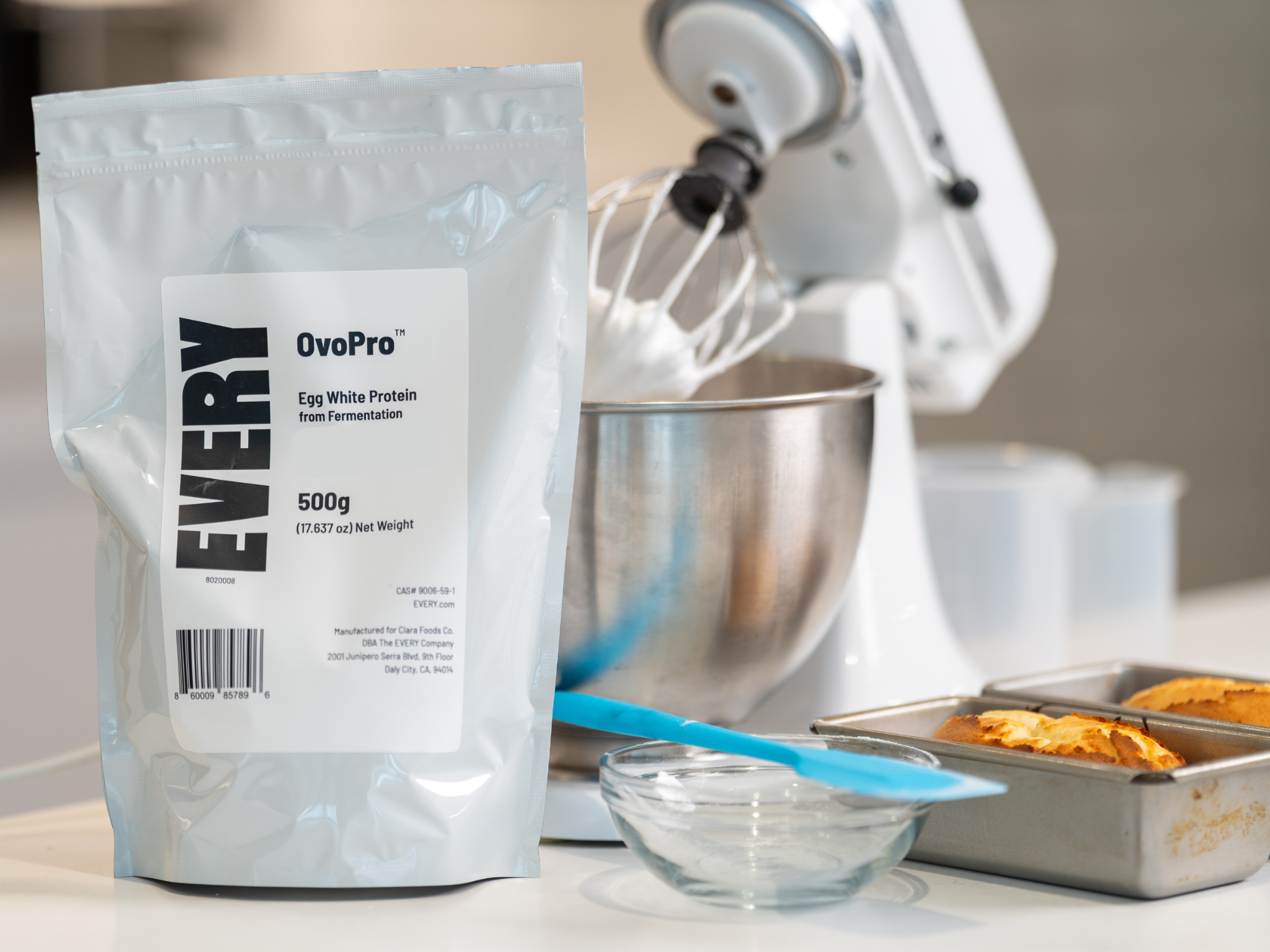
The RFP outlines five broad categories of interest for egg reduction and replacement technologies. These include novel plant-based alternatives derived from ingredients such as mung beans and potato protein, as well as advancements in precision fermentation. Precision fermentation, which leverages genetically engineered microbes to produce specific proteins like ovalbumin, offers a high-tech route to replicating egg functionalities. The firm also notes the potential of recombinant whey protein, which, due to its excellent foaming and gelling properties, could serve as a valuable substitute for supply-strained dairy ingredients.
However, Coefficient Capital places particular emphasis on two specific technological avenues: enzymatic modification and hybrid systems. Enzymatic modification aims to enhance the emulsification and binding capacities of egg ingredients, allowing for greater functionality per unit volume. Hybrid systems, which combine modified egg components with plant proteins or other ingredients, are also of significant interest, as they offer the potential to maximize functional performance by leveraging the complementary strengths of different technologies. Proposals will be evaluated based on their expected functional performance relative to conventional egg benchmarks, cost-effectiveness per functional unit, and the degree to which they integrate multiple technological approaches.
Characterizing Fish Flavors in Welfare-Priority Species
The final priority area for Coefficient Capital’s RFP focuses on the development of alternative seafood. While a growing segment of the alternative protein market, it still represents a smaller portion compared to plant-based meats. Coefficient Capital notes that many important fish species are currently processed into non-structured formats, such as stocks, pastes, and balls, where the replication of a whole fillet’s complex structure is not the primary objective. In such applications, replicating the authentic flavor and basic texture becomes paramount.
The challenge lies in the inherent difficulty of accurately characterizing fish flavors and translating those profiles into plant-based or cultivated alternatives. The analytical-to-sensory pipeline for developing fish flavor is often unclear, and publicly available flavor characterization data for many commercially significant, yet welfare-challenged, fish species is sparse and inconsistent. Coefficient Capital’s RFP specifically targets certain welfare-priority species that are farmed in large volumes and often face significant ethical concerns, including tilapias, milkfish, carp, bottom-dwellers, and catfish.
Proposals are sought in two sub-areas: the development of improved analytical-sensory methodologies that can be demonstrated on these target species, and the systematic characterization of the sensory profiles of these species in commercially relevant processed formats. This research aims to build a robust scientific foundation for creating authentic-tasting alternative seafood products that can appeal to a wider consumer base.
Implications and Future Outlook
Coefficient Capital’s strategic allocation of $10 million in R&D funding for these critical areas signifies a renewed commitment to addressing the fundamental challenges hindering the widespread adoption of alternative proteins. The firm’s emphasis on foundational, pre-competitive research suggests a long-term vision, aiming to unlock breakthroughs that can benefit the entire industry.
"After a decade of investment, the alternative protein category has produced commercially significant products but has yet to achieve mainstream adoption," Coefficient Capital observed. "The dominant hypothesis, as illustrated by consumer surveys and industry, is that taste and price represent the dominant barriers to mainstream adoption." This statement underscores the rationale behind their investment strategy, which directly targets these core consumer concerns.

The implications of this funding are far-reaching. By supporting research into off-flavor mitigation, fat alternatives, egg replacement, and fish flavor characterization, Coefficient Capital is not only backing specific companies or technologies but is investing in the foundational science that can propel the entire sector forward. This initiative could lead to the development of more palatable, affordable, and functionally versatile alternative protein products, ultimately accelerating their integration into global food systems and contributing to a more sustainable food future. The success of this RFP will likely serve as a benchmark for future investment strategies in the alternative protein space, potentially encouraging other venture capital firms to adopt similar targeted approaches to address the industry’s most pressing challenges.
