
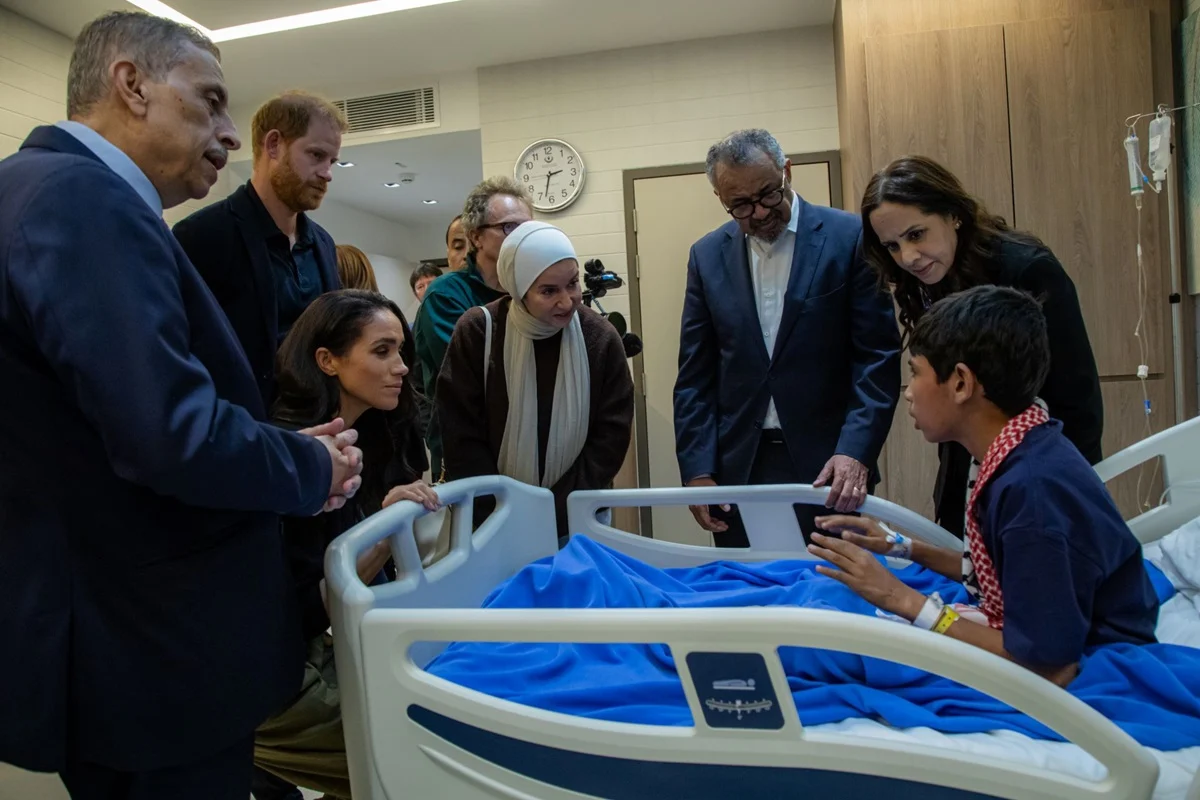
The Director-General of the World Health Organization (WHO), Dr Tedros Adhanom Ghebreyesus, has concluded the inaugural day of a high-stakes, two-day State visit to the Hashemite Kingdom of Jordan, a mission designed to reinforce the strategic partnership between the global health body and one of the Middle East’s most pivotal humanitarian hubs. The visit, which includes high-level diplomatic meetings and field inspections of clinical facilities, underscores Jordan’s multifaceted role in advancing universal health coverage (UHC), pioneering mental health integration, and facilitating complex humanitarian medical evacuations amidst escalating regional instability.
Central to the first day’s agenda was a formal audience with His Majesty King Abdullah II. This meeting served as a diplomatic cornerstone, highlighting the convergence of Jordan’s national health priorities with the WHO’s global "Triple Billion" targets. Discussions between the Director-General and the King focused on the resilience of health systems under pressure, the expansion of equitable access to primary care, and the urgent necessity of sustained international financing for emergency responses. A significant portion of the dialogue was dedicated to the deteriorating humanitarian situation in the Palestinian territories and the critical role Jordan plays in mitigating the health crisis for those affected by the ongoing conflict in Gaza.
Strengthening the Humanitarian Medical Corridor
A focal point of Dr Tedros’s visit was the inspection of the specialized medical corridor established under the direction of King Abdullah II. This initiative represents a vital lifeline for the most vulnerable victims of the Gaza conflict, particularly children suffering from complex trauma, oncology requirements, and chronic conditions that can no longer be treated within the decimated healthcare infrastructure of the Gaza Strip.
During his visit to a WHO-supported hospital in Amman, Dr Tedros met with pediatric patients who had been evacuated from Gaza. These children, many of whom have suffered life-altering injuries or are battling advanced stages of cancer, are receiving specialized care that is currently unavailable in their home territory. The Director-General praised the frontline healthcare workers—a mix of Jordanian specialists and international volunteers—who are managing these high-acuity cases.
The "Medical Corridor" is not merely a logistical route but a comprehensive clinical framework. It involves the coordination of medical triage in the field, secure transport across borders, and immediate integration into Jordan’s tertiary healthcare system. Dr Tedros emphasized that this corridor serves as a global model for "health as a bridge for peace," demonstrating how sovereign nations can leverage their medical infrastructure to provide sanctuary and life-saving interventions during active hostilities.
Mental Health Integration and the Special Initiative
Beyond emergency response, the State visit highlighted Jordan’s progressive approach to mental health. Jordan is one of the champion countries for the WHO Director-General’s Special Initiative for Mental Health, which seeks to ensure that mental health services are not treated as an elective luxury but as a fundamental component of universal health coverage.
In bilateral discussions with the Jordanian Minister of Health, Dr Tedros reviewed the progress of integrating mental health services into primary healthcare settings. This systemic shift allows citizens and refugees alike to access psychological support at local clinics rather than relying on centralized psychiatric hospitals, which often carry a heavy social stigma.
The inclusion of Prince Harry, Duke of Sussex, and Meghan, Duchess of Sussex, in several of the day’s engagements added a significant philanthropic dimension to the mission. As founders of Archewell Philanthropies, the Duke and Duchess have long-standing ties with the WHO, particularly regarding vaccine equity and mental health advocacy. Prince Harry’s participation focused specifically on the "hidden wounds" of conflict. He advocated for increased investment in community-based mental health programs, noting that for men and young people in particular, the psychological scars of displacement and war require long-term, culturally sensitive interventions.
The Socio-Economic Burden of Refugee Healthcare
Jordan’s healthcare resilience is tested daily by its role as a primary host for displaced populations. The country currently hosts more than three million refugees, including over 660,000 registered Syrian refugees and a significant population of Palestinians. On a per capita basis, Jordan remains one of the world’s largest refugee-hosting nations, a reality that places immense strain on its national resources.
During a high-level meeting with donor countries, United Nations agencies, and global philanthropies, Dr Tedros presented a case for "sustainable solidarity." He argued that the international community cannot expect Jordan to shoulder the health needs of millions of refugees without consistent and predictable financial support.
Supporting data suggests that the cost of providing comprehensive health services to refugee populations in Jordan runs into hundreds of millions of dollars annually. While the Jordanian government has maintained a policy of inclusion—allowing refugees access to the national health system—the influx of patients has led to overcrowding in public hospitals and a shortage of essential medicines. The WHO Director-General emphasized that investing in Jordan’s health system is a matter of regional security, as a stable and healthy Jordan acts as a buffer against wider regional health crises.
Chronology of the State Visit: Day One and Day Two
The State visit follows a meticulously planned itinerary designed to cover the full spectrum of the WHO-Jordan partnership:
- Day One Morning: Arrival and formal reception, followed by the meeting with His Majesty King Abdullah II at the Husseiniya Palace. Discussion topics included regional health security and the Gaza Medical Corridor.
- Day One Afternoon: Visit to specialized hospitals treating Gazan evacuees. High-level roundtable with international donors and UN partners to discuss financing for the "National Health Strategy 2023-2025."
- Day One Evening: Bilateral meetings with the Minister of Health and representatives from Archewell Philanthropies to discuss the scaling of mental health services and the "Special Initiative for Mental Health."
- Day Two (Planned): A visit to the National Center for Rehabilitation of Addicts to inspect integrated medical and social service models. This will be followed by a visit to the King Hussein Cancer Center (KHCC), a leading institution in the region, to discuss advancements in oncology and regional referral networks.
- Day Two Conclusion: Engagements with the Jordanian Hashemite Fund for Human Development (JOHUD) and community leaders to discuss the role of women and local organizations in promoting public health.
Analysis of Implications: A Strategic Hub for Global Health
The visit of Dr Tedros to Jordan carries implications that extend far beyond the immediate diplomatic gestures. Fact-based analysis of the current geopolitical climate suggests that the WHO is increasingly viewing Jordan as a "center of gravity" for its Eastern Mediterranean operations.
Firstly, the visit signals a shift in the WHO’s strategy toward "resilient health systems" in middle-income countries that face extraordinary external shocks. By highlighting Jordan’s success in maintaining high vaccination rates and maternal health standards despite the refugee crisis, the WHO is positioning Jordan as a blueprint for other nations in the Global South.
Secondly, the involvement of high-profile figures like the Duke and Duchess of Sussex indicates a modern approach to health diplomacy. By leveraging "soft power" and philanthropic visibility, the WHO aims to keep the humanitarian needs of the Middle East on the global agenda at a time when international attention is often fragmented.
Thirdly, the focus on the King Hussein Cancer Center and the National Center for Rehabilitation suggests that Jordan is moving toward becoming a regional provider of high-end medical services. This "medical tourism for humanitarian purposes" could provide a sustainable economic model for the country, provided it receives the necessary backing from global health organizations.
Official Responses and Global Reaction
The international community has reacted positively to the high-level engagement. Statements from UN agencies in Amman underscored the "indispensable" nature of the partnership between the WHO and the Jordanian Ministry of Health.
In his official remarks, Dr Tedros expressed deep gratitude: "Jordan continues to show the world what it truly means to put health and humanity first. From the halls of power to the wards of hospitals treating the most vulnerable children, the commitment to ‘Health for All’ is palpable here."
Prince Harry echoed these sentiments, highlighting the intersection of mental health and peace-building: "Mental health is fundamental to recovery, dignity, and long-term peace. We are proud to stand with WHO and Jordan to make it a global priority."
As the visit moves into its second day, the focus will shift toward the long-term sustainability of these initiatives. The WHO is expected to formalize new agreements regarding technical support for Jordan’s digital health transformation and further integration of non-communicable disease (NCD) management into refugee health protocols.
The State visit concludes at a time when the World Health Organization is navigating its own challenges, including budget constraints and the need for pandemic treaty negotiations. However, the progress observed in Jordan provides a tangible example of how multilateral cooperation can yield direct, life-saving results on the ground, reinforcing the necessity of the WHO’s mission in an increasingly volatile world.
