

Despite a challenging landscape for plant-based meat alternatives in the United States, Israeli food tech startup Chunk Foods is charting a course towards significant growth and profitability, expecting to double its sales next year and achieve company-wide net profitability in the latter half of 2027. The company’s CEO, Amos Golan, argues that the primary obstacle for the sector is not a lack of consumer interest, but rather a failure to foster repeat purchases.
Recent analyses, including data from the Good Food Institute (GFI), highlight a contraction in the plant-based meat market. Retail purchases of these products saw a 10% decline in 2025, with only 11% of U.S. households incorporating them into their diets. Crucially, the retention rate of customers, meaning those who return for a second purchase, stands at a modest 62%. This trend has precipitated a wave of consolidation within the alternative protein industry, with at least 82 companies undergoing acquisitions, mergers, insolvency proceedings, or outright closures since September 2024. A significant majority of these, 72%, were focused on plant-based technologies, with industry observers attributing this downturn to market saturation and a disconnect between product offerings and consumer expectations.
Amos Golan, founder and CEO of Chunk Foods, contends that the narrative of consumer rejection is misleading. "Plant-based meat doesn’t have a demand problem. It has a repeat-purchase problem," Golan stated. "Prices came down. Distribution expanded. Yet the category stayed flat. Consumers didn’t suddenly reject plant-based food. Too many products simply gave them no reason to buy them again."
Chunk Foods distinguishes itself with its focus on whole-cut meat alternatives, such as steak fillets and pulled meat products. This strategic differentiation, coupled with a commitment to product quality and consumer value, has allowed the company to thrive amidst industry headwinds. As of its latest reporting, Chunk Foods is nearing $10 million in annual revenue and anticipates this figure to nearly double in the upcoming fiscal year. "Our products are already profitable on a unit basis, and we’re targeting company-wide net profitability during the second half of 2027," Golan elaborated. "Growth alone is no longer enough. Growth with healthy unit economics is."
Navigating a Contraction: The Chunk Foods Growth Trajectory
The broader plant-based meat market has experienced significant turbulence. In 2025, U.S. retail sales of plant-based meat alternatives saw a notable decline, a stark contrast to earlier periods of rapid expansion. This downturn has been attributed to several factors, including a crowded market, inconsistent product quality, and a failure to meet consumer expectations for taste and texture. The GFI’s State of the Industry Report for 2025-2026 indicated that the average household purchase frequency for plant-based meat also decreased, suggesting that initial trial purchases were not translating into sustained consumption.

This market recalibration has led to a significant industry shake-up. Since late 2024, a series of high-profile companies have either been acquired, merged, or ceased operations. Notably, companies focused on fermentation technologies, such as Bolder Foods, Arkeon, NovoNutrients, and Planetarians, have faced significant challenges. Acquisitions in this space include Libre Foods by Planetary, Bosque Foods by Infinite Roots, and Meati Foods being rescued from financial distress through a $4 million buyout. Investors and industry analysts have pointed to high capital requirements, prolonged development cycles, and the difficulty of achieving price parity with conventional meat as contributing factors to these failures.
Against this backdrop, Chunk Foods’ success can be attributed to its strategic approach. The company has achieved substantial growth, reporting a 140% increase in its business in 2025. This expansion has been fueled by a deliberate distribution strategy, with Chunk Foods products now available in over 3,000 locations across the United States, which represents approximately 85% of its total market. Key retail partners include national chains such as Whole Foods Market, Sprouts, H-E-B, and Giant. Furthermore, the company has established a strong presence in the foodservice sector, supplying hundreds of establishments through major distributors like Sysco, US Foods, Chef’s Warehouse, and PFG.
Golan emphasizes a philosophy of “growing deep before growing wide,” prioritizing sales velocity over simply accumulating shelf space. "We’ve turned down opportunities to launch in thousands of additional stores because we’d rather prove velocity than simply accumulate distribution," he explained. This measured approach has allowed Chunk Foods to build credibility and demonstrate consistent performance, attracting discerning partners.
The Whole-Cut Advantage: Taste, Texture, and Value
The strategic focus on whole-cut alternatives is a cornerstone of Chunk Foods’ success. While the broader plant-based meat market has often struggled with the perception of being a compromise compared to conventional meat, particularly in categories like burgers and nuggets which compete directly with inexpensive, familiar options, whole cuts offer a different value proposition.
"Most burgers and nuggets compete directly with inexpensive, familiar products, so plant-based versions are often perceived as the more expensive compromise," Golan noted. "Whole cuts are different. They’re a centre-of-plate protein, and if the eating experience delivers, consumers don’t compare them the same way." This means that when a plant-based steak fillet delivers on taste, texture, and satisfaction, consumers are less likely to engage in direct price comparisons with ground beef or chicken breasts.
Furthermore, Chunk Foods’ commitment to frozen products from its inception has aligned with evolving consumer preferences. The frozen food category has seen a resurgence, driven by convenience, the demand for prepared meals, and the growing focus on high-protein diets. "People don’t buy dinner because it checks a sustainability box," Golan asserted. "They buy it because they expect it to taste great, and it puts a protein-rich meal on the table for the whole family in minutes." This pragmatic consumer motivation underscores the company’s product development and marketing strategy.
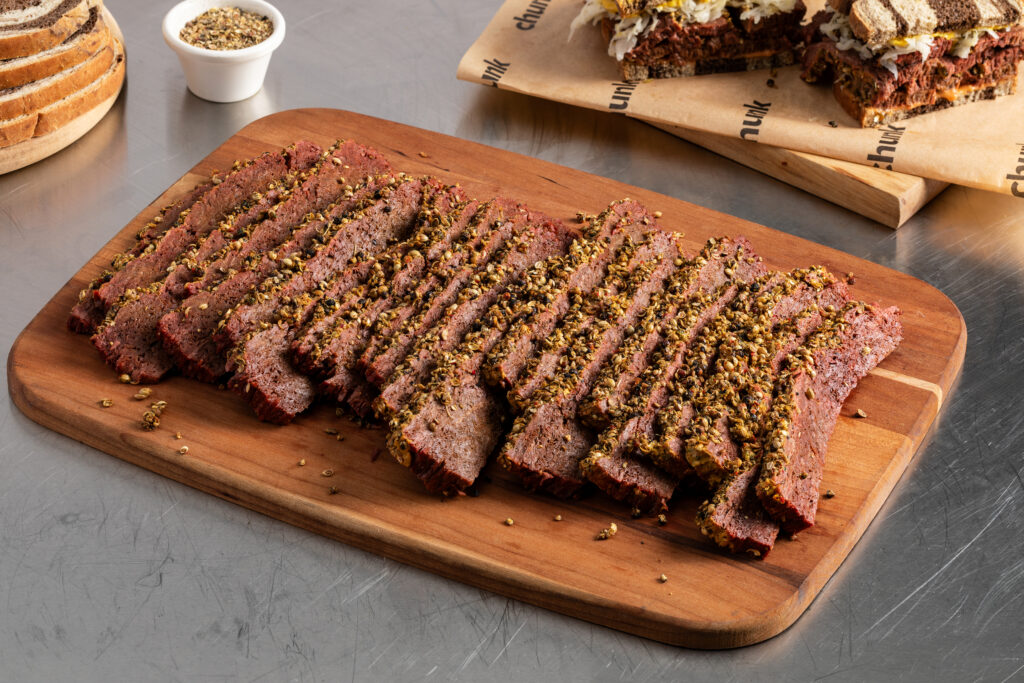
Golan identifies taste, texture, value, and trust as the primary challenges for the meat alternative category. While taste and texture remain critical, he highlights value and trust as often-overlooked issues. "Consumers turn over the pack, read a long ingredient list filled with unfamiliar ingredients and put it back," he observed. "They see the cost of a plant-based burger and feel it’s too expensive. The solution isn’t better marketing. It’s a genuinely better product with ingredients people recognize and clear value."
Chunk Foods’ products aim to address these concerns directly. For instance, its classic steak fillet provides 25 grams of protein with only 160 calories per 4oz serving. This nutritional profile is particularly appealing to the modern, health-conscious consumer, including those utilizing GLP-1 therapies, who are increasingly evaluating protein intake relative to calories and cost.
Economic Foundations and Vertical Integration: Chunk Foods’ Differentiators
The current consolidation wave in the alternative protein sector, particularly the struggles of fermentation companies, highlights a critical distinction in business models. Many fermentation ventures, while scientifically innovative, have faced significant capital expenditure requirements for large-scale infrastructure before achieving commercial viability.
"This is more about economics than science," Golan commented on the challenges faced by fermentation companies. "Many fermentation companies built beautiful state-of-the-art facilities before they built sustainable economics and a viable market. Some technologies require enormous upfront investments in infrastructure before they ever generate meaningful commercial revenue."
Chunk Foods’ production model offers a contrast. The company utilizes a solid-state fermentation process that employs soy flour as the fermentation medium. This method circumvents the need for extensive stainless-steel reactors and complex biomass separation processes common in liquid fermentation. "Solid-state fermentation uses soy flour as the fermentation medium, eliminating the need to ferment in large stainless steel reactors and separate biomass from the liquid afterwards," Golan explained. "That means simpler facilities, lower capital requirements, less waste, and production capacity that grows alongside demand rather than years ahead of it."
This capital-light approach allows Chunk Foods to scale its production capacity in alignment with market demand, avoiding the substantial upfront investments that have strained other companies. Furthermore, the company’s vertically integrated model, encompassing manufacturing in its own facilities and direct frozen product shipment to the U.S., provides a significant advantage in terms of control and efficiency.
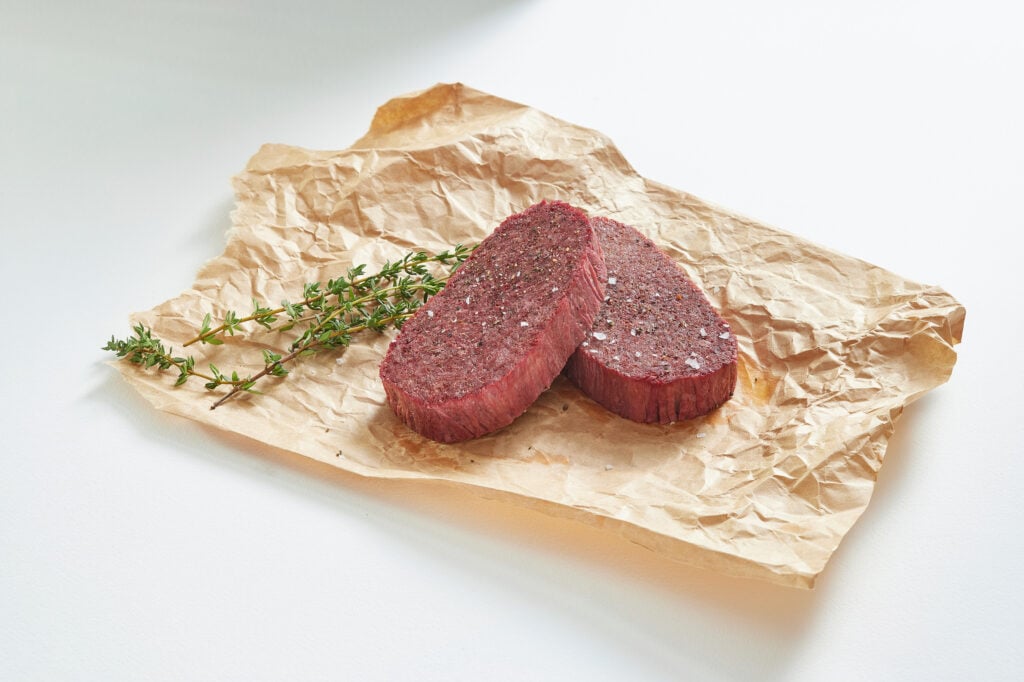
"Beyond economics, our biggest advantage is control," Golan stated. "We can precisely control fiber direction, texture, thickness and appearance without binders or gums, while still delivering the juicy eating experience people expect from a steak. I’m a chemist and a classically trained cook. I don’t want a product that survives the lab. I want one that survives dinner." This dual expertise in scientific innovation and culinary execution underpins the company’s product development ethos.
The company’s strategic planning includes future expansion of its manufacturing capabilities. While currently producing in Israel, Chunk Foods is actively planning for U.S.-based production. "Some of our newer production lines are already designed around future U.S. manufacturing, and we expect a U.S. production partnership to mature around 2027-28," Golan revealed. This foresight positions the company to capitalize on the large U.S. market more effectively in the coming years.
Chunk Foods, established six years ago, has raised $24 million in funding to date. The company is currently seeking a small funding round to further accelerate its U.S. market expansion and secure the necessary working capital to support its growth trajectory as it moves toward profitability. Golan’s perspective on capital is clear: "Capital should accelerate a good business. It shouldn’t be the only thing keeping it alive." This statement reflects a commitment to building a sustainable business model that is not solely reliant on external funding for survival. The company’s focus on sound unit economics and a clear path to profitability suggests a robust strategy for navigating the evolving landscape of the alternative protein industry.
