
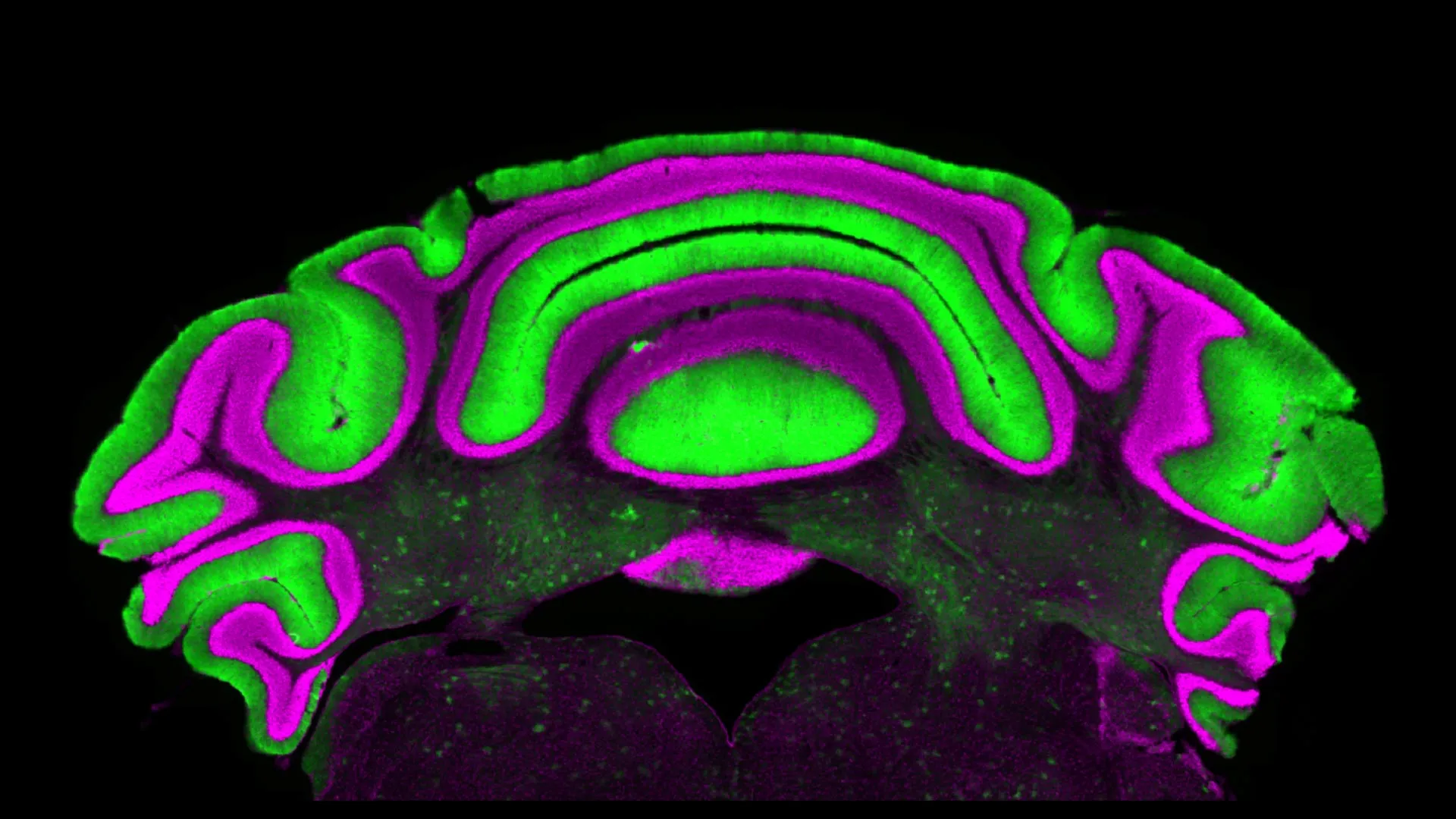
New research from a Virginia Tech neuroscientist at the Fralin Biomedical Research Institute at VTC is raising significant questions about a long-standing approach to studying chronic neurological conditions such as dystonia, ataxia, and tremor. This groundbreaking work, published in the prestigious Journal of Physiology, suggests that a foundational assumption in the field of cerebellar neuroscience may be flawed, potentially necessitating a re-evaluation of research methodologies and therapeutic strategies for a range of movement disorders.
The Cerebellum’s Crucial Role in Movement
The cerebellum, a distinct region located at the back of the brain, plays an indispensable role in motor control, coordination, balance, and posture. When this intricate structure is compromised, individuals can experience a spectrum of debilitating symptoms. Dystonia, for instance, is characterized by involuntary muscle contractions that lead to twisting, repetitive movements and abnormal postures. Ataxia manifests as a lack of voluntary coordination of muscle movements, resulting in unsteady gait, difficulty with fine motor tasks, and slurred speech. Tremor, another common symptom, involves involuntary, rhythmic shaking of a body part, often the hands. These conditions, while varying in their specific presentations, share a common origin in cerebellar dysfunction, making the study of this brain region paramount to understanding and treating them.
A Paradigm Under Scrutiny: Purkinje Cells and Deep Cerebellar Nuclei
For decades, a central tenet of cerebellar research has revolved around the inhibitory relationship between two key types of neurons: Purkinje cells and deep cerebellar nuclei (DCN) cells. Purkinje cells, the largest neurons in the brain and a primary output of the cerebellar cortex, are known to exert a powerful inhibitory influence on the DCN cells, which are the primary output nuclei of the cerebellum, relaying processed motor commands to other brain regions. This well-established inhibitory connection has led to a widespread assumption within the neuroscience community: that monitoring the activity of Purkinje cells provides a reliable proxy for understanding the activity and functional state of the DCN cells.
This assumption has been particularly attractive for researchers due to practical considerations. Purkinje cells are located in the superficial granular layer of the cerebellar cortex, making them relatively more accessible for electrophysiological recordings and other experimental manipulations. In contrast, DCN cells are situated deeper within the brain, presenting greater technical challenges for direct measurement. Consequently, a vast body of research has focused on Purkinje cell activity, often extrapolating findings to infer the state of the DCN.
Challenging the Conventional Wisdom
The new study, spearheaded by Meike van der Heijden, an assistant professor at the Fralin Biomedical Research Institute at VTC, directly challenges this long-held assumption. Her team’s findings indicate that the activity of Purkinje cells does not, in fact, reliably predict the activity of DCN cells, even with their direct anatomical and functional link. This discovery has profound implications for how researchers approach the study of cerebellar circuitry and its role in neurological disorders.
"We see that there’s not a clear linear relationship between activity in the Purkinje cells and in the deep nuclei cells," stated Dr. van der Heijden. "So, there’s very limited predictive power in monitoring one to understand what’s going on in the other." This direct quote underscores the fundamental nature of the paradigm shift proposed by the research. The study found no significant correlation between the firing patterns of these two crucial neuronal populations when analyzing a substantial database of electrophysiology recordings from pre-clinical models of cerebellar disease.
Implications for Dystonia, Ataxia, and Tremor: A New Direction for Research and Treatment
The implications of this research for the understanding and treatment of cerebellar movement disorders are significant and far-reaching. For years, therapeutic strategies and research efforts have implicitly or explicitly relied on the assumption that modulating Purkinje cell activity would have predictable consequences for the DCN and, by extension, for motor control.
Alyssa Lyon, a doctoral candidate in Virginia Tech’s Translational Biology, Medicine, and Health Graduate Program and the paper’s first author, emphasized the clinical relevance of these findings. "Purkinje and cerebellar deep nuclei cell activity is disrupted in a disease state, and a better understanding of the relationship between these neuron types will ultimately help optimize treatments for diseases such as dystonia, ataxia, and tremor," Lyon explained.
The study suggests that a more direct focus on DCN cell activity is crucial for a comprehensive understanding of cerebellar function in health and disease. If Purkinje cell activity is not a reliable indicator, then research efforts may need to pivot towards developing more sophisticated methods for directly measuring and manipulating DCN function. This could involve advances in neuroimaging, more precise electrode placement techniques, or novel optogenetic and chemogenetic tools that allow for targeted manipulation of deep cerebellar nuclei.
The Genesis of the Research: A Need for Deeper Investigation
The research project was initiated, in part, to address a perceived gap in understanding the precise functional interplay between Purkinje and DCN cells, particularly in the context of disease states. While the anatomical connection and inhibitory nature of Purkinje cells on DCN cells were well-established, the actual degree to which Purkinje cell activity directly dictated DCN output in dynamic, real-world conditions, especially during pathological processes, remained less clear. The team sought to move beyond theoretical models and investigate actual neuronal recordings to determine the predictive capacity of Purkinje cell activity.
The methodology involved a meticulous analysis of electrophysiology data. This data, gathered from various pre-clinical models designed to mimic aspects of cerebellar dysfunction, provided a rich source of information on the simultaneous activity of Purkinje and DCN neurons. By employing advanced computational and statistical techniques, the researchers were able to assess the correlation between the firing rates and patterns of these two cell populations. The consistent absence of a significant correlation across these diverse datasets was a pivotal finding.
A Cautionary Tale for the Neuroscience Community
Dr. van der Heijden’s comments serve as a strong cautionary note for the broader neuroscience community. "This is a cautionary tale for understanding cerebellar activity in disease, but also for treating these challenging diseases," she asserted. "We need to be very careful in making assumptions, and to actually do experiments to test our hypotheses." This statement highlights the importance of rigorous empirical validation in scientific research and warns against the potential pitfalls of relying on simplified models or convenient assumptions.
The findings imply that therapeutic interventions aimed at normalizing Purkinje cell activity might not yield the desired effects on DCN function and, consequently, on motor symptom amelioration. For example, if a drug is developed to enhance Purkinje cell inhibition, the assumption would be that this would lead to reduced DCN activity and potentially alleviate symptoms of over-excitation. However, if the relationship is not linear or direct, such interventions might be ineffective or even counterproductive.
Future Directions and the Road Ahead
The implications of this study extend beyond the immediate understanding of cerebellar circuitry. It opens up new avenues for research and potentially new therapeutic targets. Future research will likely focus on:
- Direct DCN Investigation: Developing and employing more advanced techniques to directly study DCN cell activity in both healthy and diseased states.
- Alternative Circuitry: Exploring other cerebellar circuits and neuronal populations that might play a more significant role in regulating DCN output, or identifying intermediary neuronal populations.
- Non-Linear Relationships: Investigating whether the relationship between Purkinje and DCN cells is non-linear or context-dependent, potentially influenced by factors such as neuromodulators, network states, or the specific disease pathology.
- Translational Research: Designing clinical trials that specifically assess the impact of interventions on DCN activity, rather than relying solely on markers of Purkinje cell function.
The study by van der Heijden and Lyon represents a significant step forward in our understanding of the cerebellum. By challenging a long-held assumption, it encourages a more nuanced and empirical approach to studying complex neurological disorders. The potential to refine diagnostic tools, develop more targeted therapies, and ultimately improve the lives of individuals suffering from dystonia, ataxia, and tremor makes this research a pivotal development in the field of neuroscience. The scientific community will undoubtedly be watching closely as these new insights pave the way for future discoveries.
