
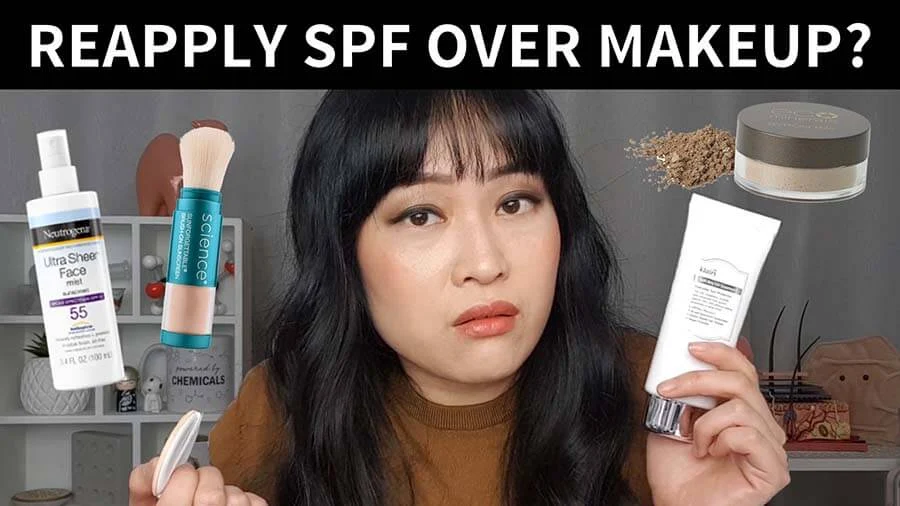
The daily dilemma of maintaining effective sun protection while preserving a meticulously applied makeup look is a common challenge for many individuals. While morning sunscreen application is a foundational step in skincare, its efficacy diminishes significantly over time, necessitating reapplication every two hours as per standard recommendations. This article delves into the scientific rationale behind regular sunscreen reapplication, evaluates various product formats for mid-day touch-ups, and offers practical strategies to ensure continuous UV defense without compromising cosmetic integrity.
The Imperative of Consistent Sunscreen Protection
Ultraviolet (UV) radiation from the sun is a primary driver of skin damage, ranging from sunburn to premature aging (photoaging) and, most critically, an increased risk of skin cancers, including melanoma. Sunscreen acts as a crucial barrier, absorbing or reflecting these harmful rays. However, its protective shield is not immutable; it degrades and disperses throughout the day, making consistent reapplication essential for optimal defense.
Official health guidelines, echoed by dermatological associations worldwide, consistently advise reapplication of sunscreen at least every two hours, or immediately after swimming, sweating heavily, or towel drying. This directive is not merely a precautionary measure but is rooted in the inherent instability of the protective film formed by sunscreen on the skin’s surface. The overarching goal is to maintain a continuous and sufficiently thick layer of active UV filters on the skin to mitigate the pervasive risks associated with prolonged sun exposure, even in seemingly benign daily scenarios.
Deconstructing Sunscreen Degradation: Why Protection Fades
The protective capacity of sunscreen is subject to multiple factors that reduce its effectiveness over time. Understanding these mechanisms is key to appreciating the necessity of regular reapplication.
1. Physical Removal and Abrasion
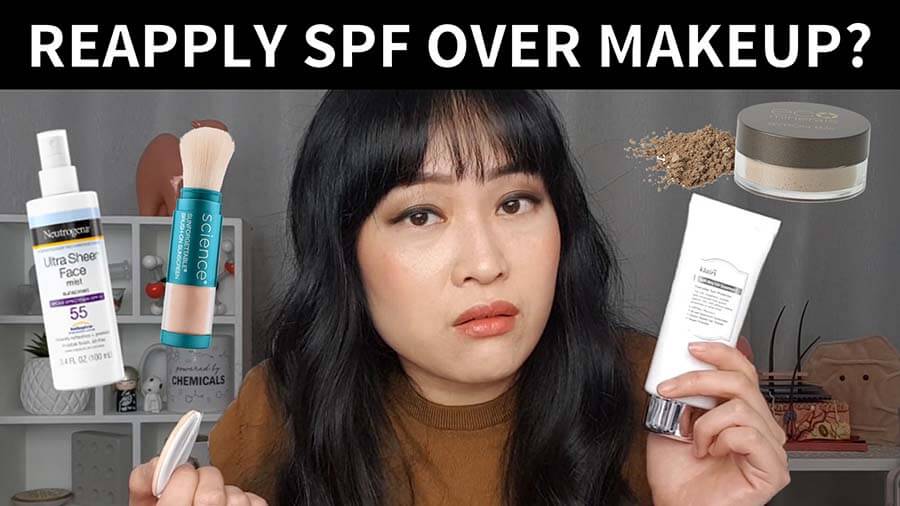
The most straightforward reason for diminishing protection is the physical removal of the sunscreen film. Daily activities, even seemingly minor ones, contribute to this. Touching the face with hands, contact with clothing, wiping sweat, or even hair brushing against the skin can dislodge the sunscreen layer. Each instance of physical contact reduces the amount of active UV filters present, thereby decreasing the overall protection. The less sunscreen remaining on the skin, the lower the SPF (Sun Protection Factor) and PA (Protection Grade of UVA) values effectively become. This mechanical disruption is a constant factor in daily life, irrespective of the sunscreen’s formulation.
2. Film Breakdown and Disruption
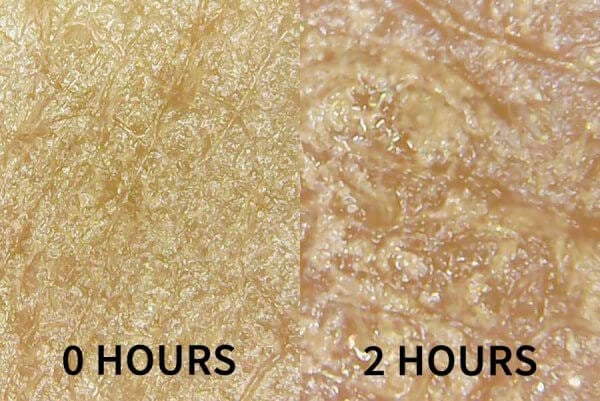
Upon initial application, adequate sunscreen forms a relatively even and continuous film across the skin, critical for uniform protection. However, this film is not static. Throughout the day, the skin’s natural processes, such as the production of sebum (oil) and perspiration (water), interact with the sunscreen layer. These bodily fluids can emulsify, dilute, or physically break up the film. This disruption is exacerbated by heavy sweating or high humidity, creating micro-channels and gaps in the protective barrier.
Furthermore, the skin itself is dynamic. Facial movements associated with talking, eating, yawning, or expressing emotions cause the skin to stretch, fold, and contract. These movements physically stress the sunscreen film, leading to its fragmentation. Microscopic observations, as seen with foundation (which shares similar film-forming technologies with sunscreen), reveal how product can clump, migrate into pores, and settle into creases over just a few hours. This uneven distribution leaves certain areas of the skin inadequately protected, creating vulnerable "hot spots" for UV penetration. The integrity of this film is paramount for effective, broad-spectrum protection.
3. Evaporation and Absorption
The sunscreen film also thins over time due to evaporation of volatile components and absorption of certain ingredients into the stratum corneum (the outermost layer of the skin). This thinning reduces the concentration of active UV filters on the surface, compromising the film’s ability to absorb or reflect UV radiation effectively. A thinner film translates directly to reduced protective capacity, even if the film remains superficially intact. This phenomenon contributes to a gradual, imperceptible decline in protection.
4. Photodegradation of Filters
While less prevalent with modern formulations, some older organic (chemical) UV filters were known to be photounstable, meaning they would break down and become less effective after absorbing a certain amount of UV radiation. Significant advancements in cosmetic chemistry have largely mitigated this issue. Contemporary sunscreens often employ photostable filters or incorporate ingredients that stabilize less photostable compounds, ensuring the active ingredients maintain their integrity for longer. Nevertheless, while this specific problem is less common, the other three factors — physical removal, film breakdown, and thinning — remain universal challenges that necessitate reapplication even for the most advanced formulas. Inorganic (physical) filters like zinc oxide and titanium dioxide are inherently photostable but are still susceptible to physical displacement and film disruption.
Quantifying the Decline: How Much Protection Remains?
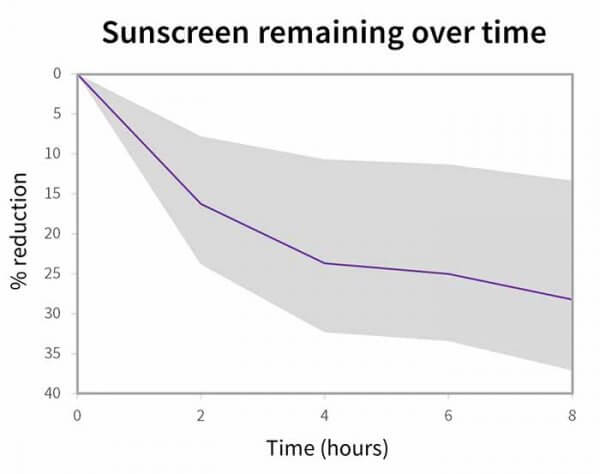
The precise rate at which sunscreen efficacy diminishes in real-world, non-active conditions has been a subject of limited research. One notable study, published in the Journal of Dermatological Treatment in 2019 by Rungananchai et al., provided valuable insights. Researchers observed 20 participants who applied 2 mg/cm² of sunscreen containing a tracking dye. Over an 8-hour period, with participants allowed up to one hour of outdoor exposure but minimal physical activity, the study found a significant reduction in the amount of dye (and by inference, sunscreen) remaining on the skin.
After just two hours, an average of 16% less dye was present. This reduction continued, reaching nearly 30% less dye after eight hours. This translates to an approximate 30% reduction in sunscreen coverage under conditions of relatively low activity.
The implications for SPF values are direct:
- An initial SPF 50 could effectively drop to SPF 35.
- An SPF 30 could become SPF 21.
- An SPF 15 could be reduced to SPF 10.
This demonstrates a clear, approximately linear relationship between the amount of sunscreen on the skin and the resulting SPF. It is crucial to note that this study used a specific sunscreen formulation and a controlled environment, meaning results may vary depending on the product’s water resistance, skin type, and individual activity levels. However, it unequivocally highlights that even without heavy sweating or swimming, sunscreen coverage diminishes substantially.
The remaining protection, while not zero, may be insufficient for individuals seeking maximal protection, especially those with photosensitive conditions, a history of skin cancer, or those aiming to prevent hyperpigmentation and premature aging. The question of "enough protection" hinges on individual risk factors, ambient UV exposure levels (often indicated by the UV Index), and personal health goals. For those highly concerned about UV damage, maintaining the highest possible SPF through reapplication is non-negotiable.
Strategic Approaches to Sunscreen Reapplication Over Makeup
Reapplying sunscreen over makeup presents a unique challenge, as traditional methods often disturb cosmetic layers. The solution often involves a compromise between achieving maximum protection and preserving one’s desired aesthetic. Dr. Michelle Wong of Lab Muffin Beauty Science, a prominent cosmetic chemist and science communicator, outlines three practical scenarios for managing this balance.
Situation 1: Minimal Sun Exposure
For individuals with predominantly indoor lifestyles or very limited sun exposure (e.g., a short commute in low UV conditions, office work away from windows), strict reapplication every two hours might be deemed excessive. In such cases, relying on the initial, robust morning application and actively seeking shade during brief outdoor stints can be a pragmatic approach. This strategy acknowledges the residual protection that remains while minimizing disruption to makeup. Indicators of sufficient protection, such as stable freckles or rapid fading of post-inflammatory hyperpigmentation, can help individuals assess their personal needs and adjust their approach. This strategy is suitable for environments where UV exposure is consistently low.
Situation 2: Significant and Unavoidable Sun Exposure
At the other end of the spectrum are situations involving prolonged and intense sun exposure, such as beach outings, long walks, or outdoor sports. Here, sun protection takes absolute priority over makeup preservation. The recommended strategy involves:
- Water-resistant sunscreen: Applied generously in the morning to form a durable base.
- Minimal makeup: Opt for light coverage like tinted moisturizer or spot concealer, focusing on areas less prone to smudging or disruption. Heavy foundation and intricate eye makeup are typically avoided.
- Frequent reapplication: Reapply the water-resistant sunscreen every two hours. If the skin feels dirty or overly layered, a gentle wipe with a makeup remover cloth can precede reapplication, but full cleansing is generally unnecessary unless breakouts occur.
- Ancillary protection: Complement sunscreen with wide-brimmed hats, UV-protective clothing, and seeking shade whenever possible. This holistic approach ensures maximal defense against high UV loads.
Situation 3: Moderate Daily Sun Exposure (The Common Dilemma)
This is the most common scenario: individuals needing to maintain a presentable makeup look while also requiring decent sun protection for intermittent outdoor activities (e.g., a sunny lunch break walk, a commute with direct sun exposure). Here, the goal is to apply as much sunscreen as possible, as evenly as possible, with minimal disturbance to makeup. This acknowledges the linear relationship between application amount and SPF, emphasizing that even a partial reapplication is better than none. This situation demands a strategic choice of reapplication product and technique to balance cosmetic integrity with health imperatives.
Evaluating Reapplication Product Formats
The choice of product for mid-day sunscreen reapplication over makeup is critical, with varying degrees of effectiveness and cosmetic elegance.
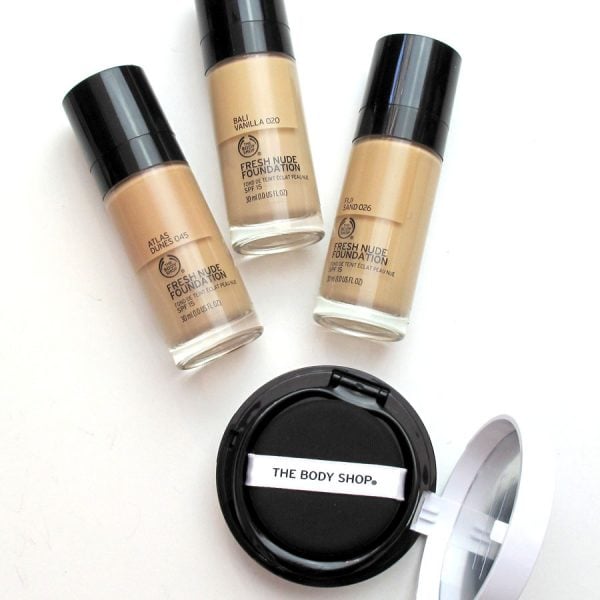
SPF-Rated Foundations and Powders: Generally Insufficient
While many foundations and powders boast SPF ratings, they are largely inadequate as standalone sun protection or for reapplication. Research consistently shows that the typical amount of foundation applied by users (an average of 0.54g for liquid foundation on a 400 cm² face, according to a 2006 Food and Chemical Toxicology study by Loretz et al.) is far less than the 2 mg/cm² used in laboratory SPF testing. This means an SPF 30 foundation might yield an actual SPF of only 7-8 in real-world application, offering minimal supplementary protection.
Powders fare even worse. A 2011 US EPA Exposure Factors Handbook, referencing 1980s Cosmetic, Toiletry, and Fragrance Association (CTFA) studies, noted an average face powder application of 85 milligrams on a 400 cm² face. This translates to an actual SPF of merely 1-2, even for products labeled SPF 30. The discontinuous and often uneven nature of powder application further compromises its protective integrity, as powders tend to sit on the surface in discrete particles rather than a cohesive film. Achieving significant coverage with powders would require an impractically thick and aesthetically undesirable layer.
One notable exception cited is Colorescience powder sunscreen, which demonstrated promising water-resistant SPF 50 efficacy in specific tests submitted to the FDA. This performance is attributed to a high mineral content and specialized coating designed for better skin adhesion. However, achieving this level of protection required an application of 2 mg/cm² – a quantity that, according to Colorescience’s own study, necessitated swirling the brush for a full 60 seconds and priming it multiple times. Such an intensive application process is often impractical for daily reapplication, and the cost of frequent replenishment for such small product sizes (2.5-7g) can be prohibitive. While water-resistant powder sunscreens may offer a marginal benefit, they remain less reliable than other formats for comprehensive protection.
Sunscreen Sprays: Caution Advised
Sunscreen sprays, once considered a convenient option for reapplication, have faced increasing scrutiny regarding their effectiveness. Recent experiments, including those conducted by Lab Muffin Beauty Science and reports from Australian researchers (ARPANSA), indicate that achieving even and sufficient coverage with sprays is highly challenging.
Initial estimations suggested that 1/2 to 1/3 of the sprayed product might land on the face. However, empirical testing has shown this figure to be as low as 1/5 to 1/9 with typical application methods. This significant loss means a substantial portion of the product never reaches the skin, leading to inadequate protection.
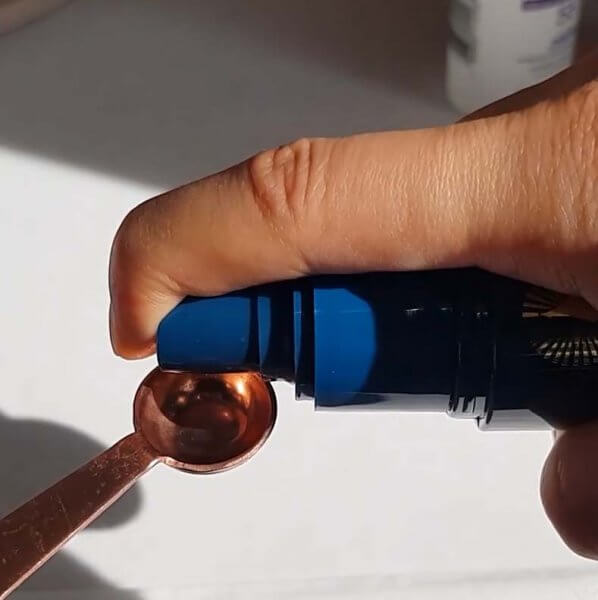
Furthermore, aerosol sunscreens (those in pressurized metal cans with propellants) pose an additional problem. Tests by Choice magazine revealed that 40-60% of the dispensed product can be propellant, not actual sunscreen. Since SPF tests are conducted before propellant is added, users effectively receive a diluted product, requiring even more generous application to achieve the labeled SPF. Wind exacerbates this issue by carrying away even more of the active ingredients, making outdoor spray application particularly ineffective.
For these reasons, directly spraying sunscreen onto the face is generally not recommended for reapplication, as it is unlikely to provide reliable coverage and may disturb makeup. If using a spray, the recommended method is to spray a generous amount into the hand and then pat it onto the face with fingers or a sponge, treating it like a lotion.
Sunscreen Lotions with Cushion Puffs: The Recommended Method
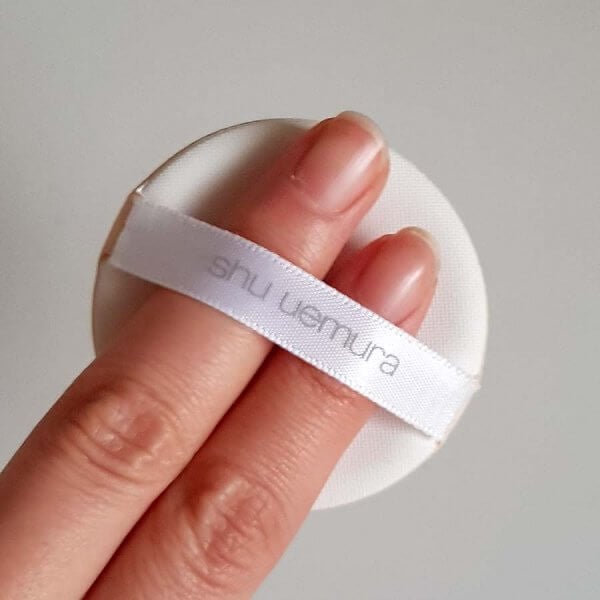
The most effective and cosmetically elegant method for reapplying sunscreen over makeup involves using a regular sunscreen lotion with a cushion puff applicator. This technique, popularized within the Asian skincare community, offers several advantages:
- Controlled Application: Cushion puffs, being thinner than traditional beauty sponges, absorb less product, ensuring more sunscreen is transferred to the skin.
- Even Distribution: The patting motion of a cushion puff allows for gentle, even layering of sunscreen without dragging or smudging existing makeup as much as rubbing. This minimizes disruption to the underlying cosmetic layers.
- Portability and Hygiene: Cushion puffs are compact, easy to carry (e.g., in a ziplock bag), and can be folded to reach intricate areas like around the nose and eyes. They are also inexpensive and readily replaceable, making them a practical tool for daily use.
- Product Versatility: This method allows the use of one’s preferred regular sunscreen lotion, eliminating the need for specialized (and often less effective) reapplication products. Lightweight, silicone-based sunscreens tend to work particularly well as they blend smoothly without causing excessive pilling or makeup disruption, creating a seamless finish.
Practical Steps for Reapplication with a Cushion Puff:
- Dispense a small amount (e.g., a quarter teaspoon, which is the recommended amount for the face) of your chosen sunscreen onto the back of your hand or directly onto the cushion puff.
- Gently pat the puff onto the sunscreen to load it evenly, ensuring the product is distributed across the puff’s surface.
- Begin by lightly patting the sunscreen onto areas of the face with minimal or no makeup color (e.g., forehead, cheeks, chin). This helps to build up a base layer without immediate color transfer.
- Gradually move to areas with colored makeup (e.g., blush, bronzer), continuing to pat rather than rub, to minimize transfer or smudging. The key is a gentle, pressing motion.
- Repeat the process if necessary to ensure adequate coverage, aiming for multiple thin layers rather than one thick one, which can be easier to blend and less disruptive.
- Be mindful that reapplication over intricate eye makeup (e.g., eyeshadow, eyeliner) is challenging without disruption. Consider skipping these areas or touching them up afterward with minimal product if needed.
Ensuring ingredient compatibility between the initial makeup and reapplication sunscreen is generally less critical for efficacy but can impact cosmetic finish. When in doubt, reapplying the same sunscreen used in the morning simplifies the process and reduces the risk of undesirable interactions.
Broader Implications and Future Directions
The ongoing discourse around sunscreen reapplication highlights a critical gap between scientific recommendations for optimal UV protection and the practical realities of daily life. For public health, the implication of inadequate reapplication is significant, contributing to the cumulative UV damage that underlies the global burden of skin cancer and photoaging. Organizations like the American Academy of Dermatology consistently advocate for diligent sunscreen use, including reapplication, as a cornerstone of preventive health.
For consumers, the challenge lies in navigating a complex product landscape and integrating effective sun protection into their routines without undue burden. This has spurred innovation in the beauty industry, with ongoing research into more cosmetically elegant, effective, and convenient reapplication formats. The goal is to develop products that maintain high SPF efficacy while being invisible, blendable, and resistant to makeup disruption. This includes advancements in film-forming technologies and more stable, high-performance UV filters.
Ultimately, informed consumer choices, coupled with a nuanced understanding of sunscreen science, are paramount. Whether through strategic avoidance, simplified makeup routines, or adopting effective reapplication tools like cushion puffs, the commitment to consistent sun protection remains a cornerstone of skin health and longevity. The scientific community and cosmetic industry continue to collaborate, striving for solutions that make comprehensive sun defense an effortless and integral part of everyone’s daily regimen, ensuring that both health and aesthetic preferences can be met.
