

Polycystic Ovary Syndrome (PCOS) stands as the most prevalent endocrine and metabolic disorder affecting women of reproductive age, impacting an estimated 6 to 12 percent of women globally, or roughly 5 million individuals in the United States alone. Characterized by a complex cluster of symptoms—including hormonal imbalances, irregular menstrual cycles, hyperandrogenism, and metabolic disturbances—PCOS is increasingly recognized by the medical community as a condition deeply intertwined with metabolic dysfunction.
At the core of this pathology lies insulin resistance, a physiological state identified in up to 75 percent of women diagnosed with PCOS, regardless of whether they present with lean or overweight body types. This widespread metabolic hurdle has shifted the therapeutic paradigm toward the use of insulin-sensitizing agents. Among these, the prescription pharmaceutical Metformin and the over-the-counter nutritional supplement Myo-inositol have emerged as front-line options. As clinicians and patients continuously seek optimal management strategies, a comprehensive evaluation of their biochemical mechanisms, clinical efficacy, safety profiles, and potential intersections is essential for informed healthcare decision-making.

The Central Role of Insulin Resistance in PCOS Pathology
To understand why insulin sensitizers are frequently deployed in the management of PCOS, one must examine the cascading effects of hyperinsulinemia—chronically elevated levels of insulin in the blood. When cells become less responsive to the physiological actions of insulin, the pancreas compensates by secreting higher quantities of the hormone to maintain normal blood glucose homeostasis.
This surplus of circulating insulin exerts direct adverse effects on the ovarian tissue. Excess insulin stimulates the theca cells within the ovaries to overproduce androgens, such as testosterone. The resulting hyperandrogenism is responsible for many of the hallmark clinical manifestations of PCOS, including hirsutism (excessive facial and body hair growth), acne, and male-pattern hair loss, while also disrupting normal follicular development and leading to anovulation (the failure of the ovaries to release eggs). Furthermore, hyperinsulinemia suppresses hepatic production of sex hormone-binding globulin (SHBG), a protein that binds to free testosterone. With reduced SHBG levels, the concentration of biologically active, unbound androgens in the bloodstream increases, compounding the endocrine disruption.
Given this pathophysiology, medical interventions aimed at lowering systemic insulin levels or enhancing cellular insulin sensitivity can interrupt this destructive cascade, restoring ovulatory function, improving metabolic markers, and mitigating hyperandrogenic symptoms.

Metformin: Mechanisms, Clinical Efficacy, and Historical Context
Metformin is a synthetic biguanide medication with a long-established history of safety and efficacy in the management of type 2 diabetes mellitus. Over the past three decades, its application has expanded significantly into the realm of reproductive endocrinology as an off-label treatment for insulin-resistant PCOS.
From a pharmacological perspective, Metformin improves glycemic control and insulin sensitivity through three primary mechanisms. First, it acts upon the liver to significantly suppress hepatic gluconeogenesis, thereby reducing the amount of glucose released into the bloodstream. Second, it increases peripheral glucose uptake and utilization in skeletal muscle tissue. Third, it favorably alters the gut microbiome and enhances the secretion of glucagon-like peptide-1 (GLP-1), an incretin hormone that improves satiety and metabolic regulation.
Clinical studies evaluating Metformin’s impact on women with PCOS consistently demonstrate improvements in several key areas. Randomized controlled trials have shown that long-term administration of Metformin can reduce circulating androgen levels, restore regular menstrual cyclicity, and improve spontaneous ovulation rates. Furthermore, when utilized in fertility treatments, Metformin has been shown to enhance the success rates of ovulation induction agents like clomiphene citrate.
However, despite its metabolic and reproductive benefits, clinical evaluations note that Metformin has a limited direct impact on weight loss for many patients. In many standard six-month clinical trials, women taking Metformin experienced little to no significant change in body mass index (BMI), indicating that weight loss cannot be assumed as a guaranteed secondary outcome without concurrent lifestyle modifications.
Inositol: Biochemical Function and Emerging Clinical Evidence
Inositol, a carbocyclic sugar structurally similar to glucose, has gained substantial traction in the endocrinology and nutritional science communities as a potent natural alternative or adjunct for insulin-sensitizing therapy. While inositol is naturally synthesized by the human body and consumed through a diet rich in fruits, beans, grains, and nuts, therapeutic administration typically utilizes specific stereoisomers, most notably myo-inositol (MI) and D-chiro-inositol (DCI).
The biochemical role of inositol in cellular signaling is both complex and critical. Myo-inositol acts as a structural component of second messenger molecules involved in the insulin signaling cascade. Every cell wall features specialized insulin receptors that function on a lock-and-key mechanism; insulin must bind precisely to these receptors to trigger intracellular glucose uptake and metabolic processing. In states of insulin resistance, receptor efficiency is impaired. Myo-inositol acts to optimize the efficiency of these receptors, allowing insulin to bind properly on the initial attempt and preventing the body from overproducing the hormone to compensate.

Furthermore, once insulin binds to the cell surface, inositol-phosphoglycans mediate the intracellular enzymes responsible for glucose metabolism. By facilitating this downstream signaling, inositol helps regulate both glucose disposal and the "off switch" for cellular insulin action.
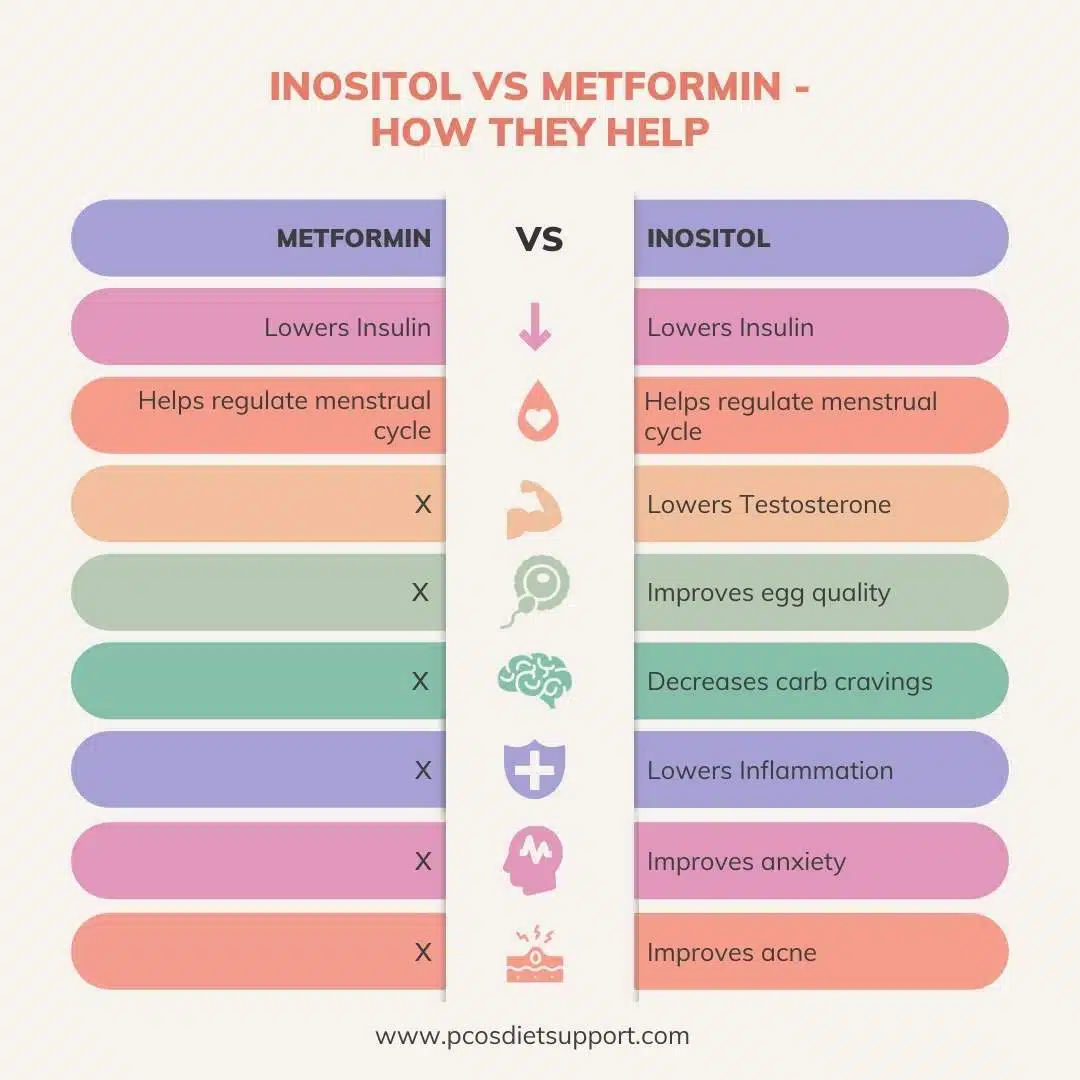
Recent systematic reviews and meta-analyses comparing myo-inositol directly with Metformin have yielded compelling data. Clinical trials examining ovarian function in PCOS patients have found that myo-inositol is statistically comparable to Metformin in improving insulin resistance, lowering serum androgen concentrations, and reestablishing spontaneous ovulation and pregnancy rates. Because it operates on overlapping insulin-signaling pathways—specifically improving the same intracellular cascades targeted by Metformin—myo-inositol achieves similar metabolic and endocrine endpoints via a nutritional pathway.
Side-by-Side Comparison: Benefits, Tolerability, and Side Effects Profile
While both Metformin and inositol share the ultimate objective of mitigating insulin resistance and its downstream endocrinological consequences, they diverge sharply in their pharmacological classification, regulatory status, and side-effect profiles.

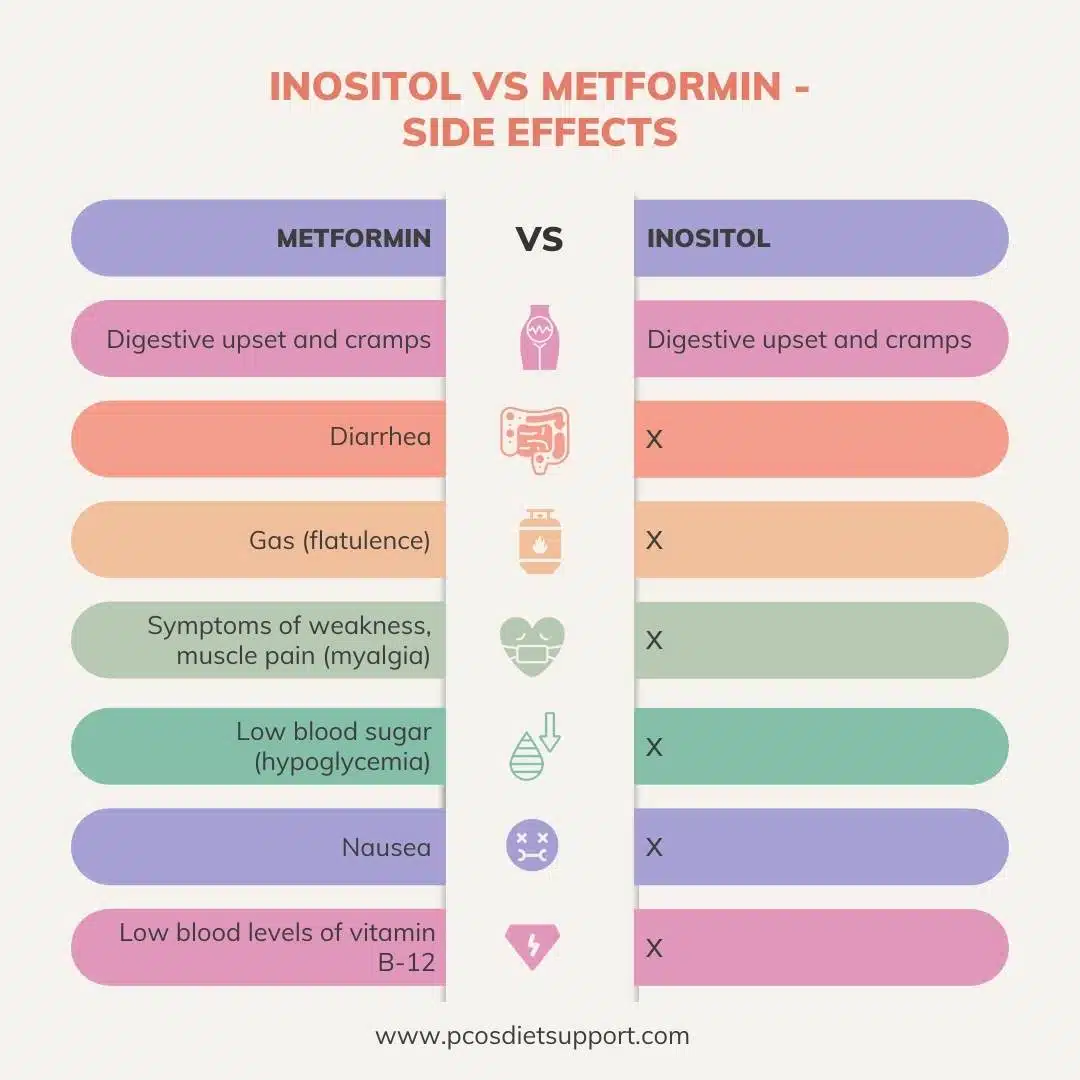
Metformin, as a prescription pharmaceutical, is frequently associated with notable gastrointestinal adverse events. Clinical data indicates that up to 30 percent of patients initiating Metformin therapy experience side effects such as nausea, abdominal discomfort, flatulence, and persistent diarrhea. These symptoms often necessitate a slow, titrated dosing schedule or the use of extended-release formulations to improve gastrointestinal tolerance. Additionally, rare but serious risks, such as lactic acidosis, require ongoing monitoring, particularly in patients with compromised renal function. Furthermore, long-term Metformin use has been associated with the malabsorption of vitamin B12, necessitating routine nutritional screening and supplementation for chronic users.
Conversely, inositol is classified as a dietary supplement and is exceptionally well-tolerated by the vast majority of patients. Clinical evaluations report a minimal side-effect profile, with minor gastrointestinal upset occurring occasionally at very high therapeutic doses—an effect that can be mitigated by consuming the supplement alongside meals. Mild headaches are occasionally reported, but systemic toxicity is virtually nonexistent. This favorable safety margin makes inositol an attractive first-line option for patients who cannot tolerate the gastrointestinal burden of Metformin or who prefer a non-pharmaceutical intervention.
Integration, Combination Therapy, and Clinical Guidance
A frequent clinical inquiry among patients managing PCOS is whether Metformin and inositol can be co-administered. Because the two compounds utilize slightly different molecular pathways to enhance insulin sensitivity, they can theoretically be combined under medical supervision. Endocrinologists and registered dietitians occasionally recommend adding an inositol supplement, such as formulas combining myo-inositol and D-chiro-inositol (e.g., Ovasitol), for patients currently taking Metformin who continue to experience refractory symptoms or unacceptable pharmacological side effects.
However, combining these two insulin-sensitizing agents introduces a distinct clinical risk: hypoglycemia. Because both compounds lower blood glucose and reduce hyperinsulinemia through complementary mechanisms, concurrent administration without appropriate dietary adjustments can theoretically drive blood sugar levels below the normal physiological threshold. Consequently, healthcare professionals strongly advise against self-prescribing or combining these agents without direct oversight from a qualified physician or endocrinologist.
Broader Economic and Public Health Implications
The management of PCOS carries substantial economic and healthcare burdens, driven by the chronic nature of the condition, its associated morbidities—such as type 2 diabetes, gestational diabetes, cardiovascular disease, and endometrial hyperplasia—and the costs associated with infertility treatments.
The validation of inositol as an effective, low-risk alternative to prescription pharmaceuticals represents a significant shift in integrative medicine. By offering an intervention with high patient compliance rates due to minimal adverse events, healthcare providers can improve long-term metabolic management without subjecting patients to the gastrointestinal attrition often caused by Metformin. As ongoing clinical trials continue to refine the specific ratios of myo-inositol to D-chiro-inositol required for optimal metabolic and reproductive outcomes, the integration of targeted nutritional supplements into mainstream clinical guidelines for PCOS management is expected to expand.
Ultimately, the choice between inositol and Metformin depends on individual patient physiology, severity of metabolic dysfunction, personal tolerance for pharmaceutical side effects, and overarching reproductive goals. A personalized, multidisciplinary approach involving endocrinologists, gynecologists, and registered dietitians remains the gold standard for navigating the complexities of PCOS treatment, ensuring that therapeutic interventions safely target the root causes of the disorder while preserving patient quality of life.
